

Beef, variety meats and by-products, tongue, raw
Whole food · Beef Products

Photo: Wikipedia
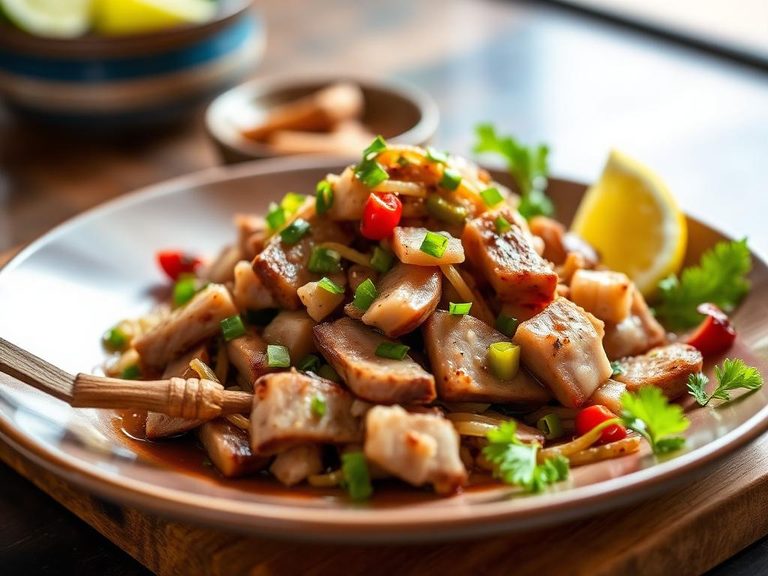
Beef tongue is a dense, muscular organ prized for its remarkably tender, almost buttery texture when slow-cooked, with a rich, beefy flavor that's milder than steak. Nutritionally, it's a powerhouse of protein and healthy fats, offering a significant calorie boost in a small serving.
Calorie split: 27% protein · 7% carbs · 66% fat
↓ Full nutrition💚 Why it's loved
People adore beef tongue for its uniquely smooth, melt-in-your-mouth texture and deep, savory flavor that absorbs marinades and spices beautifully. It's a culinary canvas celebrated in global cuisines for transforming a humble cut into a luxurious dish.
⚠️ Watch-outs & how to enjoy it better
Its high fat and calorie content can be a concern for those monitoring intake, and the initial preparation (peeling the skin) can be daunting for beginners. To manage, practice precise portion control and pair it with high-fiber, low-carb vegetables like roasted broccoli or a sharp, acidic slaw to balance the richness.
Key benefits
- Excellent source of high-quality protein for muscle maintenance.
- Rich in iron and zinc, essential minerals for energy and immunity.
- Contains vitamin B12, crucial for nerve function and red blood cell formation.
- Provides healthy monounsaturated fats similar to those in olive oil.
🍽️ Popular dishes
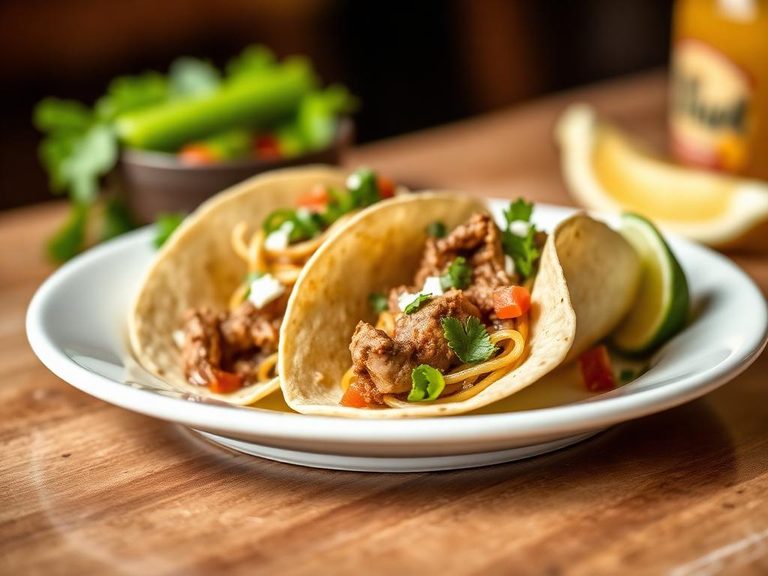
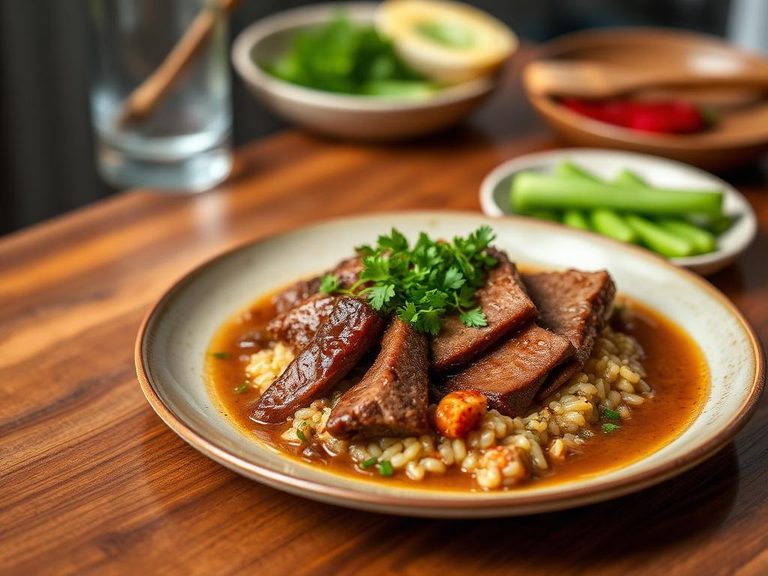
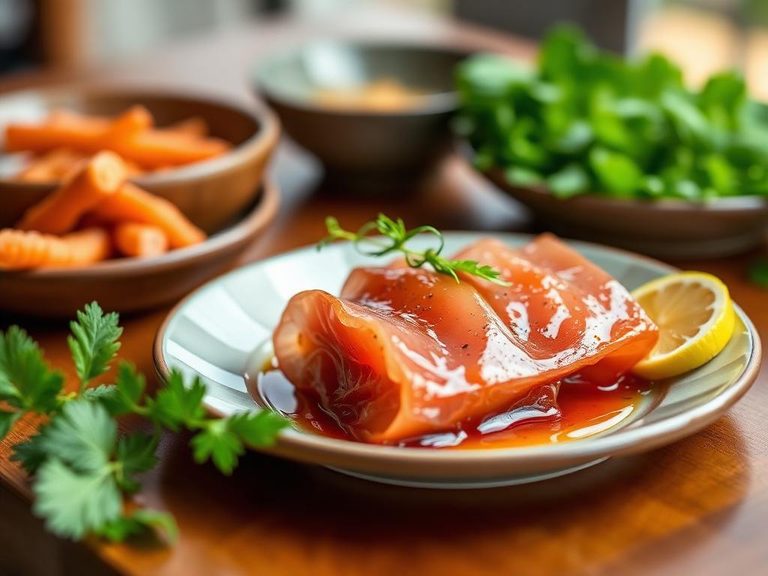
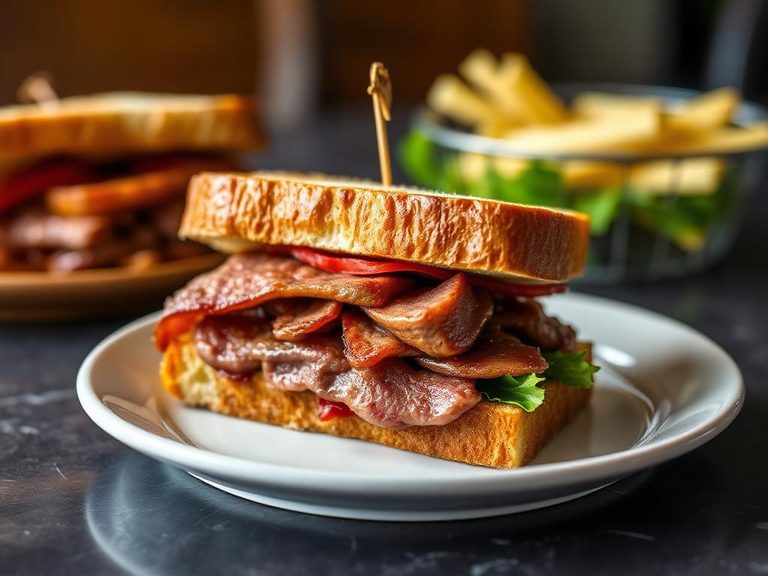
🌍 Where it's eaten
💡 Did you know?
A single beef tongue can weigh between 2 to 4 pounds and is composed almost entirely of muscle, making it one of the most powerful muscles in a cow's body.
Full nutrition (USDA data · scales with serving)
| Water | 64.5 g |
| Energy | 224 kcal |
| Energy | 937 kj |
| Protein | 14.9 g |
| Total lipid (fat) | 16.1 g |
| Ash | 0.80 g |
| Carbohydrate, by difference | 3.7 g |
| Fiber, total dietary | 0.00 g |
| Calcium, Ca | 6.0 mg |
| Iron, Fe | 3.0 mg |
| Magnesium, Mg | 16.0 mg |
| Phosphorus, P | 133 mg |
| Potassium, K | 315 mg |
| Sodium, Na | 69.0 mg |
| Zinc, Zn | 2.9 mg |
| Copper, Cu | 0.17 mg |
| Manganese, Mn | 0.03 mg |
| Selenium, Se | 9.4 ug |
| Vitamin C, total ascorbic acid | 3.1 mg |
| Thiamin | 0.13 mg |
| Riboflavin | 0.34 mg |
| Niacin | 4.2 mg |
| Pantothenic acid | 0.65 mg |
| Vitamin B-6 | 0.31 mg |
| Folate, total | 7.0 ug |
| Folic acid | 0.00 ug |
| Folate, food | 7.0 ug |
| Folate, DFE | 7.0 ug |
| Vitamin B-12 | 3.8 ug |
| Vitamin A, RAE | 0.00 ug |
| Retinol | 0.00 ug |
| Vitamin A, IU | 0.00 iu |
| Alcohol, ethyl | 0.00 g |
Fat & fatty acid profile (per 100g)
| Fatty acids, total saturated | 7.0 g |
| SFA 4:0 | 0.00 g |
| SFA 6:0 | 0.00 g |
| SFA 8:0 | 0.00 g |
| SFA 10:0 | 0.02 g |
| SFA 12:0 | 0.09 g |
| SFA 14:0 | 0.57 g |
| SFA 16:0 | 4.2 g |
| SFA 18:0 | 2.1 g |
| Fatty acids, total monounsaturated | 7.2 g |
| MUFA 16:1 | 0.55 g |
| MUFA 18:1 | 6.5 g |
| MUFA 20:1 | 0.14 g |
| MUFA 22:1 | 0.00 g |
| Fatty acids, total polyunsaturated | 0.90 g |
| PUFA 18:2 | 0.58 g |
| PUFA 18:3 | 0.00 g |
| PUFA 18:4 | 0.00 g |
| PUFA 20:4 | 0.31 g |
| PUFA 20:5 n-3 (EPA) | 0.00 g |
| PUFA 22:5 n-3 (DPA) | 0.00 g |
| PUFA 22:6 n-3 (DHA) | 0.00 g |
| Cholesterol | 87.0 mg |
| Phytosterols | 0.00 mg |
Amino acid profile (per 100g)
| Tryptophan | 0.11 g |
| Threonine | 0.65 g |
| Isoleucine | 0.64 g |
| Leucine | 1.1 g |
| Lysine | 1.1 g |
| Methionine | 0.32 g |
| Cystine | 0.20 g |
| Phenylalanine | 0.61 g |
| Tyrosine | 0.48 g |
| Valine | 0.71 g |
| Arginine | 0.95 g |
| Histidine | 0.39 g |
| Alanine | 0.86 g |
| Aspartic acid | 1.4 g |
| Glutamic acid | 2.1 g |
| Glycine | 0.89 g |
| Proline | 0.70 g |
| Serine | 0.60 g |
FAQ
How do you prepare beef tongue?
Typically, it's simmered or braised for several hours until tender, then the thick outer skin is peeled off before slicing and serving.
Is beef tongue fatty?
Yes, it has a higher fat content than many lean cuts, with about 16g of fat per 100g, contributing to its rich flavor and tender texture.
What does beef tongue taste like?
It has a pronounced beefy flavor but is milder and more delicate than steak, with a smooth, almost creamy texture when cooked properly.
Nutrient density (calculated · NRF9.3)
Nutrient Rich Foods index: beneficial nutrients (protein, fiber, vitamins, minerals) minus saturated fat, added sugar & sodium, per 100 kcal.
NRF9.3 index — Fulgoni, Keast & Drewnowski, 2009. Computed from USDA nutrients.
Weight-loss friendliness (composite index)
Energy density 2.24 kcal/g · 27% calories from protein · 0.0 g fiber · 0.0 g sugar per 100 g.
Composite of energy density (Rolls et al., 1999), protein & fiber satiety, minus sugar. A calculated heuristic — ranks satiety-per-calorie, not a clinical measure.
Dietary load (calculated from USDA values)
Potential renal acid load. Positive = acid-forming, negative = alkaline-forming.
Sodium-to-potassium ratio: 0.22 (lower is better — aim for ≤ 1)
Sodium:potassium per WHO potassium guidance. Computed from USDA nutrients.