

Beef, variety meats and by-products, brain, cooked, pan-fried
Whole food · Beef Products

Photo: Wikipedia
Beef brain is a delicate, rich organ meat with a soft, creamy texture and a mild, slightly mineral flavor that absorbs seasonings beautifully. Pan-frying renders it to a tender, custard-like consistency with a lightly crisp exterior. It's a nutrient-dense food, exceptionally high in healthy fats and a standout source of DHA omega-3 fatty acids.
Calorie split: 26% protein · 0% carbs · 74% fat
↓ Full nutrition💚 Why it's loved
People love it for its uniquely smooth, luxurious mouthfeel and its ability to be a blank canvas for bold spices and sauces. It's a prized delicacy in many cultures, often prepared simply to highlight its natural richness.
⚠️ Watch-outs & how to enjoy it better
Its soft, sometimes gelatinous texture can be off-putting to those unfamiliar with it, and its strong association with offal may deter some eaters. For those concerned about dietary cholesterol, it should be consumed in moderation. To balance a meal, pair it with fibrous vegetables like sautéed greens or a crisp salad to add bulk and texture contrast.
Key benefits
- Excellent source of DHA, an omega-3 fatty acid crucial for brain health.
- High in high-quality protein for muscle maintenance.
- Rich in vitamin B12, essential for nerve function and red blood cell formation.
- Contains significant amounts of choline, important for liver and brain function.
- Provides minerals like selenium and phosphorus.
🍽️ Popular dishes
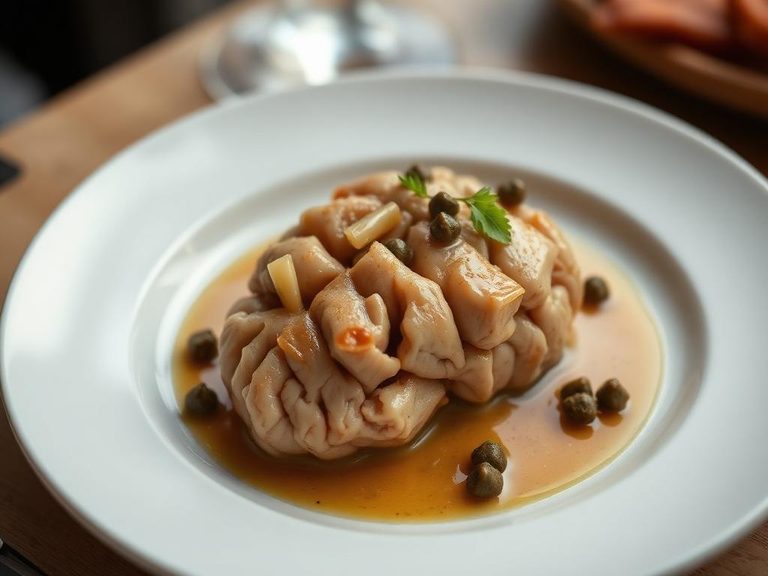
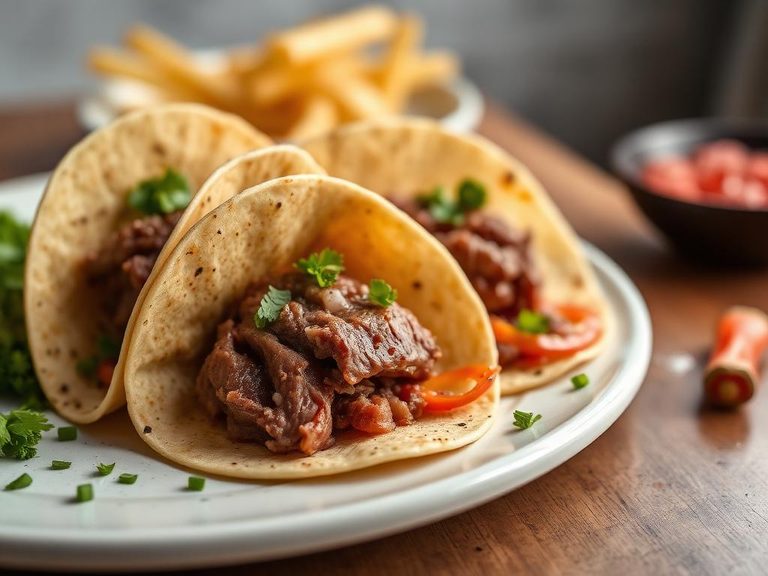
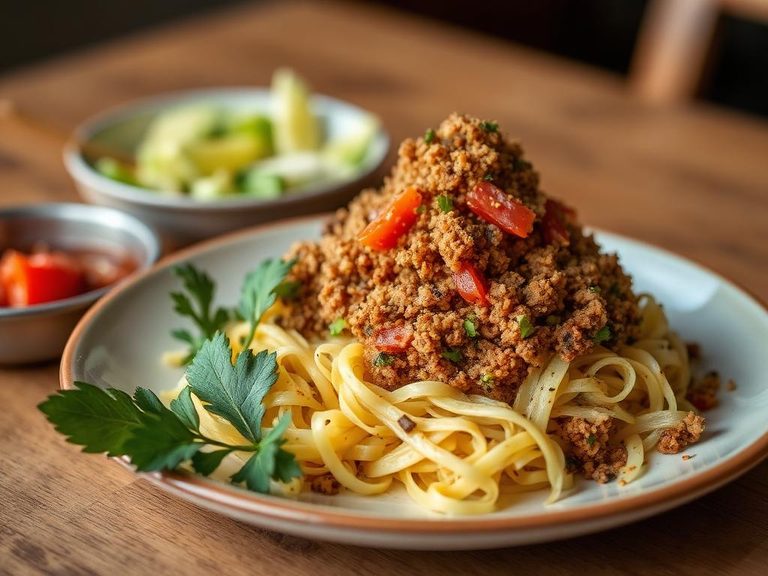
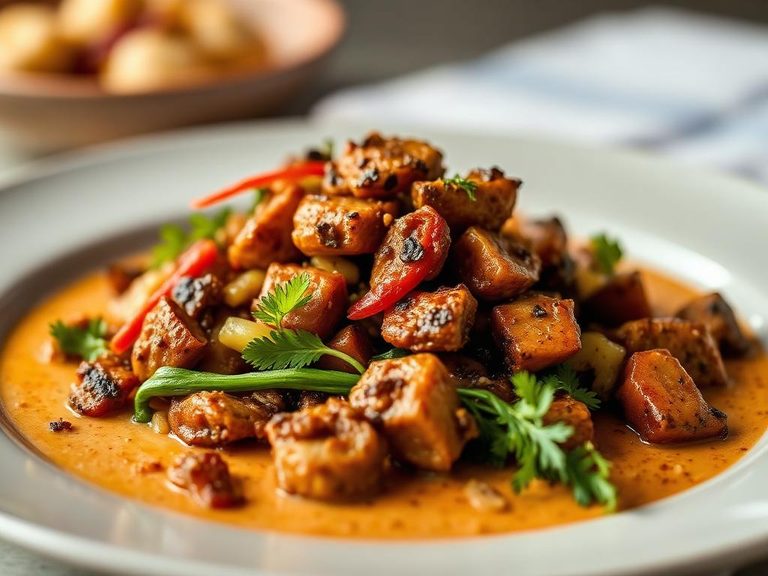
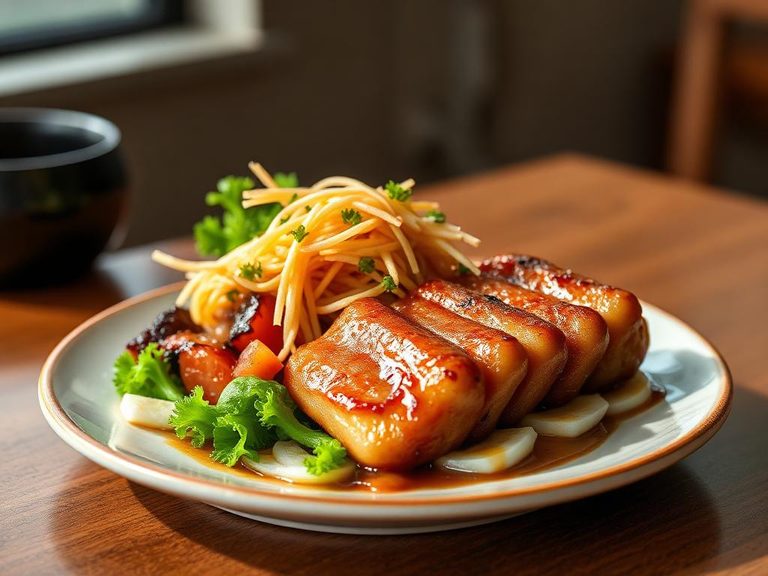
🌍 Where it's eaten
💡 Did you know?
Beef brain is one of the few foods naturally very high in the omega-3 fatty acid DHA, which is more commonly associated with fatty fish like salmon.
Full nutrition (USDA data · scales with serving)
| Water | 70.8 g |
| Energy | 196 kcal |
| Energy | 820 kj |
| Protein | 12.6 g |
| Total lipid (fat) | 15.8 g |
| Ash | 1.6 g |
| Carbohydrate, by difference | 0.00 g |
| Fiber, total dietary | 0.00 g |
| Calcium, Ca | 9.0 mg |
| Iron, Fe | 2.2 mg |
| Magnesium, Mg | 15.0 mg |
| Phosphorus, P | 386 mg |
| Potassium, K | 354 mg |
| Sodium, Na | 158 mg |
| Zinc, Zn | 1.4 mg |
| Copper, Cu | 0.22 mg |
| Manganese, Mn | 0.03 mg |
| Selenium, Se | 26.0 ug |
| Vitamin C, total ascorbic acid | 3.3 mg |
| Thiamin | 0.13 mg |
| Riboflavin | 0.26 mg |
| Niacin | 3.8 mg |
| Pantothenic acid | 0.57 mg |
| Vitamin B-6 | 0.39 mg |
| Folate, total | 6.0 ug |
| Folic acid | 0.00 ug |
| Folate, food | 6.0 ug |
| Folate, DFE | 6.0 ug |
| Vitamin B-12 | 15.2 ug |
| Vitamin A, RAE | 0.00 ug |
| Retinol | 0.00 ug |
| Vitamin A, IU | 0.00 iu |
Fat & fatty acid profile (per 100g)
| Fatty acids, total saturated | 3.7 g |
| SFA 4:0 | 0.00 g |
| SFA 6:0 | 0.00 g |
| SFA 8:0 | 0.00 g |
| SFA 10:0 | 0.00 g |
| SFA 12:0 | 0.00 g |
| SFA 14:0 | 0.07 g |
| SFA 16:0 | 2.0 g |
| SFA 18:0 | 1.6 g |
| Fatty acids, total monounsaturated | 4.0 g |
| MUFA 16:1 | 0.11 g |
| MUFA 18:1 | 3.5 g |
| MUFA 20:1 | 0.24 g |
| MUFA 22:1 | 0.00 g |
| Fatty acids, total polyunsaturated | 2.3 g |
| PUFA 18:2 | 0.84 g |
| PUFA 18:3 | 0.05 g |
| PUFA 18:4 | 0.00 g |
| PUFA 20:4 | 0.29 g |
| PUFA 20:5 n-3 (EPA) | 0.00 g |
| PUFA 22:5 n-3 (DPA) | 0.29 g |
| PUFA 22:6 n-3 (DHA) | 0.67 g |
| Cholesterol | 1995 mg |
| Phytosterols | 0.00 mg |
Amino acid profile (per 100g)
| Tryptophan | 0.10 g |
| Threonine | 0.60 g |
| Isoleucine | 0.49 g |
| Leucine | 0.94 g |
| Lysine | 0.75 g |
| Methionine | 0.26 g |
| Cystine | 0.22 g |
| Phenylalanine | 0.64 g |
| Tyrosine | 0.45 g |
| Valine | 0.62 g |
| Arginine | 0.69 g |
| Histidine | 0.32 g |
| Alanine | 0.70 g |
| Aspartic acid | 1.1 g |
| Glutamic acid | 1.5 g |
| Glycine | 0.59 g |
| Proline | 0.52 g |
| Serine | 0.73 g |
FAQ
What does beef brain taste like?
It has a mild, slightly sweet and mineral flavor, often compared to a very rich, creamy pâté or foie gras, but with a more delicate, custard-like texture when cooked properly.
Is it safe to eat? Are there health risks?
When sourced from healthy, young animals and cooked thoroughly, it is safe. However, like all organ meats, it should be consumed in moderation due to its high cholesterol content. Always ensure it comes from a reputable butcher.
How do you prepare and cook it?
The membranes must be carefully removed. It's often soaked in milk or salted water to mellow the flavor, then quickly pan-fried, scrambled, or added to tacos. Overcooking will make it tough.
Nutrient density (calculated · NRF9.3)
Nutrient Rich Foods index: beneficial nutrients (protein, fiber, vitamins, minerals) minus saturated fat, added sugar & sodium, per 100 kcal.
NRF9.3 index — Fulgoni, Keast & Drewnowski, 2009. Computed from USDA nutrients.
Weight-loss friendliness (composite index)
Energy density 1.96 kcal/g · 26% calories from protein · 0.0 g fiber · 0.0 g sugar per 100 g.
Composite of energy density (Rolls et al., 1999), protein & fiber satiety, minus sugar. A calculated heuristic — ranks satiety-per-calorie, not a clinical measure.
Dietary load (calculated from USDA values)
Potential renal acid load. Positive = acid-forming, negative = alkaline-forming.
Sodium-to-potassium ratio: 0.45 (lower is better — aim for ≤ 1)
Sodium:potassium per WHO potassium guidance. Computed from USDA nutrients.