

Babyfood, juice, orange and apricot
Whole food · Baby Foods

Photo: Wikipedia
This is a smooth, vibrant baby food juice blend, typically pureed to a thin, easily drinkable consistency for infants transitioning to solids. It offers a bright, tangy-sweet flavor profile that balances the citrusy zing of orange with the mellow, honeyed notes of apricot. Nutritionally, it's a light, low-calorie source of carbohydrates, primarily from fruit sugars, with minimal protein and fat.
Calorie split: 7% protein · 91% carbs · 2% fat
↓ Full nutrition💚 Why it's loved
Parents and caregivers love it for its convenient, mess-free format and its ability to introduce two classic fruits in one serving. The sweet-tart combination is often a hit with babies, making it a reliable choice for encouraging fruit acceptance.
⚠️ Watch-outs & how to enjoy it better
The juice form lacks the fiber of whole fruit, which can lead to quicker blood-sugar spikes, especially if consumed in large amounts. To counteract this, pair it with a small serving of protein-rich food like yogurt or a fat source like avocado to slow sugar absorption and promote satiety.
Key benefits
- Provides a quick source of natural energy from carbohydrates.
- Contains vitamin C from oranges, which supports immune function.
- Offers a gentle, palatable way to introduce fruit flavors to infants.
- Low in fat, making it a light option for young digestive systems.
🍽️ Popular dishes
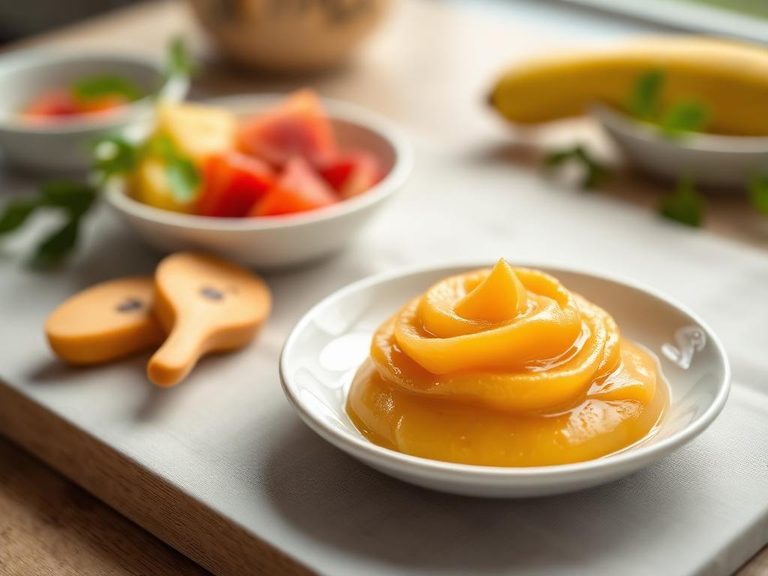
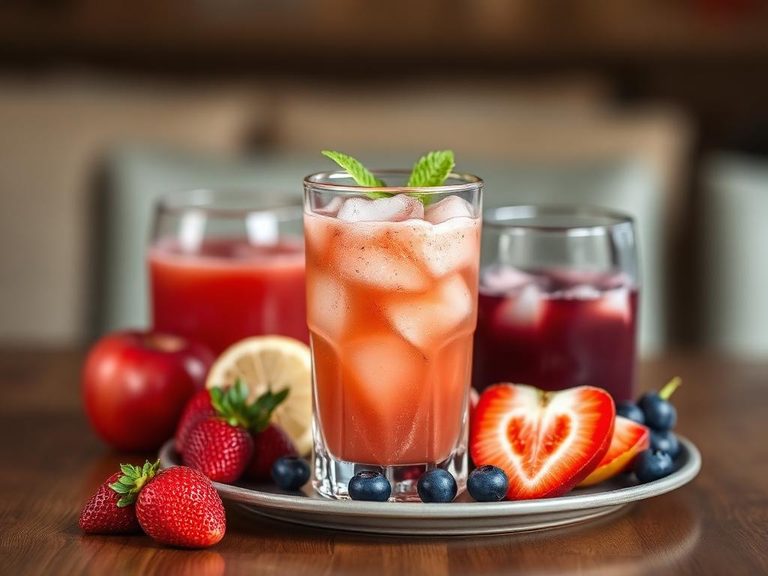
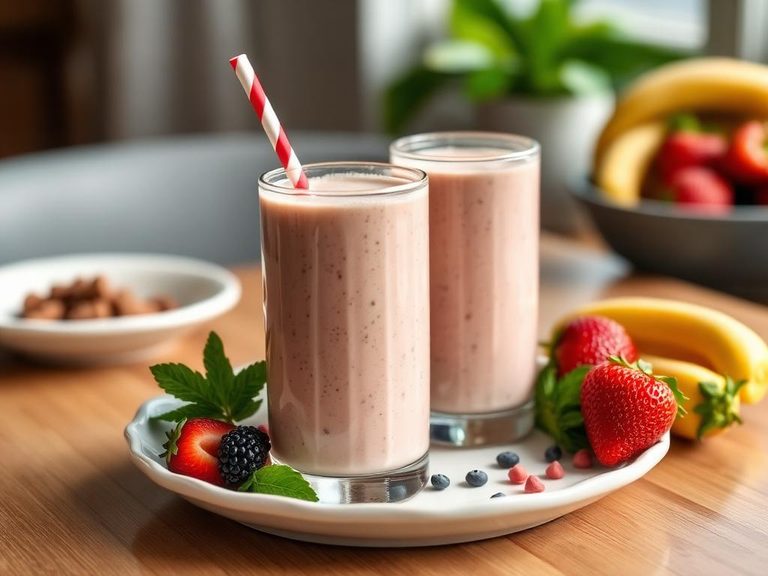
🌍 Where it's eaten
💡 Did you know?
The combination of orange and apricot in baby food is often chosen because apricots are naturally high in beta-carotene (a precursor to vitamin A), which is crucial for infant eye development, while oranges add a familiar, appealing citrus note.
Full nutrition (USDA data · scales with serving)
| Water | 87.8 g |
| Energy | 46.0 kcal |
| Energy | 192 kj |
| Protein | 0.80 g |
| Total lipid (fat) | 0.10 g |
| Ash | 0.40 g |
| Carbohydrate, by difference | 10.9 g |
| Fiber, total dietary | 0.10 g |
| Calcium, Ca | 6.0 mg |
| Iron, Fe | 0.38 mg |
| Magnesium, Mg | 7.0 mg |
| Phosphorus, P | 12.0 mg |
| Potassium, K | 199 mg |
| Sodium, Na | 6.0 mg |
| Zinc, Zn | 0.04 mg |
| Copper, Cu | 0.08 mg |
| Selenium, Se | 0.10 ug |
| Vitamin C, total ascorbic acid | 85.9 mg |
| Thiamin | 0.06 mg |
| Riboflavin | 0.03 mg |
| Niacin | 0.27 mg |
| Pantothenic acid | 0.10 mg |
| Vitamin B-6 | 0.06 mg |
| Folate, total | 20.0 ug |
| Folic acid | 0.00 ug |
| Folate, food | 20.0 ug |
| Folate, DFE | 20.0 ug |
| Vitamin B-12 | 0.00 ug |
| Vitamin B-12, added | 0.00 ug |
| Vitamin A, RAE | 11.0 ug |
| Retinol | 0.00 ug |
| Vitamin A, IU | 216 iu |
| Vitamin E (alpha-tocopherol) | 0.60 mg |
| Vitamin E, added | 0.00 mg |
| Alcohol, ethyl | 0.00 g |
Fat & fatty acid profile (per 100g)
| Fatty acids, total saturated | 0.01 g |
| SFA 4:0 | 0.00 g |
| SFA 6:0 | 0.00 g |
| SFA 8:0 | 0.00 g |
| SFA 10:0 | 0.00 g |
| SFA 12:0 | 0.00 g |
| SFA 14:0 | 0.00 g |
| SFA 16:0 | 0.01 g |
| SFA 18:0 | 0.00 g |
| Fatty acids, total monounsaturated | 0.02 g |
| MUFA 16:1 | 0.00 g |
| MUFA 18:1 | 0.02 g |
| MUFA 20:1 | 0.00 g |
| MUFA 22:1 | 0.00 g |
| Fatty acids, total polyunsaturated | 0.02 g |
| PUFA 18:2 | 0.02 g |
| PUFA 18:3 | 0.00 g |
| PUFA 18:4 | 0.00 g |
| PUFA 20:4 | 0.00 g |
| PUFA 20:5 n-3 (EPA) | 0.00 g |
| PUFA 22:5 n-3 (DPA) | 0.00 g |
| PUFA 22:6 n-3 (DHA) | 0.00 g |
| Cholesterol | 0.00 mg |
Amino acid profile (per 100g)
Estimated from Babyfood, grape juice, no sugar, canned — USDA does not publish this profile for Babyfood.
| Threonine | 0.02 g |
| Isoleucine | 0.01 g |
| Leucine | 0.02 g |
| Lysine | 0.02 g |
| Methionine | 0.03 g |
| Cystine | 0.01 g |
| Phenylalanine | 0.02 g |
| Tyrosine | 0.02 g |
| Valine | 0.02 g |
| Arginine | 0.06 g |
| Histidine | 0.03 g |
| Alanine | 0.04 g |
| Aspartic acid | 0.10 g |
| Glutamic acid | 0.18 g |
| Glycine | 0.03 g |
| Proline | 0.03 g |
| Serine | 0.04 g |
FAQ
Is this juice a good source of vitamins for my baby?
It provides vitamin C from oranges and some vitamin A precursors from apricots, but it's not a significant source of many other nutrients. It's best used as part of a varied diet that includes whole fruits and vegetables.
Can I dilute this juice with water?
Yes, diluting with water is a common practice to reduce the sugar concentration and introduce your baby to milder flavors. Start with a 50/50 mix and adjust based on your baby's preference.
At what age can I start giving this to my baby?
This is typically introduced around 6 months, when babies start solid foods. Always consult your pediatrician for personalized advice on introducing new foods.
Nutrient density (calculated · NRF9.3)
Nutrient Rich Foods index: beneficial nutrients (protein, fiber, vitamins, minerals) minus saturated fat, added sugar & sodium, per 100 kcal.
NRF9.3 index — Fulgoni, Keast & Drewnowski, 2009. Computed from USDA nutrients.
Weight-loss friendliness (composite index)
Energy density 0.46 kcal/g · 7% calories from protein · 0.1 g fiber · 0.0 g sugar per 100 g.
Composite of energy density (Rolls et al., 1999), protein & fiber satiety, minus sugar. A calculated heuristic — ranks satiety-per-calorie, not a clinical measure.
Dietary load (calculated from USDA values)
Potential renal acid load. Positive = acid-forming, negative = alkaline-forming.
Sodium-to-potassium ratio: 0.03 (lower is better — aim for ≤ 1)
Sodium:potassium per WHO potassium guidance. Computed from USDA nutrients.