

Sweet potato leaves, cooked, steamed, with salt
Whole food · Vegetables and Vegetable Products
Steamed sweet potato leaves are tender, vibrant green shoots with a mild, slightly earthy flavor and a delicate, silky texture. They are a low-calorie, nutrient-dense side dish, offering a good source of fiber and a surprising amount of protein for a leafy green. Their subtle taste makes them a versatile canvas for various seasonings, from simple salt to garlic and soy sauce.
Calorie split: 21% protein · 71% carbs · 7% fat
↓ Full nutrition💚 Why it's loved
People love sweet potato leaves for their tender, non-bitter taste and ability to absorb flavors like garlic, ginger, or oyster sauce. They are a beloved staple in many Asian cuisines, representing both comfort food and a connection to home-cooked, farm-to-table traditions.
⚠️ Watch-outs & how to enjoy it better
The leaves contain oxalates, which can contribute to kidney stones in susceptible individuals; to mitigate this, blanching the leaves before steaming or pairing them with calcium-rich foods can help. Their mild flavor can be perceived as bland without proper seasoning, and they may have a slightly slippery texture that some find unappealing.
Key benefits
- Rich in vitamin A and vitamin C, supporting immune function and vision.
- Good source of dietary fiber, aiding digestion and promoting satiety.
- Contains antioxidants like lutein and zeaxanthin, beneficial for eye health.
- Provides a notable amount of plant-based protein for a leafy vegetable.
- Low in calories and fat, making it an excellent addition to weight-management diets.
🍽️ Popular dishes
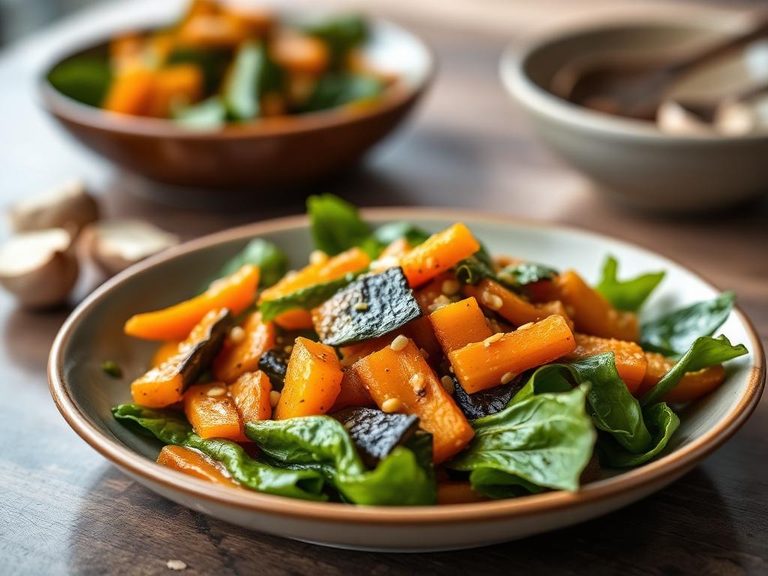
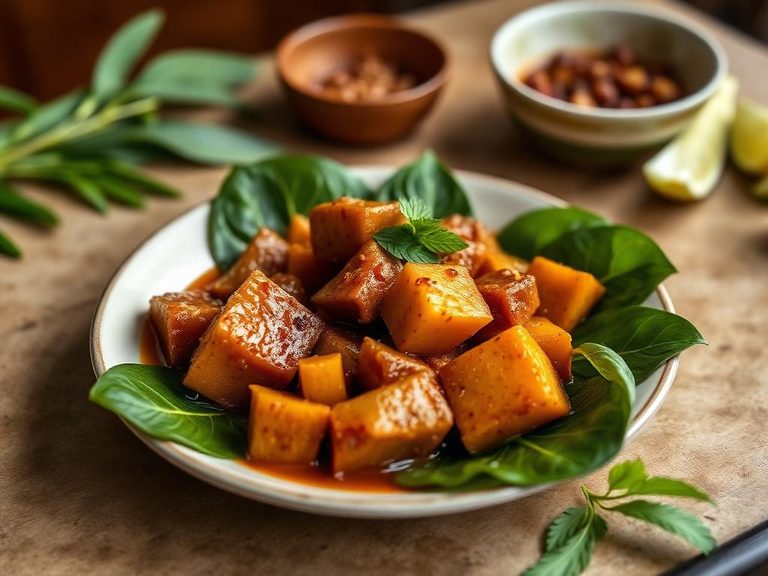
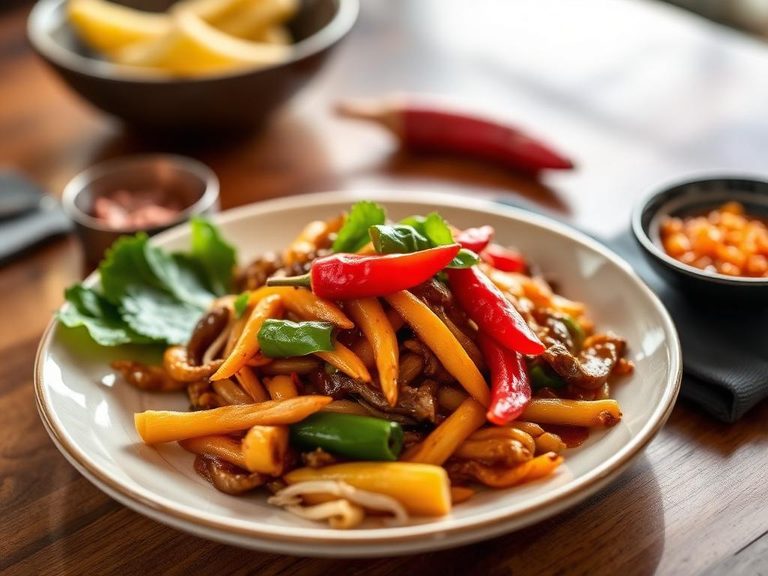
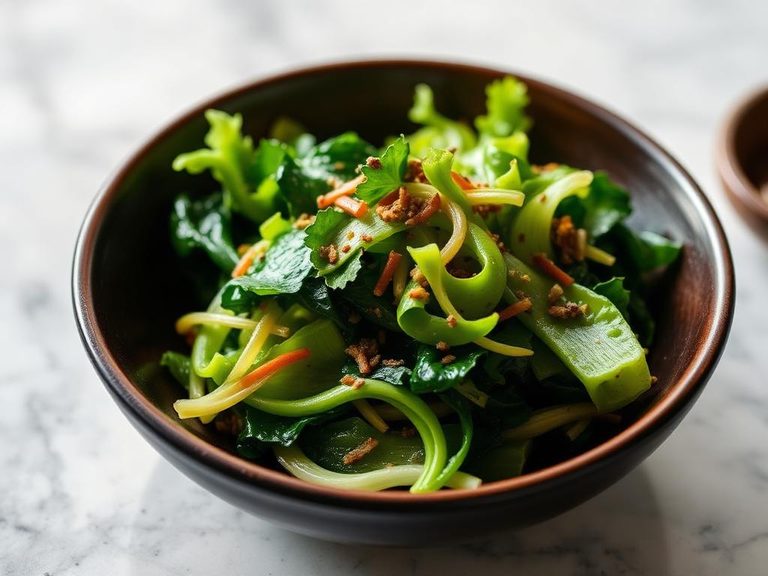
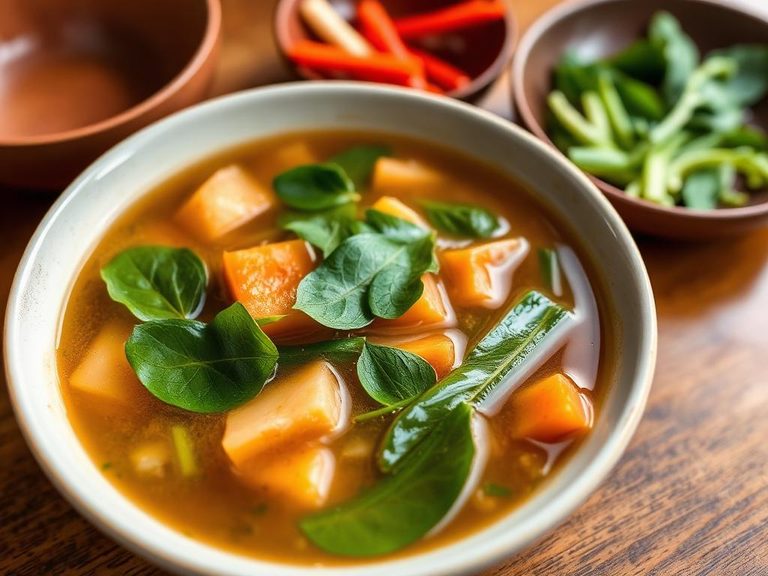
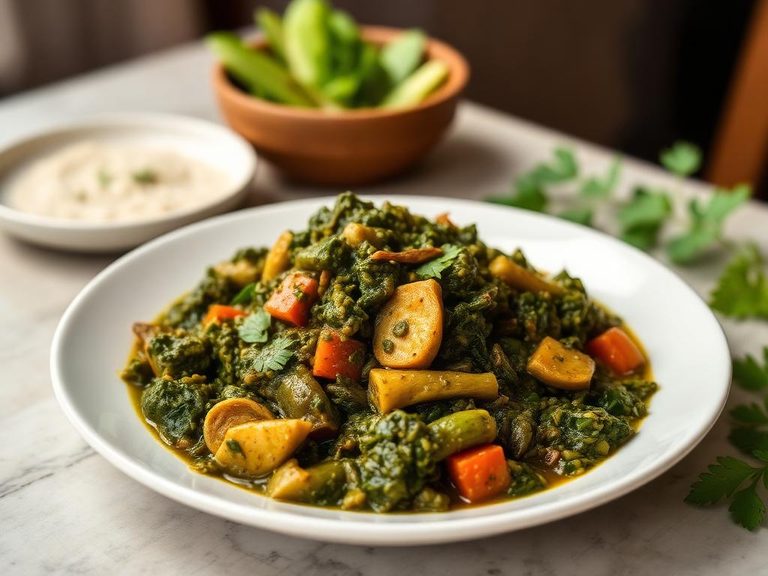
🌍 Where it's eaten
💡 Did you know?
Sweet potato leaves are one of the few leafy greens that are a significant source of protein, containing more protein per calorie than many other vegetables like spinach or kale.
Full nutrition (USDA data · scales with serving)
| Water | 89.2 g |
| Energy | 35.0 kcal |
| Energy | 144 kj |
| Protein | 2.2 g |
| Total lipid (fat) | 0.34 g |
| Ash | 0.89 g |
| Carbohydrate, by difference | 7.4 g |
| Fiber, total dietary | 1.9 g |
| Total Sugars | 5.5 g |
| Calcium, Ca | 33.0 mg |
| Iron, Fe | 0.63 mg |
| Magnesium, Mg | 48.0 mg |
| Phosphorus, P | 40.0 mg |
| Potassium, K | 312 mg |
| Sodium, Na | 249 mg |
| Zinc, Zn | 0.26 mg |
| Copper, Cu | 0.03 mg |
| Manganese, Mn | 0.23 mg |
| Selenium, Se | 0.90 ug |
| Vitamin C, total ascorbic acid | 1.5 mg |
| Thiamin | 0.11 mg |
| Riboflavin | 0.27 mg |
| Niacin | 1.0 mg |
| Pantothenic acid | 0.20 mg |
| Vitamin B-6 | 0.16 mg |
| Folate, total | 49.0 ug |
| Folic acid | 0.00 ug |
| Folate, food | 49.0 ug |
| Folate, DFE | 49.0 ug |
| Choline, total | 21.0 mg |
| Vitamin B-12 | 0.00 ug |
| Vitamin B-12, added | 0.00 ug |
| Vitamin A, RAE | 147 ug |
| Retinol | 0.00 ug |
| Carotene, beta | 1725 ug |
| Carotene, alpha | 33.0 ug |
| Cryptoxanthin, beta | 45.0 ug |
| Vitamin A, IU | 2939 iu |
| Lycopene | 0.00 ug |
| Lutein + zeaxanthin | 11449 ug |
| Vitamin E (alpha-tocopherol) | 0.96 mg |
| Vitamin E, added | 0.00 mg |
| Vitamin D (D2 + D3), International Units | 0.00 iu |
| Vitamin D (D2 + D3) | 0.00 ug |
| Vitamin K (phylloquinone) | 109 ug |
| Alcohol, ethyl | 0.00 g |
| Caffeine | 0.00 mg |
| Theobromine | 0.00 mg |
Fat & fatty acid profile (per 100g)
| Fatty acids, total saturated | 0.07 g |
| SFA 4:0 | 0.00 g |
| SFA 6:0 | 0.00 g |
| SFA 8:0 | 0.00 g |
| SFA 10:0 | 0.00 g |
| SFA 12:0 | 0.00 g |
| SFA 14:0 | 0.00 g |
| SFA 16:0 | 0.06 g |
| SFA 18:0 | 0.01 g |
| Fatty acids, total monounsaturated | 0.01 g |
| MUFA 16:1 | 0.00 g |
| MUFA 18:1 | 0.01 g |
| MUFA 20:1 | 0.00 g |
| MUFA 22:1 | 0.00 g |
| Fatty acids, total polyunsaturated | 0.13 g |
| PUFA 18:2 | 0.11 g |
| PUFA 18:3 | 0.02 g |
| PUFA 18:4 | 0.00 g |
| PUFA 20:4 | 0.00 g |
| PUFA 20:5 n-3 (EPA) | 0.00 g |
| PUFA 22:5 n-3 (DPA) | 0.00 g |
| PUFA 22:6 n-3 (DHA) | 0.00 g |
| Fatty acids, total trans | 0.00 g |
| Cholesterol | 0.00 mg |
Amino acid profile (per 100g)
| Tryptophan | 0.02 g |
| Lysine | 0.13 g |
| Methionine | 0.05 g |
| Cystine | 0.03 g |
FAQ
Are sweet potato leaves edible?
Yes, the leaves and stems of the sweet potato plant are edible and widely consumed in many parts of the world, particularly in Asia and Africa. They are distinct from the tuberous root and are prized for their nutritional value.
How do I prepare sweet potato leaves?
Wash the leaves thoroughly, then steam, stir-fry, or boil them. Steaming preserves nutrients best. They can be seasoned with garlic, soy sauce, ginger, or chili flakes. Remove tough stems if desired, but young stems are also tender and edible.
What do sweet potato leaves taste like?
They have a mild, slightly earthy flavor similar to spinach but with a hint of sweetness. The texture is tender and slightly slippery when cooked. Their taste is not overpowering, making them versatile for various dishes.
Nutrient density (calculated · NRF9.3)
Nutrient Rich Foods index: beneficial nutrients (protein, fiber, vitamins, minerals) minus saturated fat, added sugar & sodium, per 100 kcal.
NRF9.3 index — Fulgoni, Keast & Drewnowski, 2009. Computed from USDA nutrients.
Weight-loss friendliness (composite index)
Energy density 0.35 kcal/g · 25% calories from protein · 1.9 g fiber · 5.5 g sugar per 100 g.
Composite of energy density (Rolls et al., 1999), protein & fiber satiety, minus sugar. A calculated heuristic — ranks satiety-per-calorie, not a clinical measure.
Dietary load (calculated from USDA values)
Potential renal acid load. Positive = acid-forming, negative = alkaline-forming.
Sodium-to-potassium ratio: 0.80 (lower is better — aim for ≤ 1)
Sodium:potassium per WHO potassium guidance. Computed from USDA nutrients.