

Sweet potato, frozen, cooked, baked, without salt
Whole food · Vegetables and Vegetable Products

Photo: Wikipedia
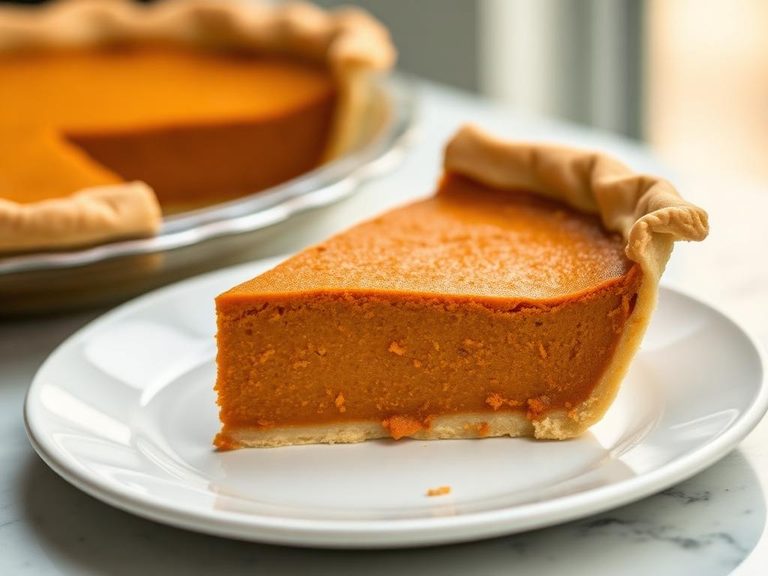
This is the humble sweet potato, transformed by freezing and baking into a soft, caramelized delight with a deep orange hue. Its texture is creamy and velvety, with a natural sweetness that intensifies upon cooking. Nutritionally, it's a powerhouse of complex carbs and fiber, delivering a steady energy boost with minimal fat.
Calorie split: 7% protein · 92% carbs · 1% fat
↓ Full nutrition💚 Why it's loved
People adore its comforting, naturally sweet flavor that requires little to no added sugar. Its versatility makes it a beloved staple, easily mashed, roasted, or added to both savory and sweet dishes across countless cultures.
⚠️ Watch-outs & how to enjoy it better
Its high carbohydrate content can cause blood sugar spikes if eaten in large portions alone. To counteract this, pair it with a source of protein (like grilled chicken or beans) or healthy fat (like avocado or a drizzle of olive oil) to slow sugar absorption. Also, be mindful of added sugars or syrups in pre-packaged versions.
Key benefits
- Excellent source of dietary fiber for digestive health.
- Rich in beta-carotene, which the body converts to vitamin A.
- Provides a good amount of complex carbohydrates for sustained energy.
- Low in fat and naturally cholesterol-free.
- Contains essential minerals like potassium and manganese.
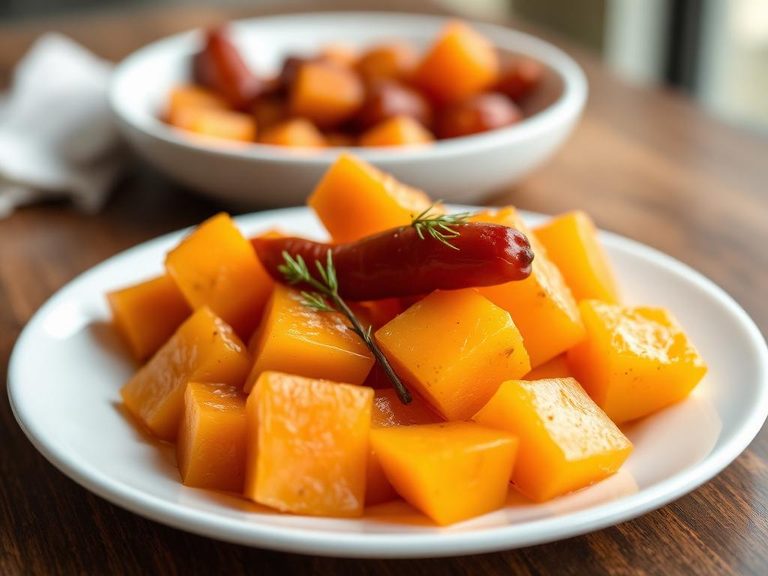
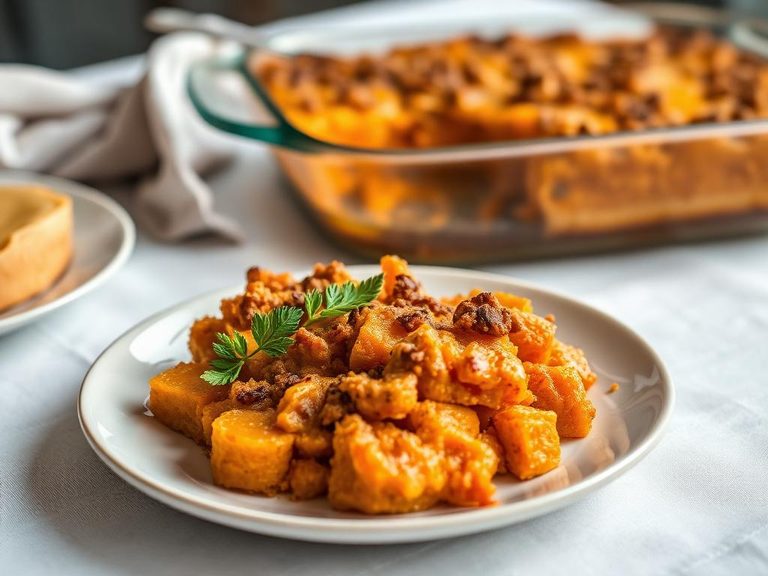
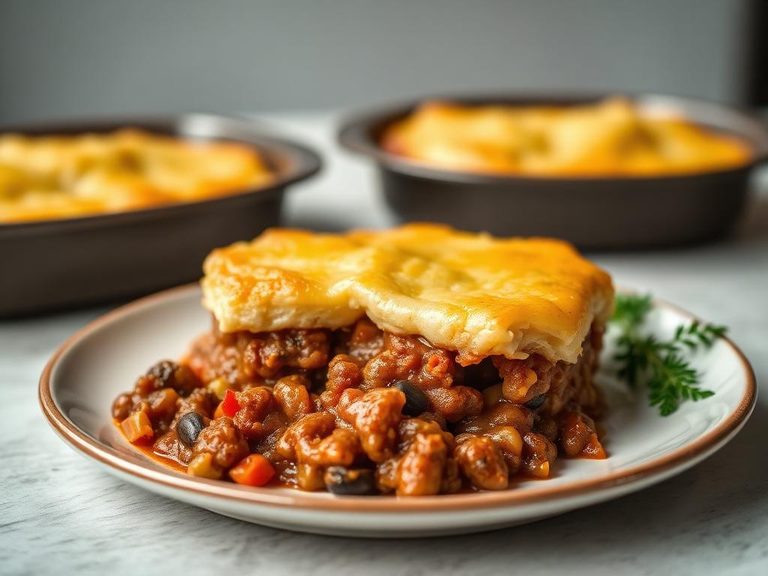
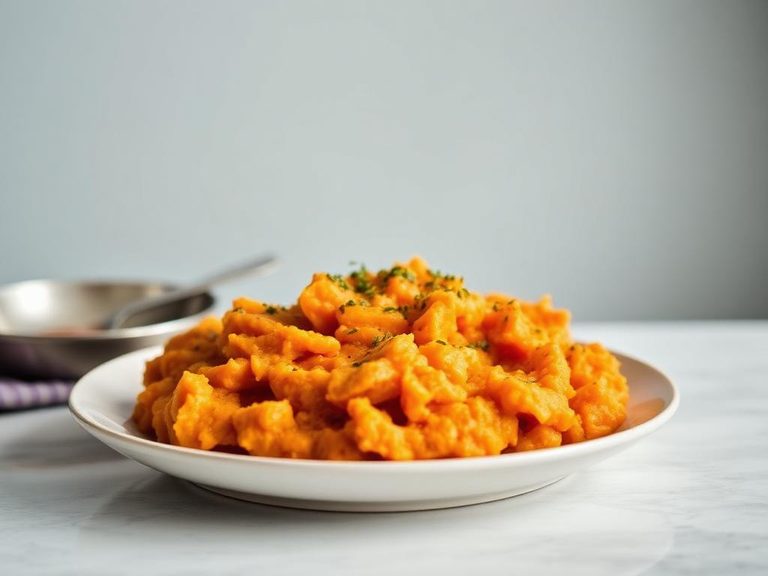
🍽️ Popular dishes

🌍 Where it's eaten
💡 Did you know?
The orange flesh color comes from beta-carotene, an antioxidant so potent that eating a lot of it can temporarily give your skin a slight orange tint, a harmless condition called carotenemia.
Full nutrition (USDA data · scales with serving)
| Water | 73.7 g |
| Energy | 100 kcal |
| Energy | 419 kj |
| Protein | 1.7 g |
| Total lipid (fat) | 0.12 g |
| Ash | 1.1 g |
| Carbohydrate, by difference | 23.4 g |
| Fiber, total dietary | 1.8 g |
| Total Sugars | 9.2 g |
| Calcium, Ca | 35.0 mg |
| Iron, Fe | 0.54 mg |
| Magnesium, Mg | 21.0 mg |
| Phosphorus, P | 44.0 mg |
| Potassium, K | 377 mg |
| Sodium, Na | 8.0 mg |
| Zinc, Zn | 0.30 mg |
| Copper, Cu | 0.18 mg |
| Manganese, Mn | 0.67 mg |
| Selenium, Se | 0.60 ug |
| Vitamin C, total ascorbic acid | 9.1 mg |
| Thiamin | 0.07 mg |
| Riboflavin | 0.06 mg |
| Niacin | 0.56 mg |
| Pantothenic acid | 0.56 mg |
| Vitamin B-6 | 0.19 mg |
| Folate, total | 22.0 ug |
| Folic acid | 0.00 ug |
| Folate, food | 22.0 ug |
| Folate, DFE | 22.0 ug |
| Vitamin B-12 | 0.00 ug |
| Vitamin A, RAE | 1043 ug |
| Retinol | 0.00 ug |
| Carotene, beta | 12498 ug |
| Carotene, alpha | 47.0 ug |
| Cryptoxanthin, beta | 0.00 ug |
| Vitamin A, IU | 20870 iu |
| Lycopene | 0.00 ug |
| Lutein + zeaxanthin | 0.00 ug |
| Vitamin E (alpha-tocopherol) | 0.77 mg |
| Vitamin D (D2 + D3), International Units | 0.00 iu |
| Vitamin D (D2 + D3) | 0.00 ug |
| Vitamin K (phylloquinone) | 2.5 ug |
| Alcohol, ethyl | 0.00 g |
| Caffeine | 0.00 mg |
| Theobromine | 0.00 mg |
Fat & fatty acid profile (per 100g)
| Fatty acids, total saturated | 0.03 g |
| SFA 16:0 | 0.02 g |
| SFA 18:0 | 0.00 g |
| Fatty acids, total monounsaturated | 0.01 g |
| MUFA 18:1 | 0.01 g |
| Fatty acids, total polyunsaturated | 0.05 g |
| PUFA 18:2 | 0.04 g |
| PUFA 18:3 | 0.01 g |
| Fatty acids, total trans | 0.00 g |
| Cholesterol | 0.00 mg |
Amino acid profile (per 100g)
| Tryptophan | 0.02 g |
| Threonine | 0.09 g |
| Isoleucine | 0.09 g |
| Leucine | 0.13 g |
| Lysine | 0.08 g |
| Methionine | 0.04 g |
| Cystine | 0.01 g |
| Phenylalanine | 0.10 g |
| Tyrosine | 0.07 g |
| Valine | 0.11 g |
| Arginine | 0.08 g |
| Histidine | 0.03 g |
| Alanine | 0.09 g |
| Aspartic acid | 0.29 g |
| Glutamic acid | 0.17 g |
| Glycine | 0.08 g |
| Proline | 0.07 g |
| Serine | 0.09 g |
FAQ
Is frozen baked sweet potato as nutritious as fresh?
Yes, the freezing process generally preserves the core nutrients like fiber, vitamins, and minerals very well. The baking step is what concentrates the natural sugars and flavor.
Why does it taste sweeter than a regular baked sweet potato?
The freezing process can break down some starches into simpler sugars, and the subsequent baking further caramelizes these sugars, enhancing the sweet flavor profile.
How can I use this in a savory dish?
Mash it with a little butter and herbs, use it as a base for a soup, or cube it and add to grain bowls. Its natural sweetness pairs wonderfully with savory spices like cinnamon, paprika, or rosemary.
Nutrient density (calculated · NRF9.3)
Nutrient Rich Foods index: beneficial nutrients (protein, fiber, vitamins, minerals) minus saturated fat, added sugar & sodium, per 100 kcal.
NRF9.3 index — Fulgoni, Keast & Drewnowski, 2009. Computed from USDA nutrients.
Weight-loss friendliness (composite index)
Energy density 1.00 kcal/g · 7% calories from protein · 1.8 g fiber · 9.2 g sugar per 100 g.
Composite of energy density (Rolls et al., 1999), protein & fiber satiety, minus sugar. A calculated heuristic — ranks satiety-per-calorie, not a clinical measure.
Dietary load (calculated from USDA values)
Potential renal acid load. Positive = acid-forming, negative = alkaline-forming.
Sodium-to-potassium ratio: 0.02 (lower is better — aim for ≤ 1)
Sodium:potassium per WHO potassium guidance. Computed from USDA nutrients.