

Squash, winter, acorn, cooked, boiled, mashed, without salt
Whole food · Vegetables and Vegetable Products

Photo: Wikipedia
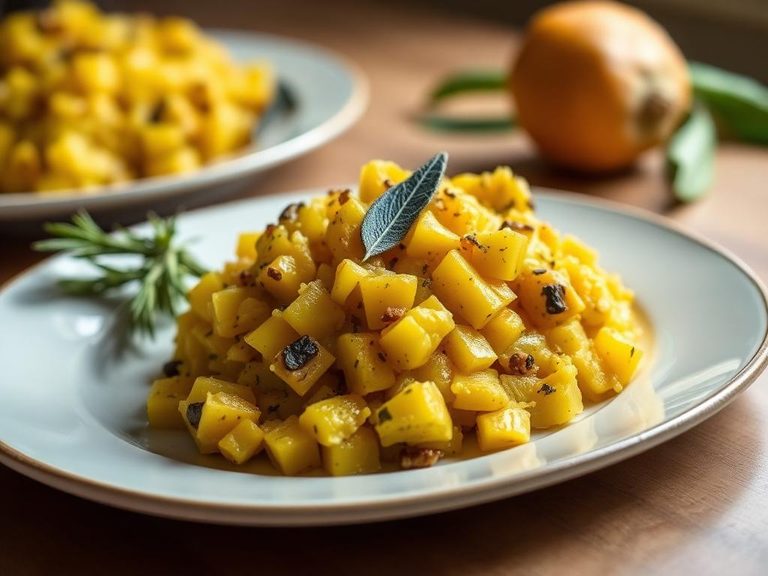
Mashed acorn squash is a velvety, subtly sweet winter squash with a nutty, earthy flavor and a texture that ranges from smooth and creamy to slightly fibrous, depending on preparation. Its vibrant orange flesh is a standout source of dietary fiber and complex carbohydrates, offering a satisfying, low-calorie base for both savory and sweet dishes. Nutritionally, it provides a notable boost of vitamin A and potassium while remaining virtually fat-free.
Calorie split: 7% protein · 91% carbs · 2% fat
↓ Full nutrition💚 Why it's loved
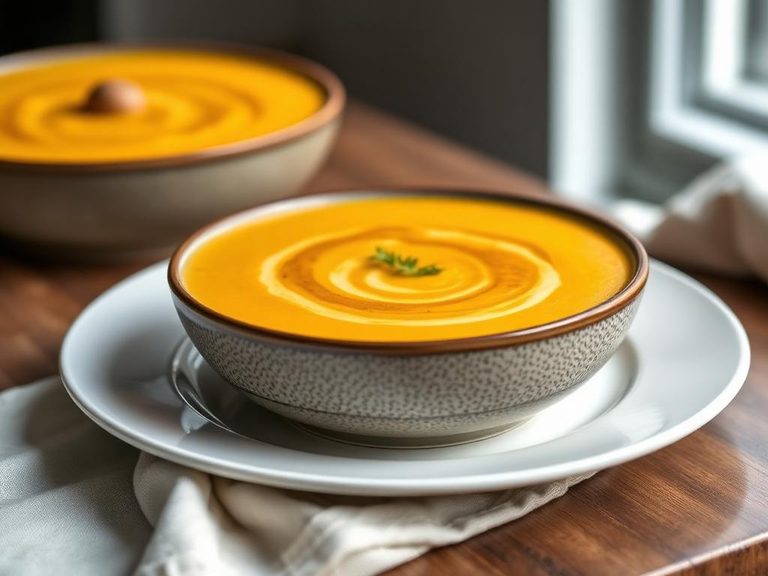
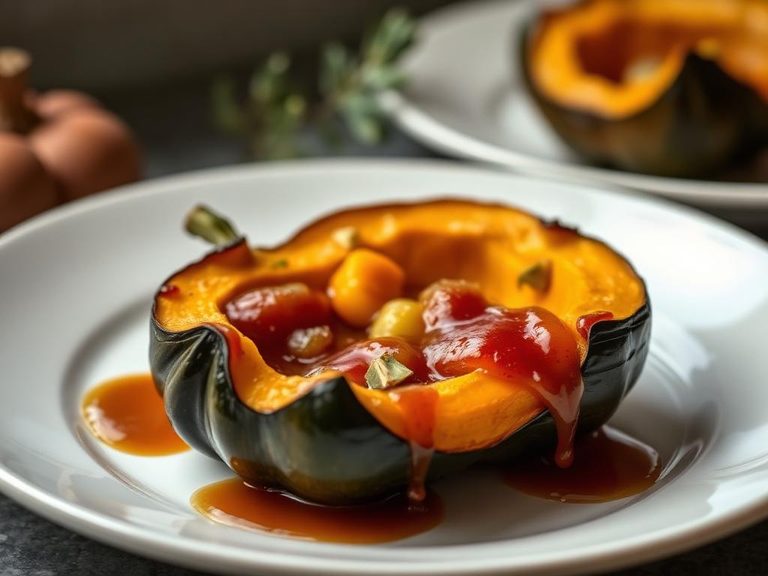
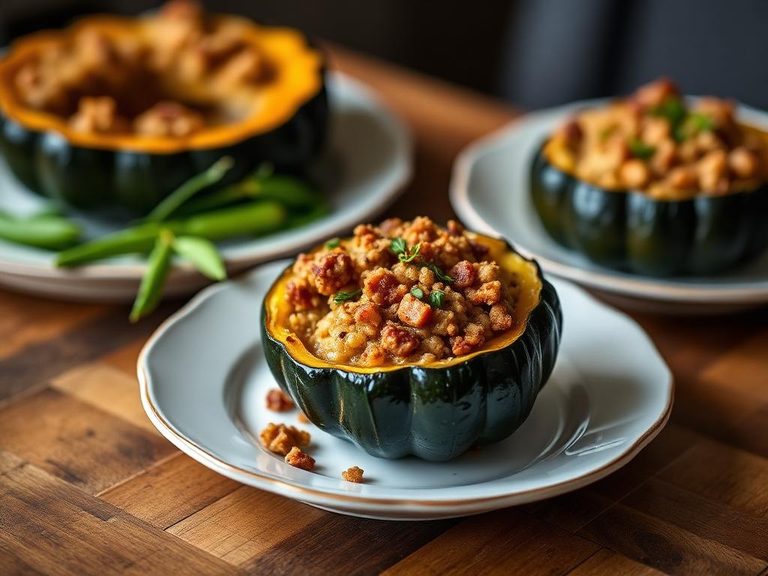
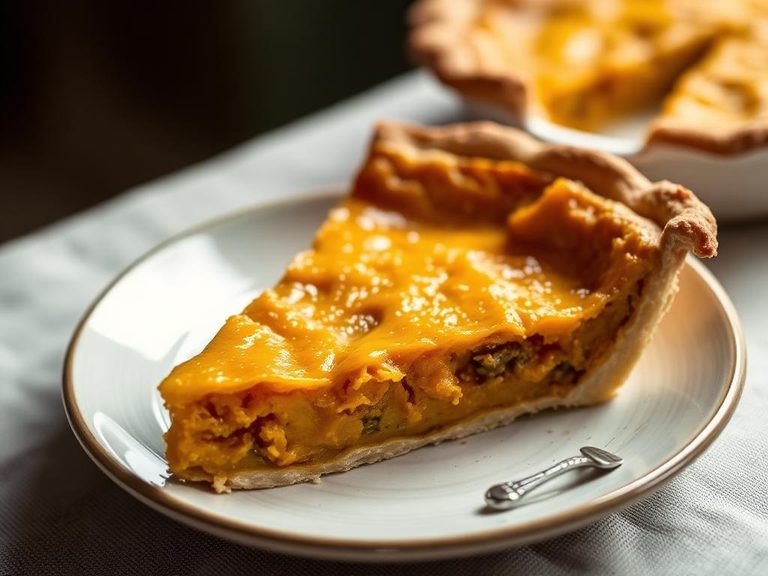
People adore its naturally sweet, buttery flavor that deepens with roasting, making it a beloved autumn and winter staple. Its versatility shines as it can be served simply with butter and herbs, or transformed into pies, soups, and casseroles, embodying comfort food across many cultures.
⚠️ Watch-outs & how to enjoy it better
Its high fiber and carbohydrate content can cause digestive discomfort or a notable blood sugar rise in sensitive individuals if consumed in large portions without balancing. To counteract this, pair it with a source of protein (like beans or poultry) or healthy fat (like olive oil or nuts) to slow glucose absorption and enhance satiety.
Key benefits
- Excellent source of vitamin A (beta-carotene) for eye and immune health
- High in soluble and insoluble dietary fiber, aiding digestion
- Very low in calories and fat, suitable for weight management
- Provides potassium, which supports healthy blood pressure
- Naturally gluten-free and free of common allergens
🍽️ Popular dishes
🌍 Where it's eaten
💡 Did you know?
Acorn squash was cultivated by Indigenous peoples of the Americas long before European contact, and its name comes from its shape resembling an acorn, not from any flavor relation to the nut.
Full nutrition (USDA data · scales with serving)
| Water | 89.7 g |
| Energy | 34.0 kcal |
| Energy | 141 kj |
| Protein | 0.67 g |
| Total lipid (fat) | 0.08 g |
| Ash | 0.76 g |
| Carbohydrate, by difference | 8.8 g |
| Fiber, total dietary | 2.6 g |
| Calcium, Ca | 26.0 mg |
| Iron, Fe | 0.56 mg |
| Magnesium, Mg | 26.0 mg |
| Phosphorus, P | 27.0 mg |
| Potassium, K | 263 mg |
| Sodium, Na | 3.0 mg |
| Zinc, Zn | 0.11 mg |
| Copper, Cu | 0.05 mg |
| Manganese, Mn | 0.15 mg |
| Selenium, Se | 0.40 ug |
| Vitamin C, total ascorbic acid | 6.5 mg |
| Thiamin | 0.10 mg |
| Riboflavin | 0.01 mg |
| Niacin | 0.53 mg |
| Pantothenic acid | 0.30 mg |
| Vitamin B-6 | 0.12 mg |
| Folate, total | 11.0 ug |
| Folic acid | 0.00 ug |
| Folate, food | 11.0 ug |
| Folate, DFE | 11.0 ug |
| Vitamin B-12 | 0.00 ug |
| Vitamin A, RAE | 41.0 ug |
| Retinol | 0.00 ug |
| Carotene, beta | 490 ug |
| Carotene, alpha | 0.00 ug |
| Cryptoxanthin, beta | 0.00 ug |
| Vitamin A, IU | 817 iu |
| Lycopene | 0.00 ug |
| Lutein + zeaxanthin | 66.0 ug |
| Vitamin D (D2 + D3), International Units | 0.00 iu |
| Vitamin D (D2 + D3) | 0.00 ug |
Fat & fatty acid profile (per 100g)
| Fatty acids, total saturated | 0.02 g |
| SFA 12:0 | 0.00 g |
| SFA 14:0 | 0.00 g |
| SFA 16:0 | 0.01 g |
| SFA 18:0 | 0.00 g |
| Fatty acids, total monounsaturated | 0.01 g |
| MUFA 16:1 | 0.00 g |
| MUFA 18:1 | 0.01 g |
| Fatty acids, total polyunsaturated | 0.04 g |
| PUFA 18:2 | 0.01 g |
| PUFA 18:3 | 0.02 g |
| Fatty acids, total trans | 0.00 g |
| Cholesterol | 0.00 mg |
Amino acid profile (per 100g)
| Tryptophan | 0.01 g |
| Threonine | 0.02 g |
| Isoleucine | 0.03 g |
| Leucine | 0.04 g |
| Lysine | 0.03 g |
| Methionine | 0.01 g |
| Cystine | 0.01 g |
| Phenylalanine | 0.03 g |
| Tyrosine | 0.02 g |
| Valine | 0.03 g |
| Arginine | 0.04 g |
| Histidine | 0.01 g |
| Alanine | 0.03 g |
| Aspartic acid | 0.07 g |
| Glutamic acid | 0.12 g |
| Glycine | 0.03 g |
| Proline | 0.02 g |
| Serine | 0.03 g |
FAQ
Is mashed acorn squash the same as pumpkin puree?
No, while both are winter squashes, acorn squash has a denser, slightly nuttier flavor and firmer texture compared to the smoother, sweeter pumpkin puree. They can often be used interchangeably in recipes, but the taste and texture will differ.
Can I freeze mashed acorn squash?
Yes, it freezes exceptionally well. Let it cool completely, then store in airtight containers or freezer bags for up to 3 months. Thaw in the refrigerator before reheating.
How do I reduce the wateriness when mashing?
Roasting the squash instead of boiling it caramelizes its natural sugars and reduces moisture, leading to a thicker, more flavorful mash. If you boil, drain it thoroughly and let it sit in the warm pot for a few minutes to allow excess steam to escape before mashing.
Nutrient density (calculated · NRF9.3)
Nutrient Rich Foods index: beneficial nutrients (protein, fiber, vitamins, minerals) minus saturated fat, added sugar & sodium, per 100 kcal.
NRF9.3 index — Fulgoni, Keast & Drewnowski, 2009. Computed from USDA nutrients.
Weight-loss friendliness (composite index)
Energy density 0.34 kcal/g · 8% calories from protein · 2.6 g fiber · 0.0 g sugar per 100 g.
Composite of energy density (Rolls et al., 1999), protein & fiber satiety, minus sugar. A calculated heuristic — ranks satiety-per-calorie, not a clinical measure.
Dietary load (calculated from USDA values)
Potential renal acid load. Positive = acid-forming, negative = alkaline-forming.
Sodium-to-potassium ratio: 0.01 (lower is better — aim for ≤ 1)
Sodium:potassium per WHO potassium guidance. Computed from USDA nutrients.