

Soybeans, mature seeds, raw
Whole food · Legumes and Legume Products

Photo: Wikipedia
Mature, raw soybeans are small, round, and creamy-yellow legumes with a firm, dense texture and a mild, beany flavor that transforms with cooking. They are a nutritional powerhouse, packing over 36 grams of complete protein and nearly 20 grams of healthy fats per 100 grams, rivaling many animal sources.
Calorie split: 33% protein · 27% carbs · 40% fat
↓ Full nutrition💚 Why it's loved
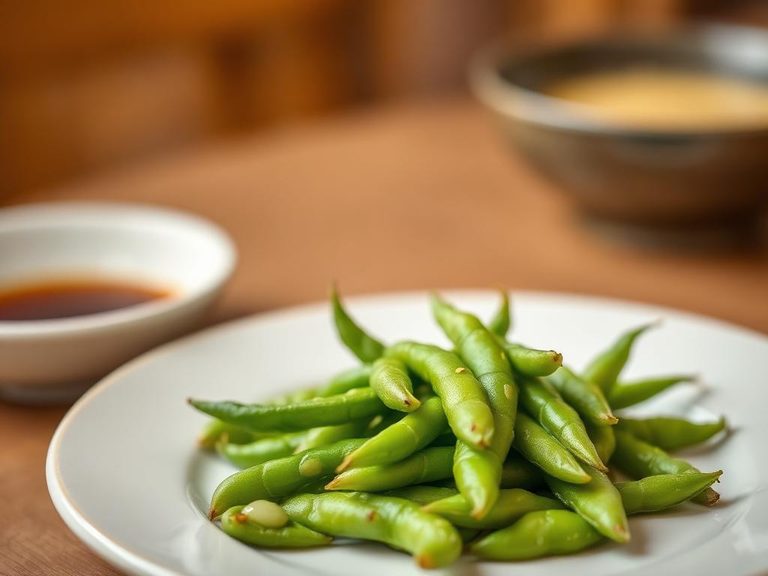
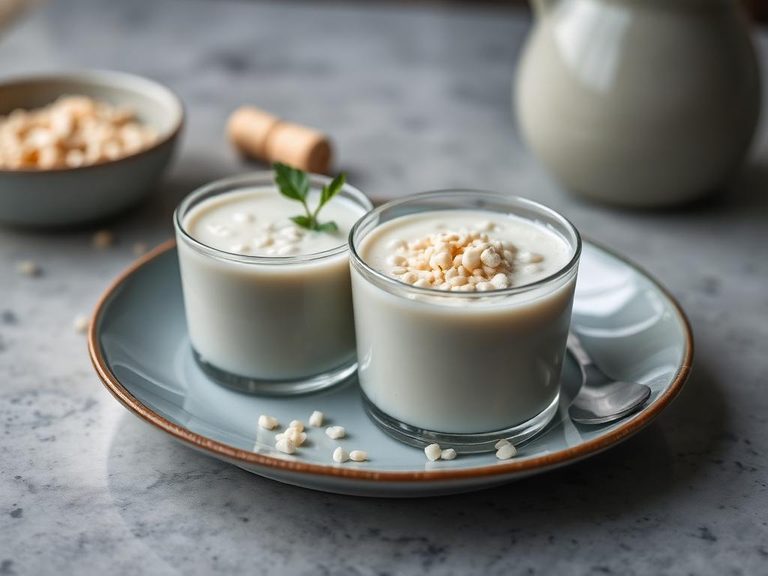
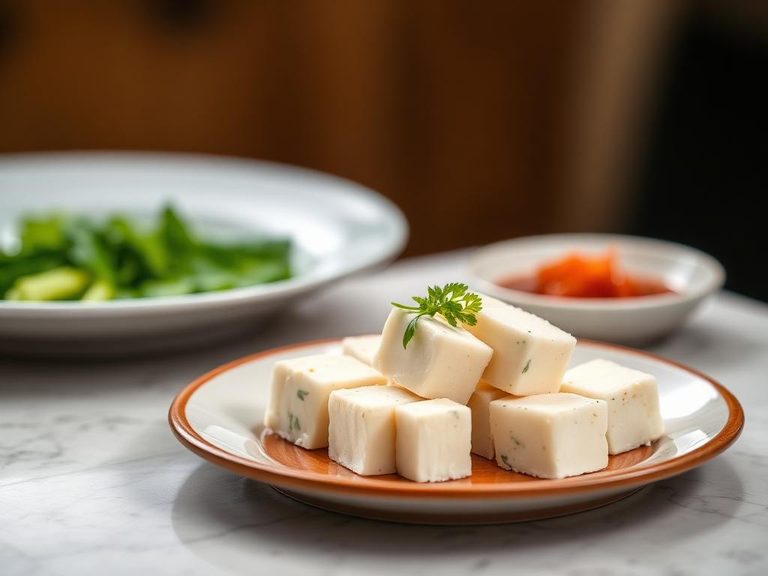
People love soybeans for their incredible versatility as a protein-rich canvas that absorbs flavors beautifully, forming the base of countless staples from tofu to soy milk. Their cultural significance in East and Southeast Asian cuisines, where they are a dietary cornerstone, adds deep culinary heritage.
⚠️ Watch-outs & how to enjoy it better
Raw soybeans contain antinutrients like trypsin inhibitors and phytic acid that can impair digestion and mineral absorption; they must be thoroughly cooked (boiled, roasted, or sprouted) to be safe and digestible. As a common allergen, they should be avoided by those with soy allergies, and individuals with thyroid conditions may want to monitor intake.
Key benefits
- Complete protein source with all essential amino acids.
- Rich in heart-healthy polyunsaturated and monounsaturated fats.
- Excellent source of dietary fiber (9.3g per 100g).
- Naturally cholesterol-free and low in saturated fat.
- Contains beneficial plant compounds like isoflavones.
🍽️ Popular dishes
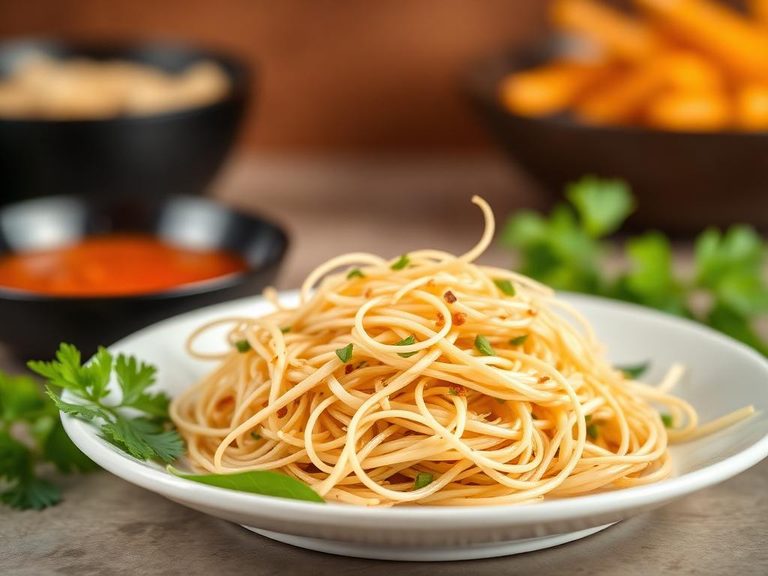
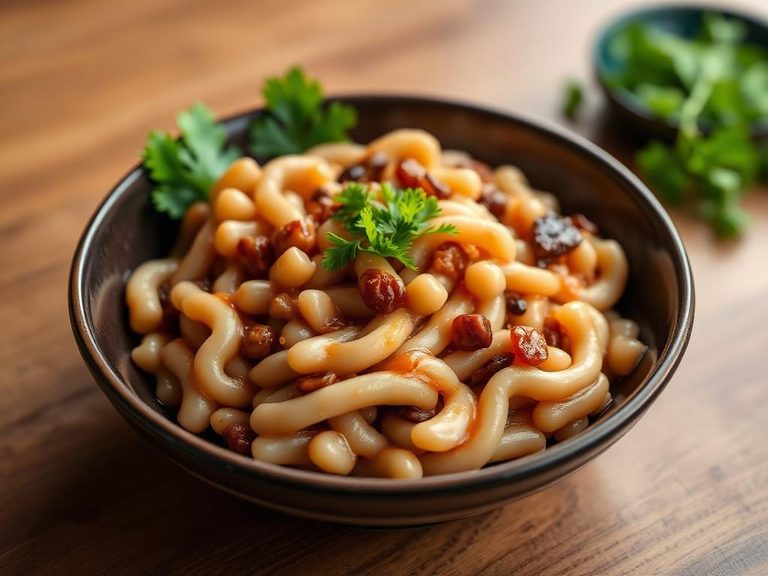
🌍 Where it's eaten
💡 Did you know?
The soybean is one of the few plant foods considered a 'complete protein,' meaning it contains all nine essential amino acids our bodies cannot make, a trait more commonly associated with meat.
Full nutrition (USDA data · scales with serving)
| Water | 8.5 g |
| Energy | 446 kcal |
| Energy | 1866 kj |
| Protein | 36.5 g |
| Total lipid (fat) | 19.9 g |
| Ash | 4.9 g |
| Carbohydrate, by difference | 30.2 g |
| Fiber, total dietary | 9.3 g |
| Total Sugars | 7.3 g |
| Calcium, Ca | 277 mg |
| Iron, Fe | 15.7 mg |
| Magnesium, Mg | 280 mg |
| Phosphorus, P | 704 mg |
| Potassium, K | 1797 mg |
| Sodium, Na | 2.0 mg |
| Zinc, Zn | 4.9 mg |
| Copper, Cu | 1.7 mg |
| Manganese, Mn | 2.5 mg |
| Selenium, Se | 17.8 ug |
| Vitamin C, total ascorbic acid | 6.0 mg |
| Thiamin | 0.87 mg |
| Riboflavin | 0.87 mg |
| Niacin | 1.6 mg |
| Pantothenic acid | 0.79 mg |
| Vitamin B-6 | 0.38 mg |
| Folate, total | 375 ug |
| Folic acid | 0.00 ug |
| Folate, food | 375 ug |
| Folate, DFE | 375 ug |
| Choline, total | 116 mg |
| Betaine | 2.1 mg |
| Vitamin B-12 | 0.00 ug |
| Vitamin A, RAE | 1.0 ug |
| Retinol | 0.00 ug |
| Carotene, beta | 13.0 ug |
| Carotene, alpha | 0.00 ug |
| Cryptoxanthin, beta | 0.00 ug |
| Vitamin A, IU | 22.0 iu |
| Lycopene | 0.00 ug |
| Lutein + zeaxanthin | 0.00 ug |
| Vitamin E (alpha-tocopherol) | 0.85 mg |
| Vitamin D (D2 + D3), International Units | 0.00 iu |
| Vitamin D (D2 + D3) | 0.00 ug |
| Vitamin K (phylloquinone) | 47.0 ug |
| Alcohol, ethyl | 0.00 g |
| Caffeine | 0.00 mg |
| Theobromine | 0.00 mg |
Fat & fatty acid profile (per 100g)
| Fatty acids, total saturated | 2.9 g |
| SFA 14:0 | 0.06 g |
| SFA 16:0 | 2.1 g |
| SFA 18:0 | 0.71 g |
| Fatty acids, total monounsaturated | 4.4 g |
| MUFA 16:1 | 0.06 g |
| MUFA 18:1 | 4.3 g |
| Fatty acids, total polyunsaturated | 11.3 g |
| PUFA 18:2 | 9.9 g |
| PUFA 18:3 | 1.3 g |
| Fatty acids, total trans | 0.00 g |
| Cholesterol | 0.00 mg |
| Phytosterols | 161 mg |
Amino acid profile (per 100g)
| Tryptophan | 0.59 g |
| Threonine | 1.8 g |
| Isoleucine | 2.0 g |
| Leucine | 3.3 g |
| Lysine | 2.7 g |
| Methionine | 0.55 g |
| Cystine | 0.66 g |
| Phenylalanine | 2.1 g |
| Tyrosine | 1.5 g |
| Valine | 2.0 g |
| Arginine | 3.2 g |
| Histidine | 1.1 g |
| Alanine | 1.9 g |
| Aspartic acid | 5.1 g |
| Glutamic acid | 7.9 g |
| Glycine | 1.9 g |
| Proline | 2.4 g |
| Serine | 2.4 g |
FAQ
Can I eat mature soybeans raw?
No, they must be cooked thoroughly. Raw soybeans contain trypsin inhibitors and other compounds that can cause digestive distress and reduce nutrient absorption. Cooking, boiling, or fermenting neutralizes these.
How do I prepare dried soybeans for cooking?
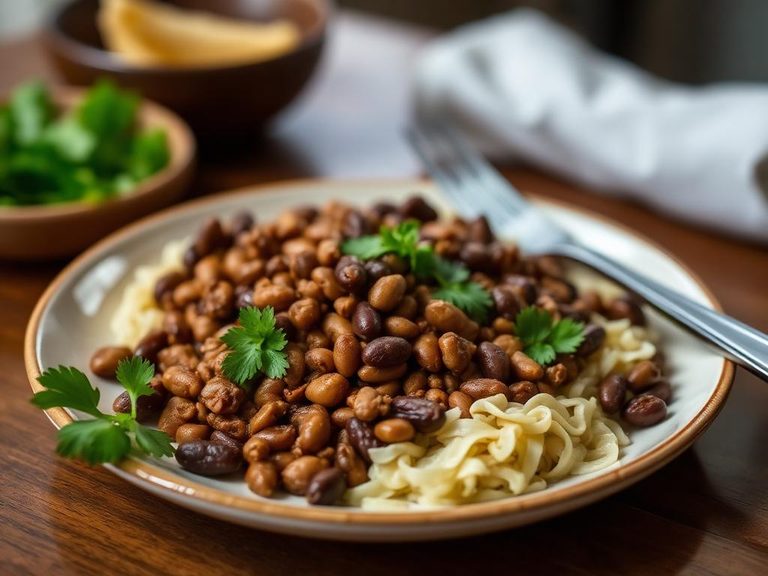
Soak them in plenty of water for 8-12 hours (or overnight), then drain and rinse. The beans will triple in size. After soaking, boil them in fresh water for 1-3 hours until tender, depending on the desired use.
What's the difference between mature and immature soybeans?
Immature soybeans (edamame) are harvested green, are softer, sweeter, and eaten as a vegetable. Mature soybeans are dried, hard, and used to make products like tofu, soy milk, and tempeh, or cooked as a hearty bean.
Nutrient density (calculated · NRF9.3)
Nutrient Rich Foods index: beneficial nutrients (protein, fiber, vitamins, minerals) minus saturated fat, added sugar & sodium, per 100 kcal.
NRF9.3 index — Fulgoni, Keast & Drewnowski, 2009. Computed from USDA nutrients.
Weight-loss friendliness (composite index)
Energy density 4.46 kcal/g · 33% calories from protein · 9.3 g fiber · 7.3 g sugar per 100 g.
Composite of energy density (Rolls et al., 1999), protein & fiber satiety, minus sugar. A calculated heuristic — ranks satiety-per-calorie, not a clinical measure.
Dietary load (calculated from USDA values)
Potential renal acid load. Positive = acid-forming, negative = alkaline-forming.
Sodium-to-potassium ratio: 0.00 (lower is better — aim for ≤ 1)
Sodium:potassium per WHO potassium guidance. Computed from USDA nutrients.