

Salami, Italian, pork
Whole food · Sausages and Luncheon Meats

Photo: Wikipedia
Italian salami is a dry-cured sausage made from finely chopped pork and pork fat, seasoned with salt, garlic, and often wine or spices like fennel. It has a firm, sliceable texture with a rich, savory, and slightly tangy flavor profile, often with a pleasant funk from fermentation. Nutritionally, it is a dense source of protein and fat, with virtually no carbohydrates.
Calorie split: 20% protein · 1% carbs · 78% fat
↓ Full nutrition💚 Why it's loved
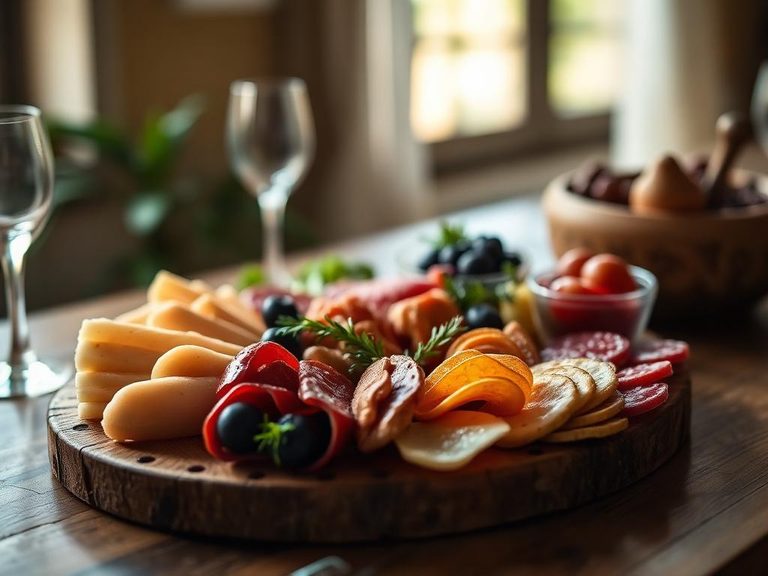
People love it for its intense, concentrated umami flavor and satisfying, chewy texture that elevates simple dishes. It's a cornerstone of Italian antipasto and a globally recognized symbol of charcuterie craftsmanship.
⚠️ Watch-outs & how to enjoy it better
Its high sodium and saturated fat content means it should be enjoyed in moderation, especially by those monitoring blood pressure or heart health. To balance it, pair it with fiber-rich foods like a leafy salad or whole-grain crackers, and practice strict portion control.
Key benefits
- High in complete protein for muscle maintenance.
- Provides essential B vitamins, especially B12.
- Contains minerals like zinc and selenium.
- Low-carb, suitable for ketogenic diets.
- Shelf-stable due to curing process.
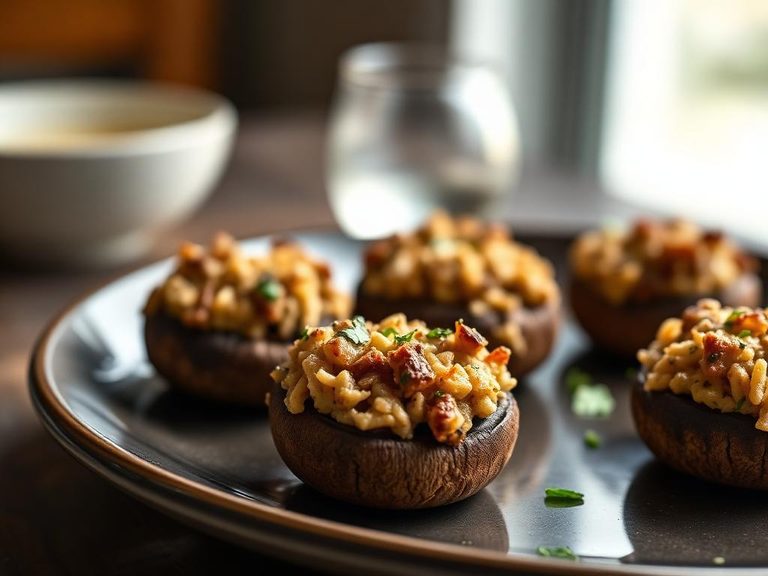
🍽️ Popular dishes
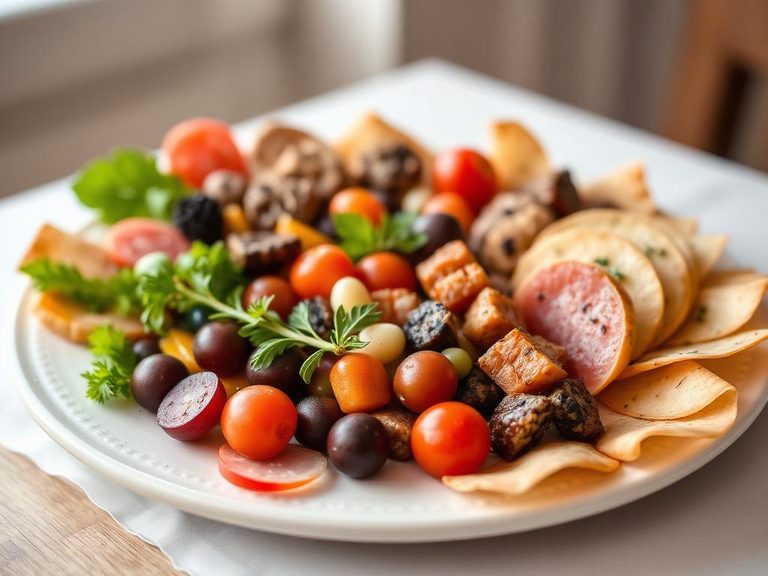
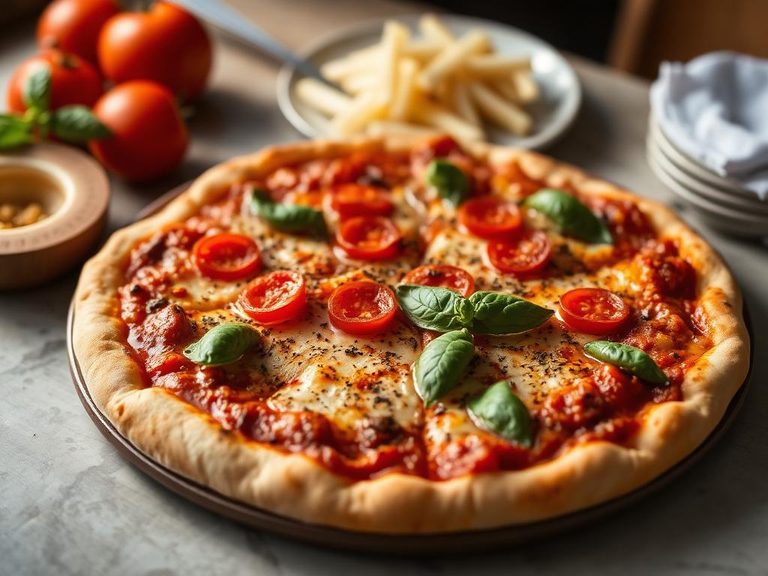
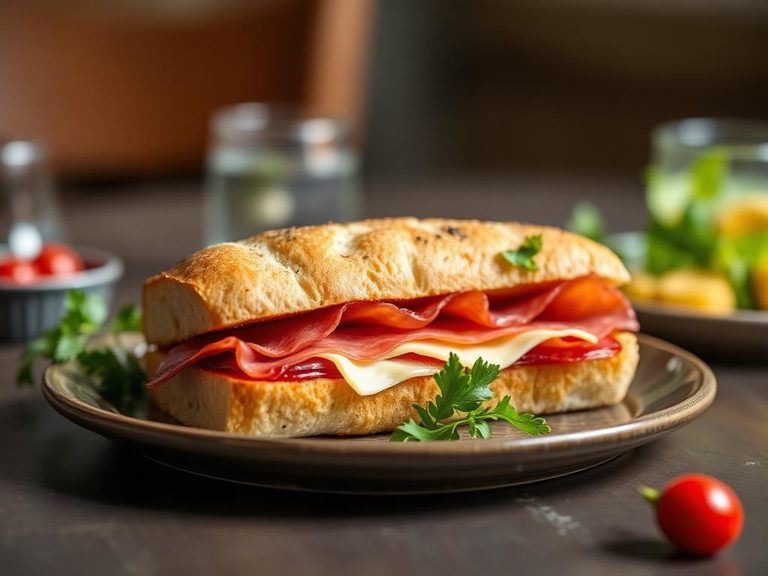
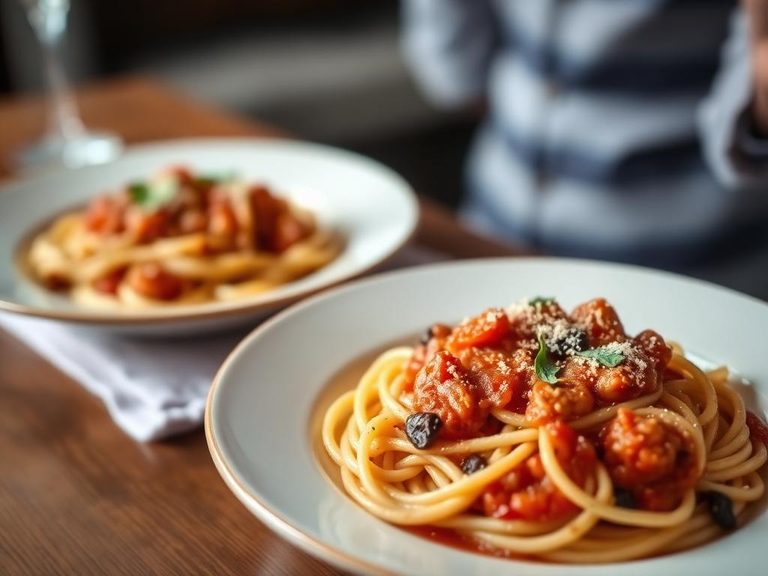
🌍 Where it's eaten
💡 Did you know?
The name 'salami' comes from the Latin word 'salumen,' meaning a combination of salt and meat, highlighting the ancient preservation method of salt-curing.
Full nutrition (USDA data · scales with serving)
| Water | 34.6 g |
| Energy | 425 kcal |
| Energy | 1777 kj |
| Protein | 21.7 g |
| Total lipid (fat) | 37.0 g |
| Ash | 5.5 g |
| Carbohydrate, by difference | 1.2 g |
| Fiber, total dietary | 0.00 g |
| Total Sugars | 1.2 g |
| Calcium, Ca | 10.0 mg |
| Iron, Fe | 1.5 mg |
| Magnesium, Mg | 22.0 mg |
| Phosphorus, P | 229 mg |
| Potassium, K | 340 mg |
| Sodium, Na | 1890 mg |
| Zinc, Zn | 4.2 mg |
| Copper, Cu | 0.16 mg |
| Manganese, Mn | 0.07 mg |
| Selenium, Se | 25.4 ug |
| Fluoride, F | 41.2 ug |
| Vitamin C, total ascorbic acid | 0.00 mg |
| Thiamin | 0.93 mg |
| Riboflavin | 0.33 mg |
| Niacin | 5.6 mg |
| Pantothenic acid | 1.1 mg |
| Vitamin B-6 | 0.55 mg |
| Folate, total | 2.0 ug |
| Folic acid | 0.00 ug |
| Folate, food | 2.0 ug |
| Folate, DFE | 2.0 ug |
| Vitamin B-12 | 2.8 ug |
| Vitamin A, RAE | 0.00 ug |
| Retinol | 0.00 ug |
| Carotene, beta | 0.00 ug |
| Carotene, alpha | 0.00 ug |
| Cryptoxanthin, beta | 0.00 ug |
| Vitamin A, IU | 0.00 iu |
| Lycopene | 0.00 ug |
| Lutein + zeaxanthin | 0.00 ug |
| Alcohol, ethyl | 0.00 g |
| Caffeine | 0.00 mg |
| Theobromine | 0.00 mg |
Fat & fatty acid profile (per 100g)
| Fatty acids, total saturated | 13.1 g |
| SFA 4:0 | 0.00 g |
| SFA 6:0 | 0.00 g |
| SFA 8:0 | 0.00 g |
| SFA 10:0 | 0.00 g |
| SFA 12:0 | 0.00 g |
| SFA 14:0 | 0.52 g |
| SFA 16:0 | 7.6 g |
| SFA 18:0 | 3.6 g |
| Fatty acids, total monounsaturated | 18.2 g |
| Fatty acids, total polyunsaturated | 3.6 g |
| Cholesterol | 80.0 mg |
| Phytosterols | 0.00 mg |
Amino acid profile (per 100g)
| Tryptophan | 0.25 g |
| Threonine | 1.0 g |
| Isoleucine | 1.1 g |
| Leucine | 1.6 g |
| Lysine | 1.9 g |
| Methionine | 0.47 g |
| Cystine | 0.29 g |
| Phenylalanine | 0.94 g |
| Tyrosine | 0.69 g |
| Valine | 1.1 g |
| Arginine | 1.4 g |
| Histidine | 0.61 g |
| Alanine | 1.3 g |
| Aspartic acid | 2.1 g |
| Glutamic acid | 3.8 g |
| Glycine | 1.6 g |
| Proline | 1.3 g |
| Serine | 0.90 g |
FAQ
Is the white stuff on salami mold?
Yes, the white coating is a beneficial, edible mold (often Penicillium) that develops during curing. It helps preserve the meat, adds flavor, and is completely safe to eat.
How should I store opened salami?
Wrap the cut end tightly in plastic wrap or place it in an airtight container in the refrigerator. It will keep for 1-2 weeks. For longer storage, you can freeze it for up to 2 months.
What's the difference between Genoa and Sopressata salami?
Genoa salami is typically made with pork and sometimes beef, seasoned with garlic and red wine, giving it a milder flavor. Sopressata is often coarser, spicier (from chili peppers), and may include black peppercorns, with a more robust, peppery taste.
Nutrient density (calculated · NRF9.3)
Nutrient Rich Foods index: beneficial nutrients (protein, fiber, vitamins, minerals) minus saturated fat, added sugar & sodium, per 100 kcal.
NRF9.3 index — Fulgoni, Keast & Drewnowski, 2009. Computed from USDA nutrients.
Weight-loss friendliness (composite index)
Energy density 4.25 kcal/g · 20% calories from protein · 0.0 g fiber · 1.2 g sugar per 100 g.
Composite of energy density (Rolls et al., 1999), protein & fiber satiety, minus sugar. A calculated heuristic — ranks satiety-per-calorie, not a clinical measure.
Dietary load (calculated from USDA values)
Potential renal acid load. Positive = acid-forming, negative = alkaline-forming.
Sodium-to-potassium ratio: 5.56 (lower is better — aim for ≤ 1)
Sodium:potassium per WHO potassium guidance. Computed from USDA nutrients.