

Salad dressing, french, home recipe
Whole food · Fats and Oils

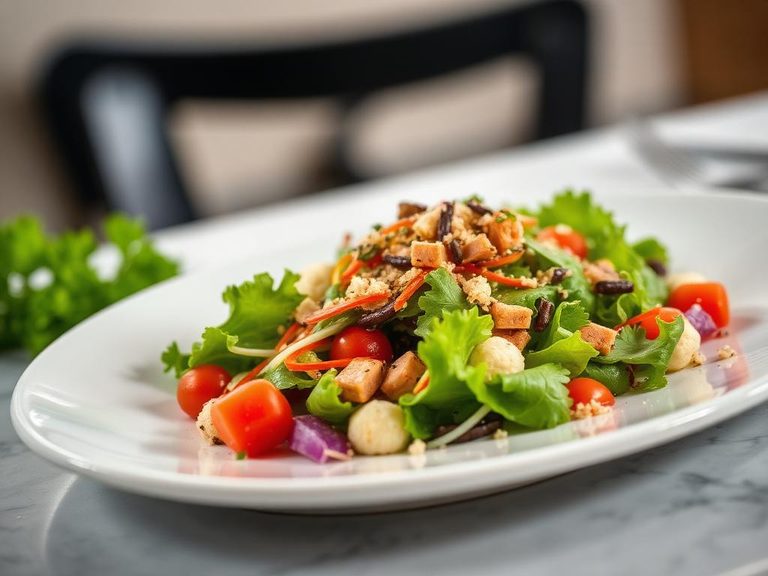
Photo: Wikipedia
This is a rich, creamy, and tangy emulsion, typically a vibrant orange-red, that clings luxuriously to greens. Its flavor profile is a bold balance of sweet, savory, and acidic notes from vinegar, tomato, and spices. Nutritionally, it is almost pure fat, delivering a significant calorie density with negligible protein or carbohydrates.
Calorie split: 0% protein · 2% carbs · 98% fat
↓ Full nutrition💚 Why it's loved
People adore its iconic, nostalgic flavor that instantly transforms a simple salad into a more indulgent meal. Its thick, clingy texture ensures every bite of lettuce is fully coated in its savory, slightly sweet punch.
⚠️ Watch-outs & how to enjoy it better
Its extremely high fat and calorie content can be a concern for those monitoring energy intake. The sodium and added sugars can also be significant. To counteract, use it sparingly as a flavor accent rather than a blanket dressing, or dilute it with a splash of vinegar or lemon juice. Pairing it with a large portion of leafy greens helps add volume and fiber.
Key benefits
- Provides a concentrated source of dietary fat for energy and satiety.
- Enhances the palatability and consumption of raw vegetables.
- Contains fat-soluble vitamins (like Vitamin K) from its base oil.
- Acts as a flavor vehicle for herbs and spices like paprika and onion.
🍽️ Popular dishes
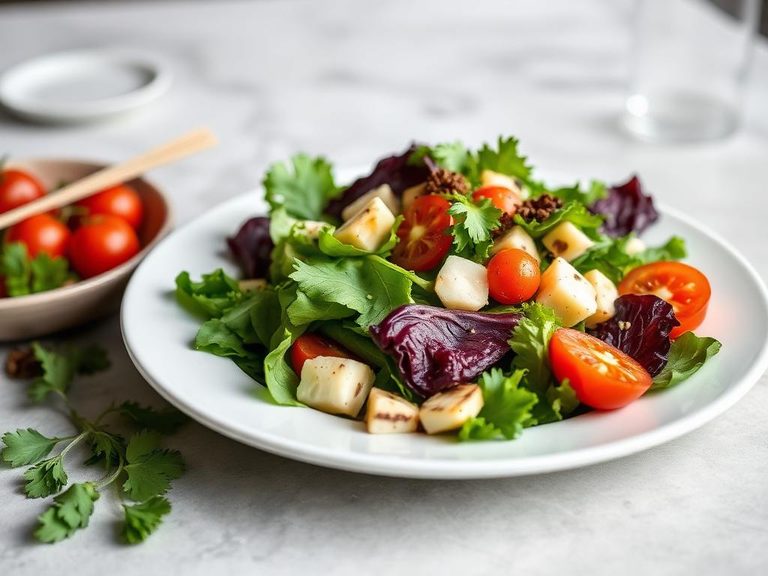
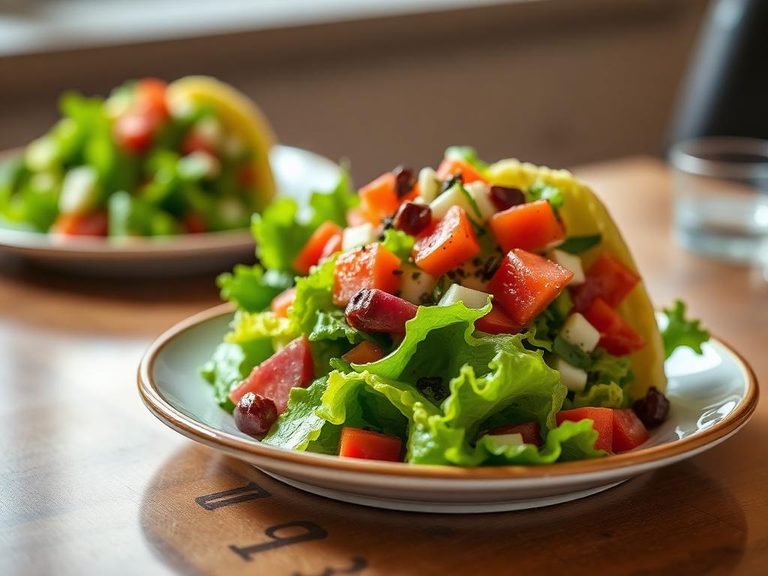
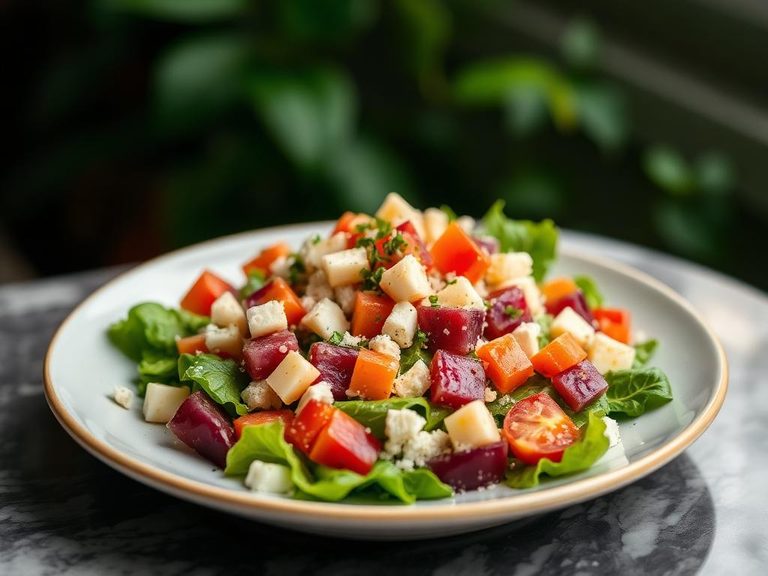
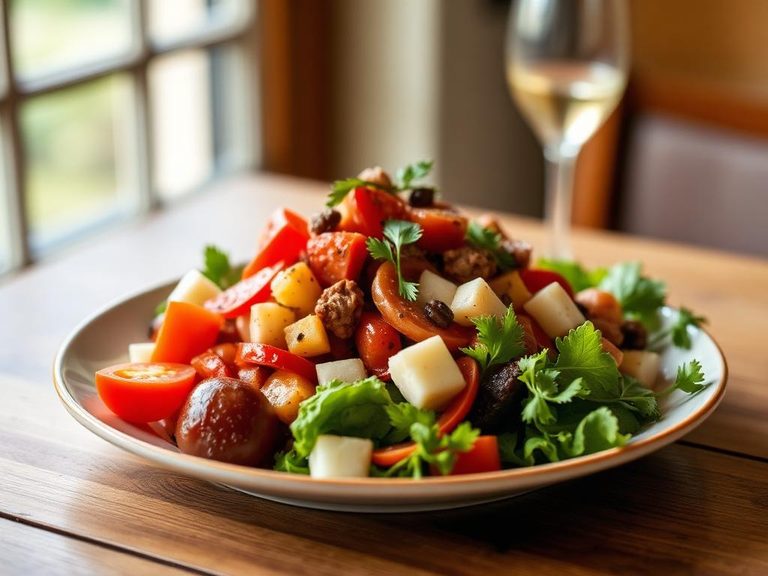
🌍 Where it's eaten
💡 Did you know?
Despite its name, French dressing as known in the United States is largely an American invention, distinct from the vinaigrette-style dressing common in France.
Full nutrition (USDA data · scales with serving)
| Water | 24.2 g |
| Energy | 631 kcal |
| Energy | 2640 kj |
| Protein | 0.10 g |
| Total lipid (fat) | 70.2 g |
| Ash | 1.8 g |
| Carbohydrate, by difference | 3.4 g |
| Fiber, total dietary | 0.00 g |
| Calcium, Ca | 6.0 mg |
| Iron, Fe | 0.20 mg |
| Magnesium, Mg | 0.00 mg |
| Phosphorus, P | 3.0 mg |
| Potassium, K | 24.0 mg |
| Sodium, Na | 658 mg |
| Zinc, Zn | 0.00 mg |
| Selenium, Se | 1.6 ug |
| Vitamin C, total ascorbic acid | 0.60 mg |
| Thiamin | 0.01 mg |
| Riboflavin | 0.02 mg |
| Niacin | 0.13 mg |
| Pantothenic acid | 0.00 mg |
| Vitamin B-6 | 0.00 mg |
| Folate, total | 0.00 ug |
| Folic acid | 0.00 ug |
| Folate, food | 0.00 ug |
| Folate, DFE | 0.00 ug |
| Vitamin B-12 | 0.00 ug |
| Vitamin A, RAE | 26.0 ug |
| Retinol | 0.00 ug |
| Vitamin A, IU | 514 iu |
| Vitamin E (alpha-tocopherol) | 8.0 mg |
Fat & fatty acid profile (per 100g)
| Fatty acids, total saturated | 12.6 g |
| SFA 4:0 | 0.00 g |
| SFA 6:0 | 0.00 g |
| SFA 8:0 | 0.00 g |
| SFA 10:0 | 0.00 g |
| SFA 12:0 | 0.00 g |
| SFA 14:0 | 0.20 g |
| SFA 16:0 | 9.8 g |
| SFA 18:0 | 2.6 g |
| Fatty acids, total monounsaturated | 20.7 g |
| MUFA 16:1 | 0.20 g |
| MUFA 18:1 | 20.5 g |
| MUFA 20:1 | 0.00 g |
| MUFA 22:1 | 0.00 g |
| Fatty acids, total polyunsaturated | 33.7 g |
| PUFA 18:2 | 31.7 g |
| PUFA 18:3 | 1.9 g |
| PUFA 18:4 | 0.00 g |
| PUFA 20:4 | 0.00 g |
| PUFA 22:5 n-3 (DPA) | 0.00 g |
| PUFA 22:6 n-3 (DHA) | 0.00 g |
| Cholesterol | 0.00 mg |
| Phytosterols | 176 mg |
Amino acid profile (per 100g)
| Tryptophan | 0.00 g |
| Threonine | 0.00 g |
| Isoleucine | 0.00 g |
| Leucine | 0.00 g |
| Lysine | 0.00 g |
| Methionine | 0.00 g |
| Cystine | 0.00 g |
| Phenylalanine | 0.00 g |
| Tyrosine | 0.00 g |
| Valine | 0.00 g |
| Arginine | 0.00 g |
| Histidine | 0.00 g |
| Alanine | 0.00 g |
| Aspartic acid | 0.00 g |
| Glutamic acid | 0.00 g |
| Glycine | 0.00 g |
| Proline | 0.00 g |
| Serine | 0.00 g |
FAQ
Is French dressing the same as Catalina dressing?
They are very similar and often used interchangeably. Both are tomato-based, sweet, and tangy, though Catalina is typically thinner and slightly more tart.
Why is it so high in fat?
The primary ingredient is typically vegetable oil, which is an emulsified fat. This gives it its characteristic creamy texture and mouthfeel.
Can I make a lighter version at home?
Yes. You can reduce the oil, use a base of Greek yogurt or buttermilk, and increase the tomato paste, vinegar, and spices for flavor with fewer calories.
Nutrient density (calculated · NRF9.3)
Nutrient Rich Foods index: beneficial nutrients (protein, fiber, vitamins, minerals) minus saturated fat, added sugar & sodium, per 100 kcal.
NRF9.3 index — Fulgoni, Keast & Drewnowski, 2009. Computed from USDA nutrients.
Weight-loss friendliness (composite index)
Energy density 6.31 kcal/g · 0% calories from protein · 0.0 g fiber · 0.0 g sugar per 100 g.
Composite of energy density (Rolls et al., 1999), protein & fiber satiety, minus sugar. A calculated heuristic — ranks satiety-per-calorie, not a clinical measure.
Dietary load (calculated from USDA values)
Potential renal acid load. Positive = acid-forming, negative = alkaline-forming.
Sodium-to-potassium ratio: 27.42 (lower is better — aim for ≤ 1)
Sodium:potassium per WHO potassium guidance. Computed from USDA nutrients.