

Pork, fresh, variety meats and by-products, brain, cooked, braised
Whole food · Pork Products
Braised pork brain is a delicacy prized for its uniquely soft, custard-like texture and rich, mild flavor that absorbs the savory braising liquid. It's a lean, high-protein cut with virtually no carbohydrates, offering a concentrated source of essential nutrients like vitamin B12 and choline. The slow cooking method transforms it into a tender, melt-in-the-mouth morsel.
Calorie split: 36% protein · 0% carbs · 64% fat
↓ Full nutrition💚 Why it's loved
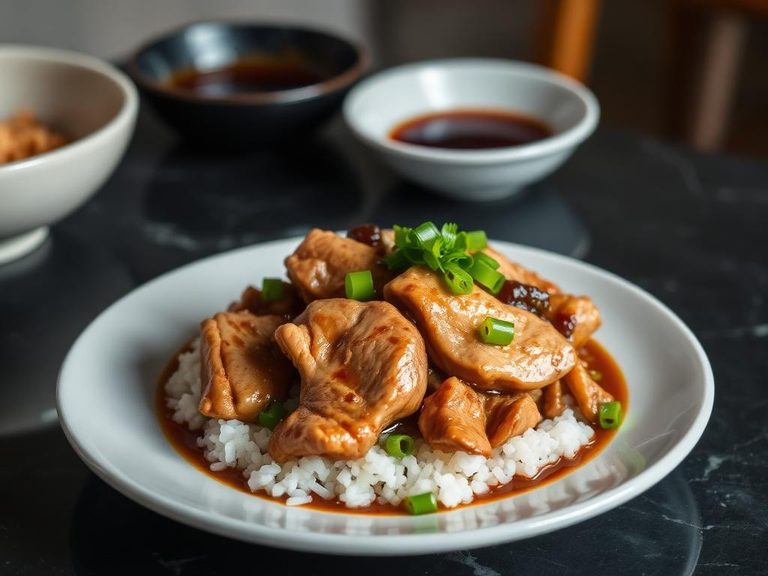
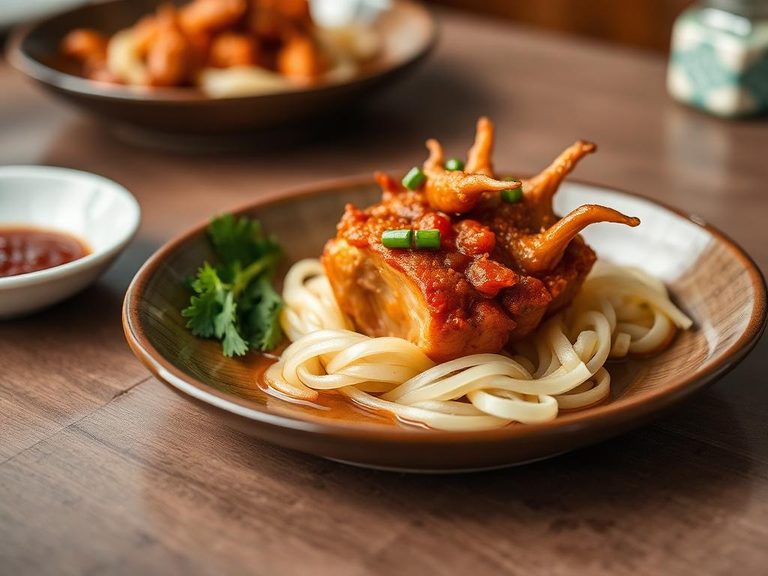
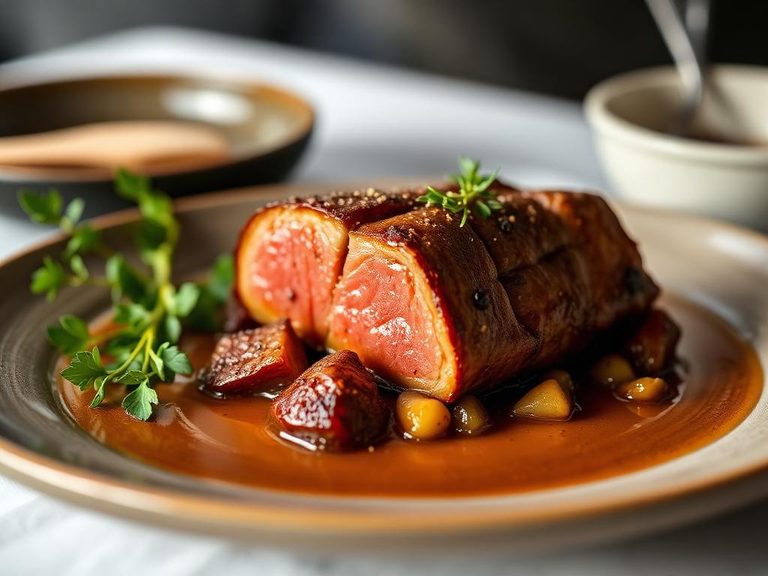
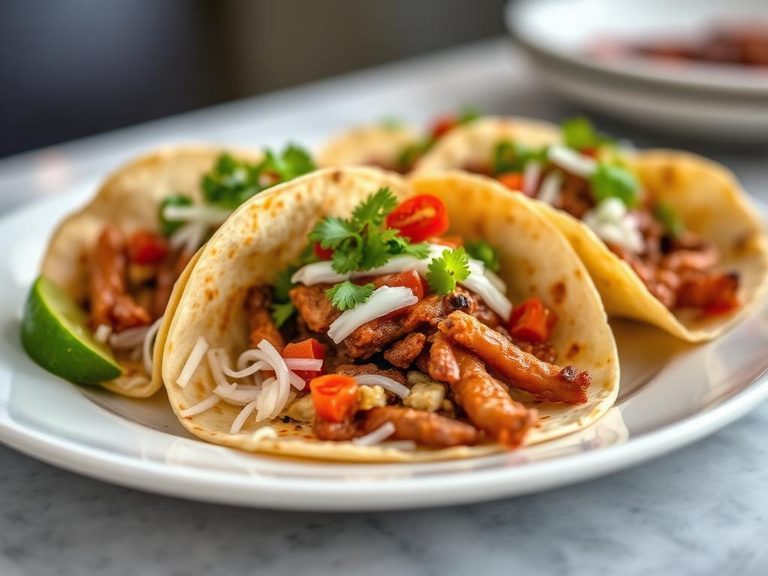
People love it for its luxurious, delicate texture and its ability to become a flavor sponge for aromatic braising liquids like soy, star anise, and ginger. It's a cherished ingredient in many culinary traditions, representing nose-to-tail eating and comfort food.
⚠️ Watch-outs & how to enjoy it better
The primary concern is its high cholesterol content, which may require moderation for individuals managing heart health. Its unfamiliar texture can be off-putting to some. To enjoy it mindfully, practice portion control and pair it with fiber-rich vegetables like steamed greens or a vinegar-based slaw to balance the meal.
Key benefits
- Excellent source of high-quality protein (12g per 100g).
- Rich in vitamin B12, crucial for nerve function and red blood cell formation.
- Contains choline, important for brain health and liver function.
- Very low in carbohydrates, making it suitable for low-carb diets.
- Provides essential minerals like selenium and phosphorus.
🍽️ Popular dishes
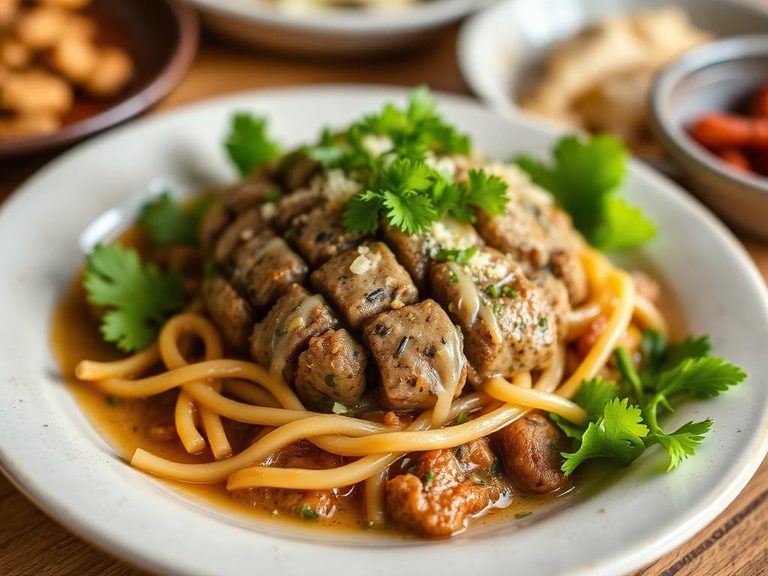
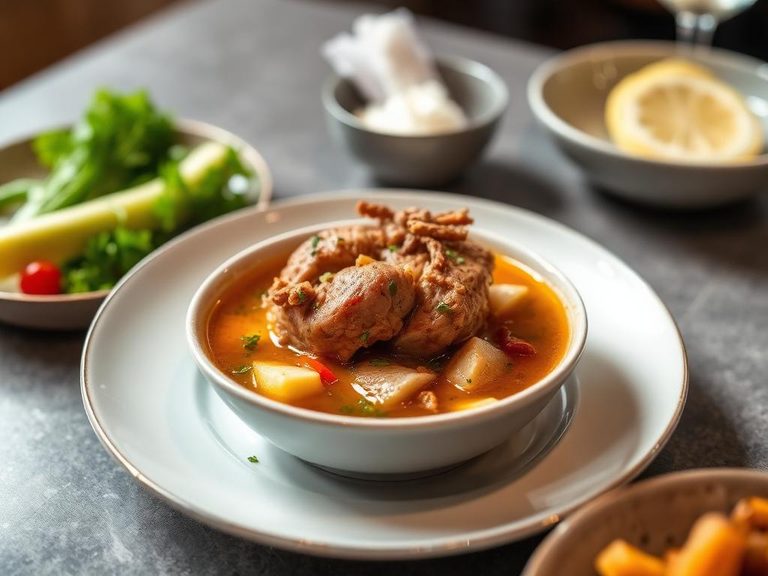
🌍 Where it's eaten
💡 Did you know?
Pork brain is one of the richest dietary sources of the omega-3 fatty acid DHA, which is the same compound heavily marketed in fish oil supplements for brain health.
Full nutrition (USDA data · scales with serving)
| Water | 75.9 g |
| Energy | 138 kcal |
| Energy | 577 kj |
| Protein | 12.1 g |
| Total lipid (fat) | 9.5 g |
| Ash | 1.4 g |
| Carbohydrate, by difference | 0.00 g |
| Fiber, total dietary | 0.00 g |
| Calcium, Ca | 9.0 mg |
| Iron, Fe | 1.8 mg |
| Magnesium, Mg | 12.0 mg |
| Phosphorus, P | 220 mg |
| Potassium, K | 195 mg |
| Sodium, Na | 91.0 mg |
| Zinc, Zn | 1.5 mg |
| Copper, Cu | 0.26 mg |
| Manganese, Mn | 0.09 mg |
| Selenium, Se | 18.5 ug |
| Vitamin C, total ascorbic acid | 14.0 mg |
| Thiamin | 0.08 mg |
| Riboflavin | 0.22 mg |
| Niacin | 3.3 mg |
| Pantothenic acid | 1.8 mg |
| Vitamin B-6 | 0.14 mg |
| Folate, total | 4.0 ug |
| Folic acid | 0.00 ug |
| Folate, food | 4.0 ug |
| Folate, DFE | 4.0 ug |
| Vitamin B-12 | 1.4 ug |
| Vitamin A, RAE | 0.00 ug |
| Retinol | 0.00 ug |
| Vitamin A, IU | 0.00 iu |
Fat & fatty acid profile (per 100g)
| Fatty acids, total saturated | 2.1 g |
| SFA 4:0 | 0.00 g |
| SFA 6:0 | 0.00 g |
| SFA 8:0 | 0.00 g |
| SFA 10:0 | 0.00 g |
| SFA 12:0 | 0.00 g |
| SFA 14:0 | 0.04 g |
| SFA 16:0 | 1.1 g |
| SFA 18:0 | 1.0 g |
| Fatty acids, total monounsaturated | 1.7 g |
| MUFA 16:1 | 0.13 g |
| MUFA 18:1 | 1.1 g |
| MUFA 20:1 | 0.00 g |
| MUFA 22:1 | 0.00 g |
| Fatty acids, total polyunsaturated | 1.5 g |
| PUFA 18:2 | 0.09 g |
| PUFA 18:3 | 0.12 g |
| PUFA 18:4 | 0.00 g |
| PUFA 20:4 | 0.49 g |
| PUFA 22:5 n-3 (DPA) | 0.22 g |
| PUFA 22:6 n-3 (DHA) | 0.46 g |
| Cholesterol | 2552 mg |
| Phytosterols | 0.00 mg |
Amino acid profile (per 100g)
| Tryptophan | 0.15 g |
| Threonine | 0.57 g |
| Isoleucine | 0.56 g |
| Leucine | 1.1 g |
| Lysine | 0.95 g |
| Methionine | 0.24 g |
| Cystine | 0.21 g |
| Phenylalanine | 0.62 g |
| Tyrosine | 0.51 g |
| Valine | 0.69 g |
| Arginine | 0.64 g |
| Histidine | 0.33 g |
| Alanine | 0.66 g |
| Aspartic acid | 1.2 g |
| Glutamic acid | 1.4 g |
| Glycine | 0.58 g |
| Proline | 0.66 g |
| Serine | 0.64 g |
FAQ
What does braised pork brain taste like?
It has a very mild, slightly sweet flavor, similar to a rich tofu or a delicate liver, but without the strong mineral taste. The dominant characteristic is its soft, creamy, custard-like texture that melts in the mouth.
Is it safe to eat pork brain?
When sourced from reputable suppliers and cooked thoroughly, it is safe. However, as with all organ meats, it should be consumed in moderation due to its high cholesterol content. It's essential to ensure it is fully cooked to eliminate any potential pathogens.
How do I prepare it to reduce any strong flavors?
Soaking the brain in cold water or milk for a few hours before cooking can help mellow any residual flavors. Braising it with strong aromatics like ginger, garlic, scallions, and star anise is the classic method to infuse it with delicious flavors.
Nutrient density (calculated · NRF9.3)
Nutrient Rich Foods index: beneficial nutrients (protein, fiber, vitamins, minerals) minus saturated fat, added sugar & sodium, per 100 kcal.
NRF9.3 index — Fulgoni, Keast & Drewnowski, 2009. Computed from USDA nutrients.
Weight-loss friendliness (composite index)
Energy density 1.38 kcal/g · 35% calories from protein · 0.0 g fiber · 0.0 g sugar per 100 g.
Composite of energy density (Rolls et al., 1999), protein & fiber satiety, minus sugar. A calculated heuristic — ranks satiety-per-calorie, not a clinical measure.
Dietary load (calculated from USDA values)
Potential renal acid load. Positive = acid-forming, negative = alkaline-forming.
Sodium-to-potassium ratio: 0.47 (lower is better — aim for ≤ 1)
Sodium:potassium per WHO potassium guidance. Computed from USDA nutrients.