

Ostrich, tip trimmed, raw
Whole food · Poultry Products

Photo: Wikipedia
Ostrich tip is a lean, deep-red cut from the bird's upper leg, prized for its beef-like texture and surprisingly mild, slightly sweet flavor. Nutritionally, it's a powerhouse, delivering over 21 grams of protein per 100 grams with virtually no fat or carbohydrates, making it a top-tier choice for high-protein, low-calorie diets.
Calorie split: 81% protein · 0% carbs · 19% fat
↓ Full nutrition💚 Why it's loved
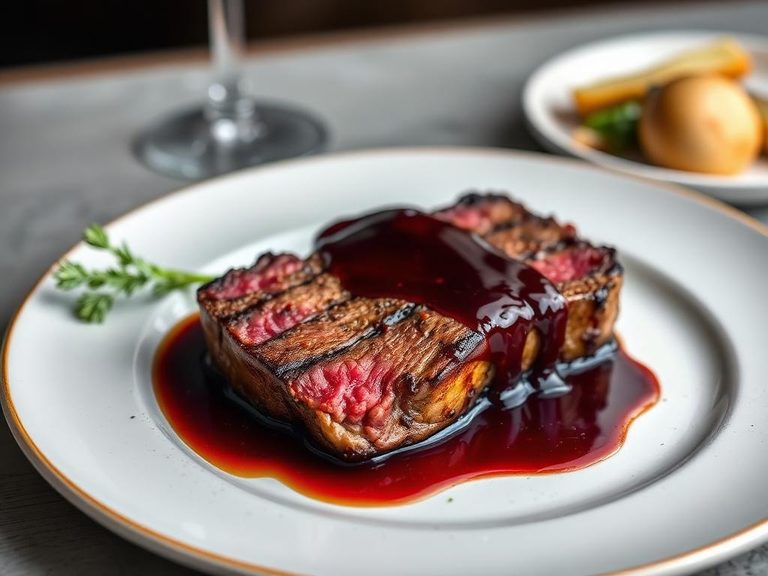
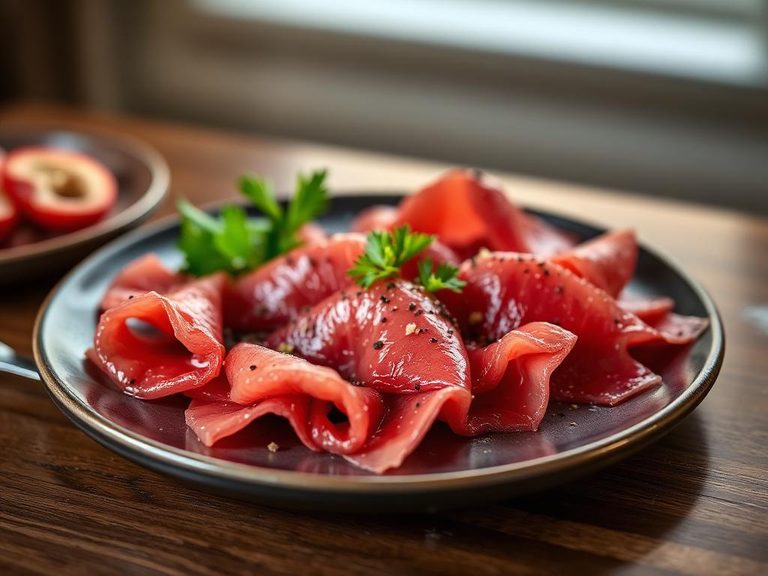
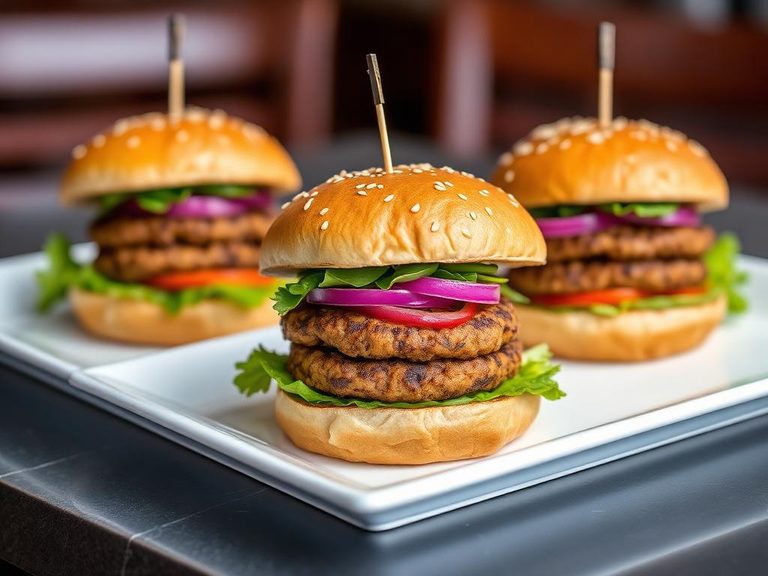
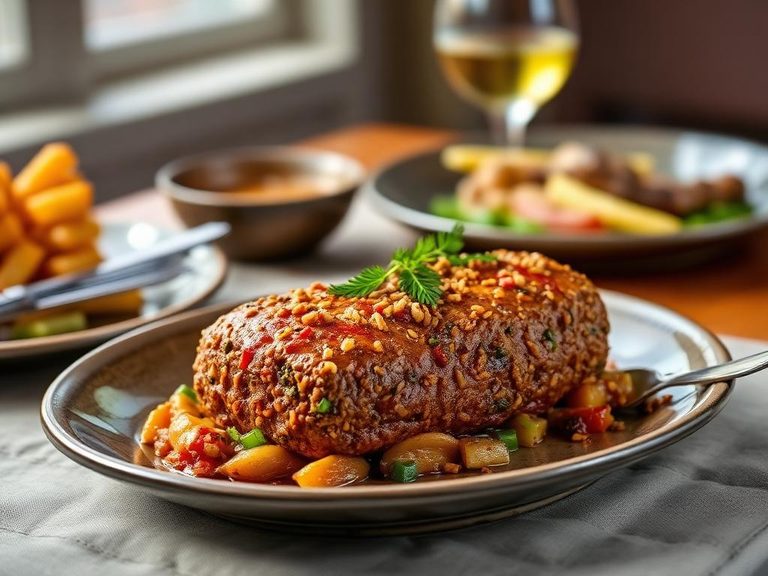
People love ostrich for its ability to mimic the satisfying experience of a lean beef steak or venison but with a fraction of the fat. Its versatility allows it to be seared rare like a filet mignon or slow-cooked in stews, absorbing flavors beautifully without becoming greasy.
⚠️ Watch-outs & how to enjoy it better
As an extremely lean meat, ostrich tip can become tough and dry if overcooked, which is its primary culinary challenge. Those monitoring iron intake should be aware it is very high in heme iron. To counteract toughness, use a meat thermometer to cook to medium-rare (130-135°F) and always let it rest before slicing against the grain.
Key benefits
- Extremely high in lean protein for muscle repair and satiety
- Very low in fat and calories, ideal for weight management
- Rich in iron and B vitamins, supporting energy levels
- A sustainable red meat alternative with a lower environmental footprint
🍽️ Popular dishes
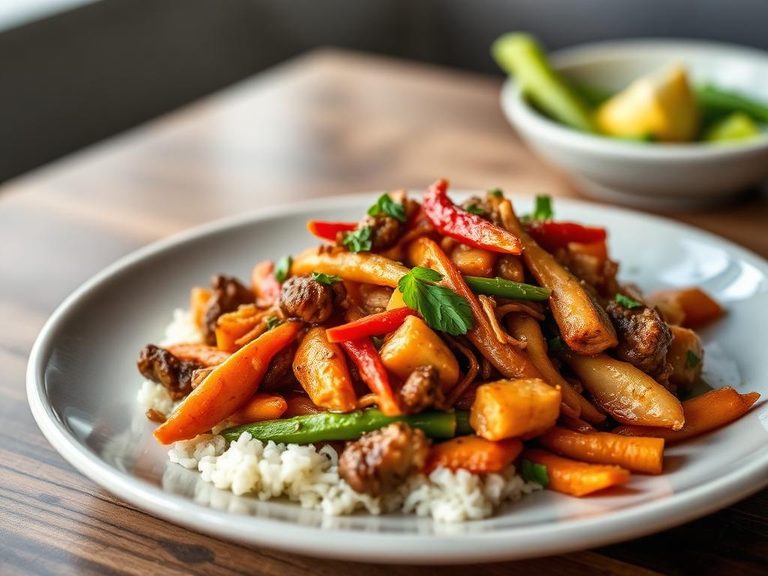
🌍 Where it's eaten
💡 Did you know?
Despite being a bird, ostrich meat is classified as red meat due to its myoglobin content and dark color, and it's often compared to lean beef in both taste and culinary use.
Full nutrition (USDA data · scales with serving)
| Water | 76.1 g |
| Energy | 114 kcal |
| Energy | 477 kj |
| Protein | 21.9 g |
| Total lipid (fat) | 2.3 g |
| Ash | 0.61 g |
| Carbohydrate, by difference | 0.00 g |
| Fiber, total dietary | 0.00 g |
| Total Sugars | 0.00 g |
| Calcium, Ca | 5.0 mg |
| Iron, Fe | 2.9 mg |
| Magnesium, Mg | 22.0 mg |
| Phosphorus, P | 213 mg |
| Potassium, K | 310 mg |
| Sodium, Na | 67.0 mg |
| Zinc, Zn | 3.7 mg |
| Copper, Cu | 0.14 mg |
| Manganese, Mn | 0.02 mg |
| Selenium, Se | 35.2 ug |
| Vitamin C, total ascorbic acid | 0.00 mg |
| Thiamin | 0.20 mg |
| Riboflavin | 0.29 mg |
| Niacin | 4.7 mg |
| Pantothenic acid | 1.2 mg |
| Vitamin B-6 | 0.51 mg |
| Folate, total | 8.0 ug |
| Folic acid | 0.00 ug |
| Folate, food | 8.0 ug |
| Folate, DFE | 8.0 ug |
| Vitamin B-12 | 5.0 ug |
| Vitamin A, RAE | 0.00 ug |
| Retinol | 0.00 ug |
| Carotene, beta | 0.00 ug |
| Carotene, alpha | 0.00 ug |
| Cryptoxanthin, beta | 0.00 ug |
| Vitamin A, IU | 0.00 iu |
| Lycopene | 0.00 ug |
| Lutein + zeaxanthin | 0.00 ug |
| Vitamin E (alpha-tocopherol) | 0.20 mg |
| Alcohol, ethyl | 0.00 g |
| Caffeine | 0.00 mg |
| Theobromine | 0.00 mg |
Fat & fatty acid profile (per 100g)
| Fatty acids, total saturated | 0.86 g |
| SFA 14:0 | 0.03 g |
| SFA 16:0 | 0.64 g |
| SFA 18:0 | 0.19 g |
| Fatty acids, total monounsaturated | 0.79 g |
| MUFA 16:1 | 0.21 g |
| MUFA 18:1 | 0.58 g |
| Fatty acids, total polyunsaturated | 0.45 g |
| PUFA 18:2 | 0.29 g |
| PUFA 18:3 | 0.02 g |
| PUFA 20:4 | 0.14 g |
| Cholesterol | 72.0 mg |
Amino acid profile (per 100g)
| Tryptophan | 0.20 g |
| Threonine | 0.96 g |
| Isoleucine | 1.0 g |
| Leucine | 1.8 g |
| Lysine | 1.9 g |
| Methionine | 0.61 g |
| Cystine | 0.22 g |
| Phenylalanine | 0.90 g |
| Tyrosine | 0.71 g |
| Valine | 1.1 g |
| Arginine | 1.5 g |
| Histidine | 0.55 g |
| Alanine | 1.4 g |
| Aspartic acid | 2.0 g |
| Glutamic acid | 3.3 g |
| Glycine | 1.5 g |
| Proline | 1.1 g |
| Serine | 0.87 g |
| Hydroxyproline | 0.39 g |
FAQ
How does ostrich meat taste compared to beef?
Ostrich has a mild, slightly sweet flavor similar to lean beef but without the gamey notes. Its texture is finer and less marbled, making it tender when cooked properly.
What's the best way to cook ostrich tip to keep it tender?
Quick, high-heat methods like grilling, searing, or stir-frying are ideal. Cook to medium-rare (130-135°F internal temperature) and let it rest for 5-10 minutes before slicing to retain juices.
Is ostrich meat considered a common allergen?
No, ostrich is not among the major food allergens (like peanuts, milk, or shellfish). However, as with any novel protein, individuals with specific poultry or bird allergies should exercise caution.
Nutrient density (calculated · NRF9.3)
Nutrient Rich Foods index: beneficial nutrients (protein, fiber, vitamins, minerals) minus saturated fat, added sugar & sodium, per 100 kcal.
NRF9.3 index — Fulgoni, Keast & Drewnowski, 2009. Computed from USDA nutrients.
Weight-loss friendliness (composite index)
Energy density 1.14 kcal/g · 77% calories from protein · 0.0 g fiber · 0.0 g sugar per 100 g.
Composite of energy density (Rolls et al., 1999), protein & fiber satiety, minus sugar. A calculated heuristic — ranks satiety-per-calorie, not a clinical measure.
Dietary load (calculated from USDA values)
Potential renal acid load. Positive = acid-forming, negative = alkaline-forming.
Sodium-to-potassium ratio: 0.22 (lower is better — aim for ≤ 1)
Sodium:potassium per WHO potassium guidance. Computed from USDA nutrients.