

Nuts, hickorynuts, dried
Whole food · Nut and Seed Products

Photo: Wikipedia
Hickory nuts are the rich, buttery treasure of the American forest, with a hard shell that demands effort but rewards with a uniquely sweet, smoky flavor and a satisfyingly crunchy texture. Nutritionally, they are a powerhouse of energy-dense healthy fats and provide a solid boost of plant-based protein and fiber.
Calorie split: 7% protein · 10% carbs · 82% fat
↓ Full nutrition💚 Why it's loved
People adore hickory nuts for their intense, sweet, and almost bacon-like smoky flavor that is irreplaceable in traditional baking and candies. The rewarding process of cracking the tough shell to get to the kernel is part of the cherished experience.
⚠️ Watch-outs & how to enjoy it better
The extremely hard, woody shell makes them notoriously difficult to crack and yield very little meat, which can be frustrating. They are also a tree nut allergen, and their high fat content means they can become rancid if not stored properly in cool, dark places.
Key benefits
- Excellent source of monounsaturated and polyunsaturated fats
- Good plant-based protein source
- High in dietary fiber for digestive health
- Contains minerals like manganese and thiamine
- Provides a dense, sustained energy source
🍽️ Popular dishes
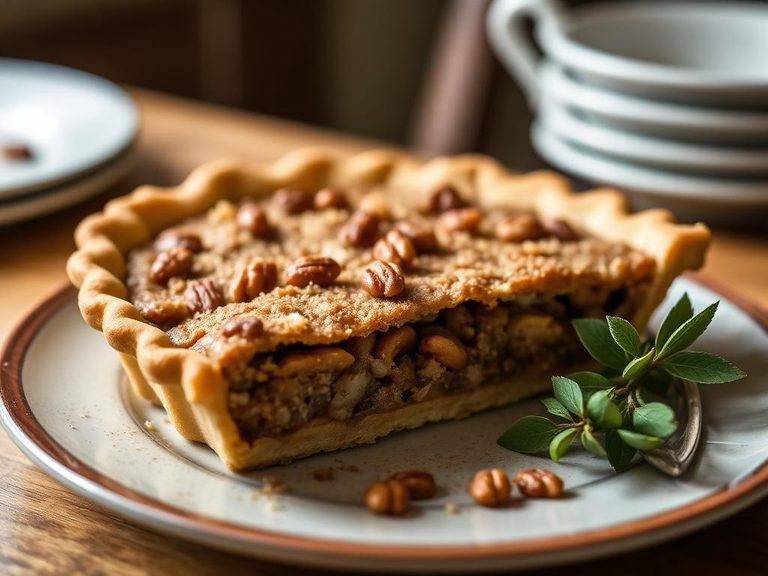
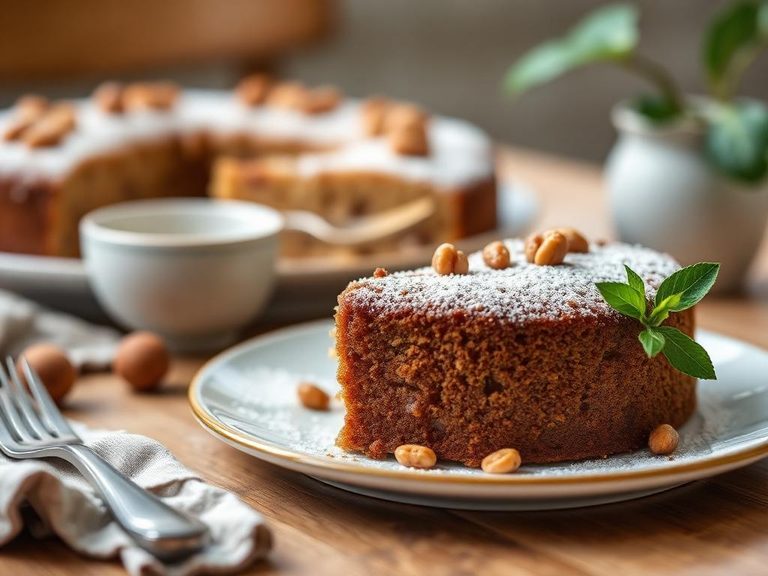
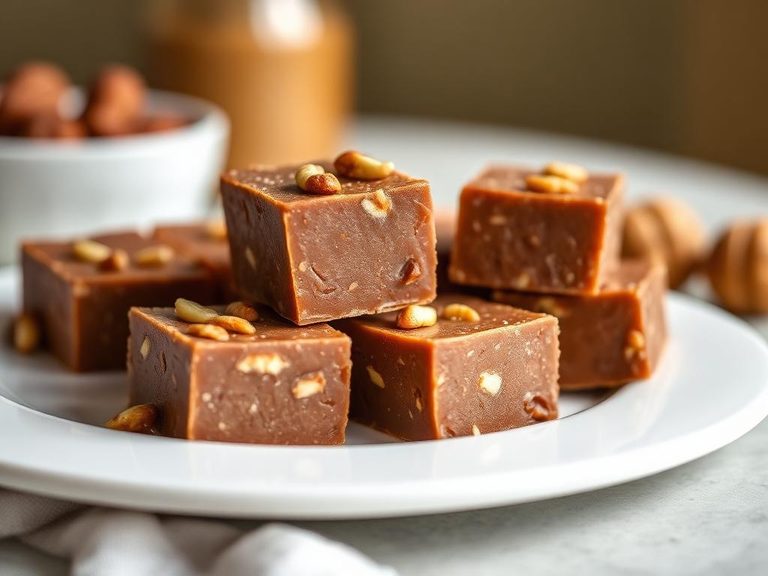
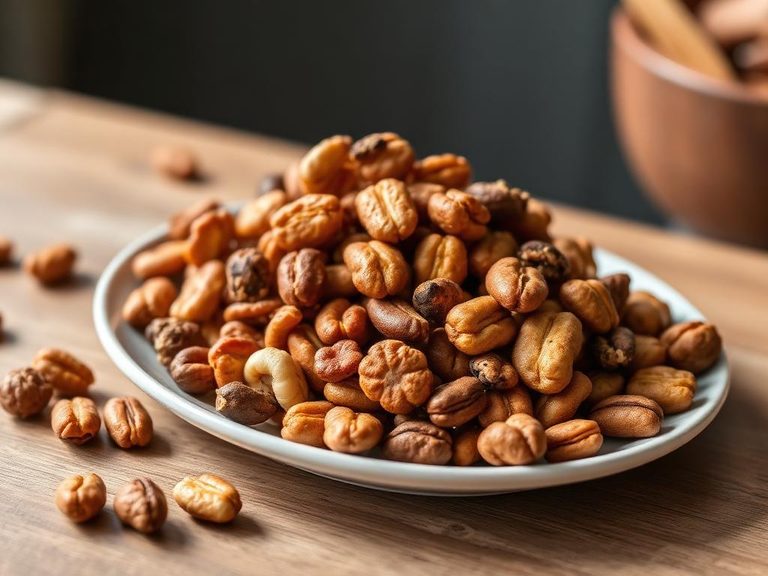
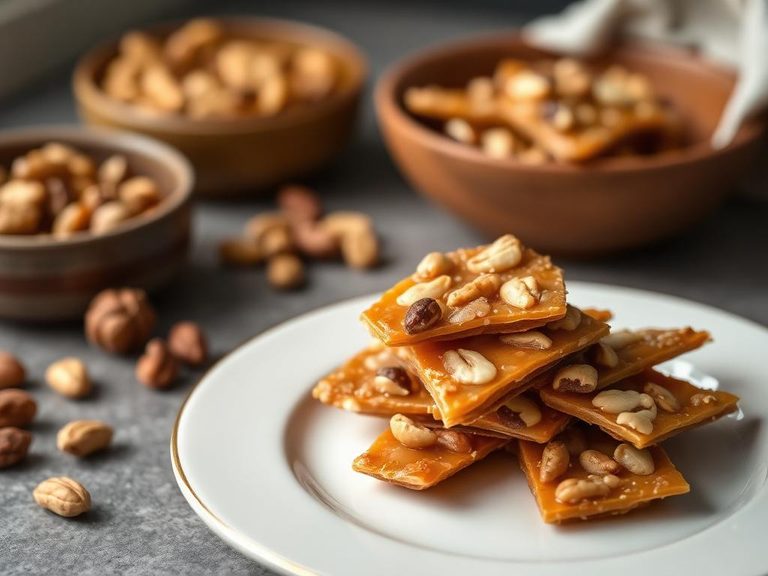
🌍 Where it's eaten
💡 Did you know?
The shagbark hickory tree, a primary source of these nuts, gets its name from its distinctive, peeling bark that hangs in long, narrow strips, looking shaggy.
Full nutrition (USDA data · scales with serving)
| Water | 2.6 g |
| Energy | 657 kcal |
| Energy | 2749 kj |
| Protein | 12.7 g |
| Total lipid (fat) | 64.4 g |
| Ash | 2.0 g |
| Carbohydrate, by difference | 18.3 g |
| Fiber, total dietary | 6.4 g |
| Calcium, Ca | 61.0 mg |
| Iron, Fe | 2.1 mg |
| Magnesium, Mg | 173 mg |
| Phosphorus, P | 336 mg |
| Potassium, K | 436 mg |
| Sodium, Na | 1.0 mg |
| Zinc, Zn | 4.3 mg |
| Copper, Cu | 0.74 mg |
| Manganese, Mn | 4.6 mg |
| Selenium, Se | 8.1 ug |
| Vitamin C, total ascorbic acid | 2.0 mg |
| Thiamin | 0.87 mg |
| Riboflavin | 0.13 mg |
| Niacin | 0.91 mg |
| Pantothenic acid | 1.7 mg |
| Vitamin B-6 | 0.19 mg |
| Folate, total | 40.0 ug |
| Folic acid | 0.00 ug |
| Folate, food | 40.0 ug |
| Folate, DFE | 40.0 ug |
| Vitamin B-12 | 0.00 ug |
| Vitamin A, RAE | 7.0 ug |
| Retinol | 0.00 ug |
| Vitamin A, IU | 131 iu |
| Vitamin D (D2 + D3), International Units | 0.00 iu |
| Vitamin D (D2 + D3) | 0.00 ug |
| Alcohol, ethyl | 0.00 g |
Fat & fatty acid profile (per 100g)
| Fatty acids, total saturated | 7.0 g |
| SFA 4:0 | 0.00 g |
| SFA 6:0 | 0.00 g |
| SFA 8:0 | 0.00 g |
| SFA 10:0 | 0.00 g |
| SFA 12:0 | 0.00 g |
| SFA 14:0 | 0.00 g |
| SFA 16:0 | 5.4 g |
| SFA 18:0 | 1.4 g |
| Fatty acids, total monounsaturated | 32.6 g |
| MUFA 16:1 | 0.28 g |
| MUFA 18:1 | 32.0 g |
| MUFA 20:1 | 0.00 g |
| MUFA 22:1 | 0.00 g |
| Fatty acids, total polyunsaturated | 21.9 g |
| PUFA 18:2 | 20.6 g |
| PUFA 18:3 | 1.0 g |
| PUFA 18:4 | 0.00 g |
| PUFA 20:4 | 0.00 g |
| PUFA 20:5 n-3 (EPA) | 0.00 g |
| PUFA 22:5 n-3 (DPA) | 0.00 g |
| PUFA 22:6 n-3 (DHA) | 0.00 g |
| Cholesterol | 0.00 mg |
Amino acid profile (per 100g)
| Tryptophan | 0.14 g |
| Threonine | 0.42 g |
| Isoleucine | 0.58 g |
| Leucine | 1.0 g |
| Lysine | 0.50 g |
| Methionine | 0.30 g |
| Cystine | 0.27 g |
| Phenylalanine | 0.71 g |
| Tyrosine | 0.45 g |
| Valine | 0.73 g |
| Arginine | 2.1 g |
| Histidine | 0.39 g |
| Alanine | 0.66 g |
| Aspartic acid | 1.4 g |
| Glutamic acid | 2.9 g |
| Glycine | 0.71 g |
| Proline | 0.57 g |
| Serine | 0.81 g |
FAQ
How do you crack hickory nuts?
The most common method is using a specialized nutcracker, a vise, or carefully striking the shell with a hammer on a hard surface. Soaking the nuts in water for a day can sometimes soften the shell slightly.
What do hickory nuts taste like compared to pecans?
Hickory nuts are generally considered richer, sweeter, and more intensely flavored than pecans, with a distinctive smoky or buttery note. The texture is also often described as more robust and crunchy.
Can you eat hickory nuts raw?
Yes, hickory nuts can be eaten raw once shelled. However, their flavor is often enhanced by toasting, which brings out their natural sweetness and oils.
Nutrient density (calculated · NRF9.3)
Nutrient Rich Foods index: beneficial nutrients (protein, fiber, vitamins, minerals) minus saturated fat, added sugar & sodium, per 100 kcal.
NRF9.3 index — Fulgoni, Keast & Drewnowski, 2009. Computed from USDA nutrients.
Weight-loss friendliness (composite index)
Energy density 6.57 kcal/g · 8% calories from protein · 6.4 g fiber · 0.0 g sugar per 100 g.
Composite of energy density (Rolls et al., 1999), protein & fiber satiety, minus sugar. A calculated heuristic — ranks satiety-per-calorie, not a clinical measure.
Dietary load (calculated from USDA values)
Potential renal acid load. Positive = acid-forming, negative = alkaline-forming.
Sodium-to-potassium ratio: 0.00 (lower is better — aim for ≤ 1)
Sodium:potassium per WHO potassium guidance. Computed from USDA nutrients.