

Mollusks, clam, mixed species, cooked, moist heat
Whole food · Finfish and Shellfish Products
Mixed species clams, gently cooked in moist heat, yield tender, briny morsels with a delicate, oceanic sweetness. Their texture is pleasantly firm yet succulent, offering a clean, savory taste of the sea. Nutritionally, they are a lean powerhouse, delivering a high dose of protein with minimal fat and calories.
Calorie split: 73% protein · 15% carbs · 13% fat
↓ Full nutrition💚 Why it's loved
People cherish clams for their ability to instantly elevate a dish with a burst of umami and coastal elegance. They are incredibly versatile, shining in everything from simple steamed preparations to rich, complex stews and pastas.
⚠️ Watch-outs & how to enjoy it better
As filter feeders, clams can accumulate heavy metals like cadmium, and those with shellfish allergies must avoid them entirely. To mitigate potential contaminants, source from reputable, clean waters and enjoy them in moderation as part of a varied diet.
Key benefits
- Excellent source of complete, lean protein
- Very low in fat and calories
- Naturally rich in iron and vitamin B12
- Provides minerals like selenium and zinc
- Zero carbohydrates and sugar
🍽️ Popular dishes
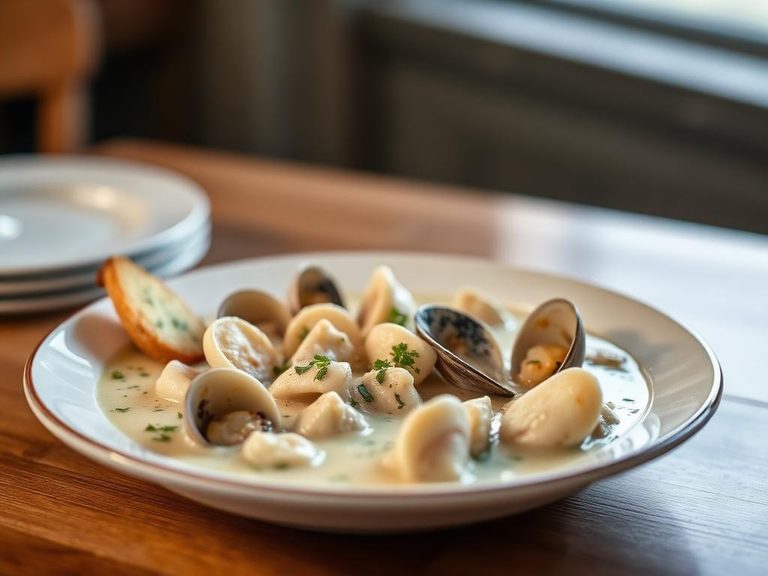
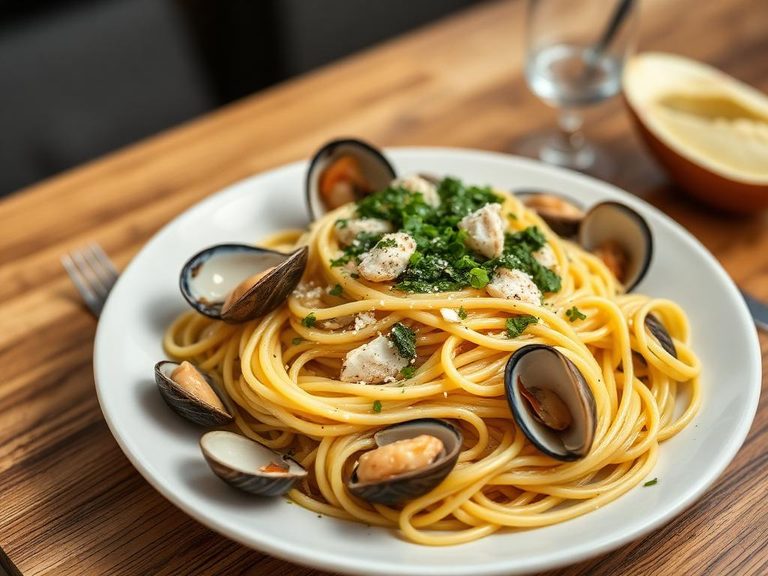
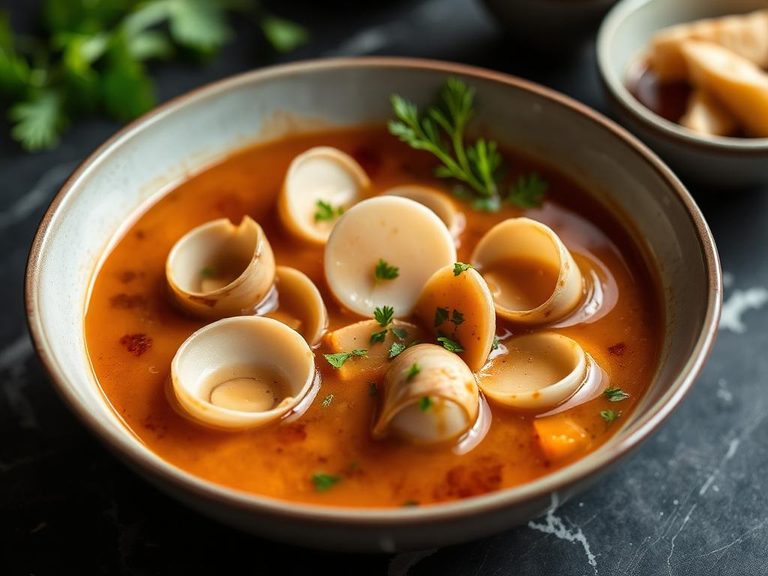
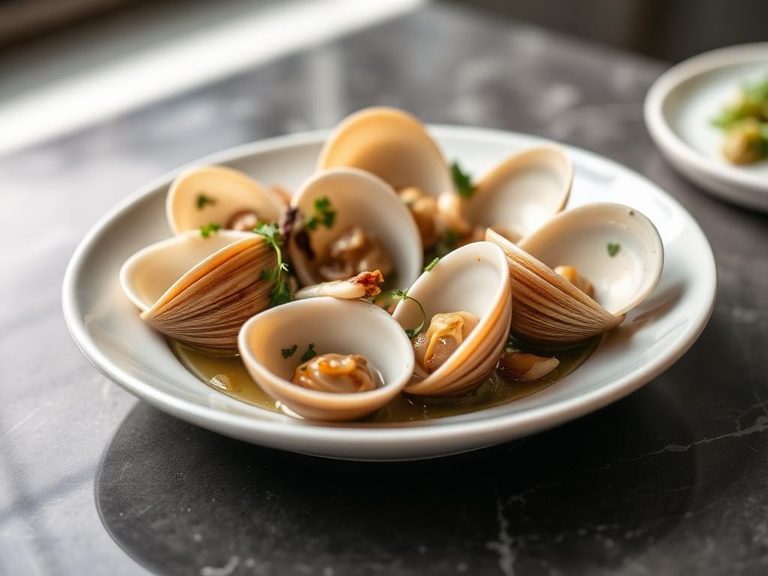
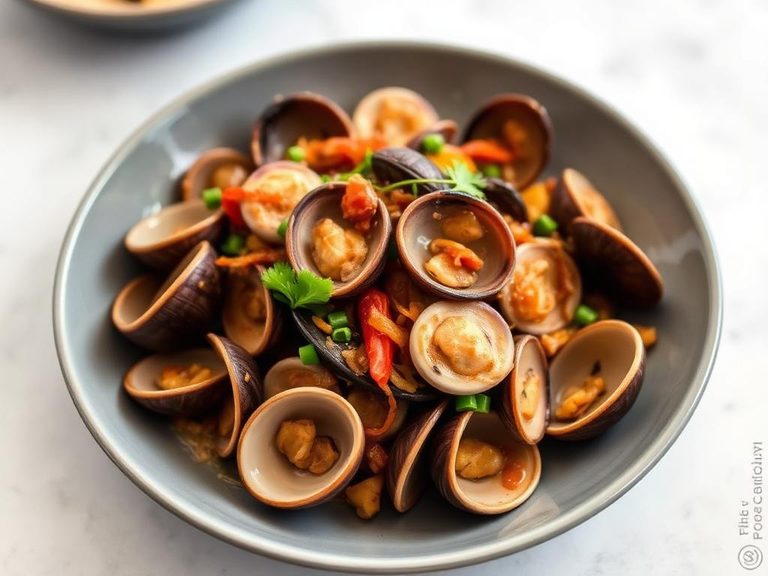
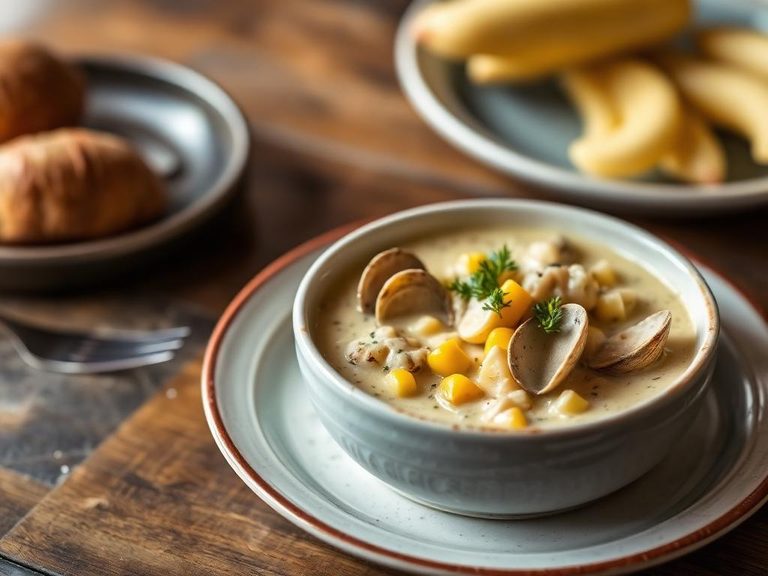
🌍 Where it's eaten
💡 Did you know?
A single large clam can filter over 40 gallons of water per day, which is how they can sometimes concentrate trace minerals—and pollutants—from their environment into their tissues.
Full nutrition (USDA data · scales with serving)
| Water | 63.6 g |
| Energy | 148 kcal |
| Energy | 618 kj |
| Protein | 25.6 g |
| Total lipid (fat) | 1.9 g |
| Ash | 3.7 g |
| Carbohydrate, by difference | 5.1 g |
| Fiber, total dietary | 0.00 g |
| Calcium, Ca | 92.0 mg |
| Iron, Fe | 2.8 mg |
| Magnesium, Mg | 18.0 mg |
| Phosphorus, P | 338 mg |
| Potassium, K | 628 mg |
| Sodium, Na | 1202 mg |
| Zinc, Zn | 2.7 mg |
| Copper, Cu | 0.69 mg |
| Manganese, Mn | 1.0 mg |
| Selenium, Se | 64.0 ug |
| Vitamin C, total ascorbic acid | 22.1 mg |
| Thiamin | 0.15 mg |
| Riboflavin | 0.43 mg |
| Niacin | 3.4 mg |
| Pantothenic acid | 0.68 mg |
| Vitamin B-6 | 0.11 mg |
| Folate, total | 29.0 ug |
| Folic acid | 0.00 ug |
| Folate, food | 29.0 ug |
| Folate, DFE | 29.0 ug |
| Vitamin B-12 | 98.9 ug |
| Vitamin A, RAE | 171 ug |
| Vitamin A, IU | 570 iu |
Fat & fatty acid profile (per 100g)
| Fatty acids, total saturated | 0.19 g |
| SFA 14:0 | 0.03 g |
| SFA 16:0 | 0.12 g |
| SFA 18:0 | 0.04 g |
| Fatty acids, total monounsaturated | 0.17 g |
| MUFA 16:1 | 0.04 g |
| MUFA 18:1 | 0.07 g |
| MUFA 20:1 | 0.04 g |
| MUFA 22:1 | 0.01 g |
| Fatty acids, total polyunsaturated | 0.55 g |
| PUFA 18:2 | 0.03 g |
| PUFA 18:3 | 0.01 g |
| PUFA 18:4 | 0.03 g |
| PUFA 20:4 | 0.08 g |
| PUFA 20:5 n-3 (EPA) | 0.14 g |
| PUFA 22:5 n-3 (DPA) | 0.10 g |
| PUFA 22:6 n-3 (DHA) | 0.15 g |
| Cholesterol | 67.0 mg |
Amino acid profile (per 100g)
| Tryptophan | 0.29 g |
| Threonine | 1.1 g |
| Isoleucine | 1.1 g |
| Leucine | 1.8 g |
| Lysine | 1.9 g |
| Methionine | 0.58 g |
| Cystine | 0.34 g |
| Phenylalanine | 0.92 g |
| Tyrosine | 0.82 g |
| Valine | 1.1 g |
| Arginine | 1.9 g |
| Histidine | 0.49 g |
| Alanine | 1.5 g |
| Aspartic acid | 2.5 g |
| Glutamic acid | 3.5 g |
| Glycine | 1.6 g |
| Proline | 1.0 g |
| Serine | 1.1 g |
FAQ
How do I know if clams are fresh before cooking?
Live clams should have tightly closed shells or close when tapped. Discard any with cracked shells or that remain open after a firm tap.
What's the best way to cook them to keep them tender?
Use moist heat methods like steaming, boiling, or sautéing. Cook just until the shells open, usually 5-8 minutes, to prevent them from becoming rubbery.
Can I eat the clam liquor (the broth in the shell)?
Yes, the savory broth is a prized part of the clam, full of flavor. It's often used as a base for sauces or sopped up with bread.
Nutrient density (calculated · NRF9.3)
Nutrient Rich Foods index: beneficial nutrients (protein, fiber, vitamins, minerals) minus saturated fat, added sugar & sodium, per 100 kcal.
NRF9.3 index — Fulgoni, Keast & Drewnowski, 2009. Computed from USDA nutrients.
Weight-loss friendliness (composite index)
Energy density 1.48 kcal/g · 69% calories from protein · 0.0 g fiber · 0.0 g sugar per 100 g.
Composite of energy density (Rolls et al., 1999), protein & fiber satiety, minus sugar. A calculated heuristic — ranks satiety-per-calorie, not a clinical measure.
Dietary load (calculated from USDA values)
Potential renal acid load. Positive = acid-forming, negative = alkaline-forming.
Sodium-to-potassium ratio: 1.91 (lower is better — aim for ≤ 1)
Sodium:potassium per WHO potassium guidance. Computed from USDA nutrients.