

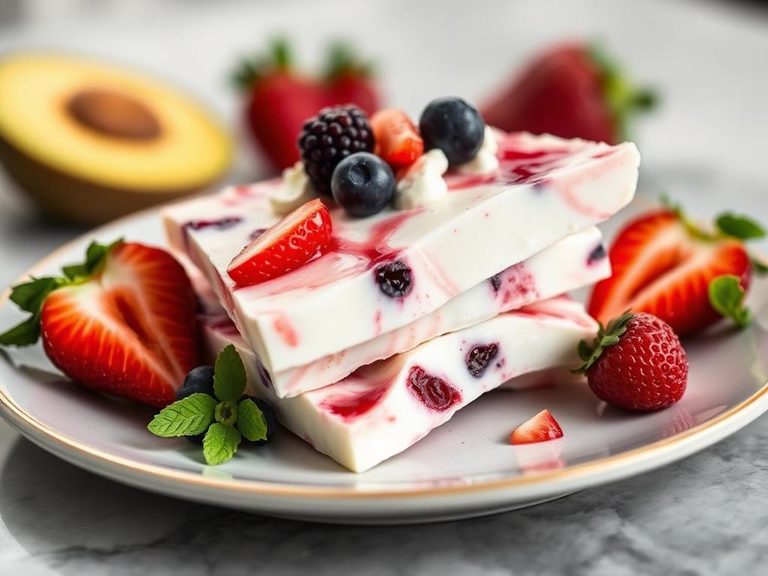
Frozen yogurt bar, vanilla
Common food

Photo: Wikipedia
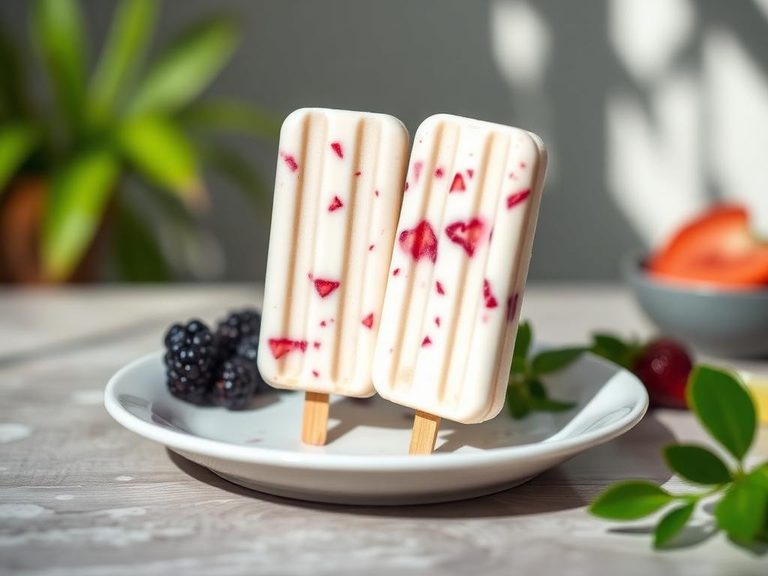
A frozen yogurt bar, vanilla is a smooth, creamy, and refreshing frozen dessert that delivers a sweet, tangy, and distinctly vanilla flavor. Its texture is lighter and less dense than traditional ice cream, offering a satisfying melt on the tongue. Nutritionally, it's a lower-fat option that provides a quick source of energy primarily from carbohydrates and sugar.
Calorie split: 9% protein · 66% carbs · 25% fat
↓ Full nutrition💚 Why it's loved
People love it for its perfect balance of sweet and tart flavors, with a creamy yet light texture that feels indulgent without being heavy. It's a versatile treat that can be enjoyed on its own or customized with a variety of toppings, fitting into a casual, modern dessert culture.
⚠️ Watch-outs & how to enjoy it better
The high sugar content (nearly 20g per 100g) can cause rapid blood-sugar spikes, making it a concern for those monitoring glucose levels or managing diabetes. To counteract this, pair it with a source of protein or healthy fat (like nuts or seeds) to slow sugar absorption, and practice strict portion control.
Key benefits
- Lower in fat than traditional ice cream
- Contains some protein from dairy
- Provides a quick source of energy
- A lighter, refreshing dessert option
- Often contains live probiotic cultures
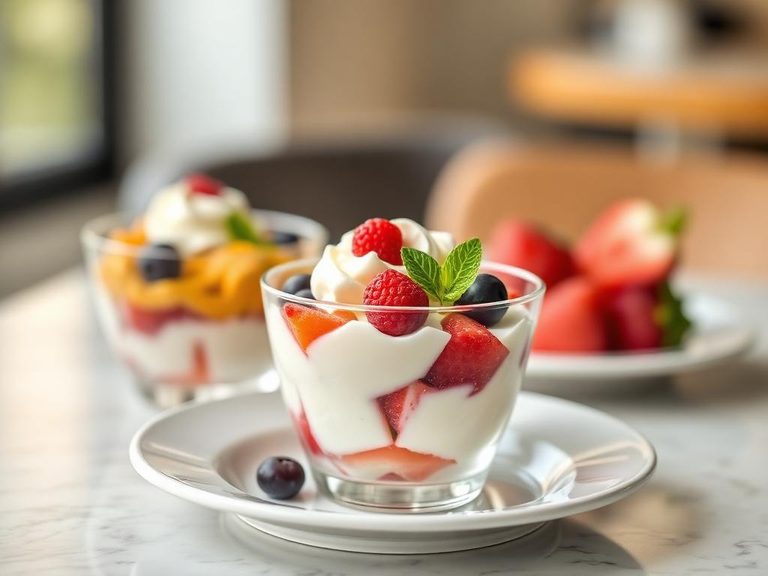
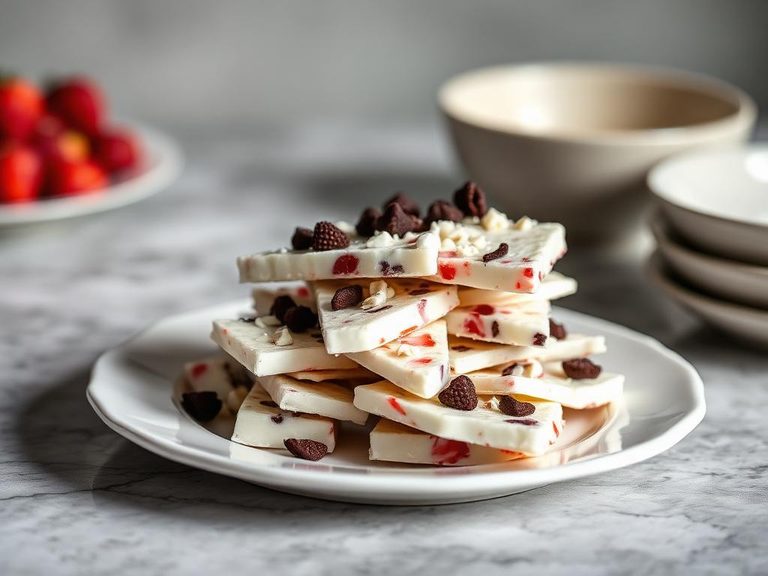
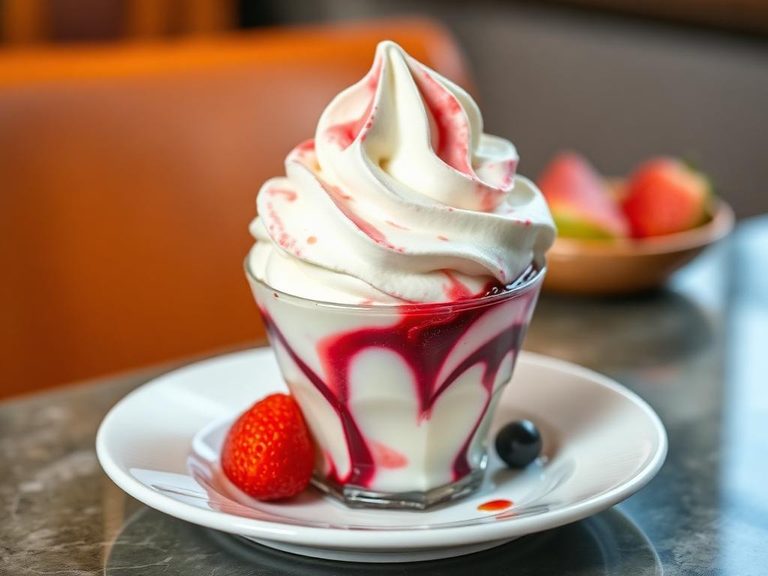
🍽️ Popular dishes
🌍 Where it's eaten
💡 Did you know?
The modern frozen yogurt boom began in the 1970s with a product called 'Frogurt,' which was marketed as a healthier, probiotic-rich alternative to ice cream.
Full nutrition (USDA data · scales with serving)
| Water | 71.2 g |
| Energy | 127 kcal |
| Protein | 3.0 g |
| Total lipid (fat) | 3.6 g |
| Carbohydrate, by difference | 21.6 g |
| Fiber, total dietary | 0.00 g |
| Total Sugars | 19.9 g |
| Calcium, Ca | 100 mg |
| Iron, Fe | 0.46 mg |
| Magnesium, Mg | 10.0 mg |
| Phosphorus, P | 89.0 mg |
| Potassium, K | 156 mg |
| Sodium, Na | 63.0 mg |
| Zinc, Zn | 0.28 mg |
| Copper, Cu | 0.01 mg |
| Selenium, Se | 1.9 ug |
| Vitamin C, total ascorbic acid | 0.70 mg |
| Thiamin | 0.04 mg |
| Riboflavin | 0.18 mg |
| Niacin | 0.07 mg |
| Vitamin B-6 | 0.04 mg |
| Folate, total | 4.0 ug |
| Folic acid | 0.00 ug |
| Folate, food | 4.0 ug |
| Folate, DFE | 4.0 ug |
| Choline, total | 23.1 mg |
| Vitamin B-12 | 0.07 ug |
| Vitamin B-12, added | 0.00 ug |
| Vitamin A, RAE | 49.0 ug |
| Retinol | 48.0 ug |
| Carotene, beta | 9.0 ug |
| Carotene, alpha | 0.00 ug |
| Cryptoxanthin, beta | 0.00 ug |
| Lycopene | 0.00 ug |
| Lutein + zeaxanthin | 0.00 ug |
| Vitamin E (alpha-tocopherol) | 0.09 mg |
| Vitamin E, added | 0.00 mg |
| Vitamin D (D2 + D3) | 0.10 ug |
| Vitamin K (phylloquinone) | 0.30 ug |
| Alcohol, ethyl | 0.00 g |
| Caffeine | 0.00 mg |
| Theobromine | 0.00 mg |
Fat & fatty acid profile (per 100g)
| Fatty acids, total saturated | 2.3 g |
| SFA 4:0 | 0.11 g |
| SFA 6:0 | 0.08 g |
| SFA 8:0 | 0.04 g |
| SFA 10:0 | 0.10 g |
| SFA 12:0 | 0.12 g |
| SFA 14:0 | 0.38 g |
| SFA 16:0 | 0.99 g |
| SFA 18:0 | 0.35 g |
| Fatty acids, total monounsaturated | 0.99 g |
| MUFA 16:1 | 0.08 g |
| MUFA 18:1 | 0.82 g |
| MUFA 20:1 | 0.00 g |
| MUFA 22:1 | 0.00 g |
| Fatty acids, total polyunsaturated | 0.10 g |
| PUFA 18:2 | 0.07 g |
| PUFA 18:3 | 0.03 g |
| PUFA 18:4 | 0.00 g |
| PUFA 20:4 | 0.00 g |
| PUFA 20:5 n-3 (EPA) | 0.00 g |
| PUFA 22:5 n-3 (DPA) | 0.00 g |
| PUFA 22:6 n-3 (DHA) | 0.00 g |
| Cholesterol | 13.0 mg |
Amino acid profile (per 100g)
Estimated from Snacks, granola bar, GENERAL MILLS, NATURE VALLEY, with yogurt coating — USDA does not publish this profile for Frozen yogurt bar.
| Threonine | 0.16 g |
| Isoleucine | 0.22 g |
| Leucine | 0.43 g |
| Lysine | 0.30 g |
| Methionine | 0.10 g |
| Cystine | 0.19 g |
| Phenylalanine | 0.29 g |
| Tyrosine | 0.17 g |
| Valine | 0.32 g |
| Arginine | 0.37 g |
| Histidine | 0.13 g |
| Alanine | 0.25 g |
| Aspartic acid | 0.52 g |
| Glutamic acid | 1.2 g |
| Glycine | 0.28 g |
| Proline | 0.18 g |
| Serine | 0.28 g |
FAQ
Is frozen yogurt healthier than ice cream?
Generally, yes. It typically has less fat and fewer calories than premium ice cream. However, it can contain similar or even higher amounts of sugar, so it's not an unlimited 'health food.'
Does frozen yogurt have probiotics?
Many brands do contain live and active cultures (like Lactobacillus bulgaricus and Streptococcus thermophilus), which are beneficial for gut health. Check the label for 'live and active cultures.'
Why is my frozen yogurt bar icy instead of creamy?
This can happen due to high water content, insufficient fat, or improper storage. Homemade versions often benefit from a small amount of corn syrup or alcohol to improve texture and reduce iciness.
Nutrient density (calculated · NRF9.3)
Nutrient Rich Foods index: beneficial nutrients (protein, fiber, vitamins, minerals) minus saturated fat, added sugar & sodium, per 100 kcal.
NRF9.3 index — Fulgoni, Keast & Drewnowski, 2009. Computed from USDA nutrients.
Weight-loss friendliness (composite index)
Energy density 1.27 kcal/g · 9% calories from protein · 0.0 g fiber · 19.9 g sugar per 100 g.
Composite of energy density (Rolls et al., 1999), protein & fiber satiety, minus sugar. A calculated heuristic — ranks satiety-per-calorie, not a clinical measure.
Dietary load (calculated from USDA values)
Potential renal acid load. Positive = acid-forming, negative = alkaline-forming.
Sodium-to-potassium ratio: 0.40 (lower is better — aim for ≤ 1)
Sodium:potassium per WHO potassium guidance. Computed from USDA nutrients.