

Frozen novelties, ice type, pop
Whole food · Sweets

Photo: Wikipedia
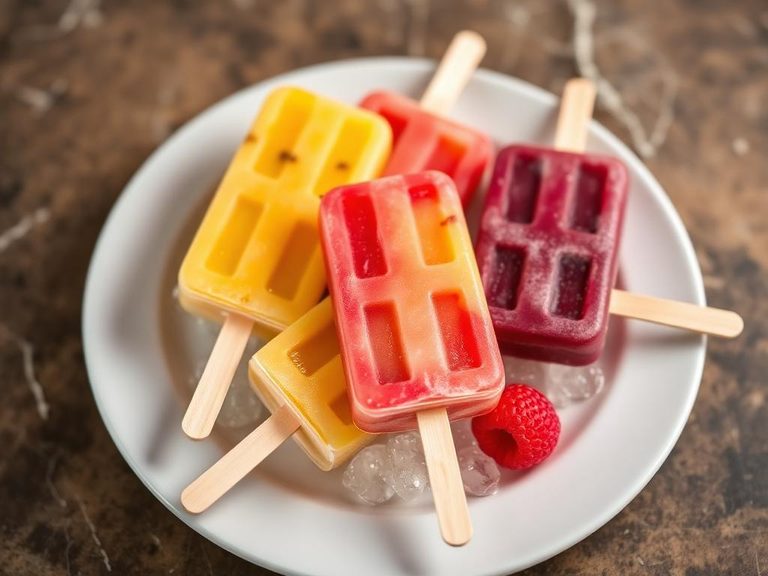
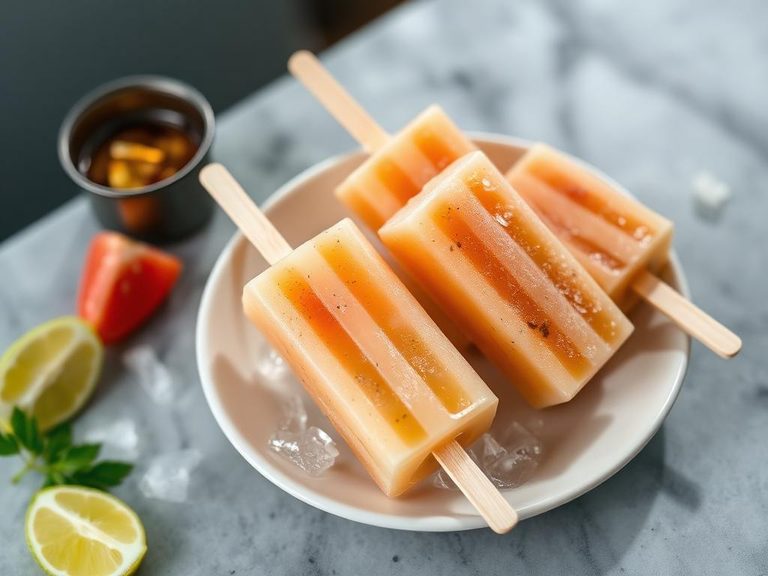
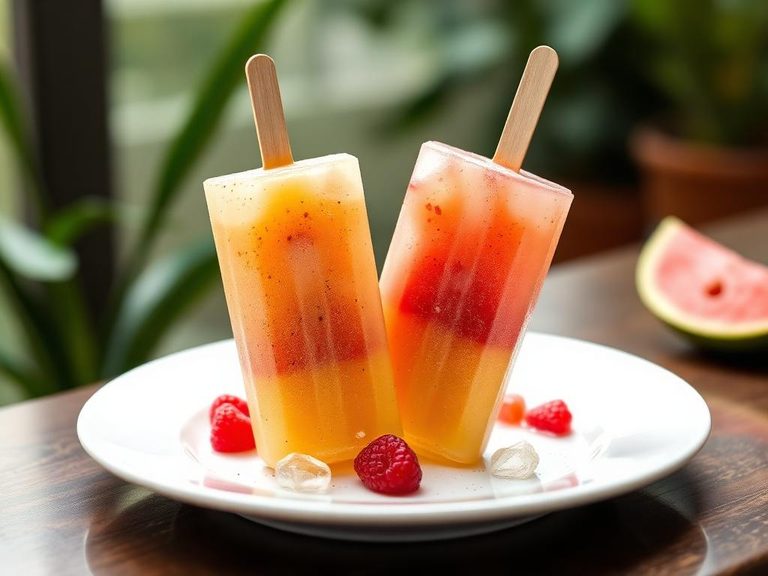
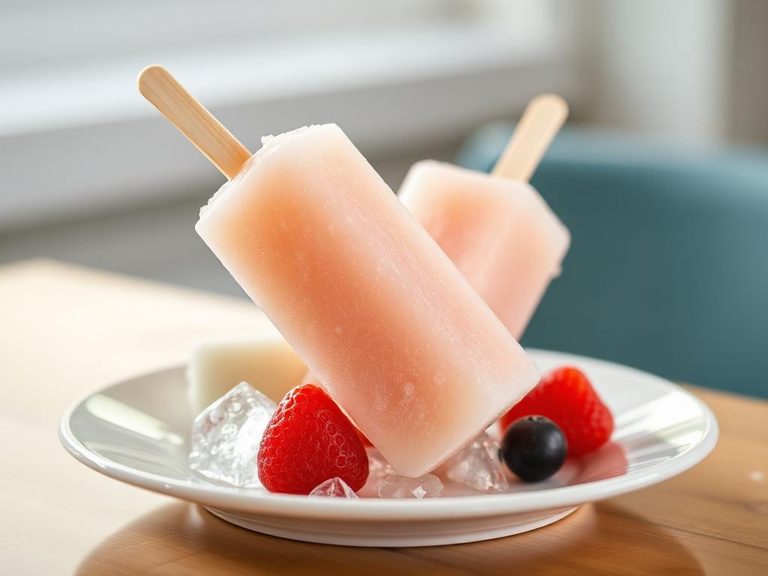
A classic frozen ice pop is a vibrant, icy treat on a stick, offering a refreshing burst of pure, sweet flavor with a satisfying, crystalline texture that melts on the tongue. Nutritionally, it's a simple, low-fat source of quick energy, primarily composed of water and sugar, making it a light, hydrating snack.
Calorie split: 0% protein · 97% carbs · 3% fat
↓ Full nutrition💚 Why it's loved
People love ice pops for their nostalgic, uncomplicated sweetness and the immediate, cooling relief they provide on a hot day. Their bright colors and variety of fruit flavors make them a fun, versatile treat for both kids and adults.
⚠️ Watch-outs & how to enjoy it better
The high sugar content can lead to a rapid blood sugar spike and subsequent crash, offering little satiety. To mitigate this, enjoy one as an occasional treat rather than a thirst-quencher, or pair it with a handful of nuts or a cheese stick to add protein and fat for more balanced energy.
Key benefits
- Quick source of hydration and energy
- Very low in fat and contains no protein
- Simple, recognizable ingredient list
- Provides a cooling sensation in hot weather
- Often fortified with Vitamin C
🍽️ Popular dishes
🌍 Where it's eaten
💡 Did you know?
The first patent for a frozen ice pop was accidentally invented in 1923 by an 11-year-old boy named Frank Epperson, who left a cup of powdered soda mix with a stirring stick on his porch overnight.
Full nutrition (USDA data · scales with serving)
| Water | 80.5 g |
| Energy | 79.0 kcal |
| Energy | 331 kj |
| Protein | 0.00 g |
| Total lipid (fat) | 0.24 g |
| Ash | 0.05 g |
| Carbohydrate, by difference | 19.2 g |
| Fiber, total dietary | 0.00 g |
| Total Sugars | 13.7 g |
| Sucrose | 6.3 g |
| Glucose | 4.0 g |
| Fructose | 2.7 g |
| Lactose | 0.00 g |
| Maltose | 0.71 g |
| Calcium, Ca | 0.00 mg |
| Iron, Fe | 0.54 mg |
| Magnesium, Mg | 1.0 mg |
| Phosphorus, P | 0.00 mg |
| Potassium, K | 15.0 mg |
| Sodium, Na | 7.0 mg |
| Zinc, Zn | 0.15 mg |
| Copper, Cu | 0.00 mg |
| Manganese, Mn | 0.00 mg |
| Selenium, Se | 0.20 ug |
| Fluoride, F | 73.9 ug |
| Vitamin C, total ascorbic acid | 0.70 mg |
| Thiamin | 0.00 mg |
| Riboflavin | 0.00 mg |
| Niacin | 0.00 mg |
| Pantothenic acid | 0.00 mg |
| Vitamin B-6 | 0.00 mg |
| Folate, total | 0.00 ug |
| Folic acid | 0.00 ug |
| Folate, food | 0.00 ug |
| Folate, DFE | 0.00 ug |
| Choline, total | 0.00 mg |
| Vitamin B-12 | 0.00 ug |
| Vitamin B-12, added | 0.00 ug |
| Vitamin A, RAE | 0.00 ug |
| Retinol | 0.00 ug |
| Carotene, beta | 0.00 ug |
| Carotene, alpha | 0.00 ug |
| Cryptoxanthin, beta | 0.00 ug |
| Vitamin A, IU | 0.00 iu |
| Lycopene | 0.00 ug |
| Lutein + zeaxanthin | 0.00 ug |
| Vitamin E (alpha-tocopherol) | 0.00 mg |
| Vitamin E, added | 0.00 mg |
| Vitamin D (D2 + D3), International Units | 0.00 iu |
| Vitamin D (D2 + D3) | 0.00 ug |
| Vitamin K (phylloquinone) | 0.00 ug |
| Alcohol, ethyl | 0.00 g |
| Caffeine | 0.00 mg |
| Theobromine | 0.00 mg |
Fat & fatty acid profile (per 100g)
| Fatty acids, total saturated | 0.01 g |
| SFA 4:0 | 0.00 g |
| SFA 6:0 | 0.00 g |
| SFA 8:0 | 0.00 g |
| SFA 10:0 | 0.00 g |
| SFA 12:0 | 0.00 g |
| SFA 14:0 | 0.00 g |
| SFA 16:0 | 0.01 g |
| SFA 18:0 | 0.00 g |
| Fatty acids, total monounsaturated | 0.05 g |
| MUFA 16:1 | 0.00 g |
| MUFA 18:1 | 0.05 g |
| MUFA 20:1 | 0.00 g |
| MUFA 22:1 | 0.00 g |
| Fatty acids, total polyunsaturated | 0.02 g |
| PUFA 18:2 | 0.01 g |
| PUFA 18:3 | 0.00 g |
| PUFA 18:4 | 0.00 g |
| PUFA 20:4 | 0.00 g |
| PUFA 20:5 n-3 (EPA) | 0.00 g |
| PUFA 22:5 n-3 (DPA) | 0.00 g |
| PUFA 22:6 n-3 (DHA) | 0.00 g |
| Cholesterol | 0.00 mg |
FAQ
Are ice pops a good source of electrolytes?
Generally, no. Most standard ice pops are primarily sugar and water. While some sports-oriented versions may contain electrolytes, traditional fruit-flavored pops do not replenish sodium or potassium effectively.
Can I make a healthier version at home?
Absolutely. Blend whole fruit (like berries or mango) with a small amount of juice or yogurt, then freeze in molds. This adds fiber, vitamins, and protein, reducing the glycemic impact.
Why do some ice pops have a 'creamy' layer at the bottom?
This is due to density separation. Ingredients like dairy or stabilizers are heavier and can settle before freezing, creating a distinct, often creamier, layer at the base of the pop.
Nutrient density (calculated · NRF9.3)
Nutrient Rich Foods index: beneficial nutrients (protein, fiber, vitamins, minerals) minus saturated fat, added sugar & sodium, per 100 kcal.
NRF9.3 index — Fulgoni, Keast & Drewnowski, 2009. Computed from USDA nutrients.
Weight-loss friendliness (composite index)
Energy density 0.79 kcal/g · 0% calories from protein · 0.0 g fiber · 13.7 g sugar per 100 g.
Composite of energy density (Rolls et al., 1999), protein & fiber satiety, minus sugar. A calculated heuristic — ranks satiety-per-calorie, not a clinical measure.
Dietary load (calculated from USDA values)
Potential renal acid load. Positive = acid-forming, negative = alkaline-forming.
Sodium-to-potassium ratio: 0.47 (lower is better — aim for ≤ 1)
Sodium:potassium per WHO potassium guidance. Computed from USDA nutrients.