

Fish, sucker, white, raw
Whole food · Finfish and Shellfish Products

Photo: Wikipedia
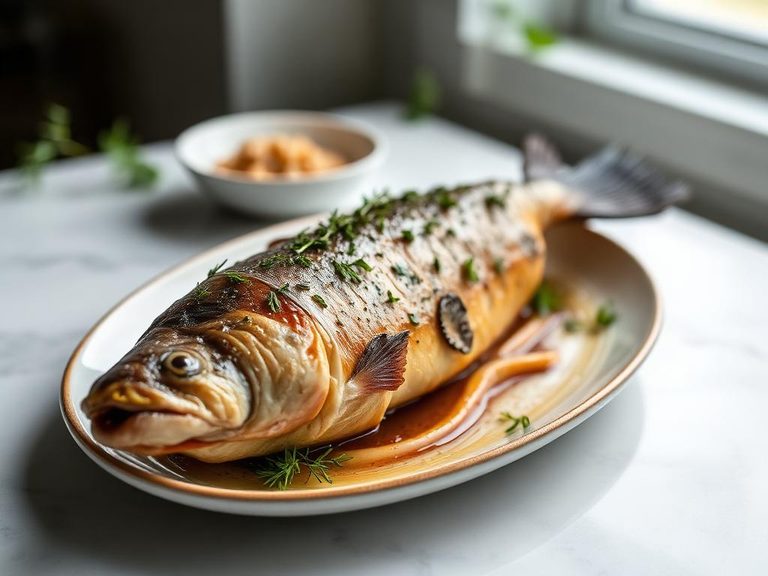
White sucker is a freshwater fish with a mild, sweet flavor and a firm, flaky texture when cooked. It's a lean protein powerhouse, delivering over 16 grams of protein per 100 grams with virtually no fat or carbohydrates.
Calorie split: 76% protein · 0% carbs · 24% fat
↓ Full nutrition💚 Why it's loved
People appreciate white sucker for its clean, non-fishy taste that readily absorbs seasonings, making it incredibly versatile in both simple pan-fries and complex stews. It's a staple in North American freshwater fishing and home cooking traditions.
⚠️ Watch-outs & how to enjoy it better
As a freshwater fish, it can sometimes have a muddy or earthy taste if not sourced from clean waters. To counteract this, soak the fillets in milk or a light brine before cooking, and ensure it's cooked to an internal temperature of 145°F (63°C) for safety and best texture.
Key benefits
- Excellent source of high-quality lean protein
- Very low in fat and calories
- Contains no carbohydrates or sugars
- Good source of B vitamins and minerals like phosphorus
🍽️ Popular dishes
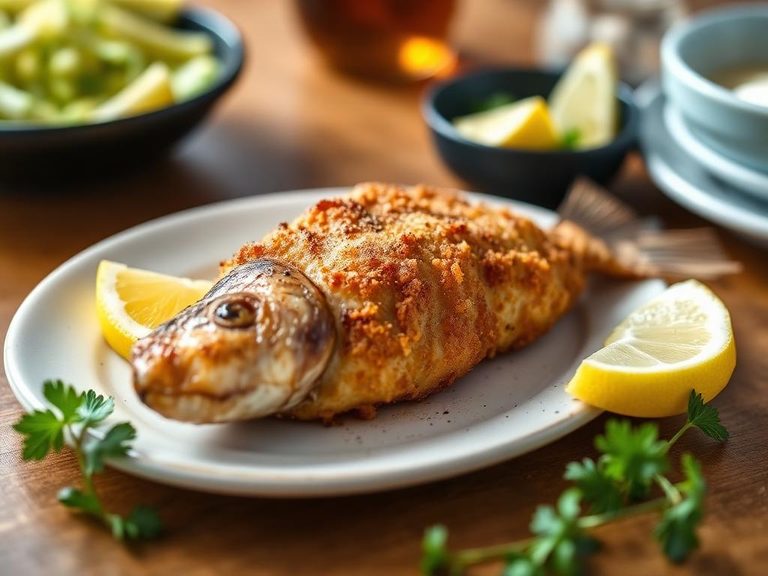
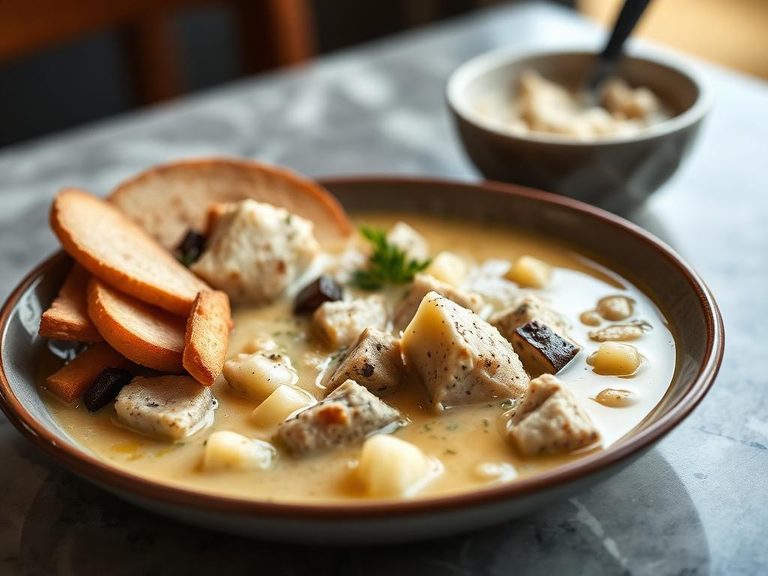
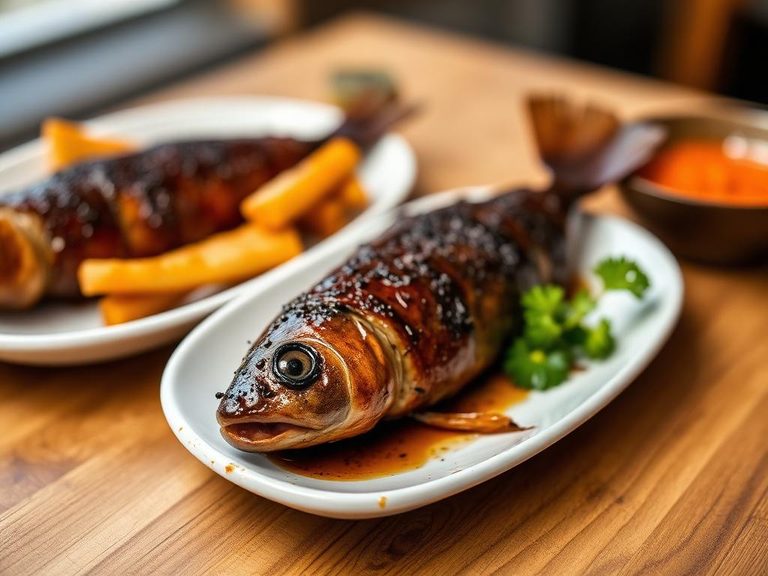
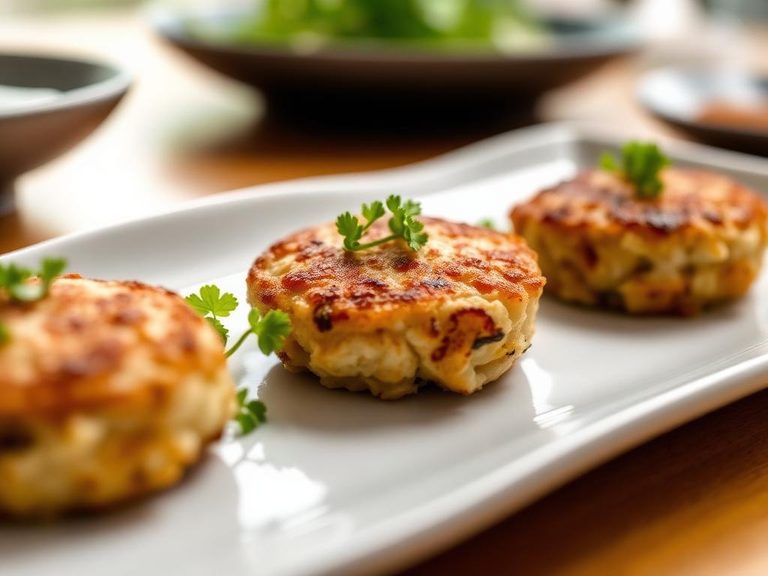
🌍 Where it's eaten
💡 Did you know?
The white sucker's mouth is downturned and fleshy, adapted for vacuuming food off the bottom of lakes and rivers, which is how it got its common name.
Full nutrition (USDA data · scales with serving)
| Water | 79.7 g |
| Energy | 92.0 kcal |
| Energy | 385 kj |
| Protein | 16.8 g |
| Total lipid (fat) | 2.3 g |
| Ash | 1.5 g |
| Carbohydrate, by difference | 0.00 g |
| Fiber, total dietary | 0.00 g |
| Calcium, Ca | 70.0 mg |
| Iron, Fe | 1.3 mg |
| Magnesium, Mg | 30.0 mg |
| Phosphorus, P | 210 mg |
| Potassium, K | 380 mg |
| Sodium, Na | 40.0 mg |
| Zinc, Zn | 0.75 mg |
| Copper, Cu | 0.20 mg |
| Manganese, Mn | 0.60 mg |
| Selenium, Se | 12.6 ug |
| Vitamin C, total ascorbic acid | 0.00 mg |
| Thiamin | 0.01 mg |
| Riboflavin | 0.07 mg |
| Niacin | 1.2 mg |
| Pantothenic acid | 0.75 mg |
| Vitamin B-6 | 0.20 mg |
| Folate, total | 15.0 ug |
| Folic acid | 0.00 ug |
| Folate, food | 15.0 ug |
| Folate, DFE | 15.0 ug |
| Vitamin B-12 | 2.0 ug |
| Vitamin A, RAE | 51.0 ug |
| Retinol | 51.0 ug |
| Vitamin A, IU | 170 iu |
Fat & fatty acid profile (per 100g)
| Fatty acids, total saturated | 0.45 g |
| SFA 14:0 | 0.05 g |
| SFA 16:0 | 0.33 g |
| SFA 18:0 | 0.07 g |
| Fatty acids, total monounsaturated | 0.71 g |
| MUFA 16:1 | 0.38 g |
| MUFA 18:1 | 0.30 g |
| MUFA 20:1 | 0.01 g |
| Fatty acids, total polyunsaturated | 0.81 g |
| PUFA 18:2 | 0.07 g |
| PUFA 18:3 | 0.05 g |
| PUFA 18:4 | 0.03 g |
| PUFA 20:4 | 0.10 g |
| PUFA 20:5 n-3 (EPA) | 0.19 g |
| PUFA 22:5 n-3 (DPA) | 0.07 g |
| PUFA 22:6 n-3 (DHA) | 0.29 g |
| Cholesterol | 41.0 mg |
Amino acid profile (per 100g)
| Tryptophan | 0.19 g |
| Threonine | 0.73 g |
| Isoleucine | 0.77 g |
| Leucine | 1.4 g |
| Lysine | 1.5 g |
| Methionine | 0.50 g |
| Cystine | 0.18 g |
| Phenylalanine | 0.65 g |
| Tyrosine | 0.57 g |
| Valine | 0.86 g |
| Arginine | 1.0 g |
| Histidine | 0.49 g |
| Alanine | 1.0 g |
| Aspartic acid | 1.7 g |
| Glutamic acid | 2.5 g |
| Glycine | 0.80 g |
| Proline | 0.59 g |
| Serine | 0.68 g |
FAQ
What does white sucker taste like?
It has a mild, sweet, and clean flavor, often compared to other white-fleshed fish like haddock or cod, but with a firmer texture.
Is white sucker a healthy fish to eat?
Yes, it is very healthy. It's low in calories and fat, high in protein, and provides essential nutrients like B vitamins and phosphorus.
How should I cook white sucker?
It's versatile. Popular methods include pan-frying, baking, broiling, or using it in chowders and fish cakes. Its firm texture holds up well to various cooking techniques.
Nutrient density (calculated · NRF9.3)
Nutrient Rich Foods index: beneficial nutrients (protein, fiber, vitamins, minerals) minus saturated fat, added sugar & sodium, per 100 kcal.
NRF9.3 index — Fulgoni, Keast & Drewnowski, 2009. Computed from USDA nutrients.
Weight-loss friendliness (composite index)
Energy density 0.92 kcal/g · 73% calories from protein · 0.0 g fiber · 0.0 g sugar per 100 g.
Composite of energy density (Rolls et al., 1999), protein & fiber satiety, minus sugar. A calculated heuristic — ranks satiety-per-calorie, not a clinical measure.
Dietary load (calculated from USDA values)
Potential renal acid load. Positive = acid-forming, negative = alkaline-forming.
Sodium-to-potassium ratio: 0.11 (lower is better — aim for ≤ 1)
Sodium:potassium per WHO potassium guidance. Computed from USDA nutrients.