

Fish, herring, Pacific, raw
Whole food · Finfish and Shellfish Products

Photo: Wikipedia
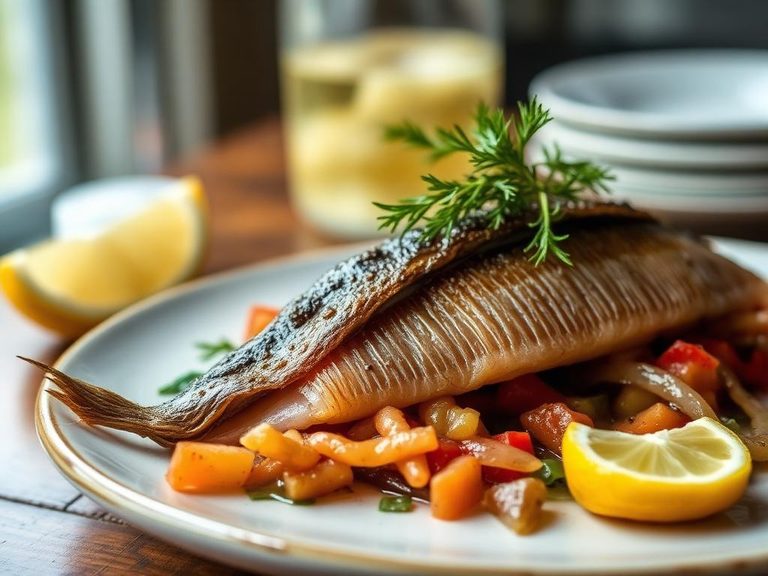
Pacific herring is a small, oily forage fish prized for its rich, savory flavor and tender, flaky texture. Packed with protein and healthy fats, it's a nutritional powerhouse, offering a substantial dose of omega-3 fatty acids in every serving. Its distinct, robust taste makes it a staple in coastal cuisines around the North Pacific.
Calorie split: 34% protein · 0% carbs · 66% fat
↓ Full nutrition💚 Why it's loved
People love its deep, umami-rich flavor that stands up to bold curing, pickling, and smoking techniques. It's a culturally significant fish, central to traditions from Scandinavian smörgåsbords to Indigenous Pacific Northwest feasts.
⚠️ Watch-outs & how to enjoy it better
As an oily fish, it has a strong flavor that some find overpowering, and its bones, while edible when canned, can be off-putting. It is a common fish allergen, so those with seafood allergies must avoid it. To counteract the strong taste, it's often paired with acidic elements like vinegar or lemon, or milder sides like potatoes and bread.
Key benefits
- Excellent source of high-quality protein for muscle maintenance.
- Rich in heart-healthy omega-3 fatty acids (EPA and DHA).
- Provides essential vitamins like B12 and D.
- Contains important minerals such as selenium and phosphorus.
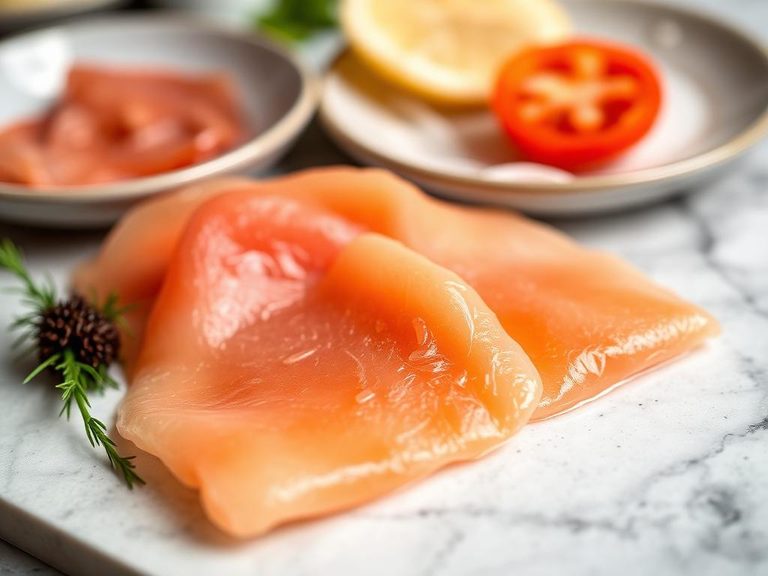
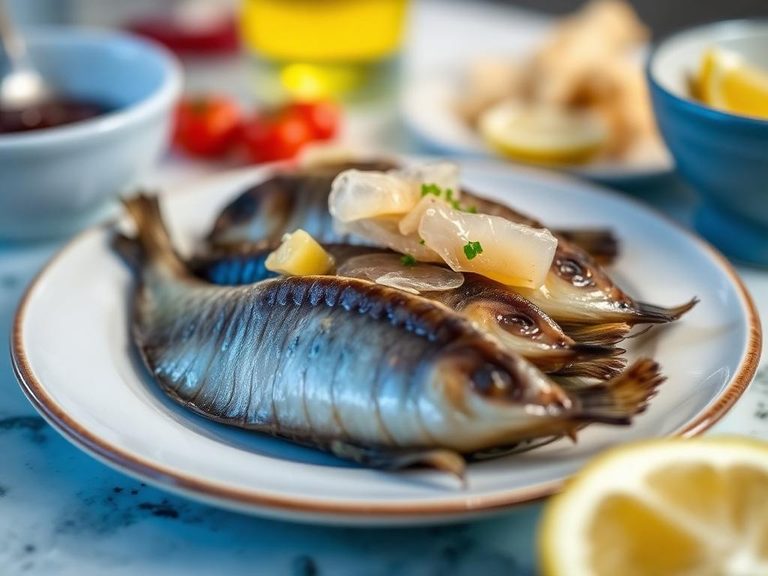
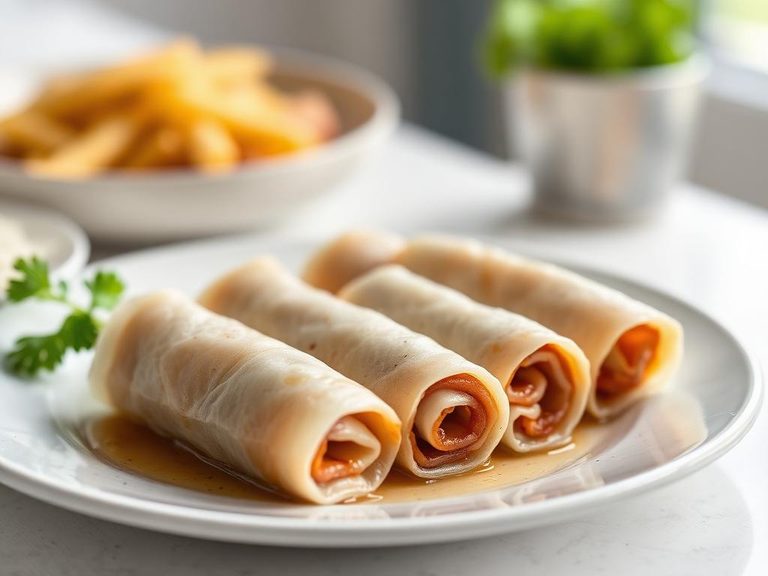
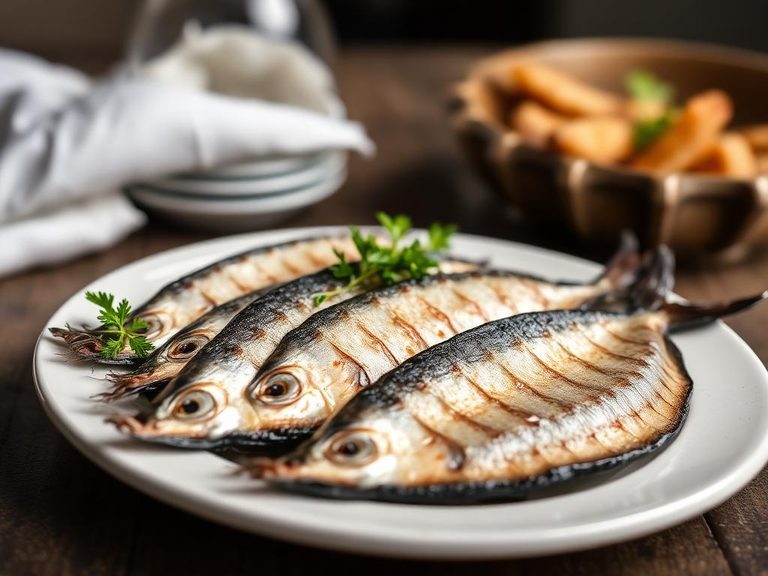
🍽️ Popular dishes
🌍 Where it's eaten
💡 Did you know?
Pacific herring are so vital to their ecosystem that their spawning events can turn entire coastal waters milky white and are a major feast for birds, marine mammals, and other fish.
Full nutrition (USDA data · scales with serving)
| Water | 71.5 g |
| Energy | 195 kcal |
| Energy | 816 kj |
| Protein | 16.4 g |
| Total lipid (fat) | 13.9 g |
| Ash | 2.4 g |
| Carbohydrate, by difference | 0.00 g |
| Fiber, total dietary | 0.00 g |
| Calcium, Ca | 83.0 mg |
| Iron, Fe | 1.1 mg |
| Magnesium, Mg | 32.0 mg |
| Phosphorus, P | 228 mg |
| Potassium, K | 423 mg |
| Sodium, Na | 74.0 mg |
| Zinc, Zn | 0.53 mg |
| Copper, Cu | 0.08 mg |
| Manganese, Mn | 0.04 mg |
| Selenium, Se | 36.5 ug |
| Vitamin C, total ascorbic acid | 0.00 mg |
| Thiamin | 0.06 mg |
| Riboflavin | 0.20 mg |
| Niacin | 2.2 mg |
| Pantothenic acid | 1.0 mg |
| Vitamin B-6 | 0.45 mg |
| Folate, total | 5.0 ug |
| Folic acid | 0.00 ug |
| Folate, food | 5.0 ug |
| Folate, DFE | 5.0 ug |
| Vitamin B-12 | 10.0 ug |
| Vitamin A, RAE | 32.0 ug |
| Retinol | 32.0 ug |
| Vitamin A, IU | 106 iu |
Fat & fatty acid profile (per 100g)
| Fatty acids, total saturated | 3.3 g |
| SFA 14:0 | 0.91 g |
| SFA 16:0 | 2.0 g |
| SFA 18:0 | 0.26 g |
| Fatty acids, total monounsaturated | 6.9 g |
| MUFA 16:1 | 1.1 g |
| MUFA 18:1 | 2.9 g |
| MUFA 20:1 | 1.4 g |
| MUFA 22:1 | 1.5 g |
| Fatty acids, total polyunsaturated | 2.4 g |
| PUFA 18:2 | 0.19 g |
| PUFA 18:3 | 0.06 g |
| PUFA 18:4 | 0.25 g |
| PUFA 20:4 | 0.10 g |
| PUFA 20:5 n-3 (EPA) | 0.97 g |
| PUFA 22:5 n-3 (DPA) | 0.17 g |
| PUFA 22:6 n-3 (DHA) | 0.69 g |
| Cholesterol | 77.0 mg |
Amino acid profile (per 100g)
| Tryptophan | 0.18 g |
| Threonine | 0.72 g |
| Isoleucine | 0.76 g |
| Leucine | 1.3 g |
| Lysine | 1.5 g |
| Methionine | 0.48 g |
| Cystine | 0.18 g |
| Phenylalanine | 0.64 g |
| Tyrosine | 0.55 g |
| Valine | 0.84 g |
| Arginine | 0.98 g |
| Histidine | 0.48 g |
| Alanine | 0.99 g |
| Aspartic acid | 1.7 g |
| Glutamic acid | 2.4 g |
| Glycine | 0.79 g |
| Proline | 0.58 g |
| Serine | 0.67 g |
FAQ
How is Pacific herring different from Atlantic herring?
They are closely related but distinct species. Pacific herring (Clupea pallasii) is native to the North Pacific Ocean, while Atlantic herring (Clupea harengus) is from the North Atlantic. Their flavor and fat content are similar, but Pacific herring is often considered slightly milder.
Can you eat the bones in canned herring?
Yes, absolutely. The bones in canned herring are softened by the canning process and are an excellent source of calcium and other minerals. They are a normal and nutritious part of the product.
What does 'raw' mean in the context of this fish?
For herring, 'raw' typically refers to the fresh, unprocessed state before it is cured, pickled, smoked, or cooked. It is very rarely consumed completely raw like sushi; it's almost always prepared with salt, vinegar, or heat.
Nutrient density (calculated · NRF9.3)
Nutrient Rich Foods index: beneficial nutrients (protein, fiber, vitamins, minerals) minus saturated fat, added sugar & sodium, per 100 kcal.
NRF9.3 index — Fulgoni, Keast & Drewnowski, 2009. Computed from USDA nutrients.
Weight-loss friendliness (composite index)
Energy density 1.95 kcal/g · 34% calories from protein · 0.0 g fiber · 0.0 g sugar per 100 g.
Composite of energy density (Rolls et al., 1999), protein & fiber satiety, minus sugar. A calculated heuristic — ranks satiety-per-calorie, not a clinical measure.
Dietary load (calculated from USDA values)
Potential renal acid load. Positive = acid-forming, negative = alkaline-forming.
Sodium-to-potassium ratio: 0.17 (lower is better — aim for ≤ 1)
Sodium:potassium per WHO potassium guidance. Computed from USDA nutrients.