Smoked Herring
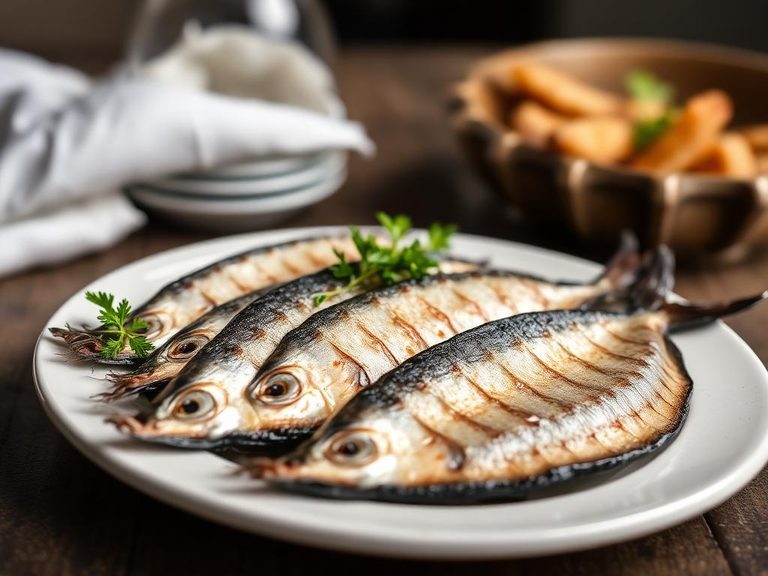
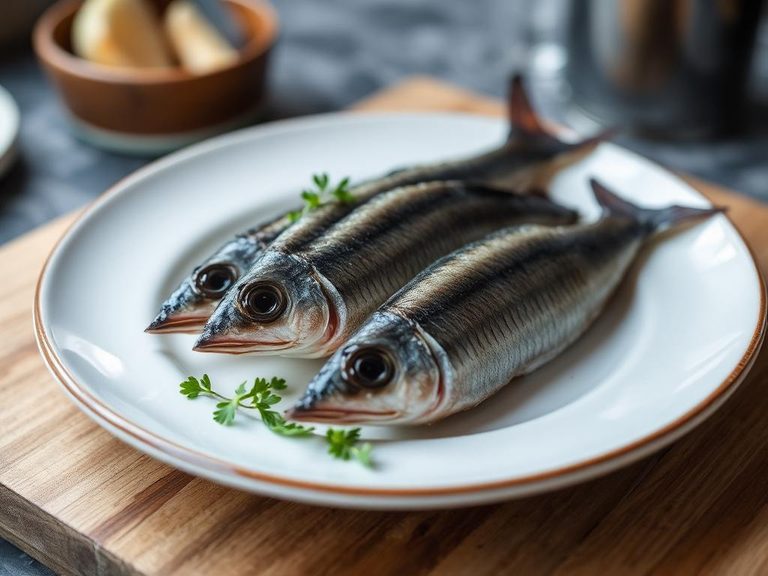
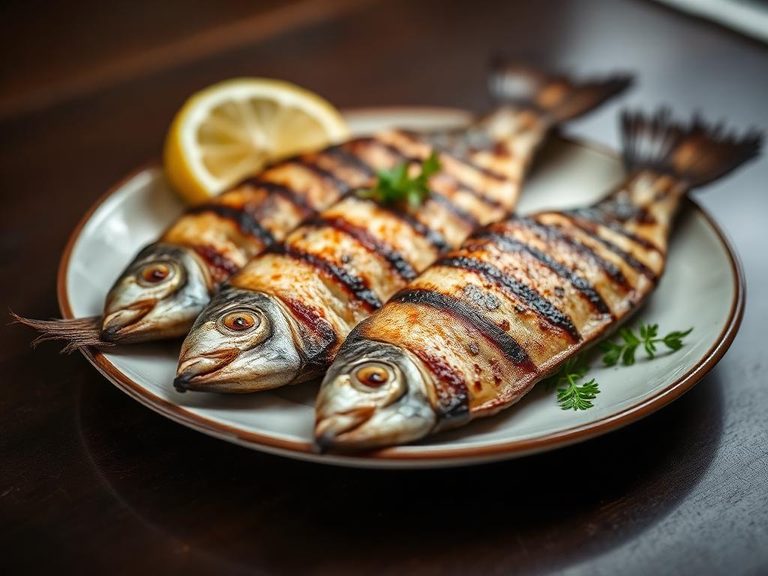
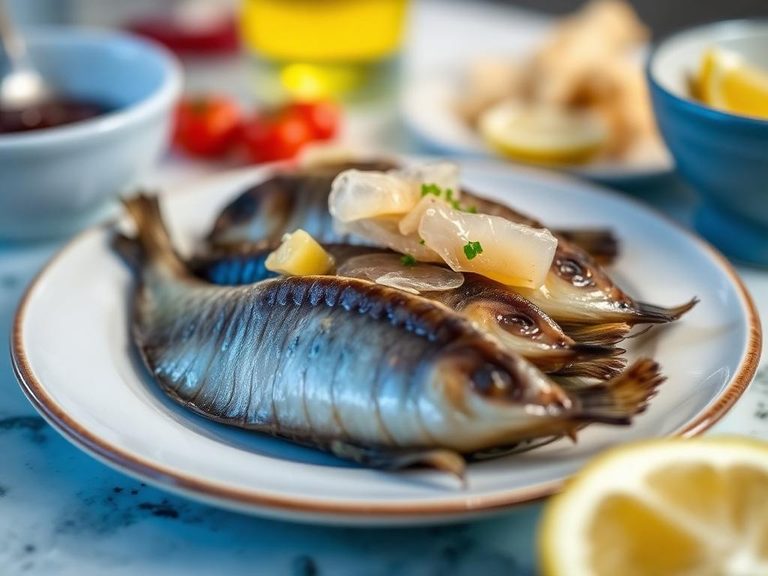
Smoked herring, commonly known as kippers, are whole herring fish that have been gutted, butterfly-filleted, and cold-smoked over wood chips. This process gives them a distinctive golden color, a firm texture, and a rich, savory, smoky flavor. They are a traditional breakfast staple and culinary icon in the United Kingdom and Ireland.
🍽️ Nutrition at a glance
Kippers are an excellent source of high-quality protein and healthy fats, particularly omega-3 fatty acids, while being very low in carbohydrates. A typical serving provides a significant amount of vitamin D, vitamin B12, and selenium, with a calorie count roughly between 200-250 kcal.
Nutrition breakdown
| Calories | 217 kcal |
| Protein | 24.6 g |
| Carbs | 0 g |
| Fat | 12.8 g |
| Fiber | 0 g |
| Sugar | 0 g |
| Sodium | 680 mg |
| Vitamin D | 4.8 µg |
| Vitamin B12 | 13.5 µg |
| Selenium | 46.8 µg |
| Niacin (B3) | 5.4 mg |
| Phosphorus | 280 mg |
| Omega-3 (EPA+DHA) | 1.8 g |
| Vitamin B6 | 0.3 mg |
| Iodine | 45 µg |
Per 1 kipper (approximately 100 g) · estimated, varies by recipe
💡 What's interesting
Culturally, kippers are deeply embedded in British working-class history as an affordable, nutrient-dense breakfast, famously associated with seaside towns and Victorian-era railways. Nutritionally, they are one of the few natural food sources of vitamin D, making them historically important in regions with limited sunlight.