

Fish, herring eggs on giant kelp, Pacific (Alaska Native)
Whole food · American Indian/Alaska Native Foods
Herring roe attached to strands of giant kelp is a traditional Alaskan Native delicacy, offering a unique textural contrast between the delicate, popping eggs and the chewy, savory kelp. The flavor is intensely briny and oceanic, with a clean, sweet finish from the fresh eggs. Nutritionally, it is a lean, high-protein food with minimal fat and carbohydrates.
Calorie split: 72% protein · 17% carbs · 11% fat
↓ Full nutrition💚 Why it's loved
It is cherished for its distinctive, concentrated taste of the sea and its unique texture, which is both delicate and satisfying. In Alaskan Native cultures, it is a valued traditional food, often prepared and shared during seasonal gatherings, connecting people to ancestral practices and the marine environment.
⚠️ Watch-outs & how to enjoy it better
The intense brininess and specific texture are an acquired taste and may be overwhelming for some. Those with shellfish or fish allergies should avoid it, as herring is a fish. To balance the strong flavor, it can be served with mild, starchy foods like rice or potatoes, which also help moderate the sodium impact.
Key benefits
- Excellent source of complete protein for muscle maintenance.
- Very low in fat and carbohydrates, suitable for low-calorie diets.
- Provides iodine and other trace minerals from the kelp.
- Traditional, minimally processed whole food.
- Naturally free of added sugars.
🍽️ Popular dishes
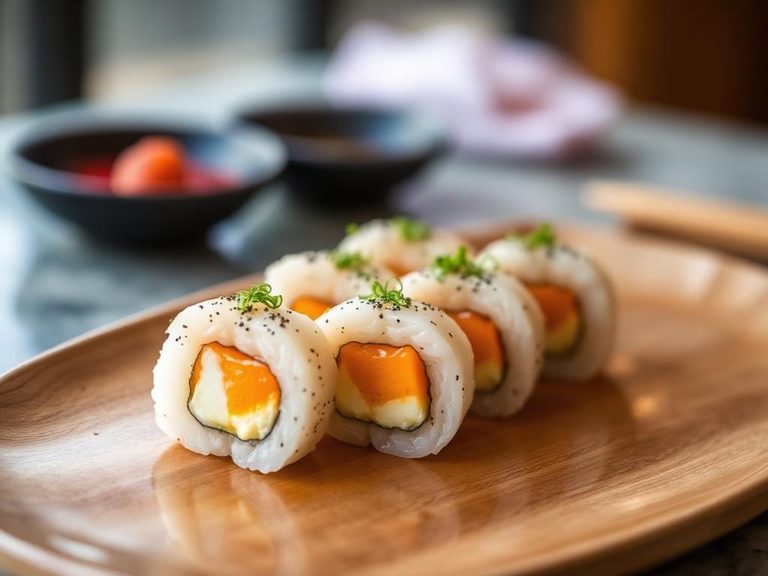
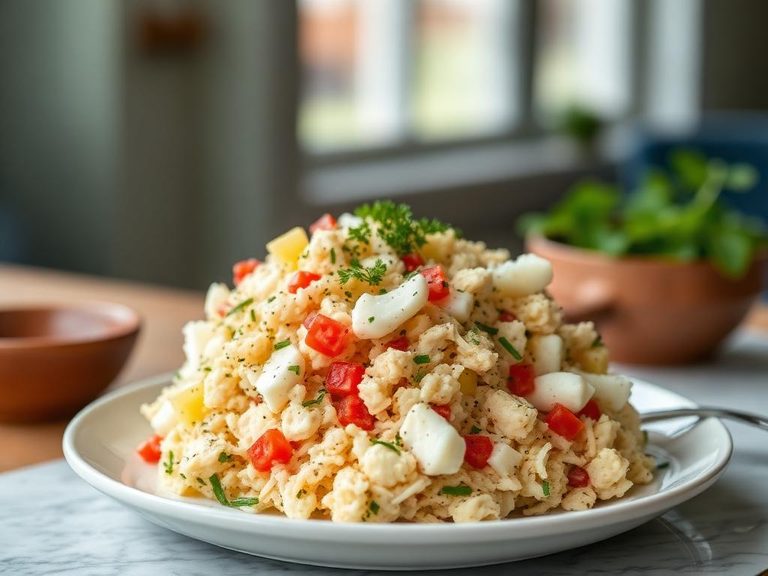
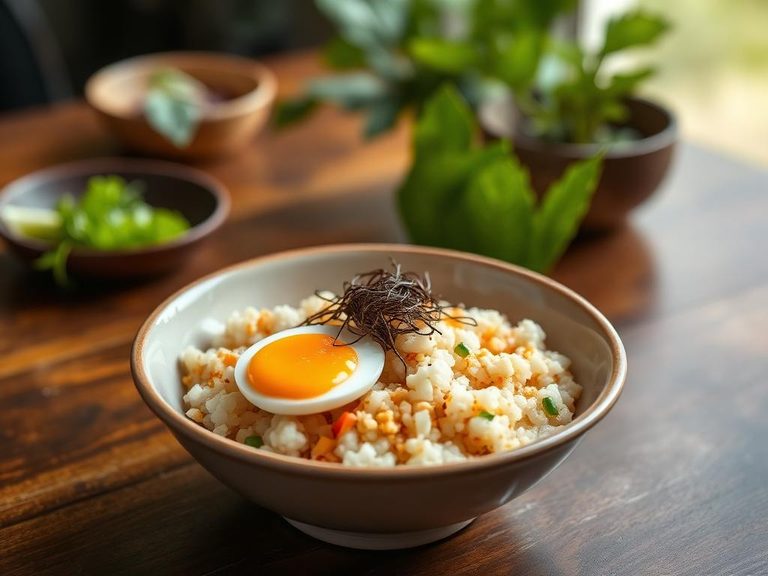
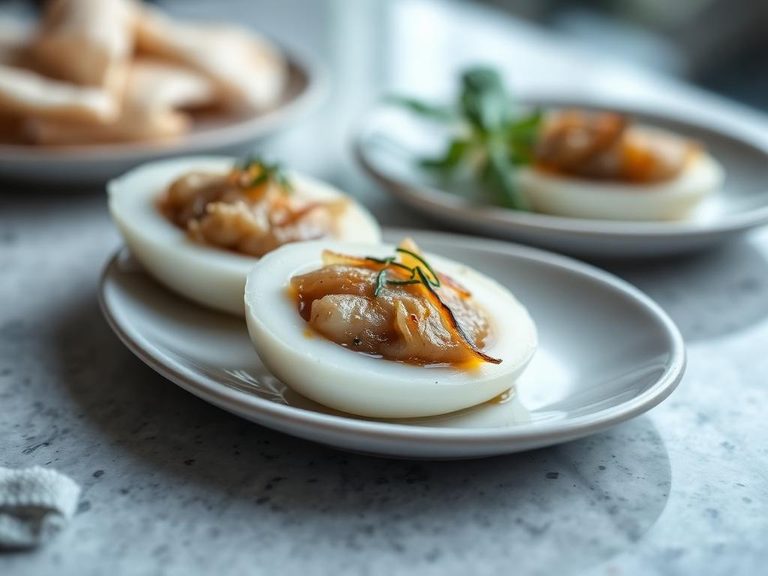
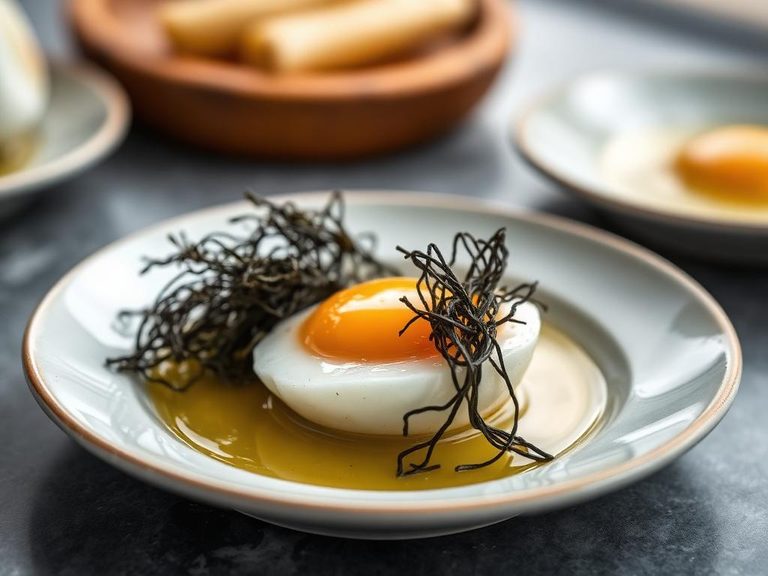
🌍 Where it's eaten
💡 Did you know?
The eggs are harvested when herring spawn on kelp fronds, creating a natural, edible structure that is both the food and its packaging.
Full nutrition (USDA data · scales with serving)
| Water | 81.8 g |
| Energy | 63.0 kcal |
| Energy | 263 kj |
| Protein | 11.3 g |
| Total lipid (fat) | 0.80 g |
| Ash | 3.5 g |
| Carbohydrate, by difference | 2.6 g |
| Calcium, Ca | 161 mg |
| Iron, Fe | 3.4 mg |
| Sodium, Na | 61.0 mg |
| Thiamin | 0.10 mg |
| Riboflavin | 0.13 mg |
| Niacin | 2.7 mg |
| Vitamin A, IU | 89.0 iu |
Fat & fatty acid profile (per 100g)
Estimated from Fish, halibut, raw, with skin (Alaska Native) — USDA does not publish this profile for Fish.
| Fatty acids, total saturated | 0.73 g |
| SFA 8:0 | 0.00 g |
| SFA 10:0 | 0.00 g |
| SFA 12:0 | 0.00 g |
| SFA 14:0 | 0.09 g |
| SFA 15:0 | 0.01 g |
| SFA 16:0 | 0.38 g |
| SFA 17:0 | 0.00 g |
| SFA 18:0 | 0.09 g |
| SFA 20:0 | 0.01 g |
| SFA 22:0 | 0.00 g |
| SFA 24:0 | 0.00 g |
| Fatty acids, total monounsaturated | 1.2 g |
| MUFA 14:1 | 0.00 g |
| MUFA 15:1 | 0.00 g |
| MUFA 16:1 | 0.23 g |
| MUFA 17:1 | 0.00 g |
| MUFA 18:1 | 0.59 g |
| MUFA 20:1 | 0.11 g |
| MUFA 22:1 | 0.00 g |
| MUFA 22:1 c | 0.00 g |
| MUFA 24:1 c | 0.01 g |
| Fatty acids, total polyunsaturated | 0.91 g |
| PUFA 18:2 | 0.02 g |
| PUFA 18:3 | 0.01 g |
| PUFA 18:3 n-3 c,c,c (ALA) | 0.01 g |
| PUFA 18:3 n-6 c,c,c | 0.00 g |
| PUFA 18:4 | 0.00 g |
| PUFA 20:2 n-6 c,c | 0.01 g |
| PUFA 20:3 | 0.00 g |
| PUFA 20:4 | 0.03 g |
| PUFA 20:5 n-3 (EPA) | 0.22 g |
| PUFA 21:5 | 0.00 g |
| PUFA 22:4 | 0.00 g |
| PUFA 22:5 n-3 (DPA) | 0.06 g |
| PUFA 22:6 n-3 (DHA) | 0.39 g |
| Cholesterol | 72.0 mg |
Amino acid profile (per 100g)
Estimated from Fish, halibut, raw, with skin (Alaska Native) — USDA does not publish this profile for Fish.
| Tryptophan | 0.31 g |
| Threonine | 0.95 g |
| Isoleucine | 0.94 g |
| Leucine | 1.6 g |
| Lysine | 1.8 g |
| Methionine | 0.80 g |
| Cystine | 0.35 g |
| Phenylalanine | 0.82 g |
| Tyrosine | 0.70 g |
| Valine | 1.0 g |
| Arginine | 1.2 g |
| Histidine | 0.50 g |
| Alanine | 1.2 g |
| Aspartic acid | 2.8 g |
| Glutamic acid | 3.2 g |
| Glycine | 0.93 g |
| Proline | 0.73 g |
| Serine | 0.91 g |
| Hydroxyproline | 0.18 g |
FAQ
What does it taste like?
It has a very strong, briny, oceanic flavor with a subtle sweetness from the eggs. The texture is a combination of soft, popping eggs and a slightly chewy kelp strand.
How is it typically prepared?
It is most often eaten raw or lightly cured in salt or soy sauce. It can be served as a topping for rice, mixed into salads, or used as a garnish for soups and other dishes.
Is it high in sodium?
Yes, due to its natural ocean salt content and common curing methods. Rinsing it briefly in fresh water before eating can help reduce the saltiness.
Weight-loss friendliness (composite index)
Energy density 0.63 kcal/g · 72% calories from protein · 0.0 g fiber · 0.0 g sugar per 100 g.
Composite of energy density (Rolls et al., 1999), protein & fiber satiety, minus sugar. A calculated heuristic — ranks satiety-per-calorie, not a clinical measure.