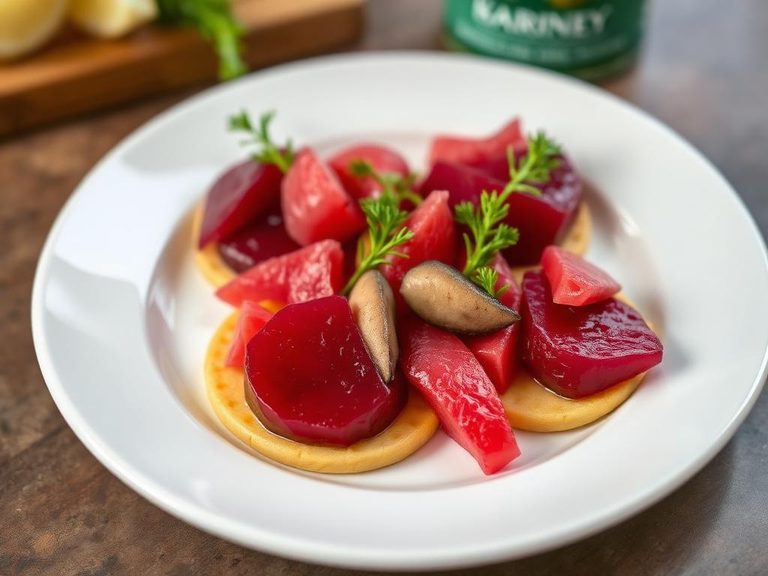
Pickled Herring Egg

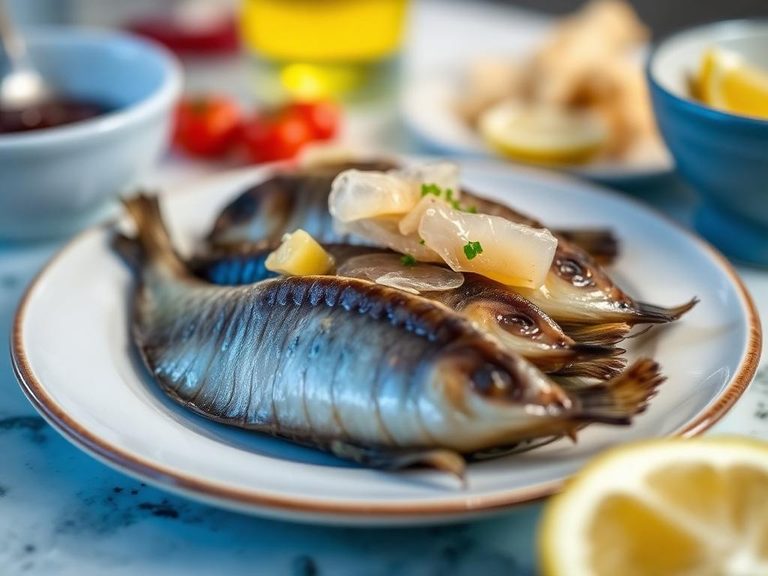
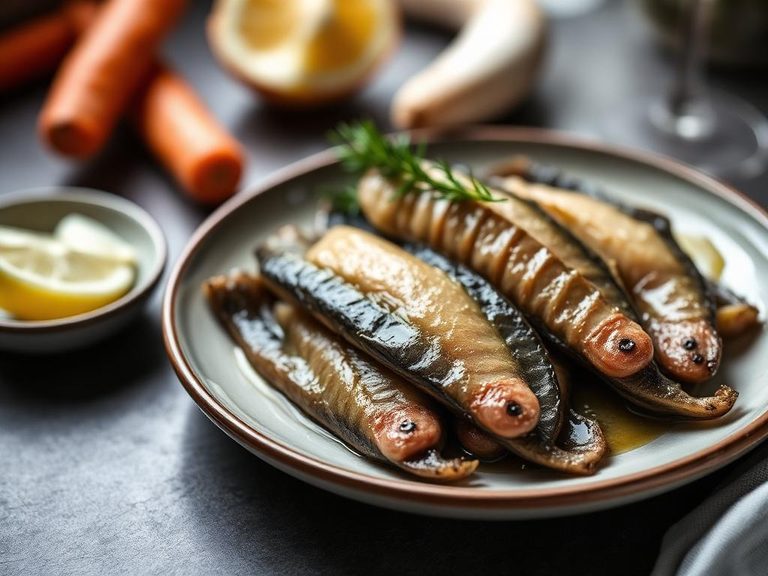
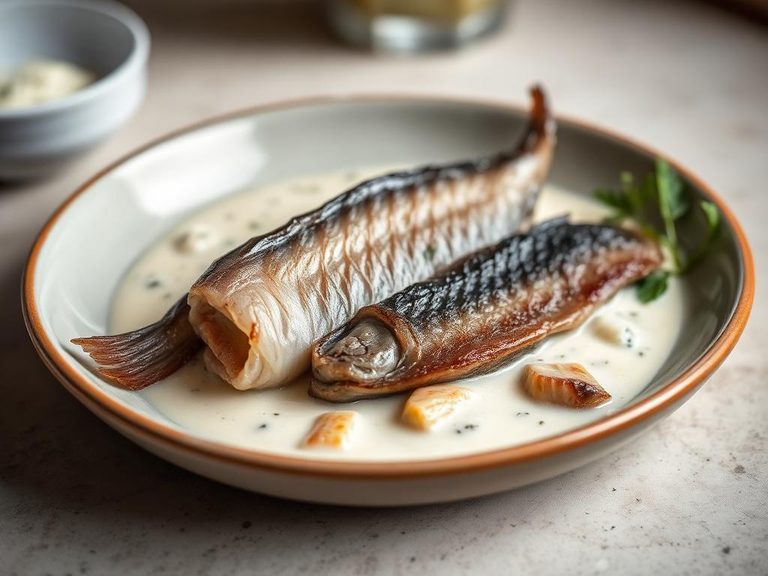
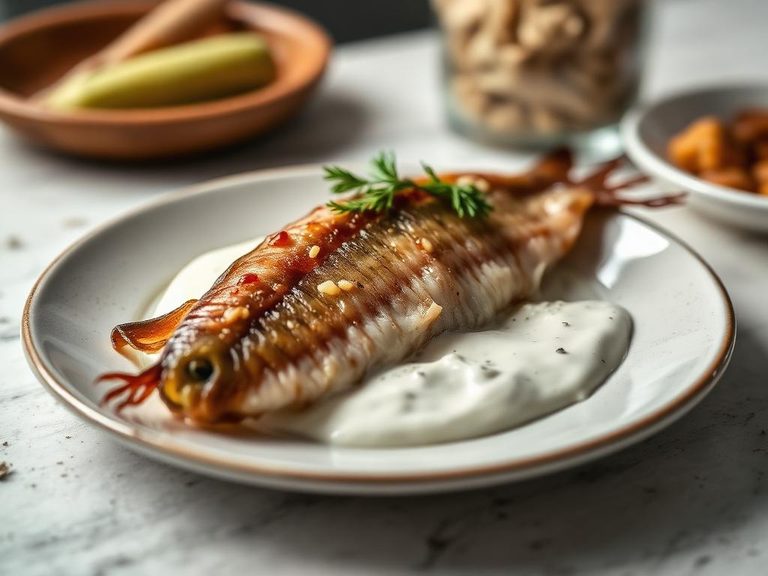
Pickled Herring Egg is a traditional Nordic and Baltic delicacy, primarily made from the roe (eggs) of herring fish cured in a brine of vinegar, salt, and sugar. It is commonly served as a cold appetizer, on open-faced sandwiches, or as part of a festive smörgåsbord, and is known for its distinct, slightly sweet and tangy flavor profile.
🍽️ Nutrition at a glance
This dish is high in protein and healthy fats, while being very low in carbohydrates. It is an excellent source of omega-3 fatty acids, vitamin D, and vitamin B12, with a typical serving containing approximately 150-200 calories.
Nutrition breakdown
| Calories | 170 kcal |
| Protein | 12 g |
| Carbs | 4 g |
| Fat | 12 g |
| Fiber | 0 g |
| Sugar | 3 g |
| Sodium | 580 mg |
| Vitamin B12 | 4.5 mcg |
| Vitamin D | 3.2 mcg |
| Omega-3 (EPA+DHA) | 800 mg |
| Selenium | 15 mcg |
| Phosphorus | 180 mg |
| Vitamin A | 90 IU |
| Iron | 0.8 mg |
| Zinc | 0.7 mg |
Per 1/4 cup (60 g) · estimated, varies by recipe
💡 What's interesting
Culturally, pickled herring eggs are a cornerstone of Midsummer celebrations in countries like Sweden and Finland. Nutritionally, the curing process not only preserves the roe but also enhances its umami flavor while retaining its dense concentration of heart-healthy nutrients.