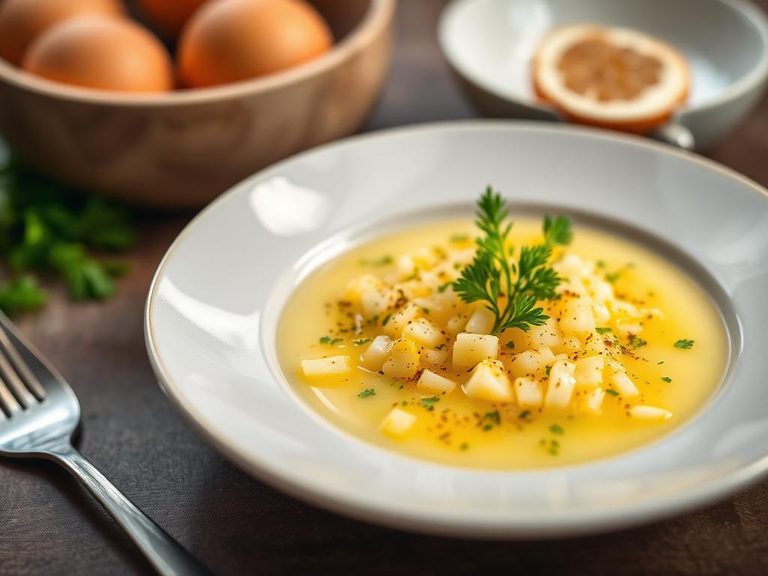
Herring Egg Sushi
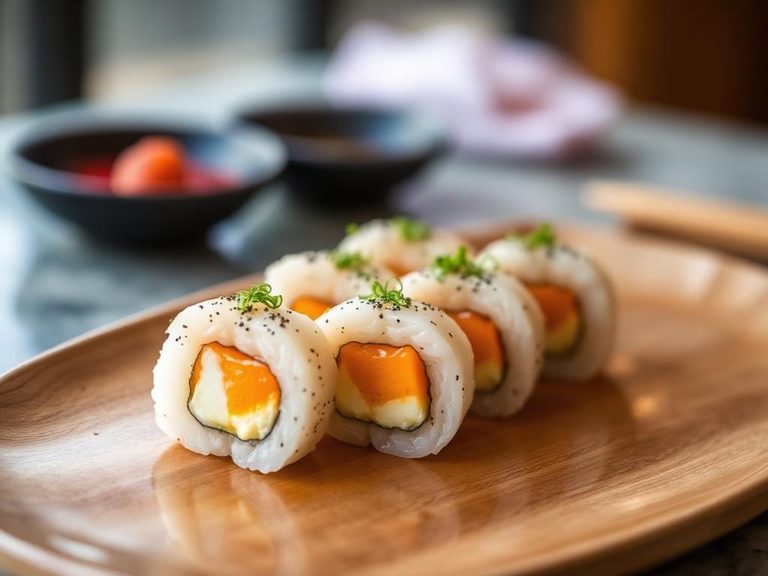
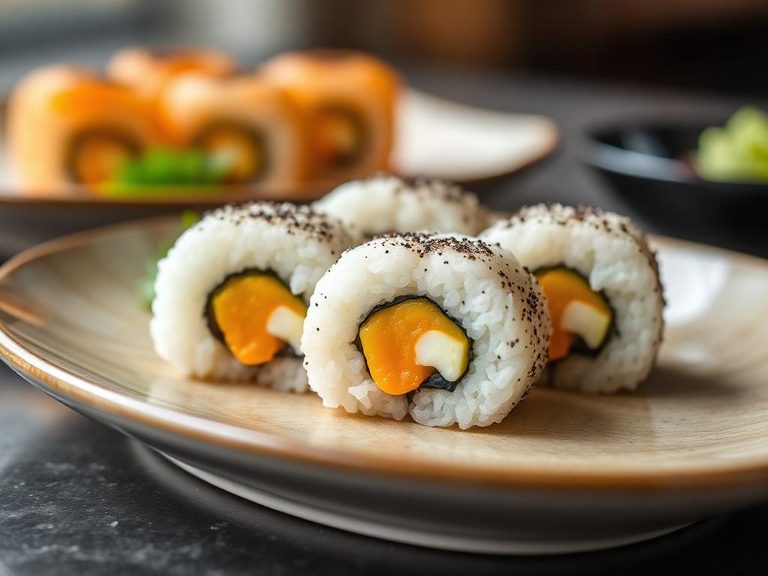
Herring Egg Sushi is a traditional Japanese sushi variety that features the tiny, translucent eggs of herring (nishin) as the primary topping, often served over vinegared rice. The dish is known for its delicate, slightly briny flavor and unique, popping texture. It is particularly popular in coastal regions of Japan, especially during the spring spawning season.
🍽️ Nutrition at a glance
This dish is a balanced source of high-quality protein and healthy fats, with a moderate amount of carbohydrates from the sushi rice. It is notably rich in omega-3 fatty acids, vitamin D, and vitamin B12, and a typical serving contains approximately 300-400 calories.
Nutrition breakdown
| Calories | 350 kcal |
| Protein | 18 g |
| Carbs | 38 g |
| Fat | 12 g |
| Fiber | 1 g |
| Sugar | 5 g |
| Sodium | 480 mg |
| Vitamin B12 | 4.5 mcg |
| Vitamin D | 12 mcg |
| Omega-3 (EPA+DHA) | 800 mg |
| Selenium | 25 mcg |
| Phosphorus | 220 mg |
| Niacin (B3) | 5 mg |
| Iron | 1.8 mg |
| Zinc | 2.1 mg |
Per 2 pieces (120 g) · estimated, varies by recipe
💡 What's interesting
Culturally, herring eggs are considered a seasonal delicacy (shun) in Japan, symbolizing spring and abundance. Nutritionally, the eggs are a concentrated source of nutrients, providing a significant boost of heart-healthy fats and essential vitamins in a small, flavorful package.