Herring Eggs on Kelp (Sgaan)
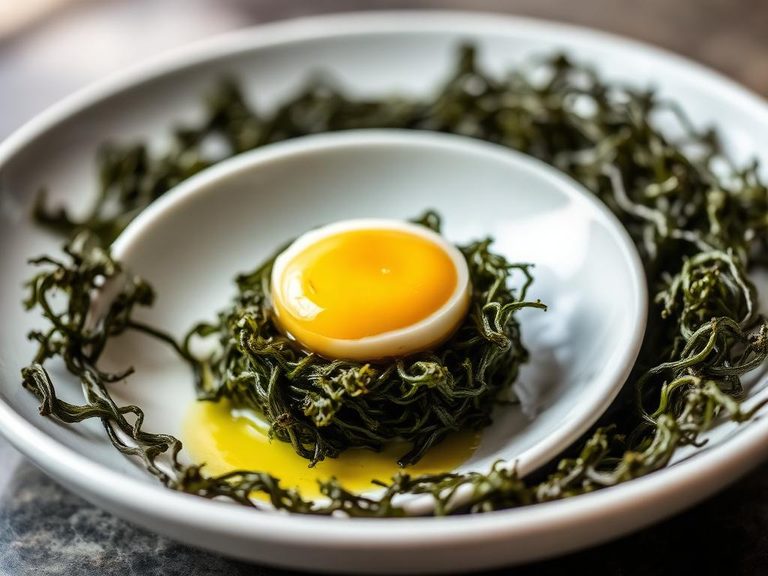
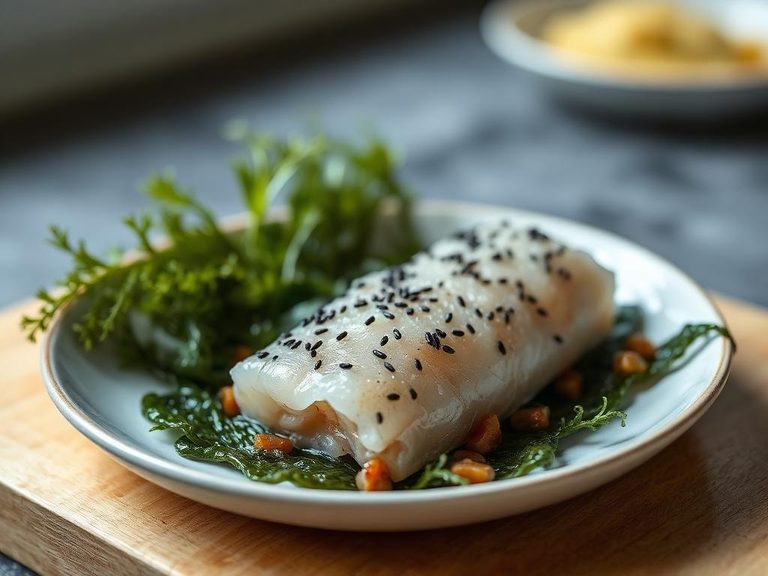
Herring Eggs on Kelp (Sgaan) is a traditional Indigenous coastal dish from the Pacific Northwest, featuring herring roe deposited on kelp fronds. The primary ingredients are the herring eggs themselves and the kelp they adhere to, often harvested together in the spring. It is a celebrated seasonal delicacy among First Nations communities in British Columbia and Alaska.
🍽️ Nutrition at a glance
This dish is a powerhouse of lean protein and essential minerals, with very low fat and negligible carbohydrates. A single serving provides a significant amount of high-quality protein, along with key nutrients like iodine, calcium, and omega-3 fatty acids, typically for under 150 calories.
Nutrition breakdown
| Calories | 130 kcal |
| Protein | 22 g |
| Carbs | 3 g |
| Fat | 3 g |
| Fiber | 1 g |
| Sugar | 0 g |
| Sodium | 650 mg |
| Iodine | High (varies) |
| Calcium | 180 mg |
| Iron | 3 mg |
| Phosphorus | 250 mg |
| Vitamin B12 | 10 mcg |
| Omega-3 (DHA) | 500 mg |
| Selenium | 35 mcg |
| Zinc | 2 mg |
Per 1/2 cup (85 g) · estimated, varies by recipe
💡 What's interesting
Culturally, Sgaan is deeply tied to the seasonal cycles and sustainable harvesting practices of coastal Indigenous peoples, representing a vital source of food and cultural connection. Nutritionally, it's unique as a direct, wild-harvested source of marine nutrients, offering a concentrated boost of iodine for thyroid health and calcium from the edible kelp.