

Fish, devilfish, meat (Alaska Native)
Whole food · American Indian/Alaska Native Foods

Photo: Wikipedia
Devilfish, or octopus, is a firm, meaty cephalopod with a distinctive mild, slightly sweet flavor and a satisfyingly chewy texture when cooked properly. It's a powerhouse of lean protein, delivering over 11 grams per 100 grams with virtually no carbohydrates or fat. This makes it a prized, low-calorie staple in coastal cuisines worldwide.
Calorie split: 50% protein · 0% carbs · 50% fat
↓ Full nutrition💚 Why it's loved
People cherish octopus for its unique, satisfying texture that can be tenderized to perfection and its ability to absorb the flavors of marinades, grills, and stews. It's a symbol of coastal feasts and is celebrated in dishes from Greek tavernas to Japanese izakayas.
⚠️ Watch-outs & how to enjoy it better
The primary challenge is achieving tenderness; improper cooking results in a rubbery texture. It is also a common shellfish allergen. To counteract toughness, tenderize by pounding, freezing, or slow-cooking before a quick sear. Those with allergies must avoid it entirely.
Key benefits
- Excellent source of lean, complete protein
- Very low in calories and fat
- Rich in essential minerals like selenium and vitamin B12
- Provides omega-3 fatty acids
- Contains taurine, an antioxidant amino acid
🍽️ Popular dishes
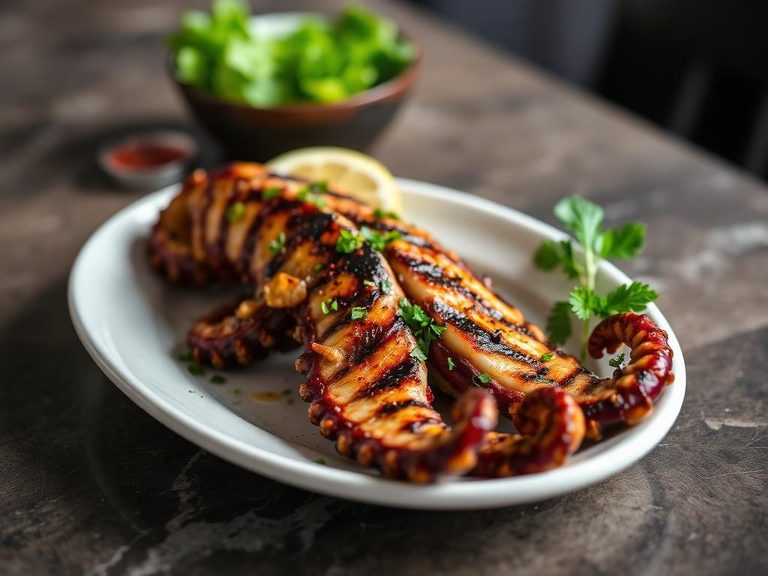
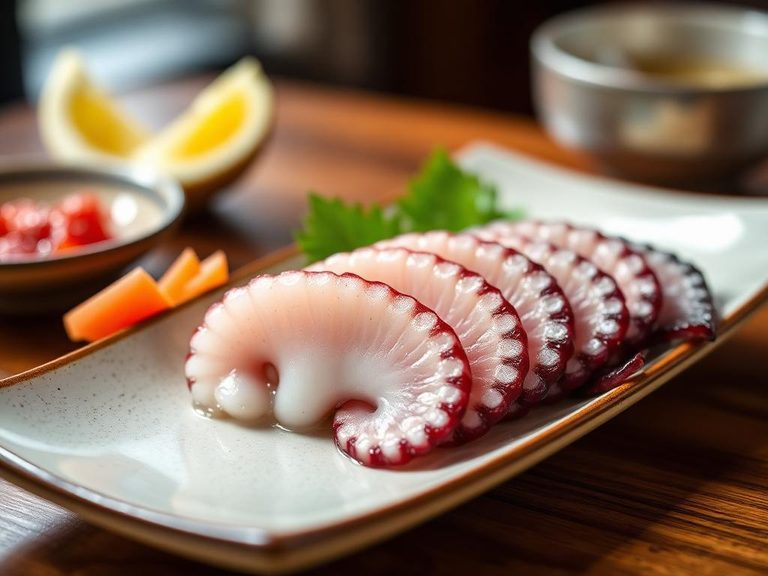
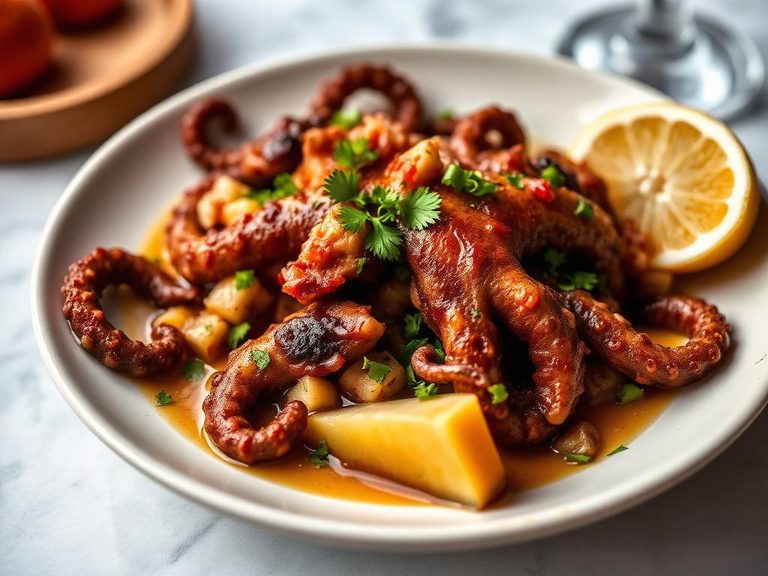
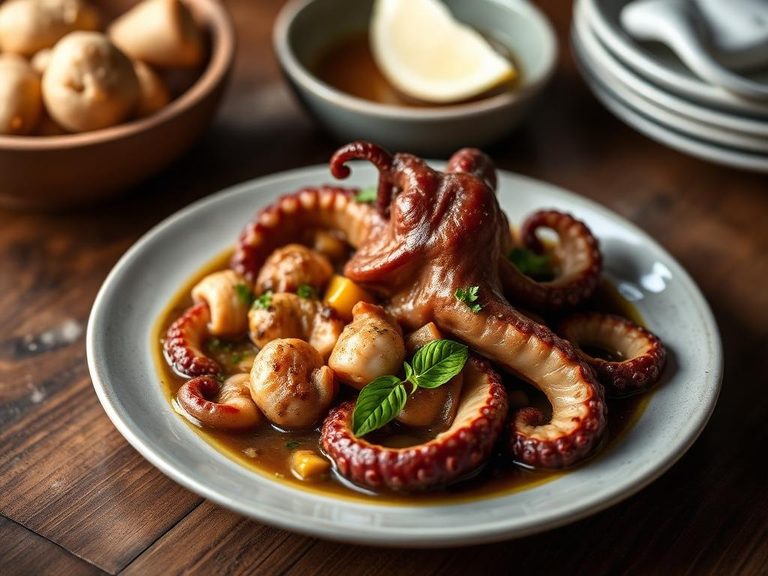
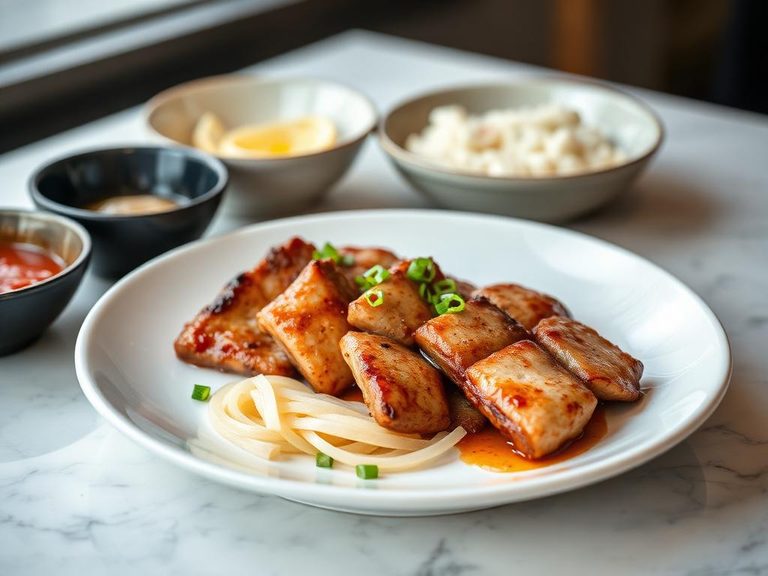
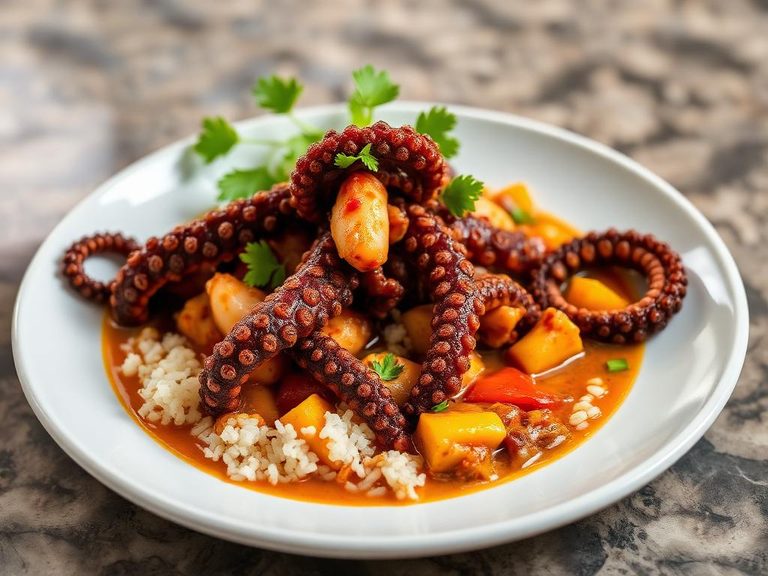
🌍 Where it's eaten
💡 Did you know?
Octopuses have three hearts and blue, copper-based blood, which is an adaptation for efficiently transporting oxygen in cold, low-oxygen deep-sea environments.
Full nutrition (USDA data · scales with serving)
| Water | 80.8 g |
| Energy | 97.0 kcal |
| Energy | 407 kj |
| Protein | 11.7 g |
| Total lipid (fat) | 5.3 g |
| Ash | 1.5 g |
| Carbohydrate, by difference | 0.00 g |
| Calcium, Ca | 12.0 mg |
| Iron, Fe | 0.40 mg |
| Phosphorus, P | 3.0 mg |
| Vitamin C, total ascorbic acid | 3.0 mg |
| Thiamin | 0.09 mg |
| Riboflavin | 0.10 mg |
| Niacin | 1.1 mg |
| Vitamin A, IU | 1020 iu |
Fat & fatty acid profile (per 100g)
Estimated from Fish, halibut, raw, with skin (Alaska Native) — USDA does not publish this profile for Fish.
| Fatty acids, total saturated | 0.73 g |
| SFA 8:0 | 0.00 g |
| SFA 10:0 | 0.00 g |
| SFA 12:0 | 0.00 g |
| SFA 14:0 | 0.09 g |
| SFA 15:0 | 0.01 g |
| SFA 16:0 | 0.38 g |
| SFA 17:0 | 0.00 g |
| SFA 18:0 | 0.09 g |
| SFA 20:0 | 0.01 g |
| SFA 22:0 | 0.00 g |
| SFA 24:0 | 0.00 g |
| Fatty acids, total monounsaturated | 1.2 g |
| MUFA 14:1 | 0.00 g |
| MUFA 15:1 | 0.00 g |
| MUFA 16:1 | 0.23 g |
| MUFA 17:1 | 0.00 g |
| MUFA 18:1 | 0.59 g |
| MUFA 20:1 | 0.11 g |
| MUFA 22:1 | 0.00 g |
| MUFA 22:1 c | 0.00 g |
| MUFA 24:1 c | 0.01 g |
| Fatty acids, total polyunsaturated | 0.91 g |
| PUFA 18:2 | 0.02 g |
| PUFA 18:3 | 0.01 g |
| PUFA 18:3 n-3 c,c,c (ALA) | 0.01 g |
| PUFA 18:3 n-6 c,c,c | 0.00 g |
| PUFA 18:4 | 0.00 g |
| PUFA 20:2 n-6 c,c | 0.01 g |
| PUFA 20:3 | 0.00 g |
| PUFA 20:4 | 0.03 g |
| PUFA 20:5 n-3 (EPA) | 0.22 g |
| PUFA 21:5 | 0.00 g |
| PUFA 22:4 | 0.00 g |
| PUFA 22:5 n-3 (DPA) | 0.06 g |
| PUFA 22:6 n-3 (DHA) | 0.39 g |
| Cholesterol | 72.0 mg |
Amino acid profile (per 100g)
Estimated from Fish, halibut, raw, with skin (Alaska Native) — USDA does not publish this profile for Fish.
| Tryptophan | 0.31 g |
| Threonine | 0.95 g |
| Isoleucine | 0.94 g |
| Leucine | 1.6 g |
| Lysine | 1.8 g |
| Methionine | 0.80 g |
| Cystine | 0.35 g |
| Phenylalanine | 0.82 g |
| Tyrosine | 0.70 g |
| Valine | 1.0 g |
| Arginine | 1.2 g |
| Histidine | 0.50 g |
| Alanine | 1.2 g |
| Aspartic acid | 2.8 g |
| Glutamic acid | 3.2 g |
| Glycine | 0.93 g |
| Proline | 0.73 g |
| Serine | 0.91 g |
| Hydroxyproline | 0.18 g |
FAQ
How do you tenderize octopus before cooking?
Common methods include freezing it first (which breaks down muscle fibers), pounding the flesh with a mallet, or simmering it with a cork in the water for about 45-60 minutes before grilling or sautéing.
Is octopus high in cholesterol?
While it contains some cholesterol (about 48mg per 100g), it is very low in saturated fat. For most people, the lean protein and nutrient benefits outweigh this concern as part of a balanced diet.
What does octopus taste like?
It has a mild, slightly sweet flavor similar to other shellfish but less briny than shrimp. The taste is often described as a cross between chicken and squid, with a clean, oceanic finish.
Weight-loss friendliness (composite index)
Energy density 0.97 kcal/g · 48% calories from protein · 0.0 g fiber · 0.0 g sugar per 100 g.
Composite of energy density (Rolls et al., 1999), protein & fiber satiety, minus sugar. A calculated heuristic — ranks satiety-per-calorie, not a clinical measure.