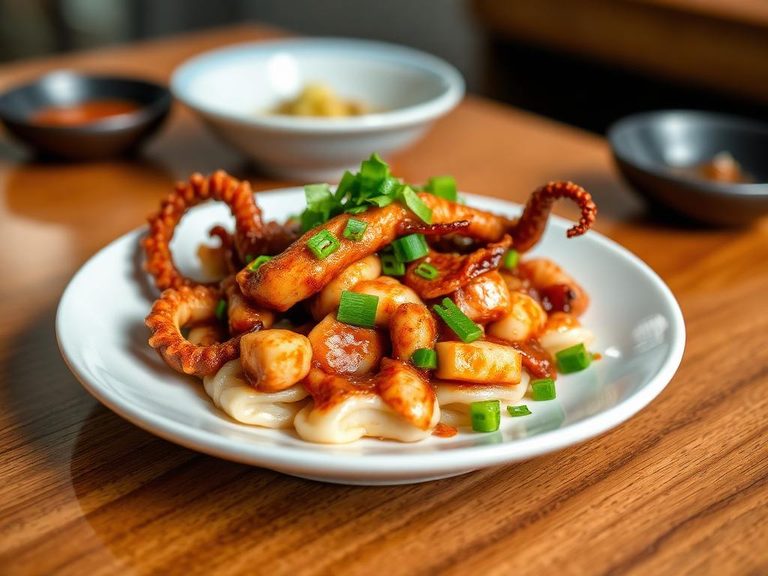
San-nakji
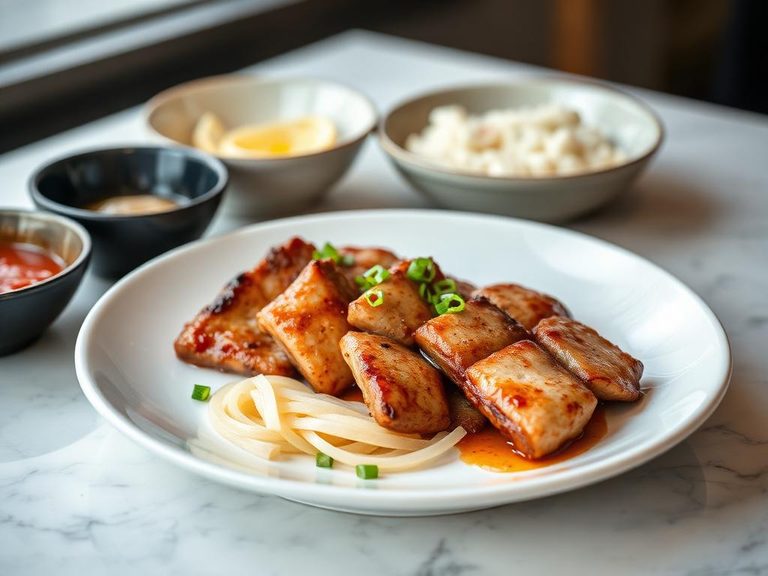
San-nakji is a Korean delicacy consisting of live, freshly cut small octopus (typically *Octopus minor*), served immediately while its tentacles are still moving. It is usually seasoned simply with sesame oil and salt, and sometimes garnished with sesame seeds and scallions. This dish is a popular and adventurous choice in Korean seafood restaurants, particularly in coastal areas.
🍽️ Nutrition at a glance
San-nakji is a high-protein, low-carbohydrate, and low-fat dish, making it a lean source of energy. A typical serving provides a good amount of essential minerals like selenium and vitamin B12, with a calorie count generally ranging from 150 to 250 kcal.
Nutrition breakdown
| Calories | 180 kcal |
| Protein | 28 g |
| Carbs | 2 g |
| Fat | 6 g |
| Fiber | 0 g |
| Sugar | 0 g |
| Sodium | 300 mg |
| Selenium | 60 mcg |
| Vitamin B12 | 15 mcg |
| Phosphorus | 200 mg |
| Zinc | 2.5 mg |
| Iron | 1.5 mg |
| Niacin (B3) | 3.5 mg |
| Magnesium | 40 mg |
| Copper | 0.3 mg |
Per 100 g · estimated, varies by recipe
💡 What's interesting
The most culturally unique aspect of San-nakji is that it is consumed live, with the tentacles still wriggling on the plate, which is believed to showcase ultimate freshness and is considered an aphrodisiac in some traditions. Nutritionally, the act of chewing the active tentacles is thought to aid digestion and provide a satisfying textural experience.