

Desserts, rennin, tablets, unsweetened
Whole food · Sweets
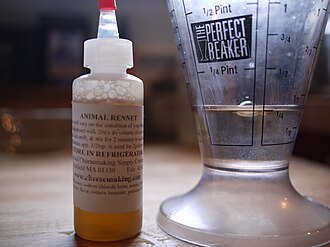
Photo: Wikipedia
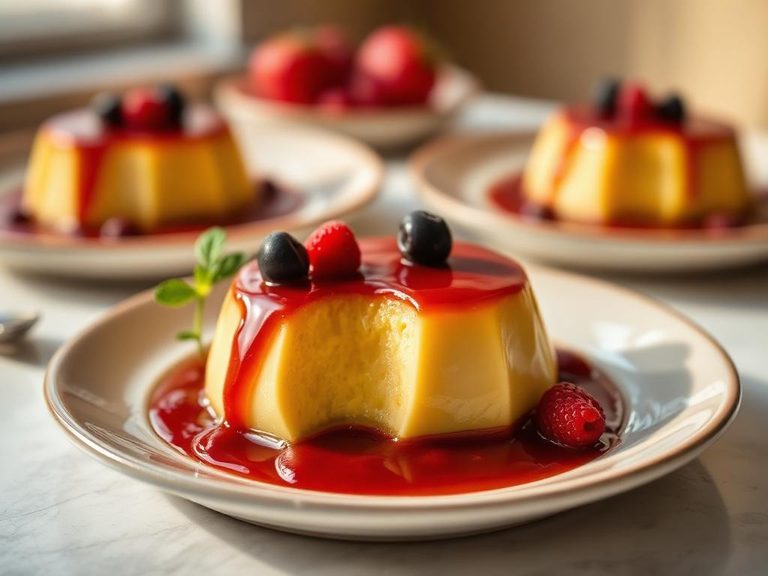
Rennin tablets are a concentrated, unsweetened dessert base derived from calf stomachs, traditionally used to set milk into a smooth, custard-like pudding. The flavor is remarkably neutral and milky, with a delicate, tender texture that melts on the tongue. Nutritionally, it's a low-fat, low-calorie source of protein and carbohydrates, primarily from the milk it coagulates.
Calorie split: 5% protein · 94% carbs · 1% fat
↓ Full nutrition💚 Why it's loved
People love it for its ability to create a uniquely silky, spoonable texture in desserts like junket or rennet custard, which is distinct from gelatin-set puddings. It's cherished for its simplicity and its role in traditional, comforting European and American home cooking.
⚠️ Watch-outs & how to enjoy it better
The primary downside is its animal-derived origin, making it unsuitable for vegetarians and vegans. As a dessert base, it's often sweetened, which can lead to blood-sugar spikes if consumed in large portions. To counteract this, pair the finished dessert with a source of protein or healthy fat (like nuts or a dollop of cream) and practice portion control, opting for a small serving as a treat rather than a main course.
Key benefits
- Provides a smooth, high-protein dessert base
- Low in fat and calories (84 kcal/100g)
- Source of calcium when used with milk
- Simple, quick preparation for classic puddings
- Neutral flavor allows for versatile sweetening
🍽️ Popular dishes
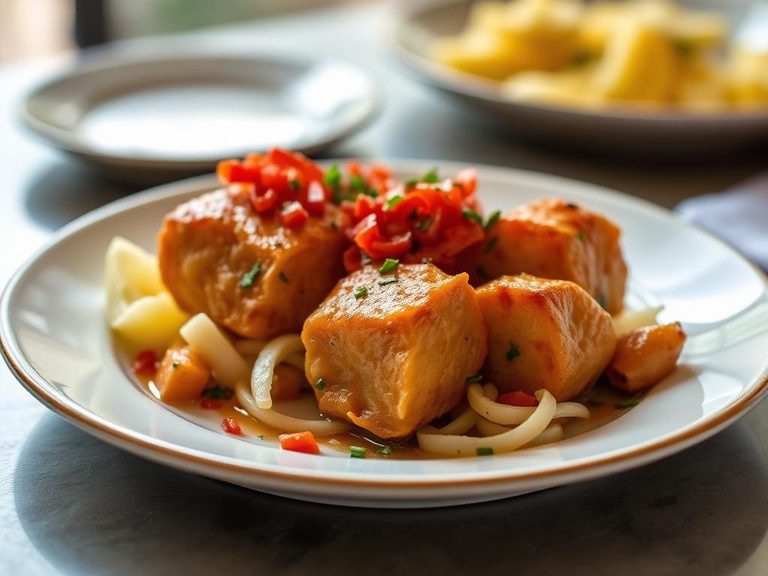
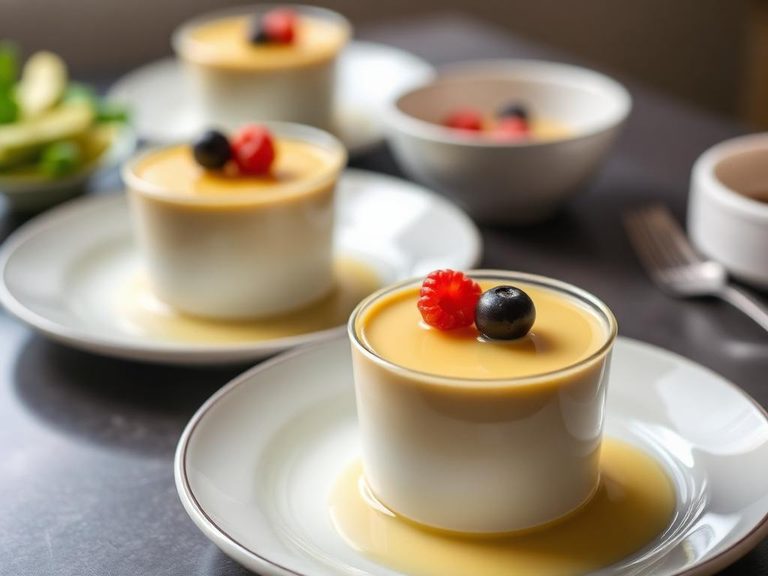

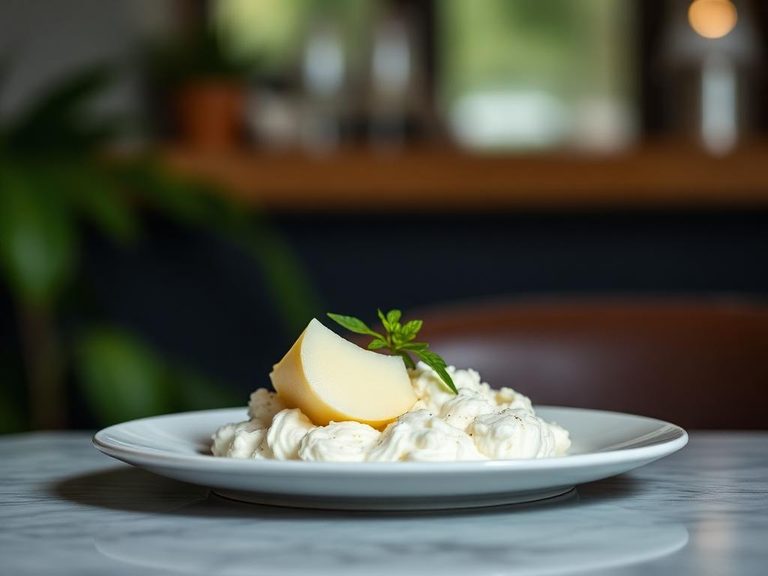
🌍 Where it's eaten
💡 Did you know?
The active enzyme in rennin tablets, chymosin, is the same one that gives 'junket' its name, derived from the Latin 'juncus' (rush), referring to the rush baskets used to strain the curd.
Full nutrition (USDA data · scales with serving)
| Water | 6.5 g |
| Energy | 84.0 kcal |
| Energy | 351 kj |
| Protein | 1.0 g |
| Total lipid (fat) | 0.10 g |
| Ash | 72.5 g |
| Carbohydrate, by difference | 19.8 g |
| Fiber, total dietary | 0.00 g |
| Calcium, Ca | 3733 mg |
| Iron, Fe | 7.1 mg |
| Magnesium, Mg | 18.0 mg |
| Phosphorus, P | 340 mg |
| Potassium, K | 292 mg |
| Sodium, Na | 26050 mg |
| Zinc, Zn | 6.4 mg |
| Copper, Cu | 0.20 mg |
| Manganese, Mn | 0.90 mg |
| Selenium, Se | 0.00 ug |
| Vitamin C, total ascorbic acid | 0.00 mg |
| Thiamin | 0.00 mg |
| Riboflavin | 0.00 mg |
| Niacin | 0.00 mg |
| Pantothenic acid | 0.00 mg |
| Vitamin B-6 | 0.00 mg |
| Folate, total | 0.00 ug |
| Folic acid | 0.00 ug |
| Folate, food | 0.00 ug |
| Folate, DFE | 0.00 ug |
| Vitamin B-12 | 0.00 ug |
| Vitamin A, RAE | 0.00 ug |
| Retinol | 0.00 ug |
| Vitamin A, IU | 0.00 iu |
| Alcohol, ethyl | 0.00 g |
Fat & fatty acid profile (per 100g)
| Fatty acids, total saturated | 0.04 g |
| SFA 4:0 | 0.00 g |
| SFA 6:0 | 0.00 g |
| SFA 8:0 | 0.00 g |
| SFA 10:0 | 0.00 g |
| SFA 12:0 | 0.00 g |
| SFA 14:0 | 0.00 g |
| SFA 16:0 | 0.02 g |
| SFA 18:0 | 0.01 g |
| Fatty acids, total monounsaturated | 0.04 g |
| MUFA 16:1 | 0.00 g |
| MUFA 18:1 | 0.03 g |
| MUFA 20:1 | 0.00 g |
| MUFA 22:1 | 0.00 g |
| Fatty acids, total polyunsaturated | 0.01 g |
| PUFA 18:2 | 0.01 g |
| PUFA 18:3 | 0.00 g |
| PUFA 18:4 | 0.00 g |
| PUFA 20:4 | 0.00 g |
| PUFA 20:5 n-3 (EPA) | 0.00 g |
| PUFA 22:5 n-3 (DPA) | 0.00 g |
| PUFA 22:6 n-3 (DHA) | 0.00 g |
| Cholesterol | 0.00 mg |
Amino acid profile (per 100g)
Estimated from Gelatin desserts, dry mix — USDA does not publish this profile for Desserts.
| Tryptophan | 0.00 g |
| Threonine | 0.15 g |
| Isoleucine | 0.12 g |
| Leucine | 0.25 g |
| Lysine | 0.35 g |
| Methionine | 0.06 g |
| Cystine | 0.00 g |
| Phenylalanine | 0.18 g |
| Tyrosine | 0.03 g |
| Valine | 0.21 g |
| Arginine | 0.68 g |
| Histidine | 0.07 g |
| Alanine | 0.82 g |
| Aspartic acid | 0.54 g |
| Glutamic acid | 0.89 g |
| Glycine | 1.9 g |
| Proline | 1.3 g |
| Serine | 0.27 g |
FAQ
What is the difference between rennin and rennet?
Rennin (chymosin) is the specific enzyme, while rennet is the broader term for the preparation containing the enzyme, often including other substances. In common usage, the terms are often used interchangeably.
Can I use rennin tablets to make cheese?
Yes, rennin is a key ingredient in cheesemaking, used to coagulate milk into curds. However, dessert rennin tablets are often formulated differently and may contain additives; for cheesemaking, it's best to use a dedicated cheese rennet.
Is rennin suitable for vegetarians?
Traditional rennin is derived from the stomachs of calves, making it unsuitable for vegetarians and vegans. There are microbial or vegetable-based rennet alternatives available for those with dietary restrictions.
Nutrient density (calculated · NRF9.3)
Nutrient Rich Foods index: beneficial nutrients (protein, fiber, vitamins, minerals) minus saturated fat, added sugar & sodium, per 100 kcal.
NRF9.3 index — Fulgoni, Keast & Drewnowski, 2009. Computed from USDA nutrients.
Weight-loss friendliness (composite index)
Energy density 0.84 kcal/g · 5% calories from protein · 0.0 g fiber · 0.0 g sugar per 100 g.
Composite of energy density (Rolls et al., 1999), protein & fiber satiety, minus sugar. A calculated heuristic — ranks satiety-per-calorie, not a clinical measure.
Dietary load (calculated from USDA values)
Potential renal acid load. Positive = acid-forming, negative = alkaline-forming.
Sodium-to-potassium ratio: 89.21 (lower is better — aim for ≤ 1)
Sodium:potassium per WHO potassium guidance. Computed from USDA nutrients.