

Crustaceans, crayfish, mixed species, farmed, raw
Whole food · Finfish and Shellfish Products

Photo: Wikipedia
Crayfish, often called crawfish or crawdads, are small freshwater crustaceans with a sweet, delicate flavor and a texture that's tender yet firm, reminiscent of a cross between shrimp and lobster. Their meat is exceptionally lean and protein-rich, offering a satisfying bite without the heaviness of larger shellfish. This farmed, raw variety is prized for its clean, mild taste that readily absorbs seasonings and spices.
Calorie split: 87% protein · 0% carbs · 13% fat
↓ Full nutrition💚 Why it's loved
People love crayfish for its sweet, succulent flavor and the communal, hands-on experience of eating it, especially in dishes like boils where the seasoning is part of the fun. Its versatility shines in everything from spicy stews to delicate salads, making it a beloved ingredient in both rustic and refined cuisines.
⚠️ Watch-outs & how to enjoy it better
As a shellfish, crayfish is a common allergen and should be avoided by those with crustacean sensitivities. To mitigate potential issues, ensure thorough cooking to eliminate bacteria, and pair with fiber-rich vegetables to balance the meal. For those watching sodium, be mindful of heavily seasoned preparations like boils, and opt for simpler cooking methods like steaming or grilling.
Key benefits
- High-quality, complete protein source with minimal fat.
- Very low in calories, suitable for weight management.
- Rich in essential minerals like selenium and phosphorus.
- Contains omega-3 fatty acids, beneficial for heart health.
- Naturally low in carbohydrates and sugar.
🍽️ Popular dishes
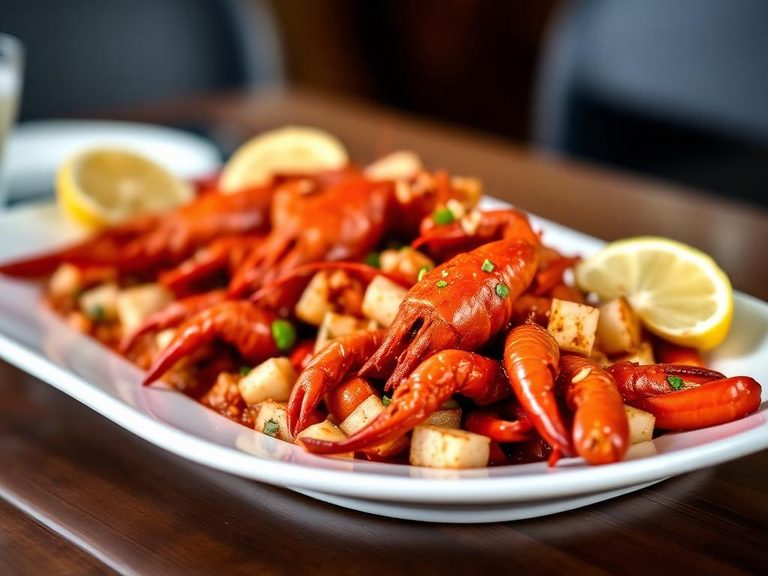

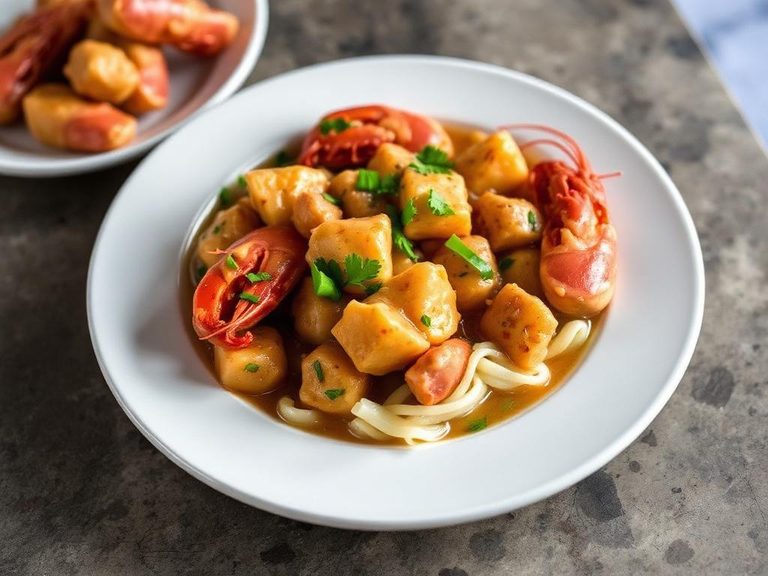
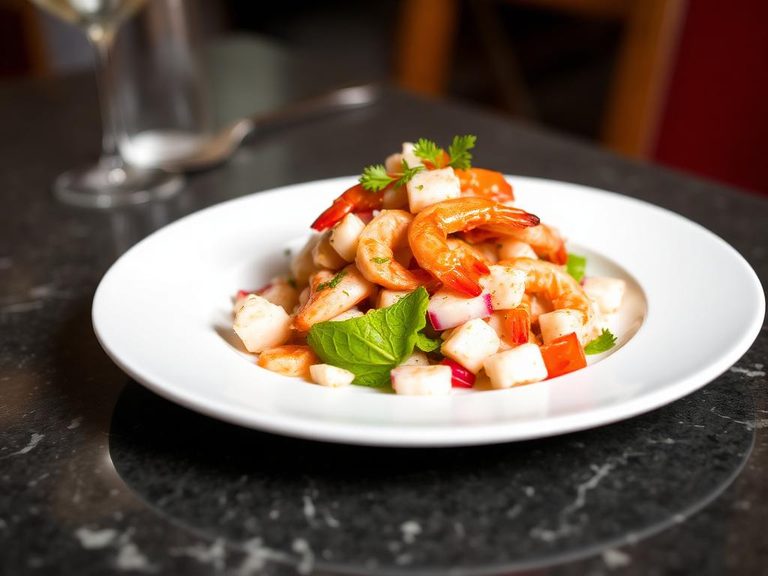
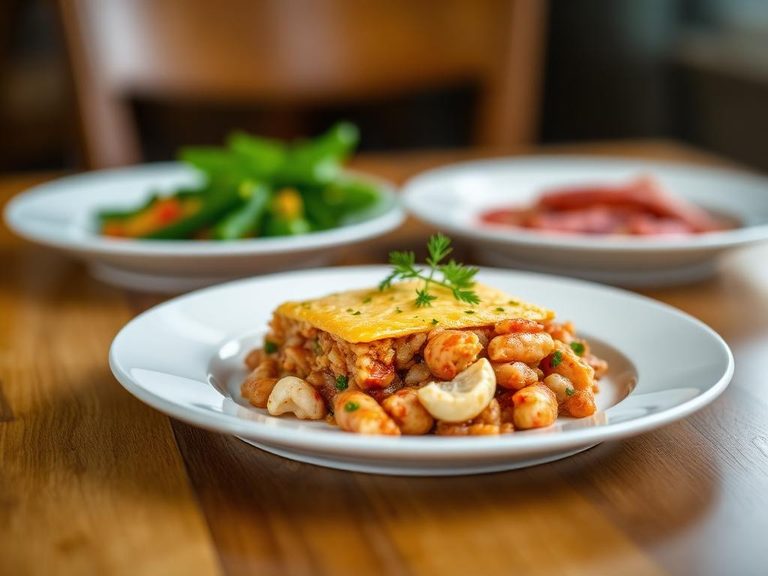
🌍 Where it's eaten
💡 Did you know?
Crayfish are often called 'mudbugs' in the Southern United States, a nickname that highlights their habitat in muddy riverbeds and ponds.
Full nutrition (USDA data · scales with serving)
| Water | 84.0 g |
| Energy | 72.0 kcal |
| Energy | 301 kj |
| Protein | 14.8 g |
| Total lipid (fat) | 0.97 g |
| Ash | 1.0 g |
| Carbohydrate, by difference | 0.00 g |
| Fiber, total dietary | 0.00 g |
| Calcium, Ca | 25.0 mg |
| Iron, Fe | 0.55 mg |
| Magnesium, Mg | 30.0 mg |
| Phosphorus, P | 218 mg |
| Potassium, K | 261 mg |
| Sodium, Na | 62.0 mg |
| Zinc, Zn | 1.0 mg |
| Copper, Cu | 0.24 mg |
| Manganese, Mn | 0.15 mg |
| Selenium, Se | 28.4 ug |
| Vitamin C, total ascorbic acid | 0.50 mg |
| Thiamin | 0.04 mg |
| Riboflavin | 0.03 mg |
| Niacin | 1.9 mg |
| Pantothenic acid | 0.57 mg |
| Vitamin B-6 | 0.08 mg |
| Folate, total | 30.0 ug |
| Folic acid | 0.00 ug |
| Folate, food | 30.0 ug |
| Folate, DFE | 30.0 ug |
| Vitamin B-12 | 2.1 ug |
| Vitamin A, RAE | 15.0 ug |
| Retinol | 15.0 ug |
| Vitamin A, IU | 50.0 iu |
Fat & fatty acid profile (per 100g)
| Fatty acids, total saturated | 0.16 g |
| SFA 14:0 | 0.00 g |
| SFA 16:0 | 0.10 g |
| SFA 18:0 | 0.04 g |
| Fatty acids, total monounsaturated | 0.18 g |
| MUFA 16:1 | 0.03 g |
| MUFA 18:1 | 0.13 g |
| MUFA 20:1 | 0.01 g |
| MUFA 22:1 | 0.00 g |
| Fatty acids, total polyunsaturated | 0.31 g |
| PUFA 18:2 | 0.08 g |
| PUFA 18:3 | 0.03 g |
| PUFA 18:4 | 0.01 g |
| PUFA 20:4 | 0.05 g |
| PUFA 20:5 n-3 (EPA) | 0.12 g |
| PUFA 22:5 n-3 (DPA) | 0.01 g |
| PUFA 22:6 n-3 (DHA) | 0.03 g |
| Cholesterol | 107 mg |
Amino acid profile (per 100g)
| Tryptophan | 0.21 g |
| Threonine | 0.60 g |
| Isoleucine | 0.72 g |
| Leucine | 1.2 g |
| Lysine | 1.3 g |
| Methionine | 0.42 g |
| Cystine | 0.17 g |
| Phenylalanine | 0.63 g |
| Tyrosine | 0.49 g |
| Valine | 0.70 g |
| Arginine | 1.3 g |
| Histidine | 0.30 g |
| Alanine | 0.84 g |
| Aspartic acid | 1.5 g |
| Glutamic acid | 2.5 g |
| Glycine | 0.89 g |
| Proline | 0.49 g |
| Serine | 0.58 g |
FAQ
How do you clean and prepare raw crayfish?
Rinse them thoroughly in cold water, scrubbing the shells. For some recipes, you may need to devein them by twisting the tail and pulling out the digestive tract. Always discard any dead or foul-smelling crayfish.
What's the difference between crayfish, crawfish, and crawdad?
They are all the same animal! 'Crayfish' is the standard term, 'crawfish' is common in the Southern U.S., and 'crawdad' is a regional colloquialism.
Can I eat the whole crayfish?
You eat the tail meat primarily. Some people also eat the fat in the head (tomalley), which is flavorful but can contain higher levels of contaminants. The claws also contain meat, but it's less substantial.
Nutrient density (calculated · NRF9.3)
Nutrient Rich Foods index: beneficial nutrients (protein, fiber, vitamins, minerals) minus saturated fat, added sugar & sodium, per 100 kcal.
NRF9.3 index — Fulgoni, Keast & Drewnowski, 2009. Computed from USDA nutrients.
Weight-loss friendliness (composite index)
Energy density 0.72 kcal/g · 83% calories from protein · 0.0 g fiber · 0.0 g sugar per 100 g.
Composite of energy density (Rolls et al., 1999), protein & fiber satiety, minus sugar. A calculated heuristic — ranks satiety-per-calorie, not a clinical measure.
Dietary load (calculated from USDA values)
Potential renal acid load. Positive = acid-forming, negative = alkaline-forming.
Sodium-to-potassium ratio: 0.24 (lower is better — aim for ≤ 1)
Sodium:potassium per WHO potassium guidance. Computed from USDA nutrients.