

Crustaceans, crab, alaska king, cooked, moist heat
Whole food · Finfish and Shellfish Products

Photo: Wikipedia
Alaska King Crab, cooked via moist heat, is the pinnacle of luxury seafood—massive, succulent legs with a firm, snow-white flesh that flakes in large, juicy chunks. Its flavor is intensely sweet and briny, reminiscent of the pristine, frigid waters of the Bering Sea. Nutritionally, it is a powerhouse of lean protein with virtually no fat or carbohydrates.
Calorie split: 85% protein · 0% carbs · 15% fat
↓ Full nutrition💚 Why it's loved
People adore it for its clean, sweet ocean flavor and the dramatic, hands-on experience of cracking open the massive, spiny legs. It's a centerpiece for celebratory feasts and a symbol of indulgent, straightforward luxury.
⚠️ Watch-outs & how to enjoy it better
The primary downside is its high cost and the potential for shellfish allergies, which can be severe. For those watching sodium intake, the natural brine can be significant; pairing it with unsalted sides like steamed vegetables or a fresh salad can help balance the meal.
Key benefits
- Excellent source of high-quality, complete protein.
- Very low in fat and calories.
- Naturally free of carbohydrates and sugar.
- Rich in essential minerals like zinc and selenium.
- Provides vitamin B12 for nerve and blood health.
🍽️ Popular dishes
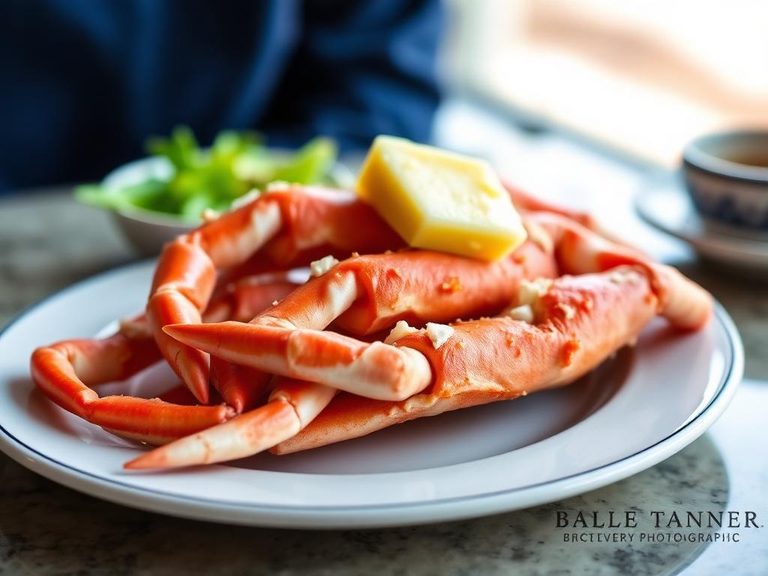
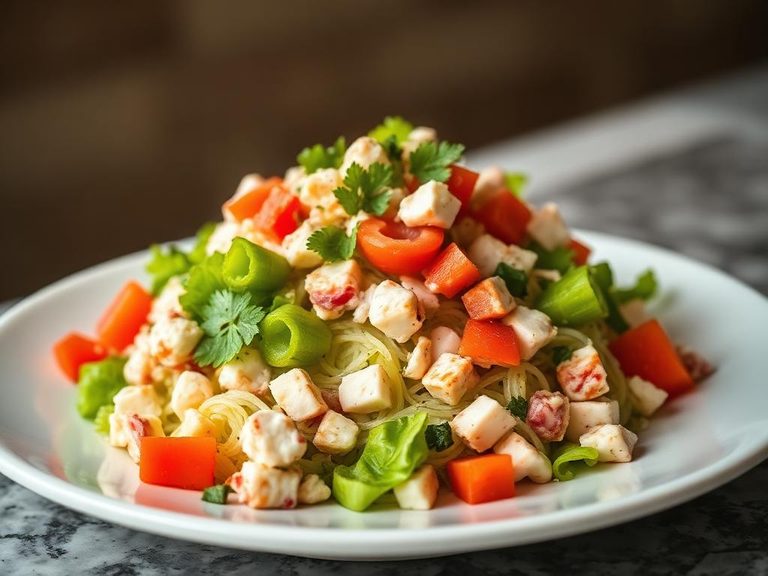

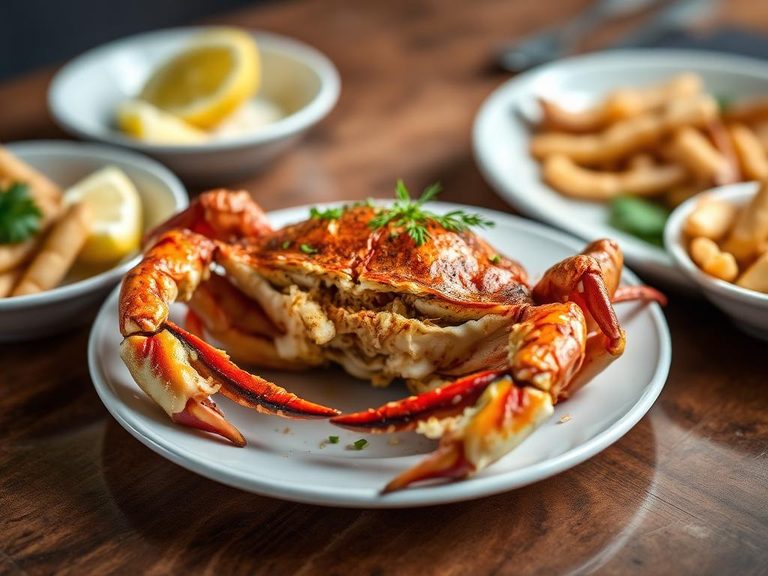
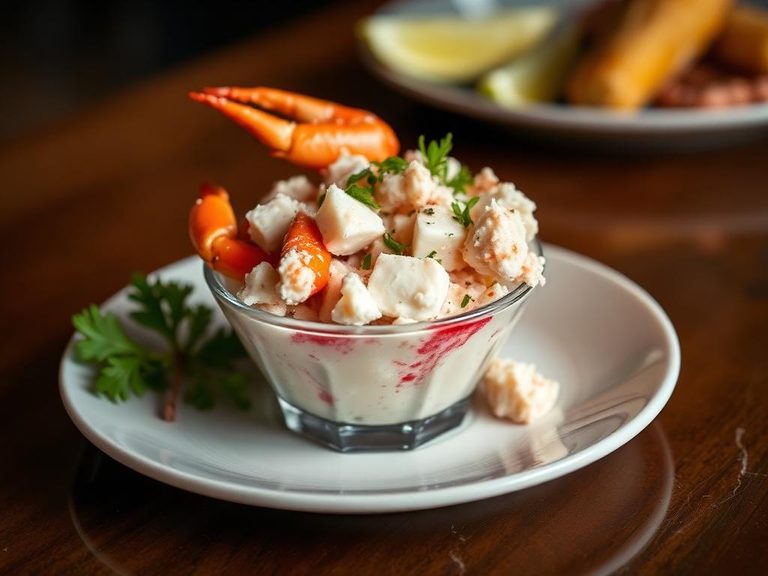
🌍 Where it's eaten
💡 Did you know?
The Alaska King Crab can have a leg span of over 5 feet (1.5 meters) and weigh up to 24 pounds (11 kg), making it one of the largest arthropods on Earth.
Full nutrition (USDA data · scales with serving)
| Water | 77.5 g |
| Energy | 97.0 kcal |
| Energy | 406 kj |
| Protein | 19.4 g |
| Total lipid (fat) | 1.5 g |
| Ash | 1.9 g |
| Carbohydrate, by difference | 0.00 g |
| Fiber, total dietary | 0.00 g |
| Calcium, Ca | 59.0 mg |
| Iron, Fe | 0.76 mg |
| Magnesium, Mg | 63.0 mg |
| Phosphorus, P | 280 mg |
| Potassium, K | 262 mg |
| Sodium, Na | 1072 mg |
| Zinc, Zn | 7.6 mg |
| Copper, Cu | 1.2 mg |
| Manganese, Mn | 0.04 mg |
| Selenium, Se | 40.0 ug |
| Vitamin C, total ascorbic acid | 7.6 mg |
| Thiamin | 0.05 mg |
| Riboflavin | 0.06 mg |
| Niacin | 1.3 mg |
| Pantothenic acid | 0.40 mg |
| Vitamin B-6 | 0.18 mg |
| Folate, total | 51.0 ug |
| Folic acid | 0.00 ug |
| Folate, food | 51.0 ug |
| Folate, DFE | 51.0 ug |
| Vitamin B-12 | 11.5 ug |
| Vitamin A, RAE | 9.0 ug |
| Retinol | 9.0 ug |
| Vitamin A, IU | 29.0 iu |
Fat & fatty acid profile (per 100g)
| Fatty acids, total saturated | 0.13 g |
| SFA 10:0 | 0.00 g |
| SFA 12:0 | 0.00 g |
| SFA 14:0 | 0.01 g |
| SFA 16:0 | 0.09 g |
| SFA 18:0 | 0.02 g |
| Fatty acids, total monounsaturated | 0.18 g |
| MUFA 16:1 | 0.04 g |
| MUFA 18:1 | 0.09 g |
| MUFA 20:1 | 0.01 g |
| MUFA 22:1 | 0.04 g |
| Fatty acids, total polyunsaturated | 0.54 g |
| PUFA 18:2 | 0.02 g |
| PUFA 18:3 | 0.01 g |
| PUFA 18:4 | 0.01 g |
| PUFA 20:4 | 0.04 g |
| PUFA 20:5 n-3 (EPA) | 0.29 g |
| PUFA 22:5 n-3 (DPA) | 0.03 g |
| PUFA 22:6 n-3 (DHA) | 0.12 g |
| Cholesterol | 53.0 mg |
Amino acid profile (per 100g)
| Tryptophan | 0.27 g |
| Threonine | 0.78 g |
| Isoleucine | 0.94 g |
| Leucine | 1.5 g |
| Lysine | 1.7 g |
| Methionine | 0.55 g |
| Cystine | 0.22 g |
| Phenylalanine | 0.82 g |
| Tyrosine | 0.64 g |
| Valine | 0.91 g |
| Arginine | 1.7 g |
| Histidine | 0.39 g |
| Alanine | 1.1 g |
| Aspartic acid | 2.0 g |
| Glutamic acid | 3.3 g |
| Glycine | 1.2 g |
| Proline | 0.64 g |
| Serine | 0.76 g |
FAQ
How is 'moist heat' cooking different for crab?
Moist heat methods like steaming or boiling gently cook the crab in water or steam, preserving its delicate, sweet flavor and tender texture without adding fat, unlike baking or frying.
Is the nutrition different for canned or imitation crab?
Yes, dramatically. Canned crab may have added sodium, and imitation crab (surimi) is a processed fish paste with added starch, sugar, and flavorings, resulting in much lower protein and different nutritional values.
Why is it so expensive?
The high cost is due to the dangerous and regulated wild harvest in remote, icy waters, strict quotas to ensure sustainability, and the high demand for its large yield of premium meat.
Nutrient density (calculated · NRF9.3)
Nutrient Rich Foods index: beneficial nutrients (protein, fiber, vitamins, minerals) minus saturated fat, added sugar & sodium, per 100 kcal.
NRF9.3 index — Fulgoni, Keast & Drewnowski, 2009. Computed from USDA nutrients.
Weight-loss friendliness (composite index)
Energy density 0.97 kcal/g · 80% calories from protein · 0.0 g fiber · 0.0 g sugar per 100 g.
Composite of energy density (Rolls et al., 1999), protein & fiber satiety, minus sugar. A calculated heuristic — ranks satiety-per-calorie, not a clinical measure.
Dietary load (calculated from USDA values)
Potential renal acid load. Positive = acid-forming, negative = alkaline-forming.
Sodium-to-potassium ratio: 4.09 (lower is better — aim for ≤ 1)
Sodium:potassium per WHO potassium guidance. Computed from USDA nutrients.