

Croutons, plain
Whole food · Baked Products

Photo: Wikipedia
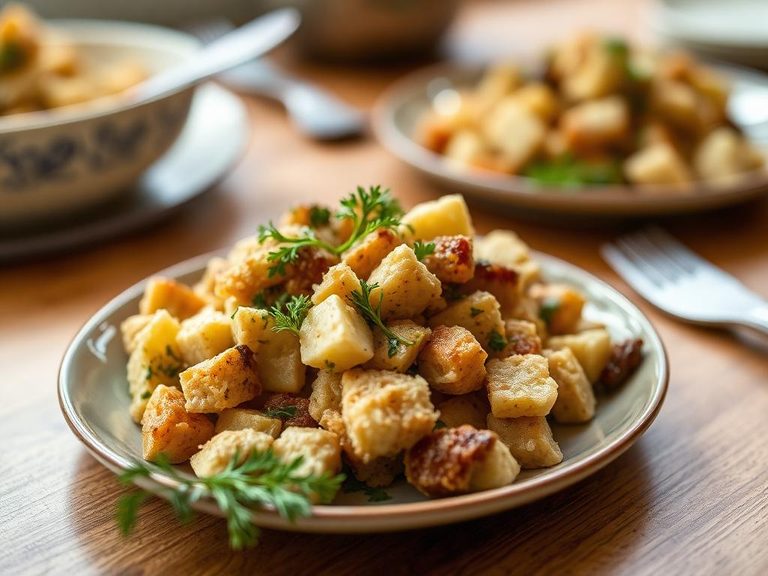
Plain croutons are small, cubed pieces of bread that have been baked or fried until golden and crisp, offering a satisfying crunch and a mild, toasty flavor. Their primary nutritional highlight is their high carbohydrate content, providing quick energy, with a modest amount of protein. They are a low-fat, low-sugar addition that transforms the texture of soups and salads.
Calorie split: 12% protein · 73% carbs · 15% fat
↓ Full nutrition💚 Why it's loved
People love croutons for the irresistible textural contrast they provide, turning a simple bowl of soup or salad into a more dynamic eating experience. Their mild, toasty flavor acts as a versatile canvas that complements a wide range of ingredients without overpowering them.
⚠️ Watch-outs & how to enjoy it better
The high carbohydrate load can cause rapid blood-sugar spikes, especially when consumed alone. They are often high in sodium from seasoning and may contain common allergens like wheat (gluten). To counteract this, pair them with protein (like chicken or beans) and healthy fats (like avocado or olive oil dressing) to slow digestion, and always check labels for sodium content.
Key benefits
- Adds satisfying crunch to soft dishes
- Provides quick energy from carbohydrates
- Low in fat and contains no sugar
- Enhances meal volume and texture
- Simple, shelf-stable pantry item
🍽️ Popular dishes
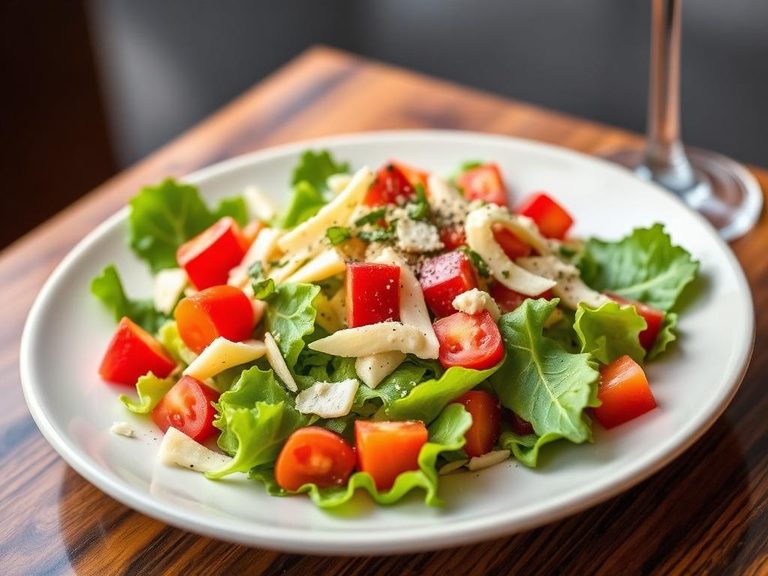
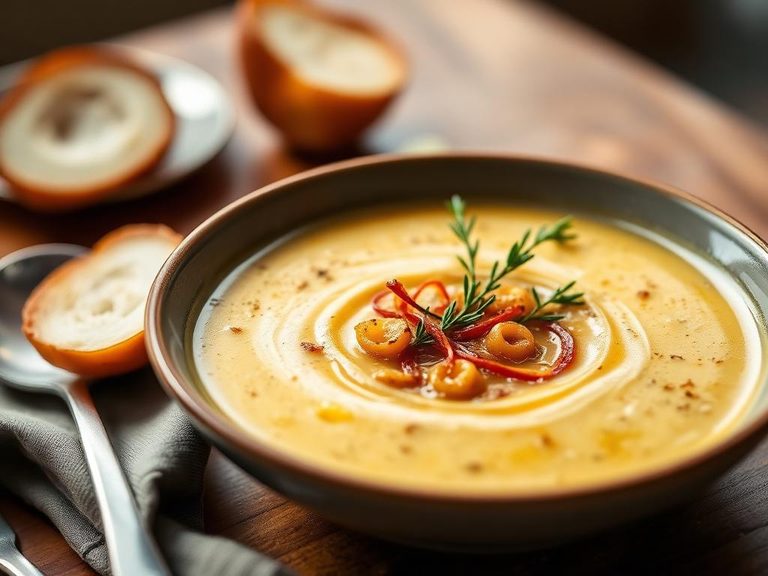
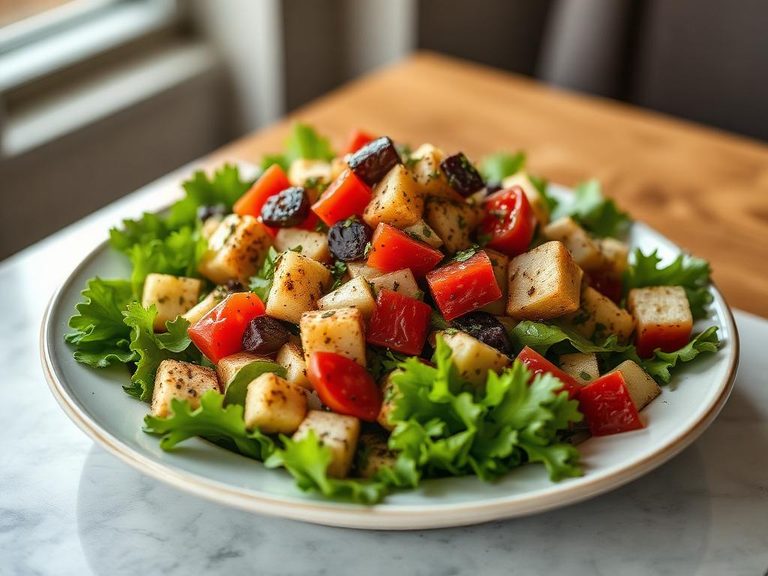
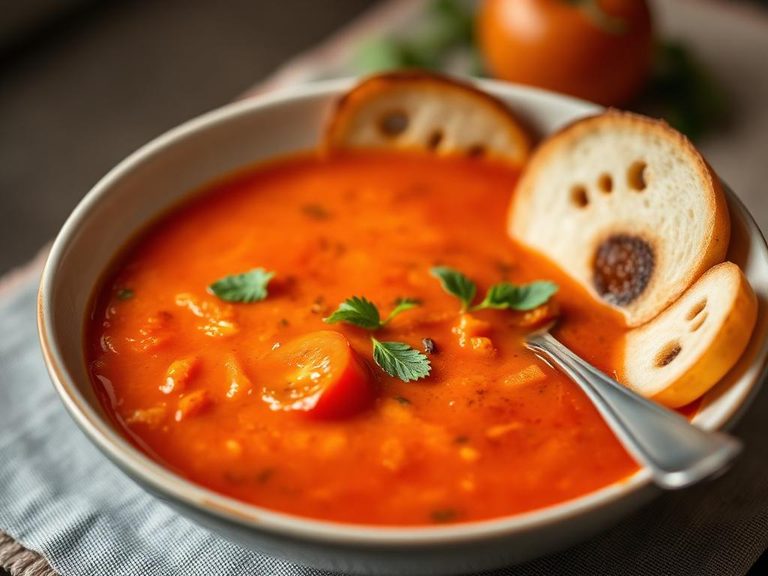
🌍 Where it's eaten
💡 Did you know?
The word 'crouton' derives from the French 'croûton,' which is a diminutive of 'croûte,' meaning 'crust' or 'hard piece of bread.'
Full nutrition (USDA data · scales with serving)
| Water | 5.5 g |
| Energy | 407 kcal |
| Energy | 1703 kj |
| Protein | 11.9 g |
| Total lipid (fat) | 6.6 g |
| Ash | 2.5 g |
| Carbohydrate, by difference | 73.5 g |
| Fiber, total dietary | 5.1 g |
| Calcium, Ca | 76.0 mg |
| Iron, Fe | 4.1 mg |
| Magnesium, Mg | 31.0 mg |
| Phosphorus, P | 115 mg |
| Potassium, K | 124 mg |
| Sodium, Na | 698 mg |
| Zinc, Zn | 0.89 mg |
| Copper, Cu | 0.16 mg |
| Manganese, Mn | 0.50 mg |
| Selenium, Se | 37.5 ug |
| Vitamin C, total ascorbic acid | 0.00 mg |
| Thiamin | 0.62 mg |
| Riboflavin | 0.27 mg |
| Niacin | 5.4 mg |
| Pantothenic acid | 0.43 mg |
| Vitamin B-6 | 0.03 mg |
| Folate, total | 132 ug |
| Folic acid | 110 ug |
| Folate, food | 22.0 ug |
| Folate, DFE | 209 ug |
| Vitamin B-12 | 0.00 ug |
| Vitamin A, RAE | 0.00 ug |
| Retinol | 0.00 ug |
| Vitamin A, IU | 0.00 iu |
Fat & fatty acid profile (per 100g)
| Fatty acids, total saturated | 1.5 g |
| SFA 4:0 | 0.00 g |
| SFA 6:0 | 0.00 g |
| SFA 8:0 | 0.00 g |
| SFA 10:0 | 0.00 g |
| SFA 12:0 | 0.00 g |
| SFA 14:0 | 0.03 g |
| SFA 16:0 | 0.86 g |
| SFA 18:0 | 0.61 g |
| Fatty acids, total monounsaturated | 3.1 g |
| MUFA 16:1 | 0.03 g |
| MUFA 18:1 | 3.0 g |
| MUFA 20:1 | 0.00 g |
| MUFA 22:1 | 0.00 g |
| Fatty acids, total polyunsaturated | 1.3 g |
| PUFA 18:2 | 1.2 g |
| PUFA 18:3 | 0.07 g |
| PUFA 18:4 | 0.00 g |
| PUFA 20:4 | 0.00 g |
| PUFA 20:5 n-3 (EPA) | 0.00 g |
| PUFA 22:5 n-3 (DPA) | 0.00 g |
| PUFA 22:6 n-3 (DHA) | 0.00 g |
| Cholesterol | 0.00 mg |
Amino acid profile (per 100g)
| Tryptophan | 0.14 g |
| Threonine | 0.34 g |
| Isoleucine | 0.46 g |
| Leucine | 0.83 g |
| Lysine | 0.28 g |
| Methionine | 0.21 g |
| Cystine | 0.26 g |
| Phenylalanine | 0.59 g |
| Tyrosine | 0.34 g |
| Valine | 0.51 g |
| Arginine | 0.43 g |
| Histidine | 0.26 g |
| Alanine | 0.39 g |
| Aspartic acid | 0.53 g |
| Glutamic acid | 4.0 g |
| Glycine | 0.42 g |
| Proline | 1.3 g |
| Serine | 0.58 g |
FAQ
How do I keep croutons from getting soggy in soup?
Add them just before serving, or serve them on the side for guests to sprinkle on themselves. You can also toast them very thoroughly to create a more moisture-resistant crust.
Can I make croutons from any bread?
Yes, though day-old, slightly stale bread works best as it has less moisture and will crisp up better. Dense breads like sourdough or baguette yield excellent results.
Are plain croutons gluten-free?
Typically no, as they are made from wheat bread. You must seek out or make croutons specifically from certified gluten-free bread.
Nutrient density (calculated · NRF9.3)
Nutrient Rich Foods index: beneficial nutrients (protein, fiber, vitamins, minerals) minus saturated fat, added sugar & sodium, per 100 kcal.
NRF9.3 index — Fulgoni, Keast & Drewnowski, 2009. Computed from USDA nutrients.
Weight-loss friendliness (composite index)
Energy density 4.07 kcal/g · 12% calories from protein · 5.1 g fiber · 0.0 g sugar per 100 g.
Composite of energy density (Rolls et al., 1999), protein & fiber satiety, minus sugar. A calculated heuristic — ranks satiety-per-calorie, not a clinical measure.
Dietary load (calculated from USDA values)
Potential renal acid load. Positive = acid-forming, negative = alkaline-forming.
Sodium-to-potassium ratio: 5.63 (lower is better — aim for ≤ 1)
Sodium:potassium per WHO potassium guidance. Computed from USDA nutrients.