

Chicken, roasting, giblets, cooked, simmered
Whole food · Poultry Products
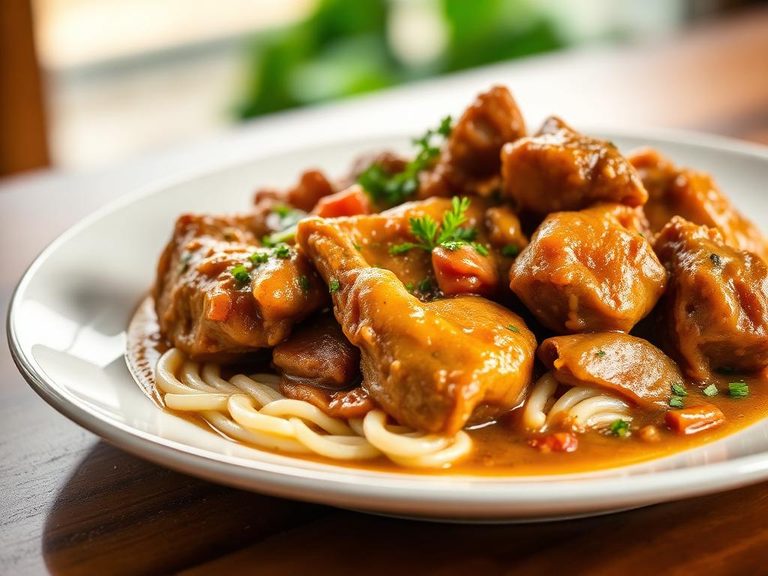
Simmered chicken giblets are the heart, liver, gizzard, and neck of the bird, gently cooked until tender. They offer a rich, mineral-forward flavor with a uniquely varied texture—silky liver, chewy gizzards, and succulent heart. This preparation is a nutritional powerhouse, delivering an exceptional amount of protein with minimal fat and virtually no carbohydrates.
Calorie split: 68% protein · 2% carbs · 30% fat
↓ Full nutrition💚 Why it's loved
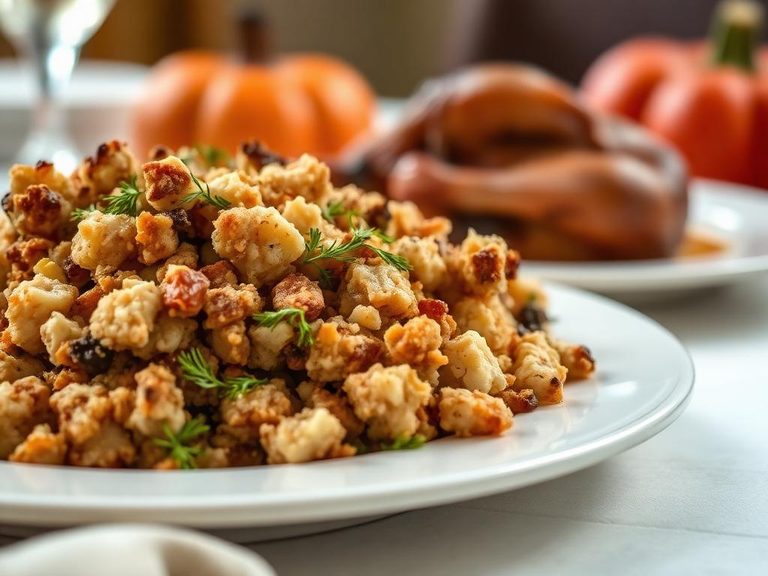
People cherish giblets for their deep, savory umami flavor that forms the backbone of traditional gravies and stuffings. They are a beloved, economical way to use the whole bird, connecting cooks to a nose-to-tail culinary tradition.
⚠️ Watch-outs & how to enjoy it better
The strong, distinct flavor and varied textures (especially the chewiness of gizzards) can be off-putting to some. Liver is very high in preformed vitamin A (retinol), so excessive consumption should be avoided by those on certain medications or with specific health conditions. To mitigate the richness, pair with acidic components like vinegar or citrus, and ensure giblets are thoroughly simmered to improve tenderness.
Key benefits
- Extremely high-quality protein source
- Rich in heme iron, more bioavailable than plant iron
- Excellent source of B vitamins, especially B12 and niacin
- Contains essential minerals like zinc and selenium
- Very low in carbohydrates and sugars
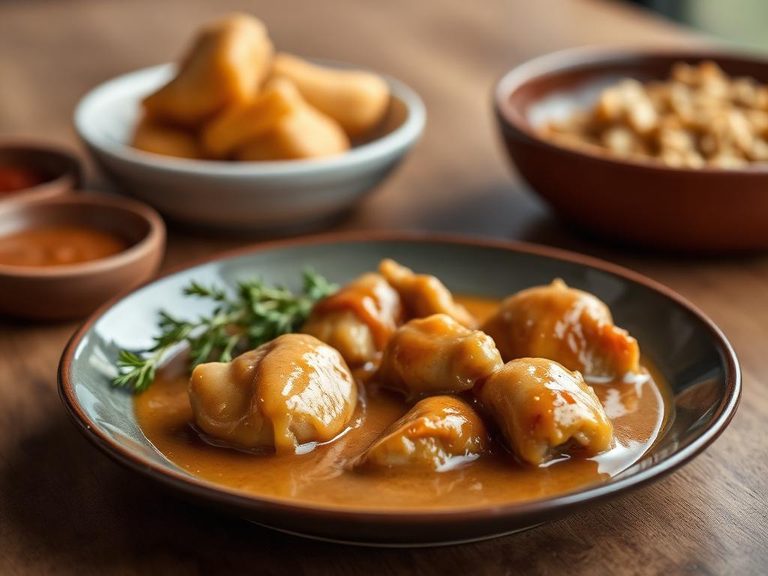
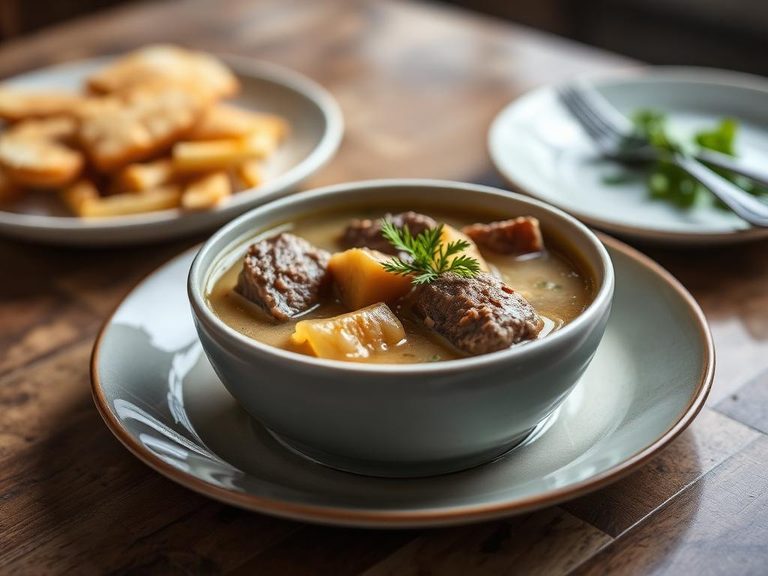
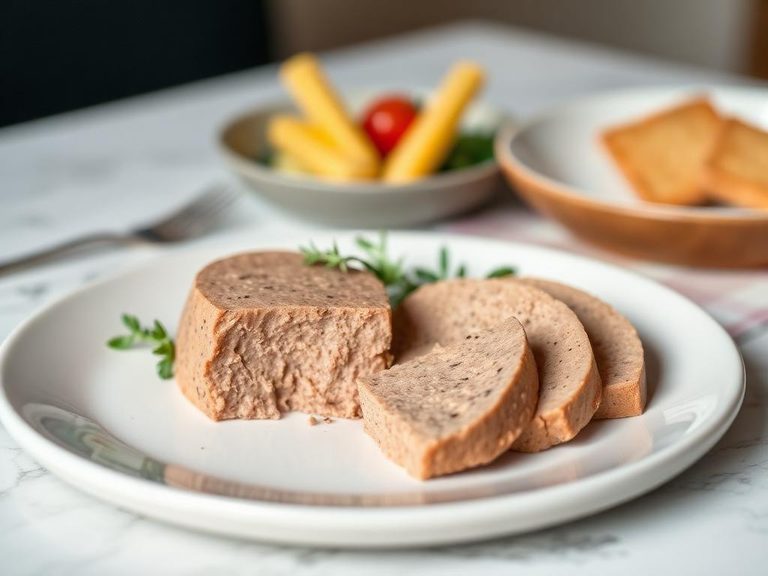
🍽️ Popular dishes
🌍 Where it's eaten
💡 Did you know?
The gizzard is a muscular stomach that birds use to grind up food, often with the help of swallowed grit or small stones, which is why it has such a uniquely firm, chewy texture.
Full nutrition (USDA data · scales with serving)
| Water | 66.3 g |
| Energy | 165 kcal |
| Energy | 690 kj |
| Protein | 26.8 g |
| Total lipid (fat) | 5.2 g |
| Ash | 0.83 g |
| Carbohydrate, by difference | 0.86 g |
| Fiber, total dietary | 0.00 g |
| Calcium, Ca | 12.0 mg |
| Iron, Fe | 6.1 mg |
| Magnesium, Mg | 20.0 mg |
| Phosphorus, P | 213 mg |
| Potassium, K | 160 mg |
| Sodium, Na | 60.0 mg |
| Zinc, Zn | 4.6 mg |
| Copper, Cu | 0.24 mg |
| Manganese, Mn | 0.15 mg |
| Selenium, Se | 100 ug |
| Vitamin C, total ascorbic acid | 6.5 mg |
| Thiamin | 0.07 mg |
| Riboflavin | 0.81 mg |
| Niacin | 4.0 mg |
| Pantothenic acid | 2.5 mg |
| Vitamin B-6 | 0.30 mg |
| Folate, total | 303 ug |
| Folic acid | 0.00 ug |
| Folate, food | 303 ug |
| Folate, DFE | 303 ug |
| Vitamin B-12 | 8.4 ug |
| Vitamin A, RAE | 2443 ug |
| Retinol | 2443 ug |
| Vitamin A, IU | 8136 iu |
Fat & fatty acid profile (per 100g)
| Fatty acids, total saturated | 1.6 g |
| SFA 10:0 | 0.00 g |
| SFA 12:0 | 0.00 g |
| SFA 14:0 | 0.03 g |
| SFA 16:0 | 0.91 g |
| SFA 18:0 | 0.59 g |
| Fatty acids, total monounsaturated | 1.3 g |
| MUFA 16:1 | 0.19 g |
| MUFA 18:1 | 1.1 g |
| MUFA 20:1 | 0.01 g |
| MUFA 22:1 | 0.00 g |
| Fatty acids, total polyunsaturated | 1.2 g |
| PUFA 18:2 | 0.83 g |
| PUFA 18:3 | 0.03 g |
| PUFA 20:4 | 0.29 g |
| PUFA 20:5 n-3 (EPA) | 0.01 g |
| PUFA 22:5 n-3 (DPA) | 0.00 g |
| PUFA 22:6 n-3 (DHA) | 0.04 g |
| Cholesterol | 357 mg |
Amino acid profile (per 100g)
| Tryptophan | 0.29 g |
| Threonine | 1.2 g |
| Isoleucine | 1.3 g |
| Leucine | 2.1 g |
| Lysine | 1.9 g |
| Methionine | 0.67 g |
| Cystine | 0.35 g |
| Phenylalanine | 1.2 g |
| Tyrosine | 0.87 g |
| Valine | 1.4 g |
| Arginine | 1.8 g |
| Histidine | 0.61 g |
| Alanine | 1.3 g |
| Aspartic acid | 2.5 g |
| Glutamic acid | 4.1 g |
| Glycine | 1.5 g |
| Proline | 1.4 g |
| Serine | 1.2 g |
FAQ
What exactly are chicken giblets?
Giblets typically refer to the heart, liver, gizzard, and neck of a chicken or turkey. They are usually found in a small bag inside the cavity of the whole bird.
How do I cook them to be tender?
Simmering is key. For gizzards and hearts, simmer in broth for 1-1.5 hours until tender. Liver cooks very quickly (3-5 minutes) and can become rubbery if overcooked; add it to the pot near the end of the cooking time.
Are chicken livers safe to eat?
Yes, when cooked thoroughly to an internal temperature of 165°F (74°C) to eliminate any potential bacteria. They are nutrient-dense but should be consumed in moderation due to high vitamin A content.
Nutrient density (calculated · NRF9.3)
Nutrient Rich Foods index: beneficial nutrients (protein, fiber, vitamins, minerals) minus saturated fat, added sugar & sodium, per 100 kcal.
NRF9.3 index — Fulgoni, Keast & Drewnowski, 2009. Computed from USDA nutrients.
Weight-loss friendliness (composite index)
Energy density 1.65 kcal/g · 65% calories from protein · 0.0 g fiber · 0.0 g sugar per 100 g.
Composite of energy density (Rolls et al., 1999), protein & fiber satiety, minus sugar. A calculated heuristic — ranks satiety-per-calorie, not a clinical measure.
Dietary load (calculated from USDA values)
Potential renal acid load. Positive = acid-forming, negative = alkaline-forming.
Sodium-to-potassium ratio: 0.38 (lower is better — aim for ≤ 1)
Sodium:potassium per WHO potassium guidance. Computed from USDA nutrients.