

Chicken, broilers or fryers, meat and skin and giblets and neck, stewed
Whole food · Poultry Products

Photo: Wikipedia
This is a hearty, rustic preparation of stewed broiler or fryer chicken, including the meat, skin, giblets, and neck. The long, slow cooking process yields incredibly tender, fall-off-the-bone meat with a rich, savory depth and a silky, collagen-thickened broth. Nutritionally, it's a powerhouse of complete protein and essential fats, with virtually no carbohydrates.
Calorie split: 47% protein · 0% carbs · 53% fat
↓ Full nutrition💚 Why it's loved
People adore it for its profound, comforting flavor—the essence of home cooking. The combination of tender dark meat, flavorful skin, and the unique, mineral-rich taste of the giblets creates a complex, satisfying experience that feels both nourishing and luxurious.
⚠️ Watch-outs & how to enjoy it better
The inclusion of skin and dark meat makes it higher in saturated fat and calories than lean breast meat. Those monitoring fat intake or with specific dietary restrictions should be mindful of portion sizes. To counteract, skim the rendered fat from the broth before serving and pair the stew with a large portion of fibrous, non-starchy vegetables like steamed broccoli or a leafy green salad to balance the meal.
Key benefits
- Excellent source of complete, high-quality protein (24.49g per 100g).
- Rich in essential B vitamins, particularly niacin and B6, from the dark meat and organs.
- Provides key minerals like iron, zinc, and selenium from the giblets and meat.
- The slow-cooked collagen from skin and bones supports joint and gut health.
- A satiating, low-carb meal that helps maintain muscle mass.
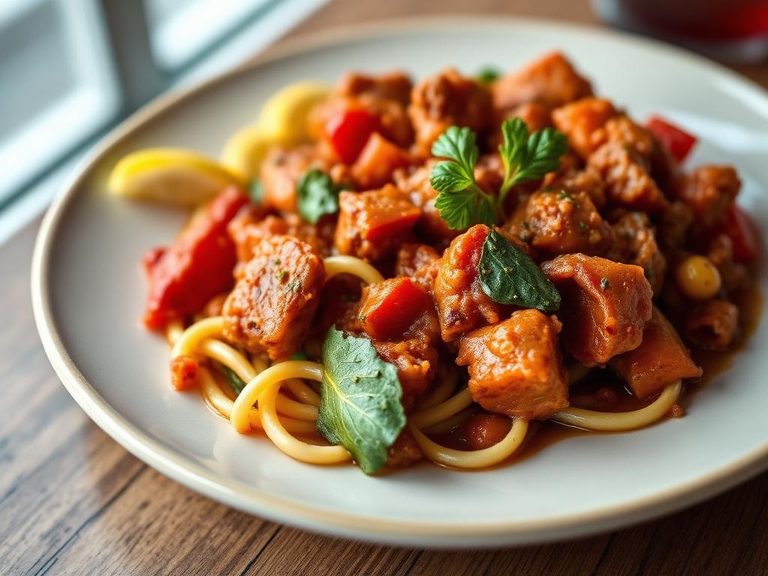
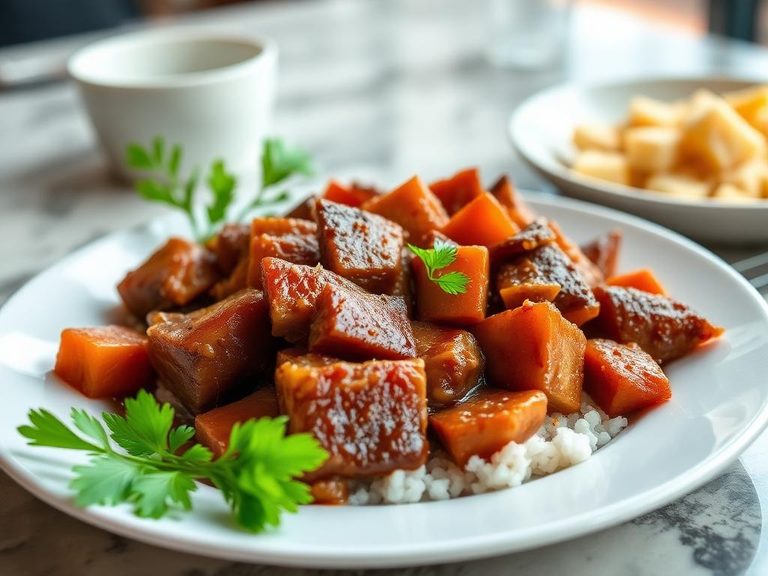
🍽️ Popular dishes
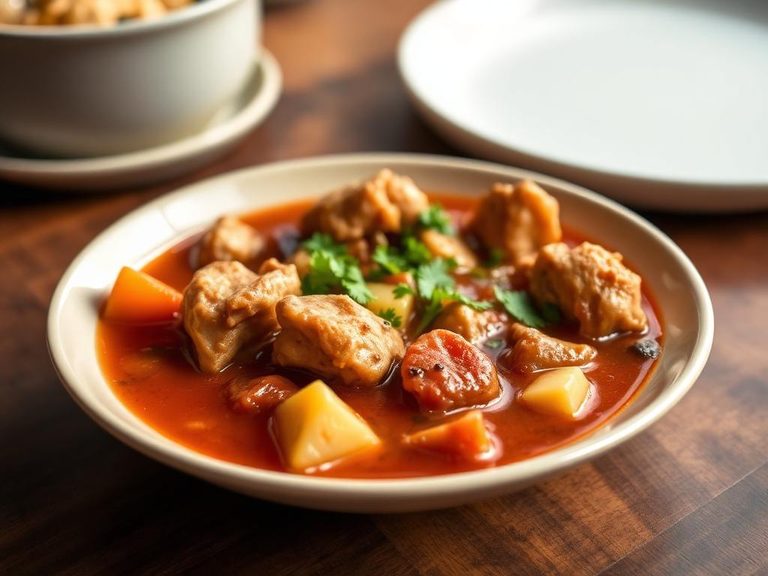
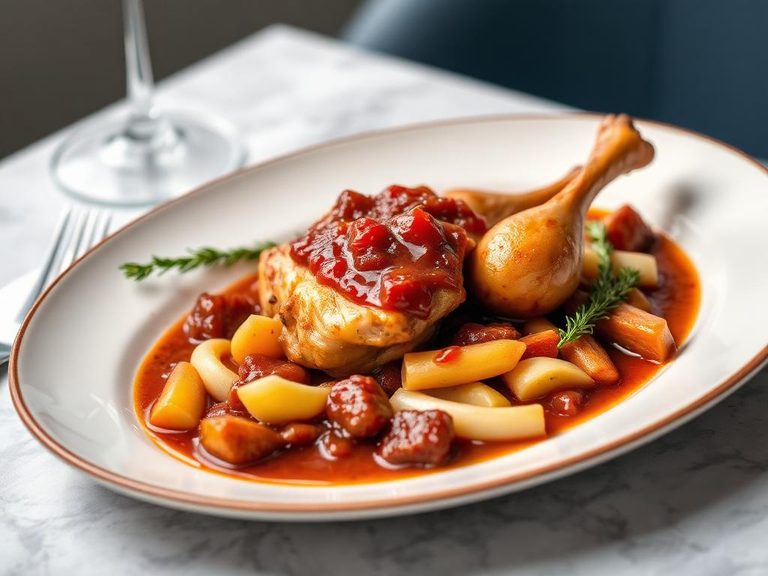
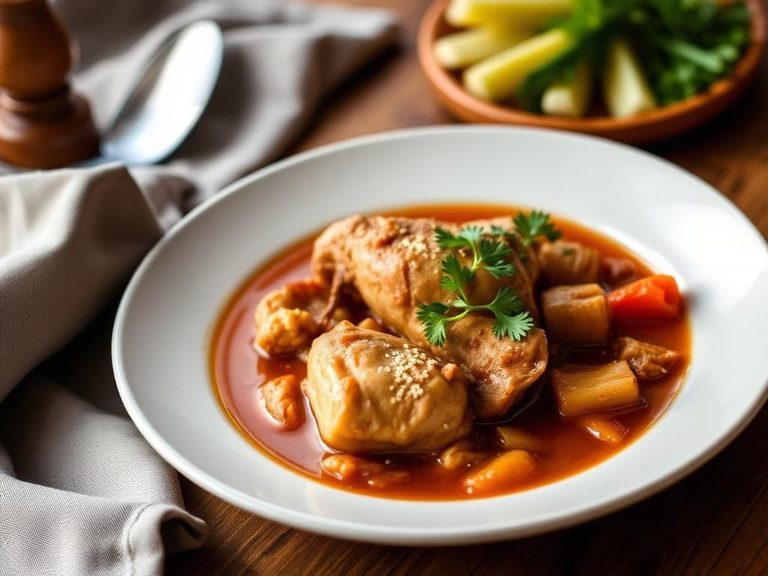
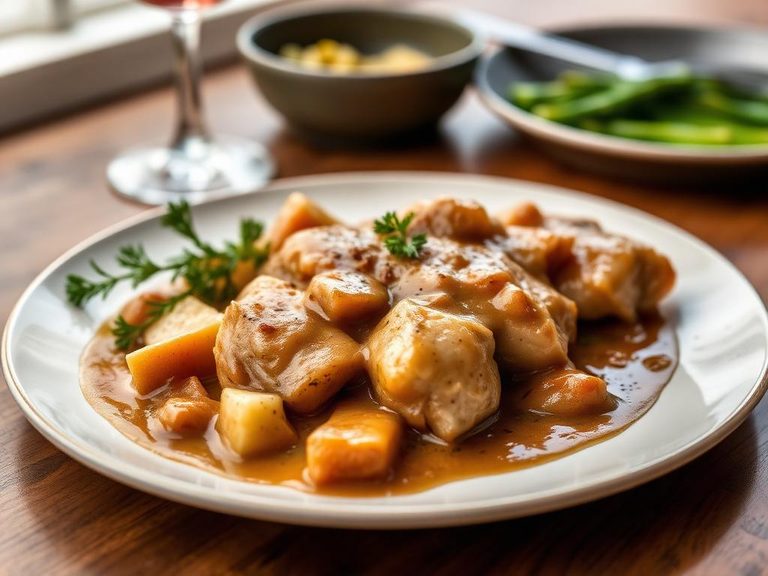
🌍 Where it's eaten
💡 Did you know?
The 'giblets' (heart, liver, gizzard) are not just flavorful additions; the liver is one of nature's most concentrated sources of vitamin A, while the gizzard is a muscular organ that provides a unique, chewy texture and is rich in iron.
Full nutrition (USDA data · scales with serving)
| Water | 64.0 g |
| Energy | 216 kcal |
| Energy | 904 kj |
| Protein | 24.5 g |
| Total lipid (fat) | 12.4 g |
| Ash | 0.76 g |
| Carbohydrate, by difference | 0.06 g |
| Fiber, total dietary | 0.00 g |
| Calcium, Ca | 14.0 mg |
| Iron, Fe | 1.5 mg |
| Magnesium, Mg | 19.0 mg |
| Phosphorus, P | 144 mg |
| Potassium, K | 163 mg |
| Sodium, Na | 66.0 mg |
| Zinc, Zn | 2.0 mg |
| Copper, Cu | 0.07 mg |
| Manganese, Mn | 0.03 mg |
| Selenium, Se | 15.9 ug |
| Vitamin C, total ascorbic acid | 0.50 mg |
| Thiamin | 0.05 mg |
| Riboflavin | 0.20 mg |
| Niacin | 5.4 mg |
| Pantothenic acid | 0.80 mg |
| Vitamin B-6 | 0.22 mg |
| Folate, total | 27.0 ug |
| Folic acid | 0.00 ug |
| Folate, food | 27.0 ug |
| Folate, DFE | 27.0 ug |
| Vitamin B-12 | 0.79 ug |
| Vitamin A, RAE | 174 ug |
| Retinol | 174 ug |
| Vitamin A, IU | 579 iu |
Fat & fatty acid profile (per 100g)
| Fatty acids, total saturated | 3.5 g |
| SFA 10:0 | 0.00 g |
| SFA 12:0 | 0.02 g |
| SFA 14:0 | 0.10 g |
| SFA 16:0 | 2.5 g |
| SFA 18:0 | 0.71 g |
| Fatty acids, total monounsaturated | 4.8 g |
| MUFA 16:1 | 0.66 g |
| MUFA 18:1 | 4.0 g |
| MUFA 20:1 | 0.12 g |
| MUFA 22:1 | 0.00 g |
| Fatty acids, total polyunsaturated | 2.7 g |
| PUFA 18:2 | 2.3 g |
| PUFA 18:3 | 0.10 g |
| PUFA 20:4 | 0.11 g |
| PUFA 20:5 n-3 (EPA) | 0.01 g |
| PUFA 22:5 n-3 (DPA) | 0.02 g |
| PUFA 22:6 n-3 (DHA) | 0.04 g |
| Cholesterol | 97.0 mg |
Amino acid profile (per 100g)
| Tryptophan | 0.27 g |
| Threonine | 1.0 g |
| Isoleucine | 1.2 g |
| Leucine | 1.8 g |
| Lysine | 2.0 g |
| Methionine | 0.65 g |
| Cystine | 0.33 g |
| Phenylalanine | 0.96 g |
| Tyrosine | 0.79 g |
| Valine | 1.2 g |
| Arginine | 1.5 g |
| Histidine | 0.71 g |
| Alanine | 1.4 g |
| Aspartic acid | 2.2 g |
| Glutamic acid | 3.6 g |
| Glycine | 1.6 g |
| Proline | 1.2 g |
| Serine | 0.88 g |
FAQ
What's the difference between broilers and fryers?
The terms are often used interchangeably in the US to describe young chickens (6-8 weeks old) raised for meat. 'Broiler' is the general industry term, while 'fryer' historically indicated a bird small enough to fit in a frying pan, but the distinction is largely obsolete in modern labeling.
Is it safe to eat the giblets, especially the liver?
Yes, when cooked thoroughly. Giblets are safe and nutritious. The liver should be cooked until no longer pink in the center to eliminate any potential pathogens. Many people enjoy them sliced in the stew or chopped into the gravy for added flavor and nutrition.
Why does the stewing method make the meat so tender?
Stewing uses moist, low heat over a long period. This gently breaks down the tough connective tissue (collagen) in dark meat and skin into gelatin, which melts into the broth, making the meat incredibly tender and creating a rich, velvety sauce.
Nutrient density (calculated · NRF9.3)
Nutrient Rich Foods index: beneficial nutrients (protein, fiber, vitamins, minerals) minus saturated fat, added sugar & sodium, per 100 kcal.
NRF9.3 index — Fulgoni, Keast & Drewnowski, 2009. Computed from USDA nutrients.
Weight-loss friendliness (composite index)
Energy density 2.16 kcal/g · 45% calories from protein · 0.0 g fiber · 0.0 g sugar per 100 g.
Composite of energy density (Rolls et al., 1999), protein & fiber satiety, minus sugar. A calculated heuristic — ranks satiety-per-calorie, not a clinical measure.
Dietary load (calculated from USDA values)
Potential renal acid load. Positive = acid-forming, negative = alkaline-forming.
Sodium-to-potassium ratio: 0.40 (lower is better — aim for ≤ 1)
Sodium:potassium per WHO potassium guidance. Computed from USDA nutrients.