

Chicken, broilers or fryers, light meat, meat only, cooked, fried
Whole food · Poultry Products
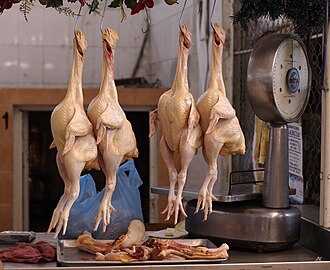
Photo: Wikipedia
This is the lean, white breast meat of a young chicken, pan-fried or deep-fried until golden and juicy. It offers a mild, savory flavor with a satisfyingly firm yet tender texture, and is a powerhouse of high-quality protein with very little fat.
Calorie split: 72% protein · 1% carbs · 27% fat
↓ Full nutrition💚 Why it's loved
People love it for its clean, mild flavor that acts as a perfect canvas for spices, marinades, and sauces, and its reliable, quick-cooking nature that makes it a weeknight staple.
⚠️ Watch-outs & how to enjoy it better
The frying process adds fat and calories compared to other cooking methods, and the lean meat can become dry if overcooked. To counteract this, use a non-stick pan with minimal oil, or consider air-frying. Always check internal temperature (165°F/74°C) to ensure safety without overcooking.
Key benefits
- Excellent source of complete, lean protein for muscle maintenance and sati.g
- Very low in carbohydrates, making it suitable for low-carb and ketogenic diets.
- Rich in niacin (vitamin B3) and phosphorus, essential for energy metabolism and bone health.
- A versatile, quick-cooking protein base for countless meals.
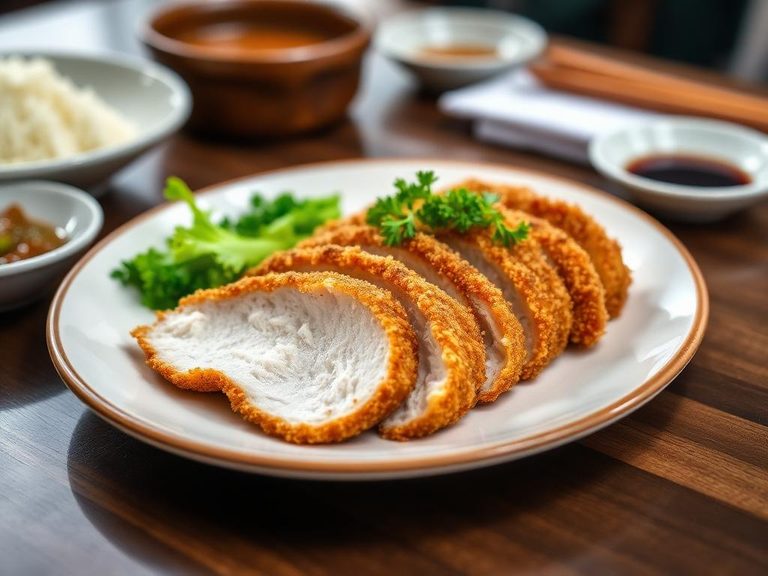
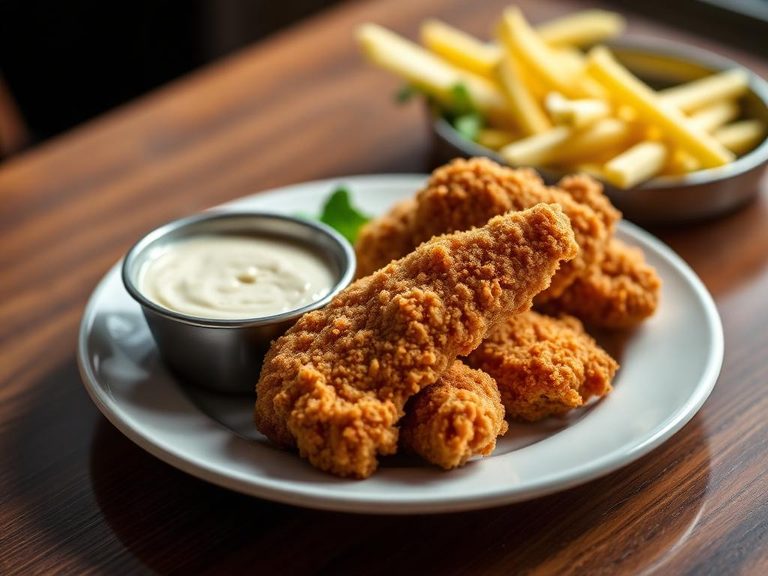
🍽️ Popular dishes




🌍 Where it's eaten
💡 Did you know?
The term 'broiler' specifically refers to a young chicken (under 10 weeks old) bred for its meat, as opposed to a 'layer' bred for eggs.
Full nutrition (USDA data · scales with serving)
| Water | 60.1 g |
| Energy | 192 kcal |
| Energy | 803 kj |
| Protein | 32.8 g |
| Total lipid (fat) | 5.5 g |
| Ash | 1.1 g |
| Carbohydrate, by difference | 0.42 g |
| Fiber, total dietary | 0.00 g |
| Calcium, Ca | 16.0 mg |
| Iron, Fe | 1.1 mg |
| Magnesium, Mg | 29.0 mg |
| Phosphorus, P | 231 mg |
| Potassium, K | 263 mg |
| Sodium, Na | 81.0 mg |
| Zinc, Zn | 1.3 mg |
| Copper, Cu | 0.05 mg |
| Manganese, Mn | 0.02 mg |
| Selenium, Se | 26.2 ug |
| Vitamin C, total ascorbic acid | 0.00 mg |
| Thiamin | 0.07 mg |
| Riboflavin | 0.13 mg |
| Niacin | 13.4 mg |
| Pantothenic acid | 1.0 mg |
| Vitamin B-6 | 0.63 mg |
| Folate, total | 4.0 ug |
| Folic acid | 0.00 ug |
| Folate, food | 4.0 ug |
| Folate, DFE | 4.0 ug |
| Vitamin B-12 | 0.36 ug |
| Vitamin A, RAE | 9.0 ug |
| Retinol | 9.0 ug |
| Vitamin A, IU | 30.0 iu |
Fat & fatty acid profile (per 100g)
| Fatty acids, total saturated | 1.5 g |
| SFA 10:0 | 0.00 g |
| SFA 12:0 | 0.01 g |
| SFA 14:0 | 0.04 g |
| SFA 16:0 | 1.0 g |
| SFA 18:0 | 0.43 g |
| Fatty acids, total monounsaturated | 2.0 g |
| MUFA 16:1 | 0.17 g |
| MUFA 18:1 | 1.7 g |
| MUFA 20:1 | 0.03 g |
| MUFA 22:1 | 0.00 g |
| Fatty acids, total polyunsaturated | 1.3 g |
| PUFA 18:2 | 0.99 g |
| PUFA 18:3 | 0.05 g |
| PUFA 20:4 | 0.09 g |
| PUFA 20:5 n-3 (EPA) | 0.01 g |
| PUFA 22:5 n-3 (DPA) | 0.02 g |
| PUFA 22:6 n-3 (DHA) | 0.03 g |
| Cholesterol | 90.0 mg |
Amino acid profile (per 100g)
| Tryptophan | 0.38 g |
| Threonine | 1.4 g |
| Isoleucine | 1.7 g |
| Leucine | 2.5 g |
| Lysine | 2.8 g |
| Methionine | 0.91 g |
| Cystine | 0.42 g |
| Phenylalanine | 1.3 g |
| Tyrosine | 1.1 g |
| Valine | 1.6 g |
| Arginine | 2.0 g |
| Histidine | 1.0 g |
| Alanine | 1.8 g |
| Aspartic acid | 2.9 g |
| Glutamic acid | 4.9 g |
| Glycine | 1.6 g |
| Proline | 1.4 g |
| Serine | 1.1 g |
FAQ
How is 'light meat' different from 'dark meat'?
Light meat (breast) has less myoglobin, the protein that stores oxygen in muscles, giving it a paler color and a milder, leaner flavor. Dark meat (thigh, leg) has more myoglobin, fat, and connective tissue, resulting in a richer flavor and juicier texture.
Why does the nutrition data show 0g for sugar and fiber?
Pure, cooked animal muscle meat like chicken breast contains no dietary fiber and only trace amounts of naturally occurring sugars, which are rounded to zero in standard nutrition labeling.
Is fried chicken breast healthy?
It can be a healthy part of a balanced diet. The key is the cooking method. Pan-frying with minimal healthy oil or air-frying creates a nutritious, high-protein meal. Deep-frying significantly increases the fat and calorie content.
Nutrient density (calculated · NRF9.3)
Nutrient Rich Foods index: beneficial nutrients (protein, fiber, vitamins, minerals) minus saturated fat, added sugar & sodium, per 100 kcal.
NRF9.3 index — Fulgoni, Keast & Drewnowski, 2009. Computed from USDA nutrients.
Weight-loss friendliness (composite index)
Energy density 1.92 kcal/g · 68% calories from protein · 0.0 g fiber · 0.0 g sugar per 100 g.
Composite of energy density (Rolls et al., 1999), protein & fiber satiety, minus sugar. A calculated heuristic — ranks satiety-per-calorie, not a clinical measure.
Dietary load (calculated from USDA values)
Potential renal acid load. Positive = acid-forming, negative = alkaline-forming.
Sodium-to-potassium ratio: 0.31 (lower is better — aim for ≤ 1)
Sodium:potassium per WHO potassium guidance. Computed from USDA nutrients.