

Cake, coffeecake, cinnamon with crumb topping, commercially prepared, enriched
Whole food · Baked Products
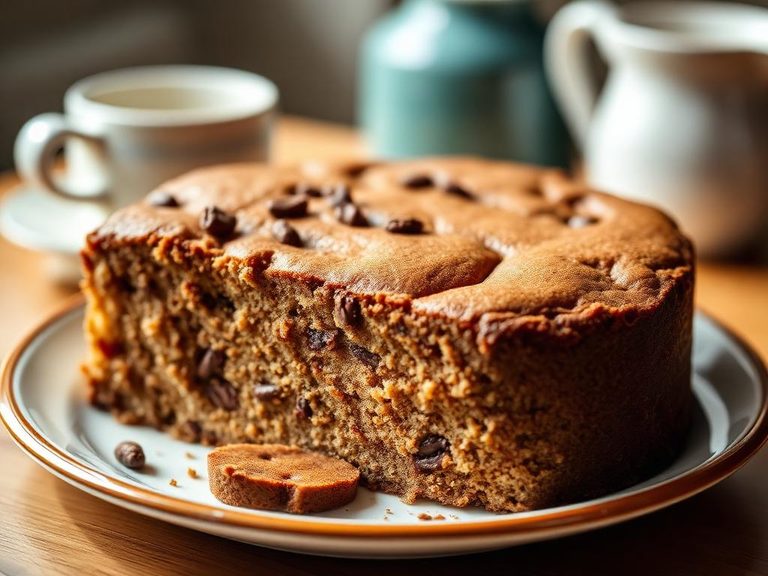
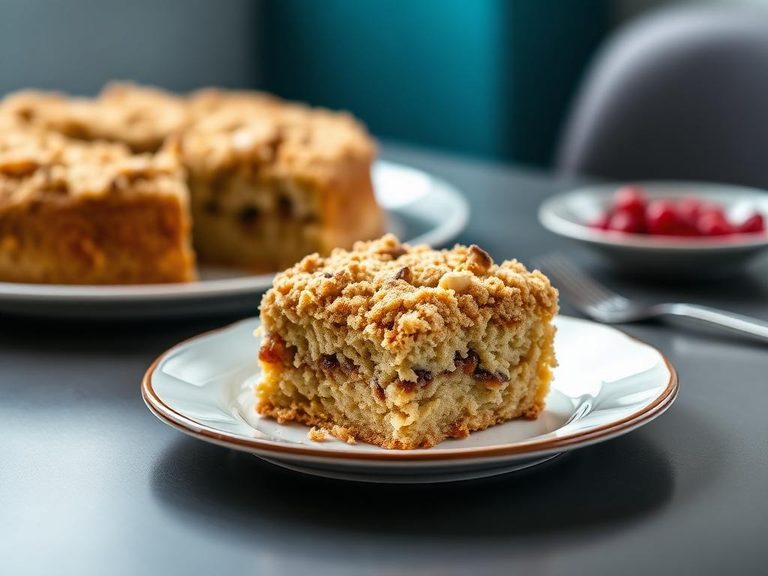
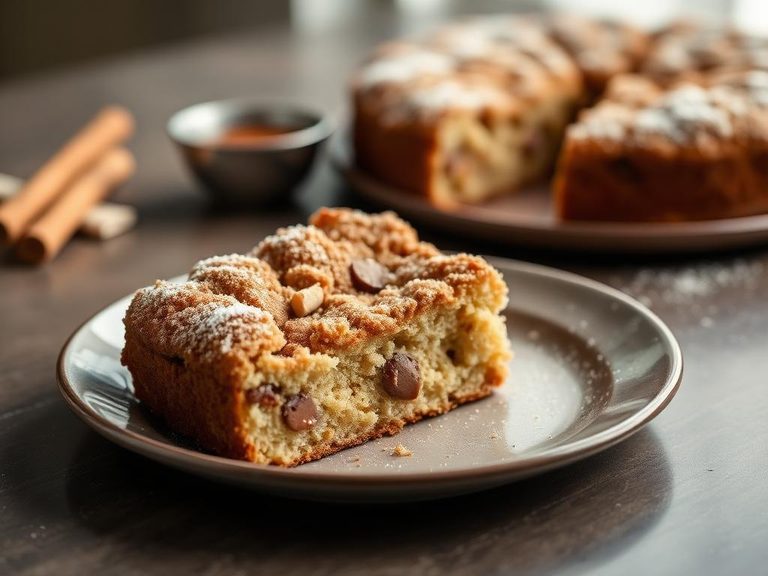
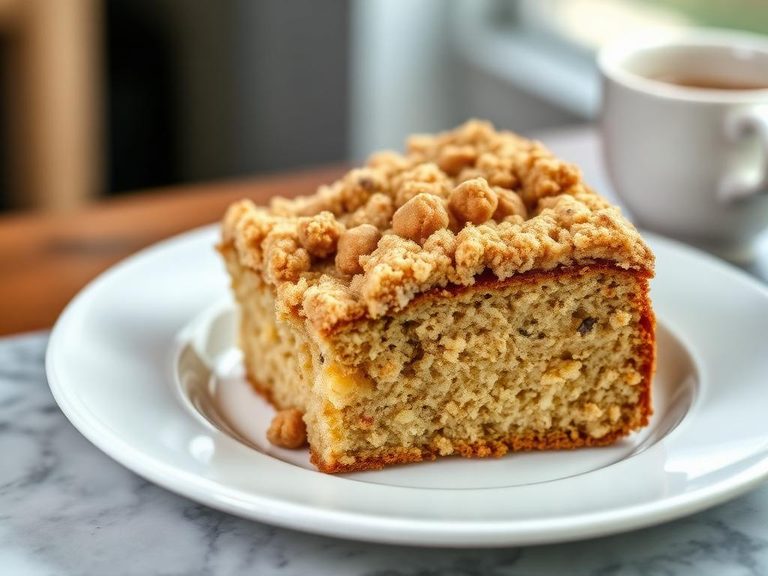
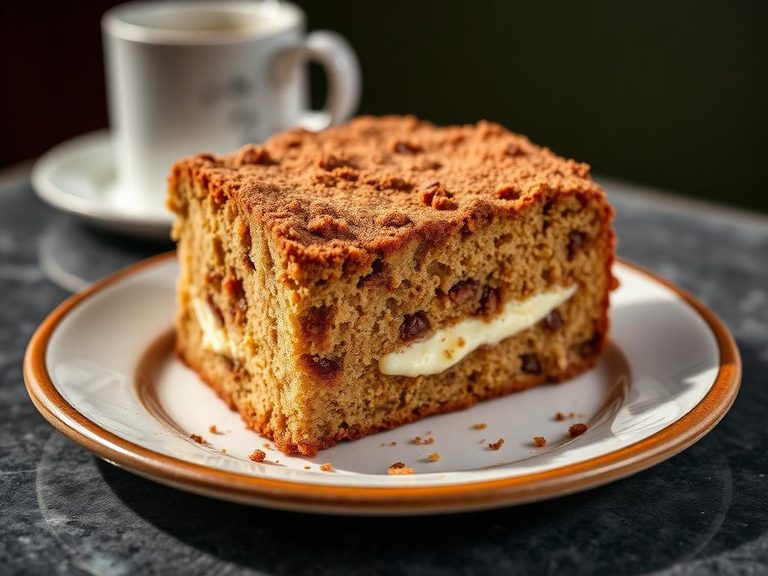
A tender, moist cake with a rich, buttery crumb and a sweet, cinnamon-spiced streusel topping. Each bite offers a delightful contrast between the soft, enriched cake base and the slightly crunchy, sugary crumble. It's a calorie-dense treat, packing over 400 kcal per 100g, primarily from carbohydrates and fats.
Calorie split: 6% protein · 44% carbs · 49% fat
↓ Full nutrition💚 Why it's loved
People love it for the comforting, nostalgic combination of warm cinnamon, sweet cake, and buttery crumb topping, often evoking memories of home baking. Its versatility makes it a popular choice for breakfast, brunch, or an afternoon snack alongside coffee or tea.
⚠️ Watch-outs & how to enjoy it better
The high sugar and refined carbohydrate content can lead to rapid blood sugar spikes, making it a poor choice for those managing diabetes or insulin resistance. It is also high in calories and low in satiating nutrients like fiber and protein, which can lead to overconsumption. To counteract, pair a small portion with a source of protein (like Greek yogurt) or healthy fat (like nuts) to slow digestion, and practice strict portion control.
Key benefits
- Provides a quick source of energy from carbohydrates
- Contains some dietary fiber from enriched flour
- Offers a small amount of protein from enriched flour and eggs
- A comforting, familiar treat for celebrations or coffee breaks
- Widely available and consistent in commercial preparations
🍽️ Popular dishes
🌍 Where it's eaten
💡 Did you know?
The 'crumb' topping, a signature feature, is a simple mixture of flour, sugar, and butter that was originally developed as a way to use up leftover dough scraps.
Full nutrition (USDA data · scales with serving)
| Water | 21.9 g |
| Energy | 418 kcal |
| Energy | 1749 kj |
| Protein | 6.8 g |
| Total lipid (fat) | 23.3 g |
| Ash | 1.4 g |
| Carbohydrate, by difference | 46.7 g |
| Fiber, total dietary | 2.0 g |
| Calcium, Ca | 54.0 mg |
| Iron, Fe | 1.9 mg |
| Magnesium, Mg | 22.0 mg |
| Phosphorus, P | 108 mg |
| Potassium, K | 123 mg |
| Sodium, Na | 351 mg |
| Zinc, Zn | 0.81 mg |
| Copper, Cu | 0.13 mg |
| Manganese, Mn | 0.45 mg |
| Selenium, Se | 17.2 ug |
| Vitamin C, total ascorbic acid | 0.30 mg |
| Thiamin | 0.21 mg |
| Riboflavin | 0.23 mg |
| Niacin | 1.7 mg |
| Pantothenic acid | 0.66 mg |
| Vitamin B-6 | 0.03 mg |
| Folate, total | 61.0 ug |
| Folic acid | 29.0 ug |
| Folate, food | 32.0 ug |
| Folate, DFE | 81.0 ug |
| Vitamin B-12 | 0.18 ug |
| Vitamin A, RAE | 33.0 ug |
| Retinol | 33.0 ug |
| Vitamin A, IU | 111 iu |
| Alcohol, ethyl | 0.00 g |
Fat & fatty acid profile (per 100g)
| Fatty acids, total saturated | 5.8 g |
| SFA 4:0 | 0.00 g |
| SFA 6:0 | 0.00 g |
| SFA 8:0 | 0.00 g |
| SFA 10:0 | 0.00 g |
| SFA 12:0 | 0.00 g |
| SFA 14:0 | 0.11 g |
| SFA 16:0 | 3.1 g |
| SFA 18:0 | 2.6 g |
| Fatty acids, total monounsaturated | 13.0 g |
| MUFA 16:1 | 0.06 g |
| MUFA 18:1 | 12.9 g |
| MUFA 20:1 | 0.01 g |
| MUFA 22:1 | 0.00 g |
| Fatty acids, total polyunsaturated | 3.1 g |
| PUFA 18:2 | 2.9 g |
| PUFA 18:3 | 0.15 g |
| PUFA 18:4 | 0.00 g |
| PUFA 20:4 | 0.02 g |
| PUFA 20:5 n-3 (EPA) | 0.00 g |
| PUFA 22:5 n-3 (DPA) | 0.00 g |
| PUFA 22:6 n-3 (DHA) | 0.01 g |
| Cholesterol | 32.0 mg |
Amino acid profile (per 100g)
| Tryptophan | 0.08 g |
| Threonine | 0.23 g |
| Isoleucine | 0.29 g |
| Leucine | 0.50 g |
| Lysine | 0.26 g |
| Methionine | 0.12 g |
| Cystine | 0.13 g |
| Phenylalanine | 0.32 g |
| Tyrosine | 0.22 g |
| Valine | 0.32 g |
| Arginine | 0.31 g |
| Histidine | 0.15 g |
| Alanine | 0.25 g |
| Aspartic acid | 0.41 g |
| Glutamic acid | 1.9 g |
| Glycine | 0.24 g |
| Proline | 0.63 g |
| Serine | 0.35 g |
FAQ
What is the difference between coffee cake and crumb cake?
While often used interchangeably, traditional coffee cake typically has a thinner streusel topping, while crumb cake is defined by a very thick, prominent layer of crumb topping, sometimes as thick as the cake itself.
Is this cake actually made with coffee?
No, it is not. The name 'coffee cake' refers to its intended pairing as a companion to a cup of coffee, not as an ingredient.
Why is it called 'enriched'?
It is made with enriched flour, meaning certain nutrients lost during processing (like iron and B vitamins such as folic acid) have been added back in.
Nutrient density (calculated · NRF9.3)
Nutrient Rich Foods index: beneficial nutrients (protein, fiber, vitamins, minerals) minus saturated fat, added sugar & sodium, per 100 kcal.
NRF9.3 index — Fulgoni, Keast & Drewnowski, 2009. Computed from USDA nutrients.
Weight-loss friendliness (composite index)
Energy density 4.18 kcal/g · 7% calories from protein · 2.0 g fiber · 0.0 g sugar per 100 g.
Composite of energy density (Rolls et al., 1999), protein & fiber satiety, minus sugar. A calculated heuristic — ranks satiety-per-calorie, not a clinical measure.
Dietary load (calculated from USDA values)
Potential renal acid load. Positive = acid-forming, negative = alkaline-forming.
Sodium-to-potassium ratio: 2.85 (lower is better — aim for ≤ 1)
Sodium:potassium per WHO potassium guidance. Computed from USDA nutrients.