

Broadbeans (fava beans), mature seeds, cooked, boiled, with salt
Whole food · Legumes and Legume Products

Photo: Wikipedia
Broadbeans, also known as fava beans, are hearty, earthy legumes with a creamy, slightly nutty flavor and a satisfying, mealy texture when boiled. They are a nutritional powerhouse, offering a substantial 7.6g of protein and 5.4g of fiber per 100g, making them a filling and wholesome addition to meals. Their mild, savory profile makes them a versatile ingredient in a wide range of global cuisines.
Calorie split: 27% protein · 70% carbs · 3% fat
↓ Full nutrition💚 Why it's loved
People love broadbeans for their earthy, nutty flavor that pairs beautifully with herbs, garlic, and citrus, and their ability to absorb seasonings in stews and salads. They are a cultural staple in many regions, celebrated in dishes from Mediterranean feasts to Middle Eastern street food, offering both comfort and nutrition.
⚠️ Watch-outs & how to enjoy it better
The high fiber content can cause digestive discomfort like bloating for some, and the added salt in this preparation may concern those monitoring sodium intake. Additionally, broadbeans contain oxalates, which can be a concern for individuals prone to kidney stones. To counteract, pair with a source of fat (like olive oil) to slow digestion, use low-sodium cooking methods, or soak and cook beans thoroughly to reduce oxalate levels.
Key benefits
- Excellent source of plant-based protein and dietary fiber
- Low in fat and naturally cholesterol-free
- Rich in folate (vitamin B9) and manganese
- Provides a steady source of energy from complex carbohydrates
- Contains antioxidants like lutein and zeaxanthin
🍽️ Popular dishes
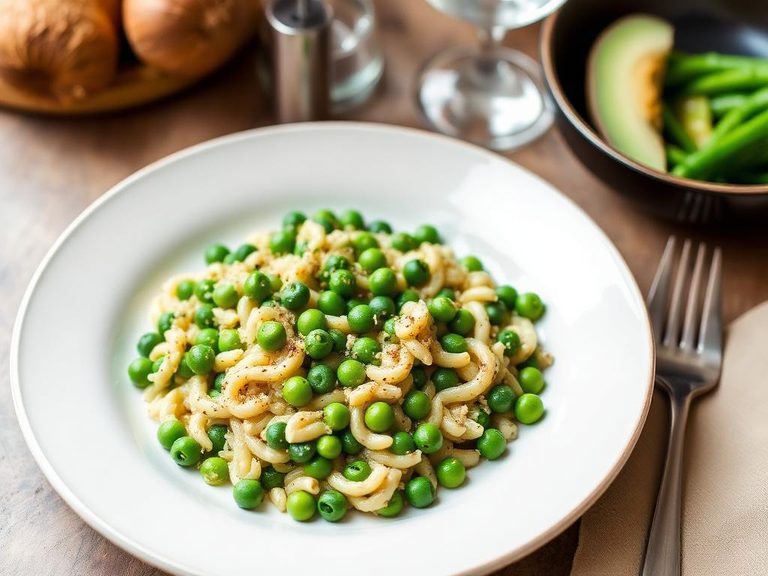
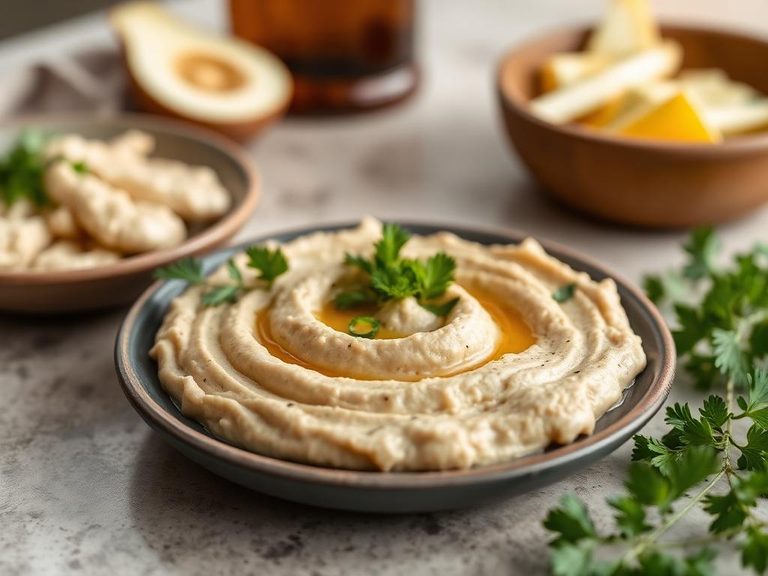
🌍 Where it's eaten
💡 Did you know?
Broadbeans are one of the oldest cultivated plants, with evidence of their use dating back to 6000 BC in the Middle East, and they were a staple food in ancient Greece and Rome.
Full nutrition (USDA data · scales with serving)
| Water | 71.5 g |
| Energy | 110 kcal |
| Energy | 460 kj |
| Protein | 7.6 g |
| Total lipid (fat) | 0.40 g |
| Ash | 0.81 g |
| Carbohydrate, by difference | 19.6 g |
| Fiber, total dietary | 5.4 g |
| Total Sugars | 1.8 g |
| Calcium, Ca | 36.0 mg |
| Iron, Fe | 1.5 mg |
| Magnesium, Mg | 43.0 mg |
| Phosphorus, P | 125 mg |
| Potassium, K | 268 mg |
| Sodium, Na | 241 mg |
| Zinc, Zn | 1.0 mg |
| Copper, Cu | 0.26 mg |
| Manganese, Mn | 0.42 mg |
| Selenium, Se | 2.6 ug |
| Vitamin C, total ascorbic acid | 0.30 mg |
| Thiamin | 0.10 mg |
| Riboflavin | 0.09 mg |
| Niacin | 0.71 mg |
| Pantothenic acid | 0.16 mg |
| Vitamin B-6 | 0.07 mg |
| Folate, total | 104 ug |
| Folic acid | 0.00 ug |
| Folate, food | 104 ug |
| Folate, DFE | 104 ug |
| Choline, total | 30.6 mg |
| Vitamin B-12 | 0.00 ug |
| Vitamin B-12, added | 0.00 ug |
| Vitamin A, RAE | 1.0 ug |
| Retinol | 0.00 ug |
| Carotene, beta | 9.0 ug |
| Carotene, alpha | 0.00 ug |
| Cryptoxanthin, beta | 0.00 ug |
| Vitamin A, IU | 15.0 iu |
| Lycopene | 0.00 ug |
| Lutein + zeaxanthin | 0.00 ug |
| Vitamin E (alpha-tocopherol) | 0.02 mg |
| Vitamin E, added | 0.00 mg |
| Vitamin D (D2 + D3), International Units | 0.00 iu |
| Vitamin D (D2 + D3) | 0.00 ug |
| Vitamin K (phylloquinone) | 2.9 ug |
Fat & fatty acid profile (per 100g)
| Fatty acids, total saturated | 0.07 g |
| SFA 12:0 | 0.00 g |
| SFA 14:0 | 0.00 g |
| SFA 16:0 | 0.05 g |
| SFA 18:0 | 0.01 g |
| Fatty acids, total monounsaturated | 0.08 g |
| MUFA 16:1 | 0.00 g |
| MUFA 18:1 | 0.08 g |
| Fatty acids, total polyunsaturated | 0.16 g |
| PUFA 18:2 | 0.15 g |
| PUFA 18:3 | 0.01 g |
| Fatty acids, total trans | 0.00 g |
| Cholesterol | 0.00 mg |
Amino acid profile (per 100g)
| Tryptophan | 0.07 g |
| Threonine | 0.27 g |
| Isoleucine | 0.31 g |
| Leucine | 0.57 g |
| Lysine | 0.49 g |
| Methionine | 0.06 g |
| Cystine | 0.10 g |
| Phenylalanine | 0.32 g |
| Tyrosine | 0.24 g |
| Valine | 0.34 g |
| Arginine | 0.70 g |
| Histidine | 0.19 g |
| Alanine | 0.31 g |
| Aspartic acid | 0.85 g |
| Glutamic acid | 1.3 g |
| Glycine | 0.32 g |
| Proline | 0.32 g |
| Serine | 0.35 g |
FAQ
Are broadbeans the same as fava beans?
Yes, broadbeans and fava beans refer to the same legume (Vicia faba). The name 'broadbean' is more common in the UK, while 'fava bean' is widely used in the US and other regions.
Can I eat broadbeans raw?
While young, tender broadbeans can be eaten raw, mature seeds like these are best cooked. Boiling or steaming improves digestibility and removes naturally occurring compounds that can cause discomfort.
How do I store cooked broadbeans?
Store cooked broadbeans in an airtight container in the refrigerator for up to 3-4 days. For longer storage, freeze them in portions for up to 6 months.
Nutrient density (calculated · NRF9.3)
Nutrient Rich Foods index: beneficial nutrients (protein, fiber, vitamins, minerals) minus saturated fat, added sugar & sodium, per 100 kcal.
NRF9.3 index — Fulgoni, Keast & Drewnowski, 2009. Computed from USDA nutrients.
Weight-loss friendliness (composite index)
Energy density 1.10 kcal/g · 28% calories from protein · 5.4 g fiber · 1.8 g sugar per 100 g.
Composite of energy density (Rolls et al., 1999), protein & fiber satiety, minus sugar. A calculated heuristic — ranks satiety-per-calorie, not a clinical measure.
Dietary load (calculated from USDA values)
Potential renal acid load. Positive = acid-forming, negative = alkaline-forming.
Sodium-to-potassium ratio: 0.90 (lower is better — aim for ≤ 1)
Sodium:potassium per WHO potassium guidance. Computed from USDA nutrients.