

Beverages, Orange-flavor drink, breakfast type, low calorie, powder
Whole food · Beverages

Photo: Wikipedia
This is a vibrant, instant orange-flavored drink mix designed for a quick, low-calorie morning boost. When reconstituted, it yields a bright, tangy, and sweet citrus beverage with a smooth, non-pulpy texture. Nutritionally, it's a lightweight option, providing a modest 217 kcal per 100g of powder, primarily from carbohydrates.
Calorie split: 4% protein · 96% carbs · 0% fat
↓ Full nutrition💚 Why it's loved
People love its nostalgic, punch-like sweetness and the sheer convenience of having a flavorful, hydrating drink ready in seconds. It's a versatile base that can be enjoyed cold, used in smoothies, or even as a flavoring in desserts.
⚠️ Watch-outs & how to enjoy it better
The primary concern is the high carbohydrate content (85.9g per 100g powder), which can lead to a rapid blood-sugar spike if consumed in large amounts or without other foods. To counteract this, always mix it with a meal containing protein and healthy fats (like yogurt or eggs) and practice strict portion control by using the recommended scoop.
Key benefits
- Low in calories per serving when mixed
- Provides a quick source of carbohydrates for energy
- Contains added dietary fiber
- Convenient and shelf-stable for quick preparation
- Often fortified with vitamins like Vitamin C
🍽️ Popular dishes
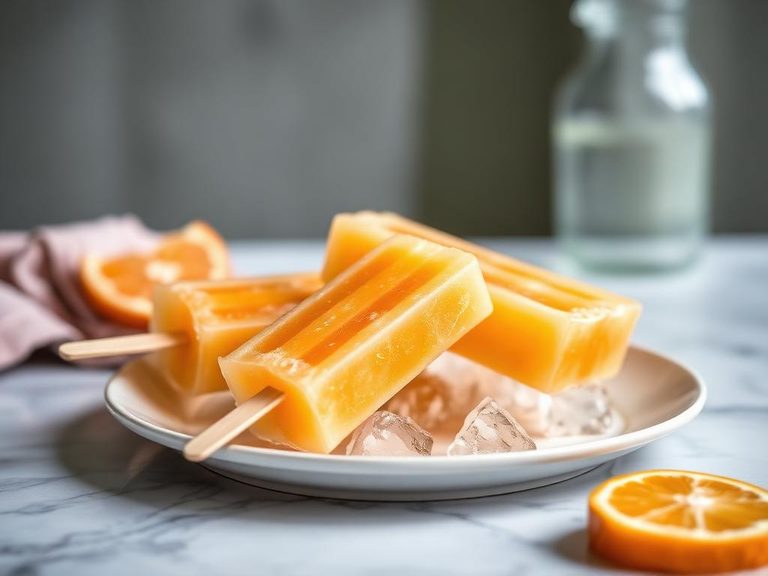
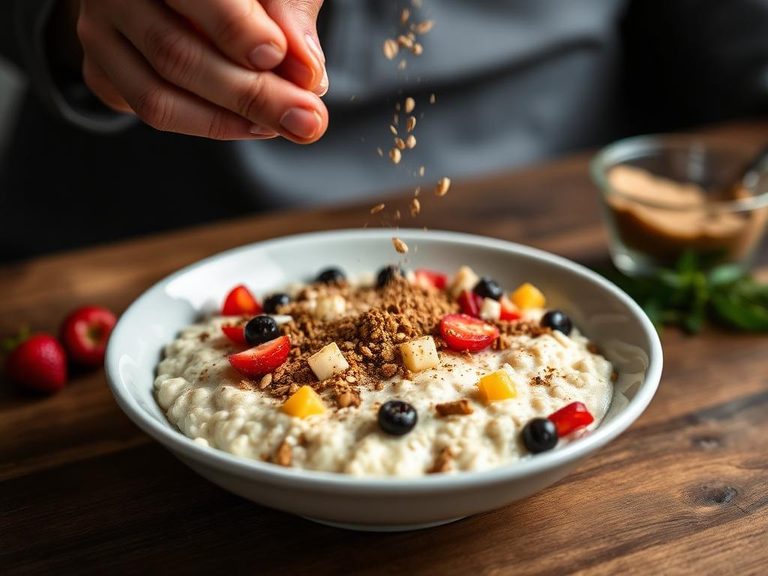
🌍 Where it's eaten
💡 Did you know?
The 'breakfast type' designation often means the powder is fortified with a significant portion of the daily recommended value for Vitamin C, a practice that began in the mid-20th century to combat nutrient deficiencies.
Full nutrition (USDA data · scales with serving)
| Water | 1.8 g |
| Energy | 217 kcal |
| Energy | 908 kj |
| Protein | 3.6 g |
| Total lipid (fat) | 0.00 g |
| Ash | 8.7 g |
| Carbohydrate, by difference | 85.9 g |
| Fiber, total dietary | 3.8 g |
| Total Sugars | 2.6 g |
| Calcium, Ca | 1378 mg |
| Iron, Fe | 0.07 mg |
| Magnesium, Mg | 275 mg |
| Phosphorus, P | 629 mg |
| Potassium, K | 3132 mg |
| Sodium, Na | 81.0 mg |
| Zinc, Zn | 0.00 mg |
| Copper, Cu | 0.00 mg |
| Selenium, Se | 0.00 ug |
| Vitamin C, total ascorbic acid | 2400 mg |
| Thiamin | 0.00 mg |
| Riboflavin | 6.8 mg |
| Niacin | 80.0 mg |
| Pantothenic acid | 0.00 mg |
| Vitamin B-6 | 8.0 mg |
| Folate, total | 0.00 ug |
| Folic acid | 0.00 ug |
| Folate, food | 0.00 ug |
| Folate, DFE | 0.00 ug |
| Vitamin B-12 | 0.00 ug |
| Vitamin A, RAE | 6006 ug |
| Retinol | 6006 ug |
| Vitamin A, IU | 20000 iu |
| Alcohol, ethyl | 0.00 g |
| Caffeine | 0.00 mg |
| Theobromine | 0.00 mg |
Fat & fatty acid profile (per 100g)
| Fatty acids, total saturated | 0.00 g |
| SFA 4:0 | 0.00 g |
| SFA 6:0 | 0.00 g |
| SFA 8:0 | 0.00 g |
| SFA 10:0 | 0.00 g |
| SFA 12:0 | 0.00 g |
| SFA 14:0 | 0.00 g |
| SFA 16:0 | 0.00 g |
| SFA 18:0 | 0.00 g |
| Fatty acids, total monounsaturated | 0.00 g |
| MUFA 16:1 | 0.00 g |
| MUFA 18:1 | 0.00 g |
| MUFA 20:1 | 0.00 g |
| MUFA 22:1 | 0.00 g |
| Fatty acids, total polyunsaturated | 0.00 g |
| PUFA 18:2 | 0.00 g |
| PUFA 18:3 | 0.00 g |
| PUFA 18:4 | 0.00 g |
| PUFA 20:4 | 0.00 g |
| PUFA 20:5 n-3 (EPA) | 0.00 g |
| PUFA 22:5 n-3 (DPA) | 0.00 g |
| PUFA 22:6 n-3 (DHA) | 0.00 g |
| Fatty acids, total trans | 0.00 g |
| Cholesterol | 0.00 mg |
Amino acid profile (per 100g)
Estimated from Beverages, carbonated, tonic water — USDA does not publish this profile for Beverages.
| Tryptophan | 0.00 g |
| Threonine | 0.00 g |
| Isoleucine | 0.00 g |
| Leucine | 0.00 g |
| Lysine | 0.00 g |
| Methionine | 0.00 g |
| Cystine | 0.00 g |
| Phenylalanine | 0.00 g |
| Tyrosine | 0.00 g |
| Valine | 0.00 g |
| Arginine | 0.00 g |
| Histidine | 0.00 g |
| Alanine | 0.00 g |
| Aspartic acid | 0.00 g |
| Glutamic acid | 0.00 g |
| Glycine | 0.00 g |
| Proline | 0.00 g |
| Serine | 0.00 g |
FAQ
Is this the same as regular orange juice powder?
Not exactly. 'Breakfast type' powders are typically formulated to mimic the taste and fortified vitamin profile of orange juice, but may contain more added sugars, flavorings, and anti-caking agents compared to pure dehydrated orange juice.
Can I use this in baking?
Yes, it can be used to add orange flavor to cakes, muffins, or frostings. Be mindful that it adds both sweetness and carbohydrates, so you may need to adjust the sugar and liquid in your recipe.
Why is there no fat in this product?
The base ingredients are typically carbohydrate sources (like maltodextrin or sugar) and citric acid, which are naturally fat-free. Any fat would come from additives, which are not common in this type of simple drink mix.
Nutrient density (calculated · NRF9.3)
Nutrient Rich Foods index: beneficial nutrients (protein, fiber, vitamins, minerals) minus saturated fat, added sugar & sodium, per 100 kcal.
NRF9.3 index — Fulgoni, Keast & Drewnowski, 2009. Computed from USDA nutrients.
Weight-loss friendliness (composite index)
Energy density 2.17 kcal/g · 7% calories from protein · 3.8 g fiber · 2.6 g sugar per 100 g.
Composite of energy density (Rolls et al., 1999), protein & fiber satiety, minus sugar. A calculated heuristic — ranks satiety-per-calorie, not a clinical measure.
Dietary load (calculated from USDA values)
Potential renal acid load. Positive = acid-forming, negative = alkaline-forming.
Sodium-to-potassium ratio: 0.03 (lower is better — aim for ≤ 1)
Sodium:potassium per WHO potassium guidance. Computed from USDA nutrients.