

Beverages, carbonated, orange
Whole food · Beverages

Photo: Wikipedia
This is a sweet, fizzy, orange-flavored soft drink, delivering a bright, tangy burst of citrus flavor with a lively, effervescent texture. Nutritionally, it's a source of quick energy from carbohydrates, with no protein, fat, or fiber.
Calorie split: 0% protein · 100% carbs · 0% fat
↓ Full nutrition💚 Why it's loved
People love it for its nostalgic, sweet-tart orange flavor and the satisfying tingle of carbonation, which makes it a popular treat for celebrations or a simple pick-me-up.
⚠️ Watch-outs & how to enjoy it better
The high carbohydrate content can cause rapid blood sugar spikes, and it offers little nutritional value beyond calories. Those monitoring blood sugar or seeking nutrient-dense foods should consume it sparingly. To mitigate blood sugar impact, consider pairing it with a source of protein or fat (like nuts or cheese) and practicing portion control.
Key benefits
- Provides quick energy from carbohydrates
- Offers a refreshing, thirst-quenching sensation
- Can be used as a quick source of glucose in low-sugar situations
- A common mixer in cocktails and mocktails
🍽️ Popular dishes
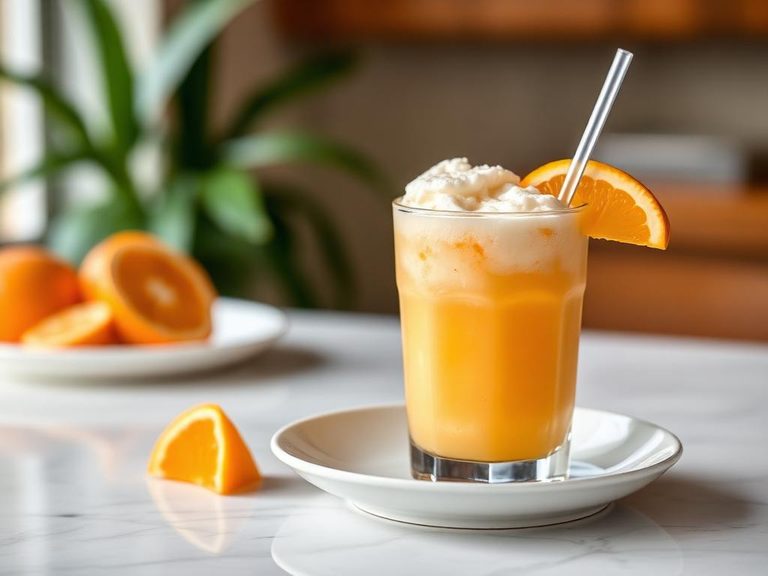

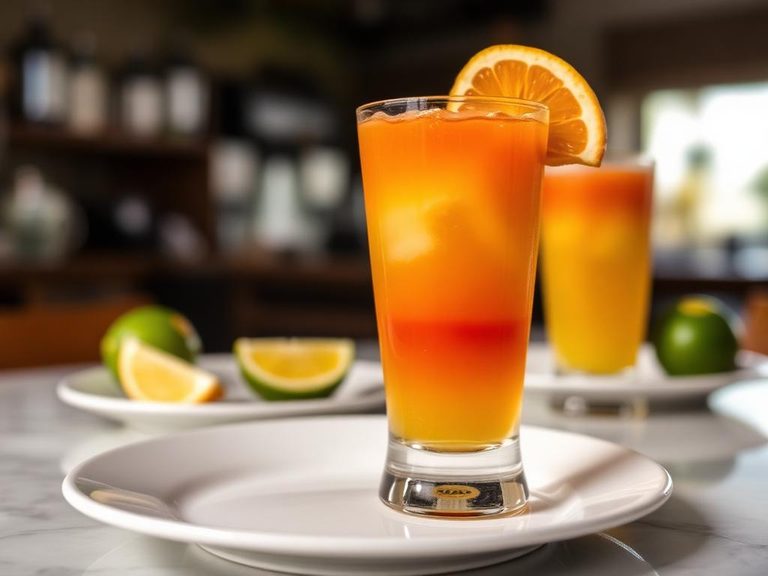
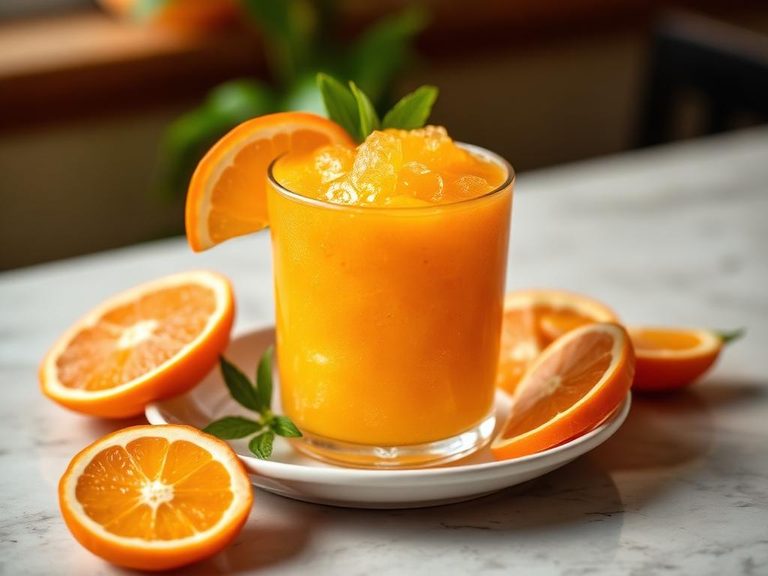
🌍 Where it's eaten
💡 Did you know?
The bright orange color of most orange sodas comes from artificial food dyes like Yellow 6, not from actual orange juice.
Full nutrition (USDA data · scales with serving)
| Water | 87.6 g |
| Energy | 48.0 kcal |
| Energy | 201 kj |
| Protein | 0.00 g |
| Total lipid (fat) | 0.00 g |
| Ash | 0.10 g |
| Carbohydrate, by difference | 12.3 g |
| Fiber, total dietary | 0.00 g |
| Calcium, Ca | 5.0 mg |
| Iron, Fe | 0.06 mg |
| Magnesium, Mg | 1.0 mg |
| Phosphorus, P | 1.0 mg |
| Potassium, K | 2.0 mg |
| Sodium, Na | 12.0 mg |
| Zinc, Zn | 0.10 mg |
| Copper, Cu | 0.01 mg |
| Manganese, Mn | 0.01 mg |
| Selenium, Se | 0.00 ug |
| Fluoride, F | 80.6 ug |
| Vitamin C, total ascorbic acid | 0.00 mg |
| Thiamin | 0.00 mg |
| Riboflavin | 0.00 mg |
| Niacin | 0.00 mg |
| Pantothenic acid | 0.00 mg |
| Vitamin B-6 | 0.00 mg |
| Folate, total | 0.00 ug |
| Folic acid | 0.00 ug |
| Folate, food | 0.00 ug |
| Folate, DFE | 0.00 ug |
| Choline, total | 0.60 mg |
| Betaine | 0.10 mg |
| Vitamin B-12 | 0.00 ug |
| Vitamin A, RAE | 0.00 ug |
| Retinol | 0.00 ug |
| Vitamin A, IU | 0.00 iu |
| Alcohol, ethyl | 0.00 g |
Fat & fatty acid profile (per 100g)
| Fatty acids, total saturated | 0.00 g |
| SFA 4:0 | 0.00 g |
| SFA 6:0 | 0.00 g |
| SFA 8:0 | 0.00 g |
| SFA 10:0 | 0.00 g |
| SFA 12:0 | 0.00 g |
| SFA 14:0 | 0.00 g |
| SFA 16:0 | 0.00 g |
| SFA 18:0 | 0.00 g |
| Fatty acids, total monounsaturated | 0.00 g |
| MUFA 16:1 | 0.00 g |
| MUFA 18:1 | 0.00 g |
| MUFA 20:1 | 0.00 g |
| MUFA 22:1 | 0.00 g |
| Fatty acids, total polyunsaturated | 0.00 g |
| PUFA 18:2 | 0.00 g |
| PUFA 18:3 | 0.00 g |
| PUFA 18:4 | 0.00 g |
| PUFA 20:4 | 0.00 g |
| PUFA 20:5 n-3 (EPA) | 0.00 g |
| PUFA 22:5 n-3 (DPA) | 0.00 g |
| PUFA 22:6 n-3 (DHA) | 0.00 g |
| Fatty acids, total trans | 0.00 g |
| Cholesterol | 0.00 mg |
Amino acid profile (per 100g)
| Tryptophan | 0.00 g |
| Threonine | 0.00 g |
| Isoleucine | 0.00 g |
| Leucine | 0.00 g |
| Lysine | 0.00 g |
| Methionine | 0.00 g |
| Cystine | 0.00 g |
| Phenylalanine | 0.00 g |
| Tyrosine | 0.00 g |
| Valine | 0.00 g |
| Arginine | 0.00 g |
| Histidine | 0.00 g |
| Alanine | 0.00 g |
| Aspartic acid | 0.00 g |
| Glutamic acid | 0.00 g |
| Glycine | 0.00 g |
| Proline | 0.00 g |
| Serine | 0.00 g |
FAQ
Is orange soda made with real orange juice?
Most commercial orange sodas are flavored with artificial or natural flavors and citric acid, with little to no actual orange juice. Check the ingredients list for 'orange juice concentrate' to know for sure.
Why does orange soda make my teeth feel sticky?
The combination of high sugar content and acidity (from carbonation and added acids) can temporarily soften tooth enamel and promote a sticky feeling. Rinsing with water after drinking can help.
Can I use orange soda in cooking or baking?
Yes, it's sometimes used as a tenderizer in marinades or to add a citrusy sweetness to cakes, glazes, and barbecue sauces.
Nutrient density (calculated · NRF9.3)
Nutrient Rich Foods index: beneficial nutrients (protein, fiber, vitamins, minerals) minus saturated fat, added sugar & sodium, per 100 kcal.
NRF9.3 index — Fulgoni, Keast & Drewnowski, 2009. Computed from USDA nutrients.
Weight-loss friendliness (composite index)
Energy density 0.48 kcal/g · 0% calories from protein · 0.0 g fiber · 0.0 g sugar per 100 g.
Composite of energy density (Rolls et al., 1999), protein & fiber satiety, minus sugar. A calculated heuristic — ranks satiety-per-calorie, not a clinical measure.
Dietary load (calculated from USDA values)
Potential renal acid load. Positive = acid-forming, negative = alkaline-forming.
Sodium-to-potassium ratio: 6.00 (lower is better — aim for ≤ 1)
Sodium:potassium per WHO potassium guidance. Computed from USDA nutrients.