

Beverages, carbonated, grape soda
Whole food · Beverages
A vibrant, effervescent soft drink known for its bold, sweet grape flavor and deep purple hue. Its fizzy texture provides a refreshing burst of sweetness, with a nutrition profile dominated by simple carbohydrates for quick energy.
Calorie split: 0% protein · 100% carbs · 0% fat
↓ Full nutrition💚 Why it's loved
People love it for its nostalgic, candy-like grape flavor that evokes a sense of fun and indulgence. Its versatility in mixing drinks and its iconic color make it a cultural staple for celebrations and casual enjoyment.
⚠️ Watch-outs & how to enjoy it better
The high concentration of simple sugars can lead to rapid blood-sugar spikes and crashes, offering little nutritional benefit. To counteract this, consider portion control, enjoying it as an occasional treat, or pairing it with a source of protein or fiber (like nuts or cheese) to slow sugar absorption.
Key benefits
- Provides quick energy from carbohydrates
- Offers a refreshing, carbonated sensory experience
- Often caffeine-free, making it a non-stimulant option
- A common ingredient in playful, non-alcoholic mocktails
🍽️ Popular dishes
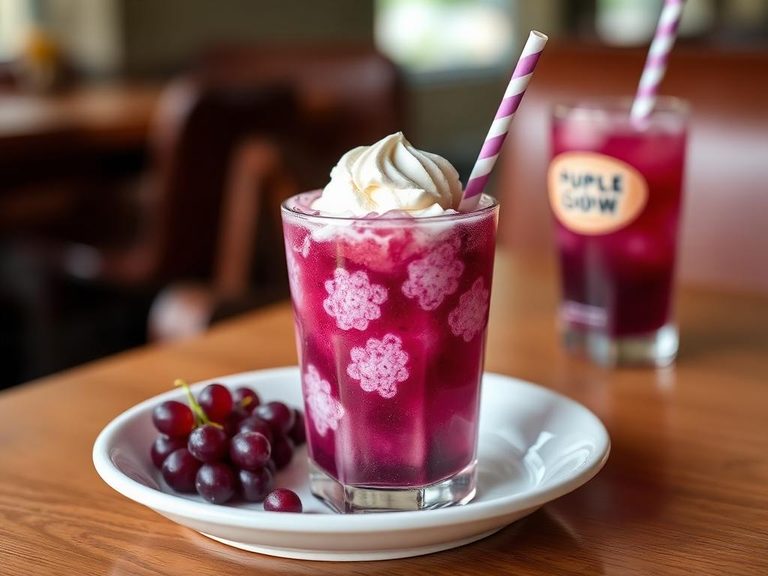
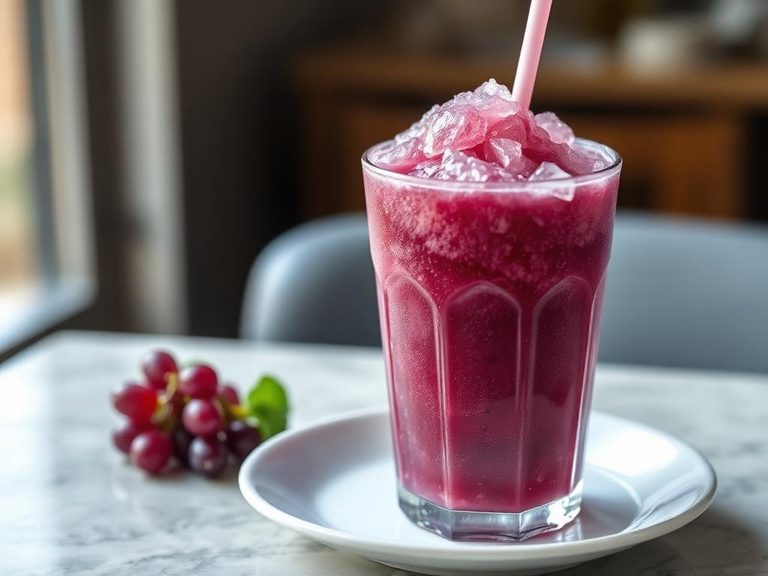
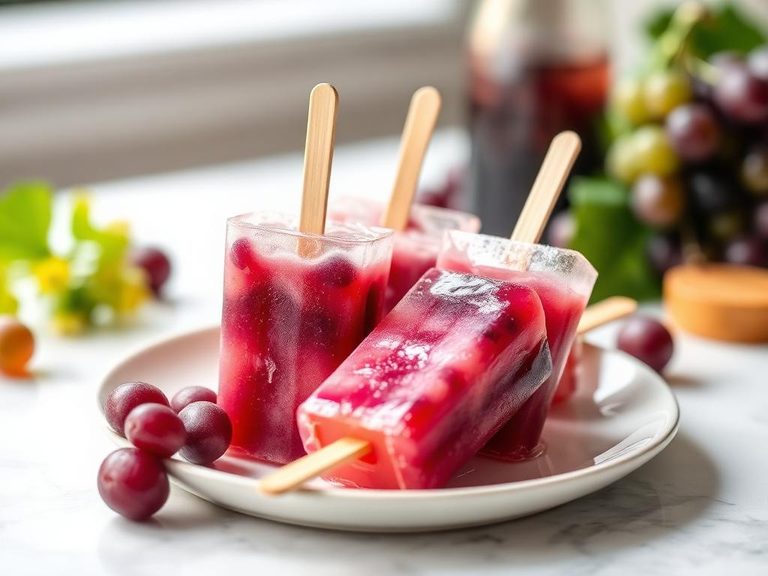
🌍 Where it's eaten
💡 Did you know?
The iconic grape flavor in most sodas is derived from a single chemical compound called methyl anthranilate, which is also found naturally in Concord grapes and is used to flavor everything from candy to chewing gum.
Full nutrition (USDA data · scales with serving)
| Water | 88.8 g |
| Energy | 43.0 kcal |
| Energy | 180 kj |
| Protein | 0.00 g |
| Total lipid (fat) | 0.00 g |
| Ash | 0.10 g |
| Carbohydrate, by difference | 11.2 g |
| Fiber, total dietary | 0.00 g |
| Calcium, Ca | 3.0 mg |
| Iron, Fe | 0.08 mg |
| Magnesium, Mg | 1.0 mg |
| Phosphorus, P | 0.00 mg |
| Potassium, K | 1.0 mg |
| Sodium, Na | 15.0 mg |
| Zinc, Zn | 0.07 mg |
| Copper, Cu | 0.02 mg |
| Manganese, Mn | 0.01 mg |
| Selenium, Se | 0.00 ug |
| Fluoride, F | 86.3 ug |
| Vitamin C, total ascorbic acid | 0.00 mg |
| Thiamin | 0.00 mg |
| Riboflavin | 0.00 mg |
| Niacin | 0.00 mg |
| Pantothenic acid | 0.00 mg |
| Vitamin B-6 | 0.00 mg |
| Folate, total | 0.00 ug |
| Folic acid | 0.00 ug |
| Folate, food | 0.00 ug |
| Folate, DFE | 0.00 ug |
| Vitamin B-12 | 0.00 ug |
| Vitamin A, RAE | 0.00 ug |
| Retinol | 0.00 ug |
| Vitamin A, IU | 0.00 iu |
| Alcohol, ethyl | 0.00 g |
Fat & fatty acid profile (per 100g)
| Fatty acids, total saturated | 0.00 g |
| SFA 4:0 | 0.00 g |
| SFA 6:0 | 0.00 g |
| SFA 8:0 | 0.00 g |
| SFA 10:0 | 0.00 g |
| SFA 12:0 | 0.00 g |
| SFA 14:0 | 0.00 g |
| SFA 16:0 | 0.00 g |
| SFA 18:0 | 0.00 g |
| Fatty acids, total monounsaturated | 0.00 g |
| MUFA 16:1 | 0.00 g |
| MUFA 18:1 | 0.00 g |
| MUFA 20:1 | 0.00 g |
| MUFA 22:1 | 0.00 g |
| Fatty acids, total polyunsaturated | 0.00 g |
| PUFA 18:2 | 0.00 g |
| PUFA 18:3 | 0.00 g |
| PUFA 18:4 | 0.00 g |
| PUFA 20:4 | 0.00 g |
| PUFA 20:5 n-3 (EPA) | 0.00 g |
| PUFA 22:5 n-3 (DPA) | 0.00 g |
| PUFA 22:6 n-3 (DHA) | 0.00 g |
| Fatty acids, total trans | 0.00 g |
| Cholesterol | 0.00 mg |
Amino acid profile (per 100g)
| Tryptophan | 0.00 g |
| Threonine | 0.00 g |
| Isoleucine | 0.00 g |
| Leucine | 0.00 g |
| Lysine | 0.00 g |
| Methionine | 0.00 g |
| Cystine | 0.00 g |
| Phenylalanine | 0.00 g |
| Tyrosine | 0.00 g |
| Valine | 0.00 g |
| Arginine | 0.00 g |
| Histidine | 0.00 g |
| Alanine | 0.00 g |
| Aspartic acid | 0.00 g |
| Glutamic acid | 0.00 g |
| Glycine | 0.00 g |
| Proline | 0.00 g |
| Serine | 0.00 g |
FAQ
Is grape soda actually made from grapes?
Typically, no. The grape flavor is almost always artificial, created using the compound methyl anthranilate. While it mimics the taste of grapes, the drink itself contains no grape juice or fruit content.
Why is grape soda purple?
The deep purple color is entirely artificial, achieved through food dyes like Red 40 and Blue 1. It's designed to visually represent the grape flavor, even though the drink is colorless without the added dye.
Can grape soda be used in cooking?
Yes, it's a popular ingredient in sweet and tangy glazes or marinades for meats like pork or chicken. The sugar caramelizes during cooking, and the acidity can help tenderize the meat.
Nutrient density (calculated · NRF9.3)
Nutrient Rich Foods index: beneficial nutrients (protein, fiber, vitamins, minerals) minus saturated fat, added sugar & sodium, per 100 kcal.
NRF9.3 index — Fulgoni, Keast & Drewnowski, 2009. Computed from USDA nutrients.
Weight-loss friendliness (composite index)
Energy density 0.43 kcal/g · 0% calories from protein · 0.0 g fiber · 0.0 g sugar per 100 g.
Composite of energy density (Rolls et al., 1999), protein & fiber satiety, minus sugar. A calculated heuristic — ranks satiety-per-calorie, not a clinical measure.
Dietary load (calculated from USDA values)
Potential renal acid load. Positive = acid-forming, negative = alkaline-forming.
Sodium-to-potassium ratio: 15.00 (lower is better — aim for ≤ 1)
Sodium:potassium per WHO potassium guidance. Computed from USDA nutrients.