

Turkey, young hen, skin only, cooked, roasted
Whole food · Poultry Products

Photo: Wikipedia
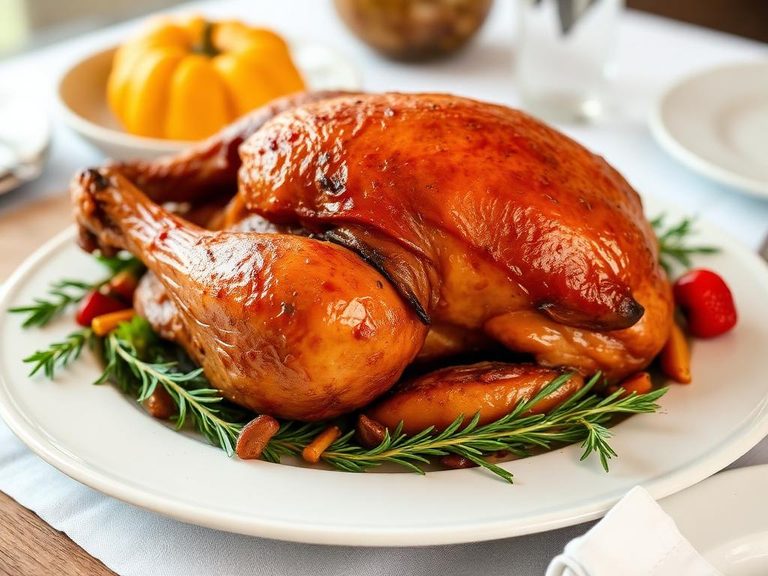
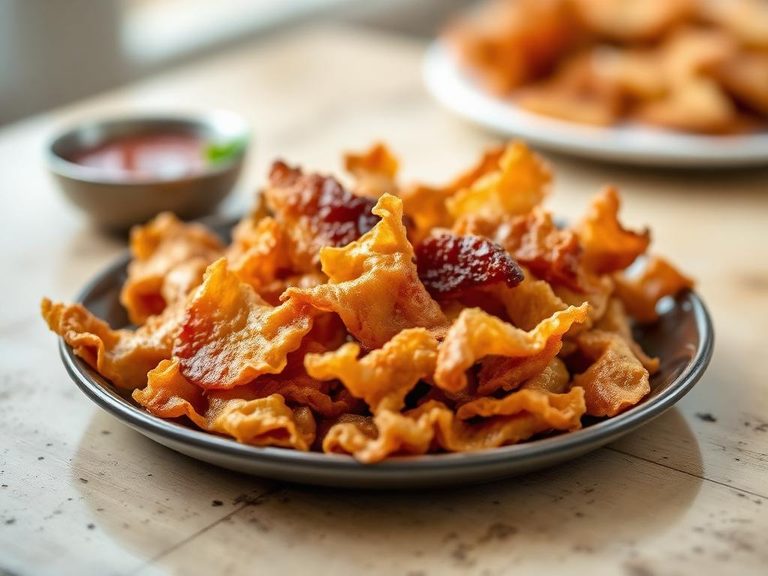
Roasted turkey skin is a golden, crispy delicacy, prized for its rich, savory flavor and satisfying crunch. It is essentially pure, rendered fat and protein, offering a concentrated source of energy and a luxurious mouthfeel. Nutritionally, it's a high-fat, zero-carb component, making it a flavorful addition rather than a primary protein source.
Calorie split: 16% protein · 0% carbs · 84% fat
↓ Full nutrition💚 Why it's loved
People adore it for the irresistible combination of salty, umami-rich flavor and the shattering crispness that contrasts with tender meat. It's often the most coveted part of the holiday turkey, representing indulgence and tradition.
⚠️ Watch-outs & how to enjoy it better
Due to its very high fat content, it's calorie-dense and should be enjoyed in moderation, especially by those managing calorie intake or cardiovascular health. To counteract this, treat it as a flavorful garnish rather than a main portion, and pair it with high-fiber vegetables like roasted Brussels sprouts or a leafy salad to add volume and nutrients without excessive calories.
Key benefits
- Provides a concentrated source of dietary fat for energy and satiety.
- Rich in collagen, which supports skin and joint health.
- Adds intense, savory flavor to dishes without added sugars or carbs.
- A traditional part of holiday feasts, contributing to cultural and celebratory meals.
🍽️ Popular dishes

🌍 Where it's eaten
💡 Did you know?
Rendering the fat from turkey skin creates 'schmaltz,' a prized cooking fat in many cuisines, which can be stored for months and used to roast potatoes or sauté vegetables with incredible depth of flavor.
Full nutrition (USDA data · scales with serving)
| Water | 35.5 g |
| Energy | 482 kcal |
| Energy | 2017 kj |
| Protein | 19.0 g |
| Total lipid (fat) | 44.5 g |
| Ash | 0.63 g |
| Carbohydrate, by difference | 0.00 g |
| Fiber, total dietary | 0.00 g |
| Calcium, Ca | 32.0 mg |
| Iron, Fe | 1.8 mg |
| Magnesium, Mg | 15.0 mg |
| Phosphorus, P | 133 mg |
| Potassium, K | 155 mg |
| Sodium, Na | 44.0 mg |
| Zinc, Zn | 2.1 mg |
| Copper, Cu | 0.08 mg |
| Manganese, Mn | 0.02 mg |
| Selenium, Se | 144 ug |
| Vitamin C, total ascorbic acid | 0.00 mg |
| Thiamin | 0.02 mg |
| Riboflavin | 0.13 mg |
| Niacin | 2.8 mg |
| Pantothenic acid | 0.30 mg |
| Vitamin B-6 | 0.07 mg |
| Folate, total | 4.0 ug |
| Folic acid | 0.00 ug |
| Folate, food | 4.0 ug |
| Folate, DFE | 4.0 ug |
| Vitamin B-12 | 0.24 ug |
| Vitamin A, RAE | 0.00 ug |
| Retinol | 0.00 ug |
| Vitamin A, IU | 0.00 iu |
Fat & fatty acid profile (per 100g)
| Fatty acids, total saturated | 11.6 g |
| SFA 10:0 | 0.00 g |
| SFA 12:0 | 0.00 g |
| SFA 14:0 | 0.34 g |
| SFA 16:0 | 8.4 g |
| SFA 18:0 | 2.2 g |
| Fatty acids, total monounsaturated | 18.9 g |
| MUFA 16:1 | 3.3 g |
| MUFA 18:1 | 15.3 g |
| MUFA 20:1 | 0.00 g |
| MUFA 22:1 | 0.00 g |
| Fatty acids, total polyunsaturated | 10.2 g |
| PUFA 18:2 | 9.2 g |
| PUFA 18:3 | 0.69 g |
| PUFA 20:4 | 0.12 g |
| PUFA 20:5 n-3 (EPA) | 0.00 g |
| PUFA 22:5 n-3 (DPA) | 0.00 g |
| PUFA 22:6 n-3 (DHA) | 0.00 g |
| Cholesterol | 106 mg |
Amino acid profile (per 100g)
| Tryptophan | 0.15 g |
| Threonine | 0.68 g |
| Isoleucine | 0.61 g |
| Leucine | 1.1 g |
| Lysine | 1.1 g |
| Methionine | 0.38 g |
| Cystine | 0.32 g |
| Phenylalanine | 0.64 g |
| Tyrosine | 0.43 g |
| Valine | 0.80 g |
| Arginine | 1.5 g |
| Histidine | 0.36 g |
| Alanine | 1.5 g |
| Aspartic acid | 1.7 g |
| Glutamic acid | 2.4 g |
| Glycine | 3.0 g |
| Proline | 1.8 g |
| Serine | 0.77 g |
FAQ
Is turkey skin healthy to eat?
It's a source of fat and collagen but is very calorie-dense. It can be part of a balanced diet in small portions, especially if you're not limiting fat intake.
How do I make turkey skin crispy?
Pat it completely dry before roasting, season generously, and cook at a high temperature (around 400°F/200°C) until deeply golden. Some recipes suggest starting the turkey breast-side down and flipping it later.
Can I eat turkey skin on a keto diet?
Yes, it's an excellent fit for a ketogenic diet as it's virtually zero-carb and high in fat, providing flavor and satiety within those macronutrient goals.
Nutrient density (calculated · NRF9.3)
Nutrient Rich Foods index: beneficial nutrients (protein, fiber, vitamins, minerals) minus saturated fat, added sugar & sodium, per 100 kcal.
NRF9.3 index — Fulgoni, Keast & Drewnowski, 2009. Computed from USDA nutrients.
Weight-loss friendliness (composite index)
Energy density 4.82 kcal/g · 16% calories from protein · 0.0 g fiber · 0.0 g sugar per 100 g.
Composite of energy density (Rolls et al., 1999), protein & fiber satiety, minus sugar. A calculated heuristic — ranks satiety-per-calorie, not a clinical measure.
Dietary load (calculated from USDA values)
Potential renal acid load. Positive = acid-forming, negative = alkaline-forming.
Sodium-to-potassium ratio: 0.28 (lower is better — aim for ≤ 1)
Sodium:potassium per WHO potassium guidance. Computed from USDA nutrients.