

Squab, (pigeon), meat and skin, raw
Whole food · Poultry Products

Photo: Wikipedia
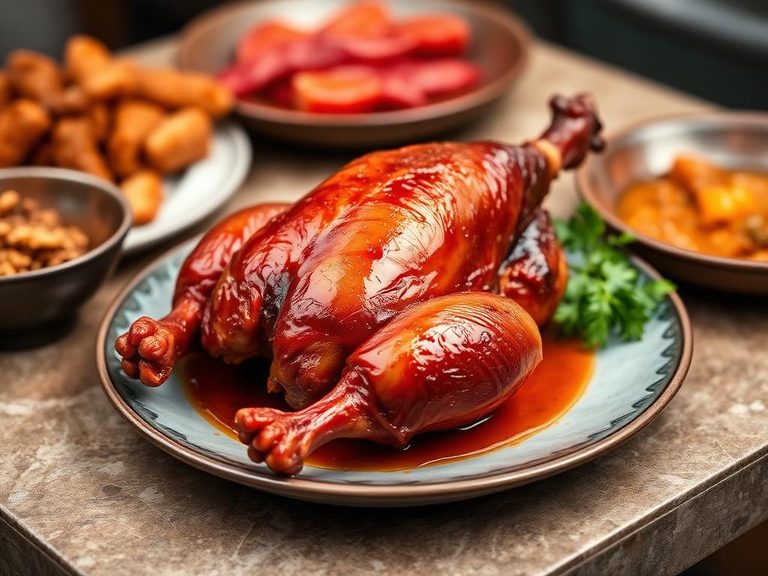
Squab is the culinary term for young domestic pigeon, prized for its rich, dark meat that is surprisingly tender and gamey, akin to a more intense duck. Its skin crisps beautifully when roasted, while the meat remains succulent and dense. Nutritionally, it's a powerhouse of protein and healthy fats, with virtually no carbohydrates.
Calorie split: 26% protein · 0% carbs · 74% fat
↓ Full nutrition💚 Why it's loved
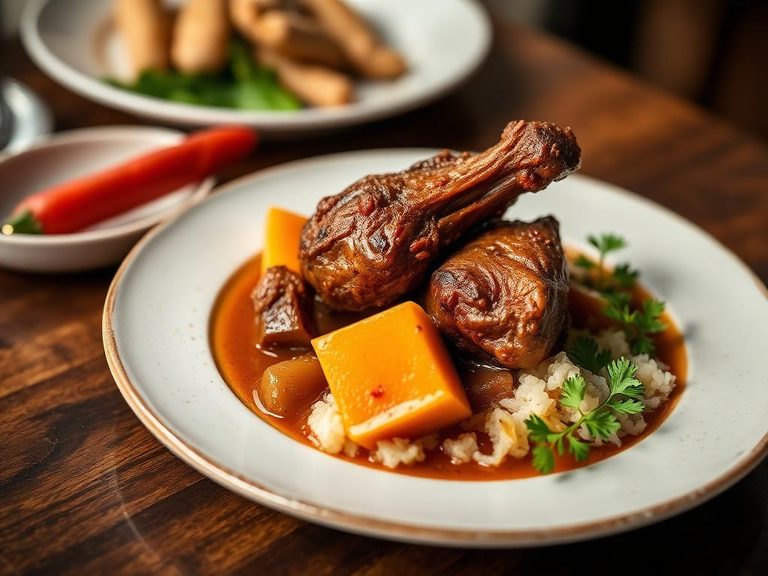
Culinary enthusiasts love squab for its deep, complex flavor that stands up to bold sauces and spices, offering a gourmet alternative to chicken or duck. Its versatility in both rustic and refined dishes, from braises to roasts, makes it a celebrated centerpiece in many cuisines.
⚠️ Watch-outs & how to enjoy it better
Its strong, gamey flavor can be off-putting to those accustomed to milder poultry, and overcooking easily leads to toughness. As a fatty meat, portion control is key for calorie management. To counteract richness, pair it with acidic or bitter elements like a vinegar-based slaw, citrus glaze, or bitter greens to cut through the fat.
Key benefits
- Excellent source of complete protein for muscle maintenance.
- Rich in iron and B vitamins, especially B12, for energy metabolism.
- High in monounsaturated fats, similar to olive oil.
- Provides essential minerals like selenium and zinc.
🍽️ Popular dishes
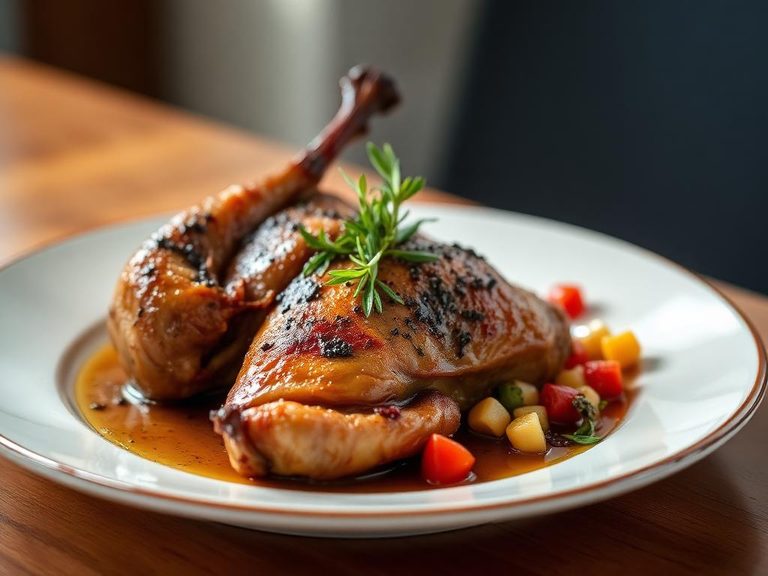
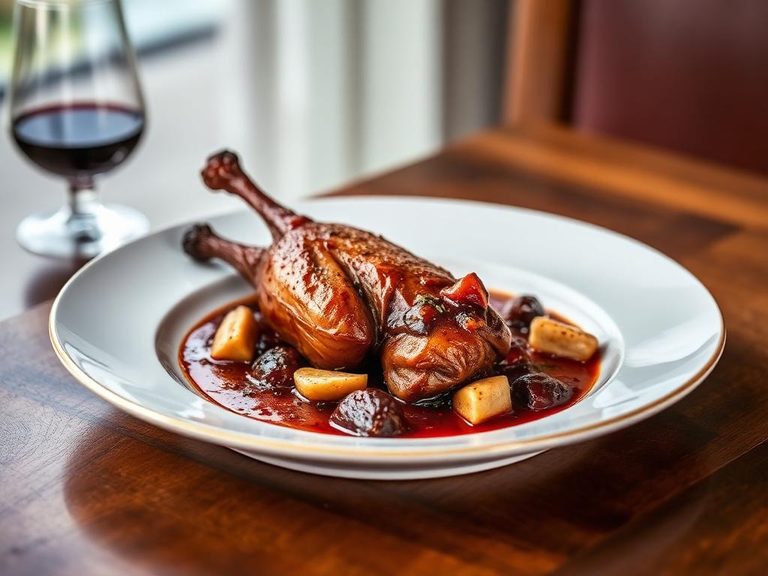
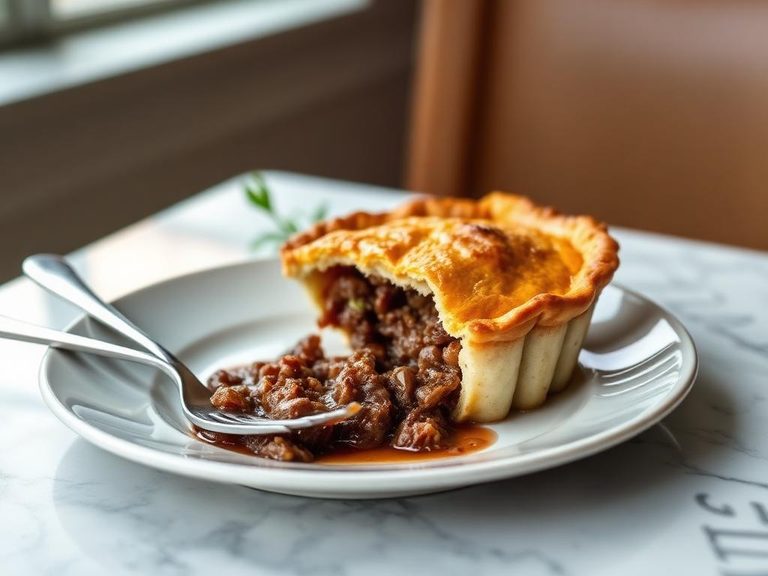
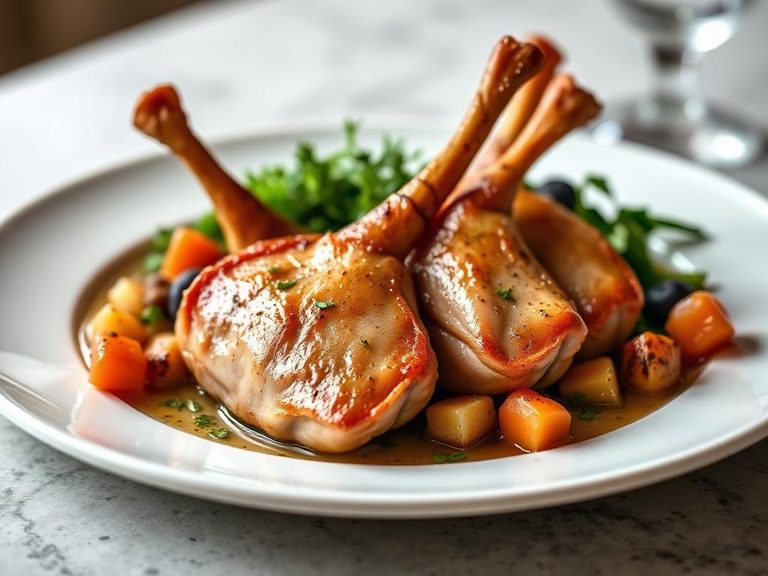
🌍 Where it's eaten
💡 Did you know?
In ancient Rome, squab was considered a delicacy and was often served stuffed with its own liver and other offal, a preparation known as 'patina ex pipere'.
Full nutrition (USDA data · scales with serving)
| Water | 56.6 g |
| Energy | 294 kcal |
| Energy | 1230 kj |
| Protein | 18.5 g |
| Total lipid (fat) | 23.8 g |
| Ash | 1.4 g |
| Carbohydrate, by difference | 0.00 g |
| Fiber, total dietary | 0.00 g |
| Calcium, Ca | 12.0 mg |
| Iron, Fe | 3.5 mg |
| Magnesium, Mg | 22.0 mg |
| Phosphorus, P | 248 mg |
| Potassium, K | 199 mg |
| Sodium, Na | 54.0 mg |
| Zinc, Zn | 2.2 mg |
| Copper, Cu | 0.44 mg |
| Manganese, Mn | 0.02 mg |
| Selenium, Se | 13.3 ug |
| Vitamin C, total ascorbic acid | 5.2 mg |
| Thiamin | 0.21 mg |
| Riboflavin | 0.22 mg |
| Niacin | 6.0 mg |
| Pantothenic acid | 0.76 mg |
| Vitamin B-6 | 0.41 mg |
| Folate, total | 6.0 ug |
| Folic acid | 0.00 ug |
| Folate, food | 6.0 ug |
| Folate, DFE | 6.0 ug |
| Vitamin B-12 | 0.40 ug |
| Vitamin A, RAE | 73.0 ug |
| Retinol | 73.0 ug |
| Vitamin A, IU | 243 iu |
Fat & fatty acid profile (per 100g)
| Fatty acids, total saturated | 8.4 g |
| SFA 10:0 | 0.00 g |
| SFA 12:0 | 0.00 g |
| SFA 14:0 | 0.03 g |
| SFA 16:0 | 4.8 g |
| SFA 18:0 | 2.7 g |
| Fatty acids, total monounsaturated | 9.7 g |
| MUFA 16:1 | 3.5 g |
| MUFA 18:1 | 6.3 g |
| MUFA 20:1 | 0.00 g |
| MUFA 22:1 | 0.00 g |
| Fatty acids, total polyunsaturated | 3.1 g |
| PUFA 18:2 | 2.7 g |
| PUFA 18:3 | 0.00 g |
| PUFA 20:4 | 0.16 g |
| PUFA 20:5 n-3 (EPA) | 0.01 g |
| PUFA 22:5 n-3 (DPA) | 0.07 g |
| PUFA 22:6 n-3 (DHA) | 0.02 g |
| Cholesterol | 95.0 mg |
Amino acid profile (per 100g)
| Tryptophan | 0.27 g |
| Threonine | 0.88 g |
| Isoleucine | 0.94 g |
| Leucine | 1.5 g |
| Lysine | 1.5 g |
| Methionine | 0.55 g |
| Cystine | 0.32 g |
| Phenylalanine | 0.77 g |
| Tyrosine | 0.79 g |
| Valine | 0.97 g |
| Arginine | 1.2 g |
| Histidine | 0.65 g |
| Alanine | 1.2 g |
| Aspartic acid | 1.6 g |
| Glutamic acid | 2.4 g |
| Glycine | 1.5 g |
| Proline | 0.84 g |
| Serine | 0.88 g |
FAQ
How does squab taste compared to chicken or duck?
Squab has a much richer, darker, and more gamey flavor than chicken, with a texture closer to a tender cut of dark-meat duck or rabbit. It's less fatty than duck but more flavorful than chicken.
Is squab safe to eat? What about diseases?
Yes, commercially farmed squab is safe. Wild pigeons should be avoided due to potential disease. Always cook squab to an internal temperature of 165°F (74°C) for food safety.
Why is squab so expensive?
Squab is expensive due to its specialized farming, short harvest window (typically 4-5 weeks old), lower yield per bird, and its status as a premium, often restaurant-sourced, ingredient.
Nutrient density (calculated · NRF9.3)
Nutrient Rich Foods index: beneficial nutrients (protein, fiber, vitamins, minerals) minus saturated fat, added sugar & sodium, per 100 kcal.
NRF9.3 index — Fulgoni, Keast & Drewnowski, 2009. Computed from USDA nutrients.
Weight-loss friendliness (composite index)
Energy density 2.94 kcal/g · 25% calories from protein · 0.0 g fiber · 0.0 g sugar per 100 g.
Composite of energy density (Rolls et al., 1999), protein & fiber satiety, minus sugar. A calculated heuristic — ranks satiety-per-calorie, not a clinical measure.
Dietary load (calculated from USDA values)
Potential renal acid load. Positive = acid-forming, negative = alkaline-forming.
Sodium-to-potassium ratio: 0.27 (lower is better — aim for ≤ 1)
Sodium:potassium per WHO potassium guidance. Computed from USDA nutrients.