

Pigeon Pie
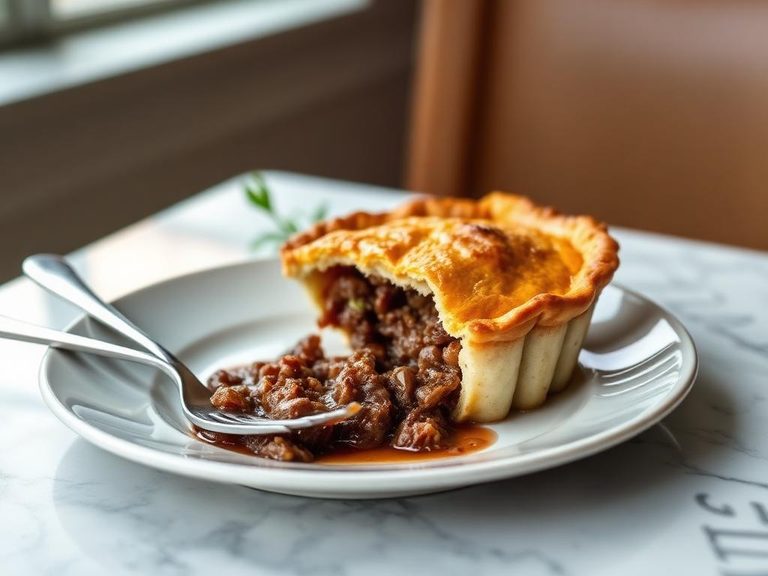
Pigeon Pie is a savory meat pie, traditionally made with young pigeon (squab) and a rich, often creamy or gravy-based filling, encased in a flaky pastry crust. It is a classic dish in British and French cuisine, with historical roots in medieval and Renaissance cooking.
🍽️ Nutrition at a glance
This dish is high in protein and fat, with a moderate amount of carbohydrates from the pastry. A typical serving provides a good source of iron, zinc, and B vitamins, with a calorie range of approximately 500-700 kcal.
Nutrition breakdown
| Calories | 620 kcal |
| Protein | 35 g |
| Carbs | 30 g |
| Fat | 38 g |
| Fiber | 2 g |
| Sugar | 2 g |
| Sodium | 850 mg |
| Iron | 4.5 mg |
| Zinc | 3.2 mg |
| Niacin (B3) | 8.0 mg |
| Vitamin B6 | 0.6 mg |
| Phosphorus | 280 mg |
| Selenium | 22 mcg |
| Potassium | 420 mg |
| Vitamin B12 | 1.8 mcg |
Per 1 slice (approx. 250 g) · estimated, varies by recipe
💡 What's interesting
Historically, pigeon pie was a dish of the aristocracy, using squab (young pigeon) for its tender, dark meat. Nutritionally, squab is a lean, nutrient-dense protein, often compared to dark chicken meat but with a richer flavor.
🍽️ Related dishes
AI estimate may be inaccurate · Terms