

Spinach, mature
Whole food · Vegetables and Vegetable Products
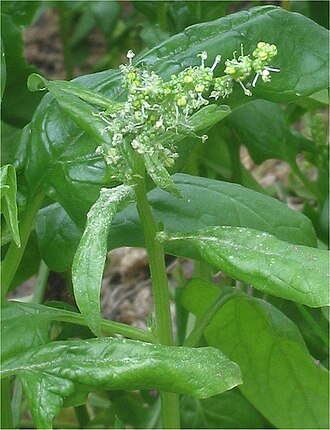
Photo: Wikipedia
Mature spinach is a leafy green with a robust, earthy flavor and a slightly coarse texture compared to its baby counterpart. Packed with nearly 3 grams of protein per 100 calories, it's a nutrient-dense powerhouse that wilts dramatically when cooked, concentrating its deep, mineral-rich taste.
Calorie split: 42% protein · 38% carbs · 20% fat
↓ Full nutrition💚 Why it's loved
People love mature spinach for its bold, hearty flavor that stands up to bold spices and rich ingredients in cooked dishes, and its incredible versatility from raw salads to sautéed sides.
⚠️ Watch-outs & how to enjoy it better
The oxalic acid in spinach can bind to minerals like calcium and iron, potentially reducing absorption and forming kidney stones in susceptible individuals. To counteract this, always pair spinach with a source of vitamin C (like lemon juice or tomatoes) to boost iron absorption, and consider cooking it to reduce oxalate content.
Key benefits
- Excellent source of plant-based protein for its calorie count.
- High in dietary fiber for digestive health.
- Rich in essential vitamins like A, C, and K.
- Provides important minerals such as iron and magnesium.
- Very low in calories, making it ideal for volume eating.
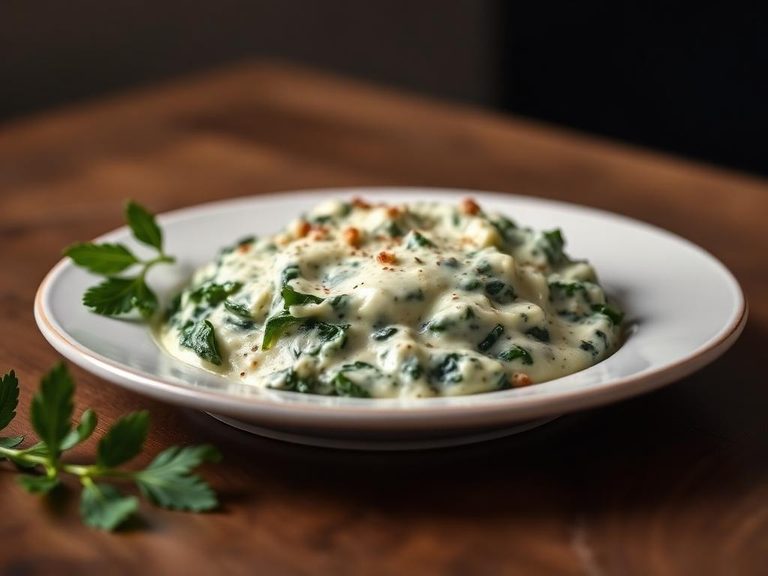
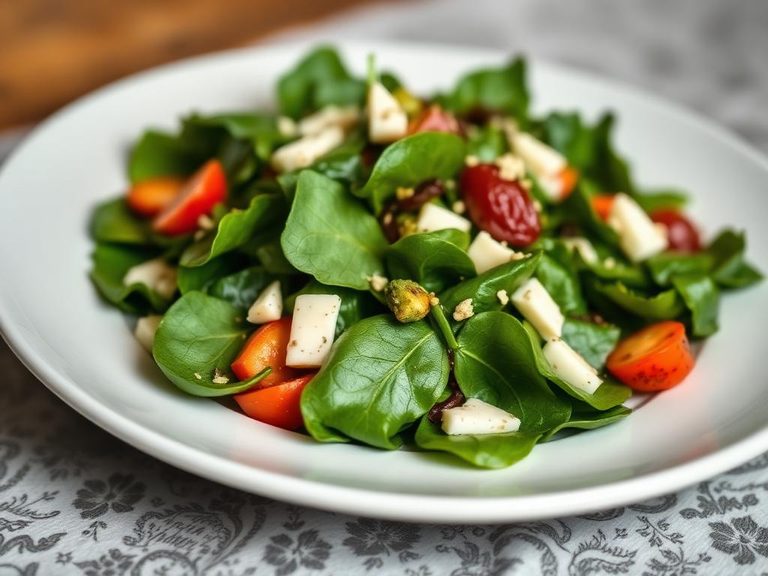
🍽️ Popular dishes
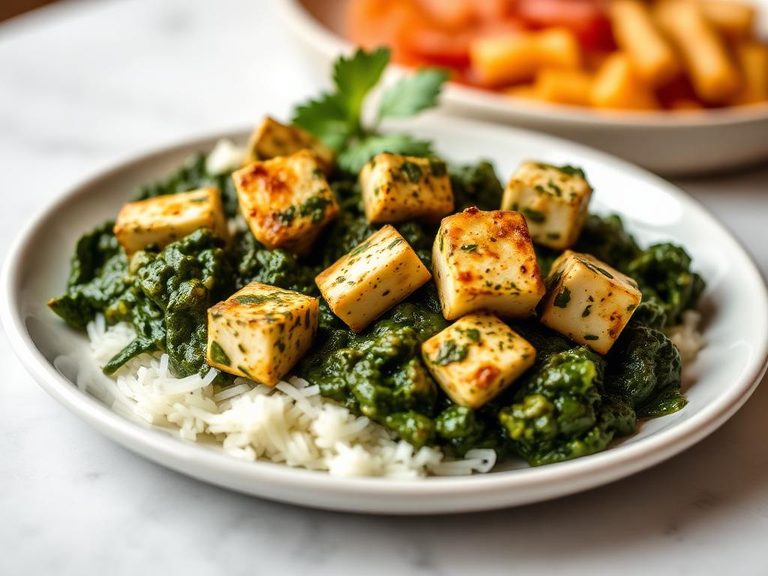

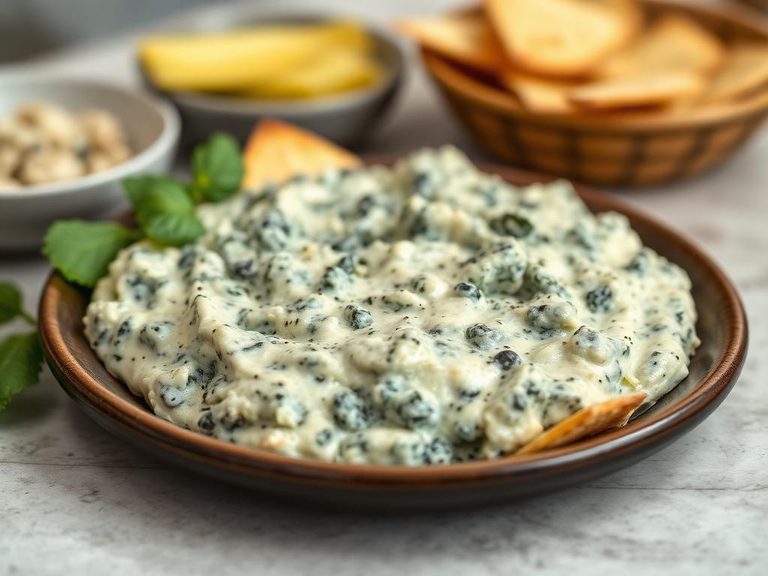
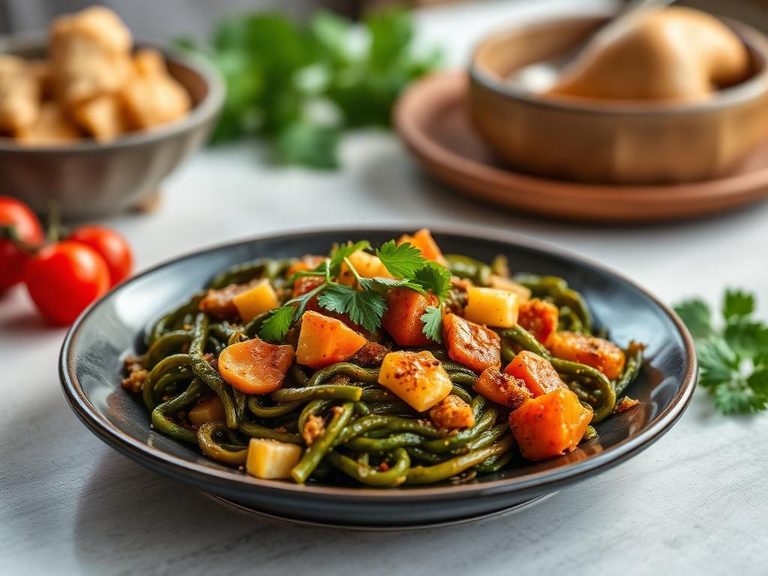
🌍 Where it's eaten
💡 Did you know?
Spinach was originally cultivated in Persia and was introduced to Europe in the Middle Ages, famously popularized in France by Catherine de' Medici, who was so fond of it she insisted it be served at every meal.
Full nutrition (USDA data · scales with serving)
| Water | 92.4 g |
| Energy (Atwater General Factors) | 27.6 kcal |
| Energy (Atwater Specific Factors) | 21.6 kcal |
| Nitrogen | 0.47 g |
| Protein | 2.9 g |
| Total lipid (fat) | 0.60 g |
| Ash | 1.4 g |
| Carbohydrate, by difference | 2.6 g |
| Fiber, total dietary | 1.6 g |
| Calcium, Ca | 66.6 mg |
| Iron, Fe | 1.1 mg |
| Magnesium, Mg | 93.0 mg |
| Phosphorus, P | 40.6 mg |
| Potassium, K | 460 mg |
| Sodium, Na | 107 mg |
| Zinc, Zn | 0.42 mg |
| Copper, Cu | 0.08 mg |
| Manganese, Mn | 0.43 mg |
| Iodine, I | 6.1 ug |
| Selenium, Se | 0.00 ug |
| Vitamin C, total ascorbic acid | 30.3 mg |
| Thiamin | 0.08 mg |
| Riboflavin | 0.19 mg |
| Niacin | 0.51 mg |
| Vitamin B-6 | 0.21 mg |
| Biotin | 4.3 ug |
| Folate, total | 113 ug |
| Vitamin A, RAE | 306 ug |
| Carotene, beta | 3669 ug |
| Carotene, alpha | 0.00 ug |
| Carotene, gamma | 0.00 ug |
| Cryptoxanthin, beta | 10.0 ug |
| Cryptoxanthin, alpha | 0.00 ug |
| Lycopene | 0.00 ug |
| Lutein + zeaxanthin | 7918 ug |
| cis-Lutein/Zeaxanthin | 0.00 ug |
| Lutein | 7451 ug |
| Zeaxanthin | 467 ug |
Fat & fatty acid profile (per 100g)
Estimated from Spinach, cooked, boiled, drained, with salt — USDA does not publish this profile for Spinach.
| Fatty acids, total saturated | 0.04 g |
| SFA 14:0 | 0.01 g |
| SFA 16:0 | 0.03 g |
| SFA 18:0 | 0.00 g |
| Fatty acids, total monounsaturated | 0.01 g |
| MUFA 16:1 | 0.00 g |
| MUFA 18:1 | 0.00 g |
| Fatty acids, total polyunsaturated | 0.11 g |
| PUFA 18:2 | 0.02 g |
| PUFA 18:3 | 0.09 g |
| Fatty acids, total trans | 0.00 g |
| Cholesterol | 0.00 mg |
Amino acid profile (per 100g)
Estimated from Spinach, cooked, boiled, drained, with salt — USDA does not publish this profile for Spinach.
| Tryptophan | 0.04 g |
| Threonine | 0.13 g |
| Isoleucine | 0.15 g |
| Leucine | 0.23 g |
| Lysine | 0.18 g |
| Methionine | 0.06 g |
| Cystine | 0.04 g |
| Phenylalanine | 0.13 g |
| Tyrosine | 0.11 g |
| Valine | 0.17 g |
| Arginine | 0.17 g |
| Histidine | 0.07 g |
| Alanine | 0.15 g |
| Aspartic acid | 0.25 g |
| Glutamic acid | 0.36 g |
| Glycine | 0.14 g |
| Proline | 0.12 g |
| Serine | 0.11 g |
FAQ
What's the difference between mature and baby spinach?
Mature spinach has larger, thicker leaves with a more robust, earthy flavor and slightly tougher texture, making it better for cooking. Baby spinach is younger, with tender, mild-flavored leaves ideal for salads.
Nutrient density (calculated · NRF9.3)
Nutrient Rich Foods index: beneficial nutrients (protein, fiber, vitamins, minerals) minus saturated fat, added sugar & sodium, per 100 kcal.
NRF9.3 index — Fulgoni, Keast & Drewnowski, 2009. Computed from USDA nutrients.
Weight-loss friendliness (composite index)
Energy density 0.28 kcal/g · 42% calories from protein · 1.6 g fiber · 0.0 g sugar per 100 g.
Composite of energy density (Rolls et al., 1999), protein & fiber satiety, minus sugar. A calculated heuristic — ranks satiety-per-calorie, not a clinical measure.
Dietary load (calculated from USDA values)
Potential renal acid load. Positive = acid-forming, negative = alkaline-forming.
Sodium-to-potassium ratio: 0.23 (lower is better — aim for ≤ 1)
Sodium:potassium per WHO potassium guidance. Computed from USDA nutrients.