

Spices, thyme, dried
Whole food · Spices and Herbs

Photo: Wikipedia
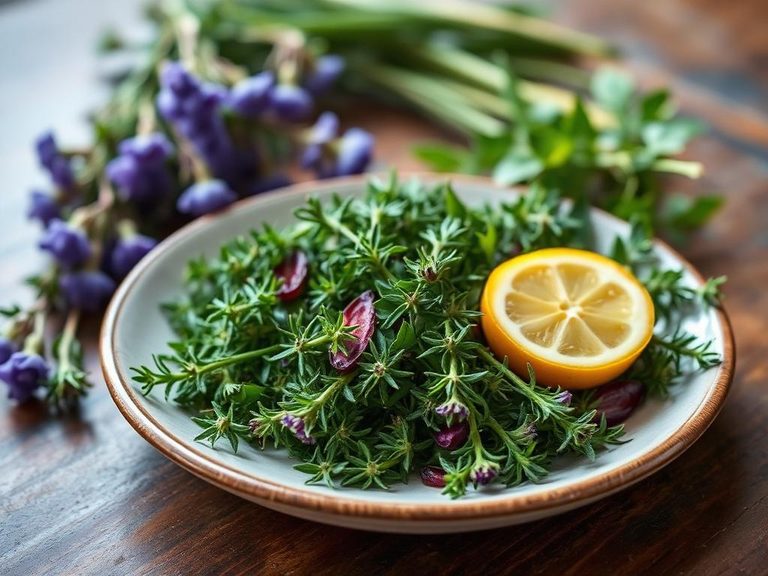
Dried thyme is a potent, earthy herb with a warm, slightly minty and peppery flavor, its tiny, brittle leaves releasing a potent aroma when crushed. Nutritionally, it's a fiber powerhouse, packing a remarkable 37g per 100g, far exceeding most other dried herbs.
Calorie split: 10% protein · 71% carbs · 19% fat
↓ Full nutrition💚 Why it's loved
People love it for its robust, versatile flavor that anchors everything from roasted meats to hearty stews, forming a cornerstone of classic herb blends like bouquet garni and herbes de Provence.
⚠️ Watch-outs & how to enjoy it better
Its intense, woody flavor can become overpowering or bitter if used excessively, especially in delicate dishes. To counteract this, start with a small pinch, crush it between your fingers to release oils, and consider adding it earlier in the cooking process to mellow its edge.
Key benefits
- Exceptionally high in dietary fiber
- Rich source of antioxidants like thymol
- Contains iron, manganese, and vitamin K
- Adds flavor without salt or fat
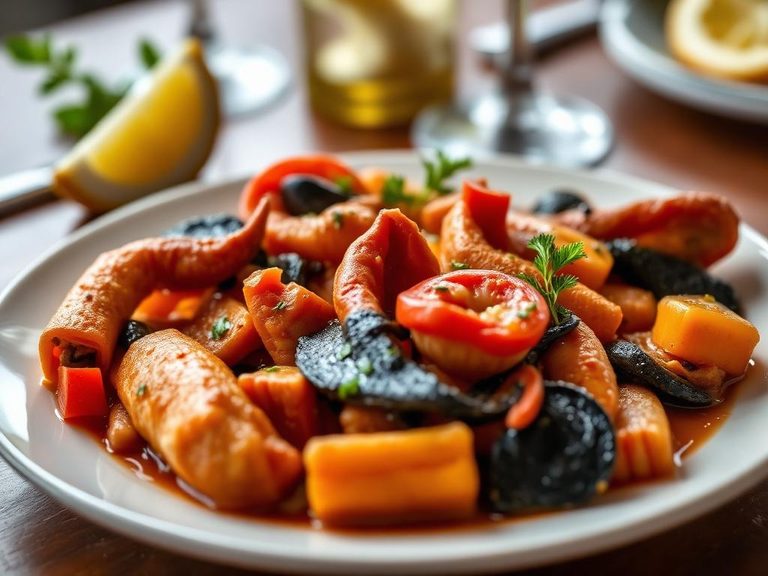
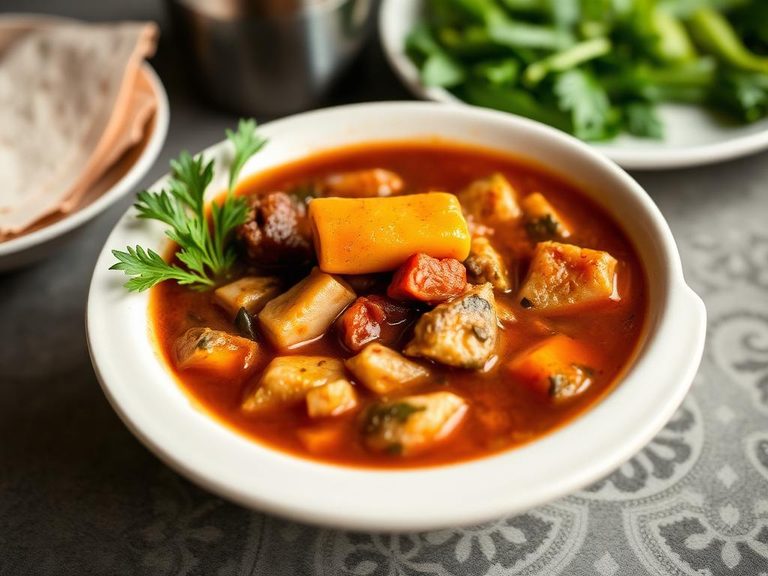
🍽️ Popular dishes



🌍 Where it's eaten
💡 Did you know?
Ancient Romans believed thyme could grant courage; they often added it to bath water and served it at banquets to ward off poison.
Full nutrition (USDA data · scales with serving)
| Water | 7.8 g |
| Energy | 276 kcal |
| Energy | 1156 kj |
| Protein | 9.1 g |
| Total lipid (fat) | 7.4 g |
| Ash | 11.7 g |
| Carbohydrate, by difference | 63.9 g |
| Fiber, total dietary | 37.0 g |
| Total Sugars | 1.7 g |
| Calcium, Ca | 1890 mg |
| Iron, Fe | 124 mg |
| Magnesium, Mg | 220 mg |
| Phosphorus, P | 201 mg |
| Potassium, K | 814 mg |
| Sodium, Na | 55.0 mg |
| Zinc, Zn | 6.2 mg |
| Copper, Cu | 0.86 mg |
| Manganese, Mn | 7.9 mg |
| Selenium, Se | 4.6 ug |
| Vitamin C, total ascorbic acid | 50.0 mg |
| Thiamin | 0.51 mg |
| Riboflavin | 0.40 mg |
| Niacin | 4.9 mg |
| Vitamin B-6 | 0.55 mg |
| Folate, total | 274 ug |
| Folic acid | 0.00 ug |
| Folate, food | 274 ug |
| Folate, DFE | 274 ug |
| Choline, total | 43.6 mg |
| Vitamin B-12 | 0.00 ug |
| Vitamin B-12, added | 0.00 ug |
| Vitamin A, RAE | 190 ug |
| Retinol | 0.00 ug |
| Carotene, beta | 2264 ug |
| Carotene, alpha | 0.00 ug |
| Cryptoxanthin, beta | 33.0 ug |
| Vitamin A, IU | 3800 iu |
| Lycopene | 0.00 ug |
| Lutein + zeaxanthin | 1895 ug |
| Vitamin E (alpha-tocopherol) | 7.5 mg |
| Vitamin E, added | 0.00 mg |
| Vitamin D (D2 + D3), International Units | 0.00 iu |
| Vitamin D (D2 + D3) | 0.00 ug |
| Vitamin K (phylloquinone) | 1715 ug |
| Alcohol, ethyl | 0.00 g |
| Caffeine | 0.00 mg |
| Theobromine | 0.00 mg |
Fat & fatty acid profile (per 100g)
| Fatty acids, total saturated | 2.7 g |
| SFA 4:0 | 0.00 g |
| SFA 6:0 | 0.00 g |
| SFA 8:0 | 0.24 g |
| SFA 10:0 | 0.12 g |
| SFA 12:0 | 0.23 g |
| SFA 14:0 | 0.15 g |
| SFA 16:0 | 1.7 g |
| SFA 18:0 | 0.28 g |
| Fatty acids, total monounsaturated | 0.47 g |
| MUFA 16:1 | 0.00 g |
| MUFA 18:1 | 0.47 g |
| MUFA 20:1 | 0.00 g |
| MUFA 22:1 | 0.00 g |
| Fatty acids, total polyunsaturated | 1.2 g |
| PUFA 18:2 | 0.50 g |
| PUFA 18:3 | 0.69 g |
| PUFA 18:4 | 0.00 g |
| PUFA 20:4 | 0.00 g |
| PUFA 20:5 n-3 (EPA) | 0.00 g |
| PUFA 22:5 n-3 (DPA) | 0.00 g |
| PUFA 22:6 n-3 (DHA) | 0.00 g |
| Fatty acids, total trans | 0.00 g |
| Cholesterol | 0.00 mg |
| Phytosterols | 163 mg |
Amino acid profile (per 100g)
| Tryptophan | 0.19 g |
| Threonine | 0.25 g |
| Isoleucine | 0.47 g |
| Leucine | 0.43 g |
| Lysine | 0.21 g |
| Valine | 0.50 g |
FAQ
How much dried thyme should I use compared to fresh?
A general rule is 1 teaspoon of dried thyme for every 1 tablespoon of fresh thyme called for in a recipe, as the dried form is more concentrated.
Can I use thyme in sweet dishes?
Yes, its earthy, slightly floral notes pair beautifully with fruits like plums, pears, and peaches in compotes, syrups, or baked goods.
How should I store dried thyme?
Keep it in a cool, dark place in an airtight container. It will retain its best flavor for about 1-2 years, though its potency will gradually fade.
Nutrient density (calculated · NRF9.3)
Nutrient Rich Foods index: beneficial nutrients (protein, fiber, vitamins, minerals) minus saturated fat, added sugar & sodium, per 100 kcal.
NRF9.3 index — Fulgoni, Keast & Drewnowski, 2009. Computed from USDA nutrients.
Weight-loss friendliness (composite index)
Energy density 2.76 kcal/g · 13% calories from protein · 37.0 g fiber · 1.7 g sugar per 100 g.
Composite of energy density (Rolls et al., 1999), protein & fiber satiety, minus sugar. A calculated heuristic — ranks satiety-per-calorie, not a clinical measure.
Dietary load (calculated from USDA values)
Potential renal acid load. Positive = acid-forming, negative = alkaline-forming.
Sodium-to-potassium ratio: 0.07 (lower is better — aim for ≤ 1)
Sodium:potassium per WHO potassium guidance. Computed from USDA nutrients.