

Sausage, New england brand, pork, beef
Whole food · Sausages and Luncheon Meats

Photo: Wikipedia
New England-style sausage is a hearty, coarse-ground link typically made from a pork and beef blend, seasoned with warm spices like sage and black pepper. It has a robust, savory flavor and a satisfyingly juicy, slightly crumbly texture when cooked. Nutritionally, it's a dense source of protein, providing over 17g per 100g, with a moderate fat content.
Calorie split: 44% protein · 12% carbs · 44% fat
↓ Full nutrition💚 Why it's loved
People love it for its distinctive, comforting spice profile—especially the prominent sage—which is synonymous with New England breakfasts and holiday meals. Its versatility allows it to be the star of a simple skillet or a key ingredient in complex stuffings and chowders.
⚠️ Watch-outs & how to enjoy it better
As a processed meat, it can be high in sodium and saturated fat, which may be a concern for heart health or blood pressure management. To counteract this, pair it with fiber-rich sides like roasted vegetables or whole-grain toast, and practice portion control by using it as a flavorful accent rather than the main bulk of the meal.
Key benefits
- Excellent source of high-quality protein
- Provides B vitamins, especially B12 and niacin
- Contains essential minerals like zinc and iron
- Offers a quick, energy-dense meal component
🍽️ Popular dishes
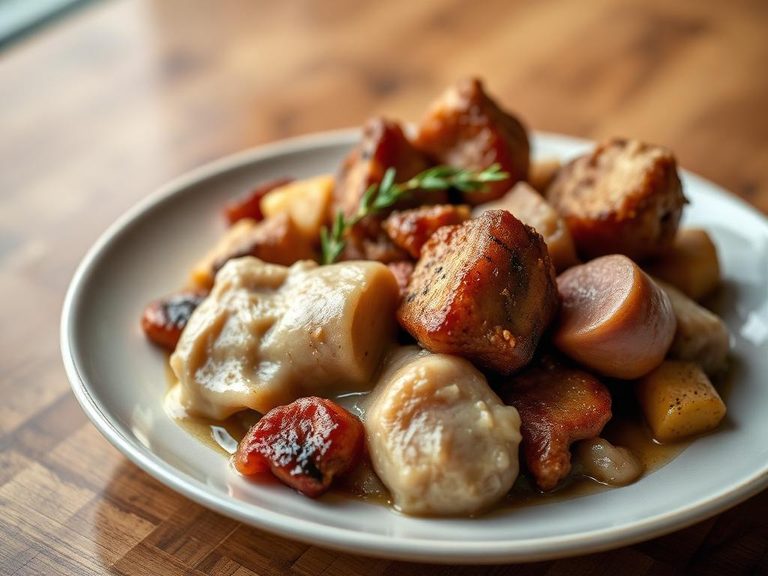

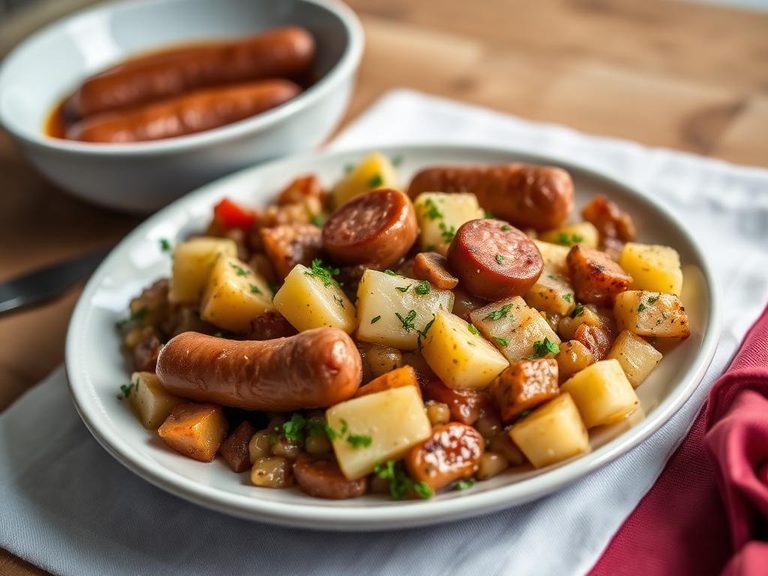
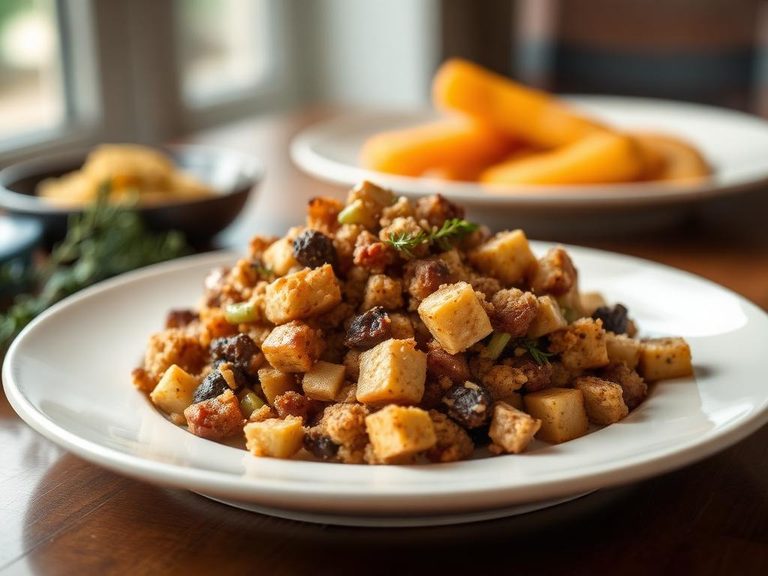
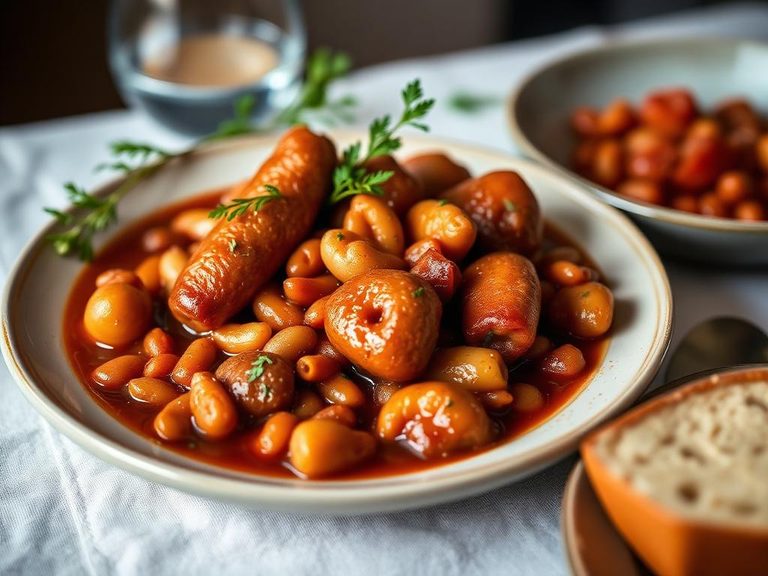
🌍 Where it's eaten
💡 Did you know?
The 'New England' style is often distinguished by its liberal use of sage and a coarser grind compared to other regional American sausages, reflecting the area's historical culinary ties to British and Northern European traditions.
Full nutrition (USDA data · scales with serving)
| Water | 66.8 g |
| Energy | 161 kcal |
| Energy | 674 kj |
| Protein | 17.3 g |
| Total lipid (fat) | 7.6 g |
| Ash | 3.5 g |
| Carbohydrate, by difference | 4.8 g |
| Fiber, total dietary | 0.00 g |
| Calcium, Ca | 7.0 mg |
| Iron, Fe | 0.94 mg |
| Magnesium, Mg | 16.0 mg |
| Phosphorus, P | 136 mg |
| Potassium, K | 321 mg |
| Sodium, Na | 1220 mg |
| Zinc, Zn | 2.7 mg |
| Copper, Cu | 0.10 mg |
| Manganese, Mn | 0.04 mg |
| Selenium, Se | 19.2 ug |
| Vitamin C, total ascorbic acid | 0.00 mg |
| Thiamin | 0.64 mg |
| Riboflavin | 0.25 mg |
| Niacin | 3.5 mg |
| Pantothenic acid | 0.68 mg |
| Vitamin B-6 | 0.36 mg |
| Folate, total | 7.0 ug |
| Folic acid | 0.00 ug |
| Folate, food | 7.0 ug |
| Folate, DFE | 7.0 ug |
| Vitamin B-12 | 1.3 ug |
| Vitamin A, RAE | 0.00 ug |
| Retinol | 0.00 ug |
| Vitamin A, IU | 0.00 iu |
| Alcohol, ethyl | 0.00 g |
Fat & fatty acid profile (per 100g)
| Fatty acids, total saturated | 2.6 g |
| SFA 4:0 | 0.00 g |
| SFA 6:0 | 0.00 g |
| SFA 8:0 | 0.00 g |
| SFA 10:0 | 0.01 g |
| SFA 12:0 | 0.01 g |
| SFA 14:0 | 0.10 g |
| SFA 16:0 | 1.6 g |
| SFA 18:0 | 0.83 g |
| Fatty acids, total monounsaturated | 3.6 g |
| MUFA 16:1 | 0.30 g |
| MUFA 18:1 | 3.3 g |
| MUFA 20:1 | 0.00 g |
| MUFA 22:1 | 0.00 g |
| Fatty acids, total polyunsaturated | 0.72 g |
| PUFA 18:2 | 0.64 g |
| PUFA 18:3 | 0.09 g |
| PUFA 18:4 | 0.00 g |
| PUFA 20:4 | 0.00 g |
| PUFA 20:5 n-3 (EPA) | 0.00 g |
| PUFA 22:5 n-3 (DPA) | 0.00 g |
| PUFA 22:6 n-3 (DHA) | 0.00 g |
| Cholesterol | 49.0 mg |
Amino acid profile (per 100g)
| Tryptophan | 0.19 g |
| Threonine | 0.76 g |
| Isoleucine | 0.76 g |
| Leucine | 1.4 g |
| Lysine | 1.5 g |
| Methionine | 0.45 g |
| Cystine | 0.25 g |
| Phenylalanine | 0.68 g |
| Tyrosine | 0.53 g |
| Valine | 0.80 g |
| Arginine | 1.2 g |
| Histidine | 0.65 g |
| Alanine | 1.0 g |
| Aspartic acid | 1.6 g |
| Glutamic acid | 2.6 g |
| Glycine | 0.95 g |
| Proline | 0.76 g |
| Serine | 0.69 g |
FAQ
What's the difference between New England sausage and breakfast sausage?
New England sausage is a specific regional style, typically a pork/beef blend with a signature sage-heavy spice mix and a coarse grind. 'Breakfast sausage' is a broader category that can include various spice profiles (like maple or spicy) and may be made from pork alone.
Is this sausage gluten-free?
It can be, but it's not guaranteed. Some brands use breadcrumbs or wheat-based fillers as binders. Always check the ingredient list for wheat, barley, rye, or malt if you have celiac disease or gluten sensitivity.
What's the best way to cook it?
Pan-frying is classic for achieving a crispy exterior while keeping the inside juicy. Bake in the oven at 375°F (190°C) for a hands-off method, or simmer gently in soups and stews to infuse the broth with flavor.
Nutrient density (calculated · NRF9.3)
Nutrient Rich Foods index: beneficial nutrients (protein, fiber, vitamins, minerals) minus saturated fat, added sugar & sodium, per 100 kcal.
NRF9.3 index — Fulgoni, Keast & Drewnowski, 2009. Computed from USDA nutrients.
Weight-loss friendliness (composite index)
Energy density 1.61 kcal/g · 43% calories from protein · 0.0 g fiber · 0.0 g sugar per 100 g.
Composite of energy density (Rolls et al., 1999), protein & fiber satiety, minus sugar. A calculated heuristic — ranks satiety-per-calorie, not a clinical measure.
Dietary load (calculated from USDA values)
Potential renal acid load. Positive = acid-forming, negative = alkaline-forming.
Sodium-to-potassium ratio: 3.80 (lower is better — aim for ≤ 1)
Sodium:potassium per WHO potassium guidance. Computed from USDA nutrients.