

Sauce, plum, ready-to-serve
Whole food · Soups, Sauces, and Gravies

Photo: Wikipedia
This is a thick, glossy, and deeply savory-sweet condiment made from simmered plums, sugar, and often soy sauce or vinegar. Its flavor profile is a complex balance of sweet, tangy, and umami, with a smooth, jam-like texture that coats food beautifully. Nutritionally, it's a high-carbohydrate, low-protein, and low-fat sauce, providing a quick energy source primarily from sugars.
Calorie split: 2% protein · 93% carbs · 5% fat
↓ Full nutrition💚 Why it's loved
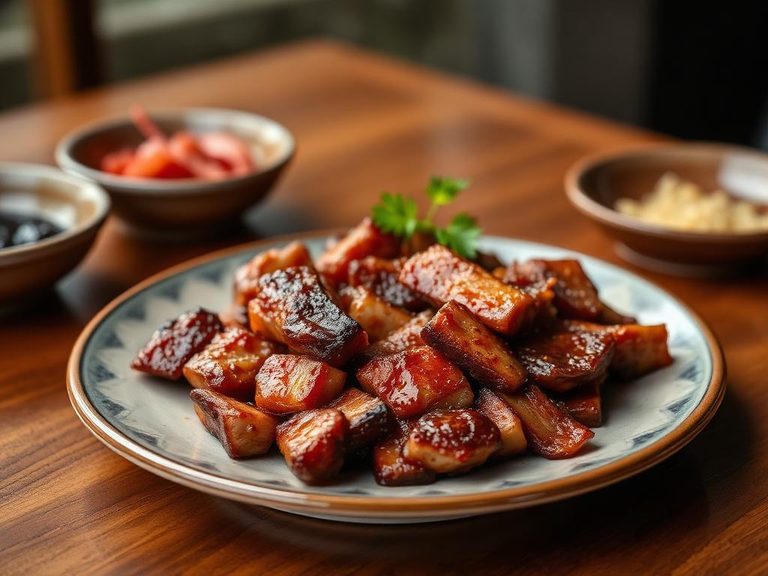
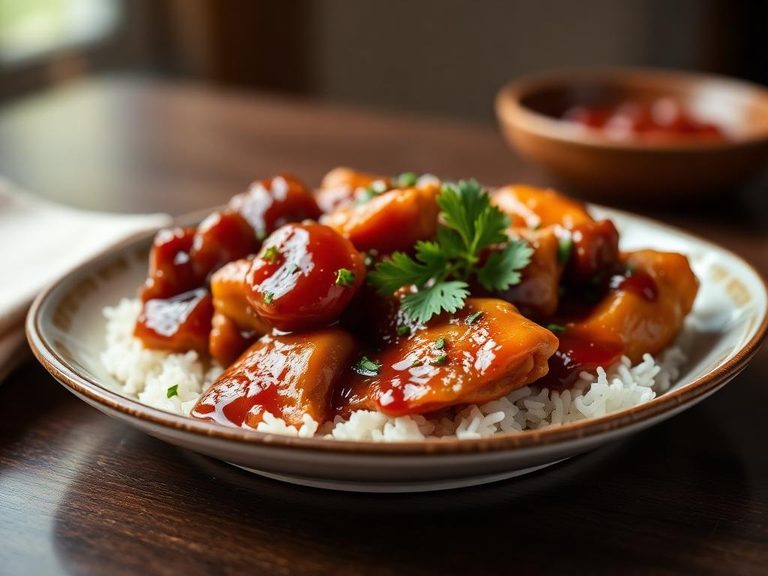
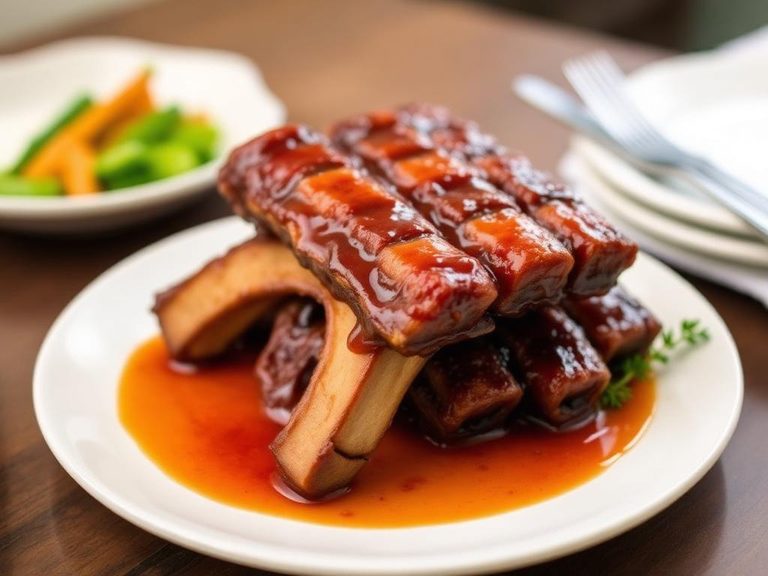
People love it for its unique ability to bridge sweet and savory, making it a beloved staple in East Asian cuisine. Its rich, tangy flavor and glossy texture elevate simple dishes like dumplings, grilled meats, and stir-fries into something truly special.
⚠️ Watch-outs & how to enjoy it better
Its high sugar content can cause blood-sugar spikes, making it less suitable for those managing diabetes. To counteract this, pair it with protein or fat (like grilled chicken or tofu) and practice portion control. Some commercial versions can be high in sodium, so check labels and use sparingly if concerned.
Key benefits
- Adds complex sweet-savory depth to dishes
- High in carbohydrates for quick energy
- Low in fat and protein
- Versatile condiment for meats, vegetables, and noodles
- Provides a glossy finish to sauces and glazes
🍽️ Popular dishes
🌍 Where it's eaten
💡 Did you know?
The traditional Chinese plum sauce is often made with preserved or salted plums (huamei), which give it a distinctive salty-sour depth that fresh plums cannot replicate.
Full nutrition (USDA data · scales with serving)
| Water | 53.7 g |
| Energy | 184 kcal |
| Energy | 770 kj |
| Protein | 0.89 g |
| Total lipid (fat) | 1.0 g |
| Ash | 1.6 g |
| Carbohydrate, by difference | 42.8 g |
| Fiber, total dietary | 0.70 g |
| Calcium, Ca | 12.0 mg |
| Iron, Fe | 1.4 mg |
| Magnesium, Mg | 12.0 mg |
| Phosphorus, P | 22.0 mg |
| Potassium, K | 259 mg |
| Sodium, Na | 538 mg |
| Zinc, Zn | 0.19 mg |
| Copper, Cu | 0.08 mg |
| Manganese, Mn | 0.11 mg |
| Selenium, Se | 0.40 ug |
| Vitamin C, total ascorbic acid | 0.50 mg |
| Thiamin | 0.02 mg |
| Riboflavin | 0.08 mg |
| Niacin | 1.0 mg |
| Pantothenic acid | 0.06 mg |
| Vitamin B-6 | 0.08 mg |
| Folate, total | 6.0 ug |
| Folic acid | 0.00 ug |
| Folate, food | 6.0 ug |
| Folate, DFE | 6.0 ug |
| Vitamin B-12 | 0.00 ug |
| Vitamin A, RAE | 2.0 ug |
| Retinol | 0.00 ug |
| Carotene, beta | 26.0 ug |
| Carotene, alpha | 0.00 ug |
| Cryptoxanthin, beta | 0.00 ug |
| Vitamin A, IU | 43.0 iu |
| Alcohol, ethyl | 0.00 g |
Fat & fatty acid profile (per 100g)
| Fatty acids, total saturated | 0.15 g |
| SFA 4:0 | 0.00 g |
| SFA 6:0 | 0.00 g |
| SFA 8:0 | 0.00 g |
| SFA 10:0 | 0.00 g |
| SFA 12:0 | 0.00 g |
| SFA 14:0 | 0.00 g |
| SFA 16:0 | 0.11 g |
| SFA 18:0 | 0.04 g |
| Fatty acids, total monounsaturated | 0.24 g |
| MUFA 16:1 | 0.00 g |
| MUFA 18:1 | 0.24 g |
| MUFA 20:1 | 0.00 g |
| MUFA 22:1 | 0.00 g |
| Fatty acids, total polyunsaturated | 0.59 g |
| PUFA 18:2 | 0.52 g |
| PUFA 18:3 | 0.07 g |
| PUFA 18:4 | 0.00 g |
| PUFA 20:4 | 0.00 g |
| PUFA 20:5 n-3 (EPA) | 0.00 g |
| PUFA 22:5 n-3 (DPA) | 0.00 g |
| PUFA 22:6 n-3 (DHA) | 0.00 g |
| Cholesterol | 0.00 mg |
Amino acid profile (per 100g)
Estimated from Sauce, homemade, white, medium — USDA does not publish this profile for Sauce.
| Tryptophan | 0.04 g |
| Threonine | 0.14 g |
| Isoleucine | 0.19 g |
| Leucine | 0.30 g |
| Lysine | 0.24 g |
| Methionine | 0.08 g |
| Cystine | 0.03 g |
| Phenylalanine | 0.15 g |
| Tyrosine | 0.15 g |
| Valine | 0.20 g |
| Arginine | 0.11 g |
| Histidine | 0.08 g |
| Alanine | 0.10 g |
| Aspartic acid | 0.23 g |
| Glutamic acid | 0.64 g |
| Glycine | 0.07 g |
| Proline | 0.30 g |
| Serine | 0.17 g |
FAQ
Is plum sauce the same as hoisin sauce?
No. While both are sweet and savory, plum sauce is primarily fruit-based with a tangy-sweet profile, while hoisin sauce is soybean-based with a thicker, more pungent, and less fruity flavor.
Can I use plum sauce as a marinade?
Yes, it's excellent for marinating meats like chicken, pork, or duck. Its sugars help caramelize the meat when grilled or roasted, creating a flavorful glaze.
How should I store opened plum sauce?
Store it in an airtight container in the refrigerator. It will typically last for several months due to its high sugar and vinegar content, which act as preservatives.
Nutrient density (calculated · NRF9.3)
Nutrient Rich Foods index: beneficial nutrients (protein, fiber, vitamins, minerals) minus saturated fat, added sugar & sodium, per 100 kcal.
NRF9.3 index — Fulgoni, Keast & Drewnowski, 2009. Computed from USDA nutrients.
Weight-loss friendliness (composite index)
Energy density 1.84 kcal/g · 2% calories from protein · 0.7 g fiber · 0.0 g sugar per 100 g.
Composite of energy density (Rolls et al., 1999), protein & fiber satiety, minus sugar. A calculated heuristic — ranks satiety-per-calorie, not a clinical measure.
Dietary load (calculated from USDA values)
Potential renal acid load. Positive = acid-forming, negative = alkaline-forming.
Sodium-to-potassium ratio: 2.08 (lower is better — aim for ≤ 1)
Sodium:potassium per WHO potassium guidance. Computed from USDA nutrients.