

Pokeberry shoots, (poke), cooked, boiled, drained, without salt
Whole food · Vegetables and Vegetable Products

Photo: Wikipedia
Pokeberry shoots, or poke, are the tender young stems of the Phytolacca americana plant, harvested before the leaves fully unfurl. When boiled and drained, they transform into a silky, slightly mucilative green with a mild, earthy flavor reminiscent of asparagus or green beans. Nutritionally, they are a low-calorie, fiber-rich vegetable that provides a modest boost of plant-based protein.
Calorie split: 37% protein · 49% carbs · 14% fat
↓ Full nutrition💚 Why it's loved
People love poke for its unique, wild-foraged appeal and its ability to absorb the flavors of rich, savory seasonings like bacon grease, onions, and vinegar. It's a cherished taste of Appalachian spring and a connection to traditional, resourceful cooking.
⚠️ Watch-outs & how to enjoy it better
The plant contains toxic compounds (phytolaccatoxin) in its roots, seeds, and mature leaves, making proper identification and preparation—specifically, using only young shoots and boiling them in multiple changes of water—absolutely critical. It is not suitable for individuals unfamiliar with safe foraging practices or those with kidney issues, due to its oxalate content.
Key benefits
- Very low in calories (20 kcal per 100g)
- Good source of dietary fiber (1.5g per 100g)
- Provides plant-based protein (2.3g per 100g)
- Contains no fat and is naturally low in sugar
- A traditional foraged green in certain regional cuisines
🍽️ Popular dishes
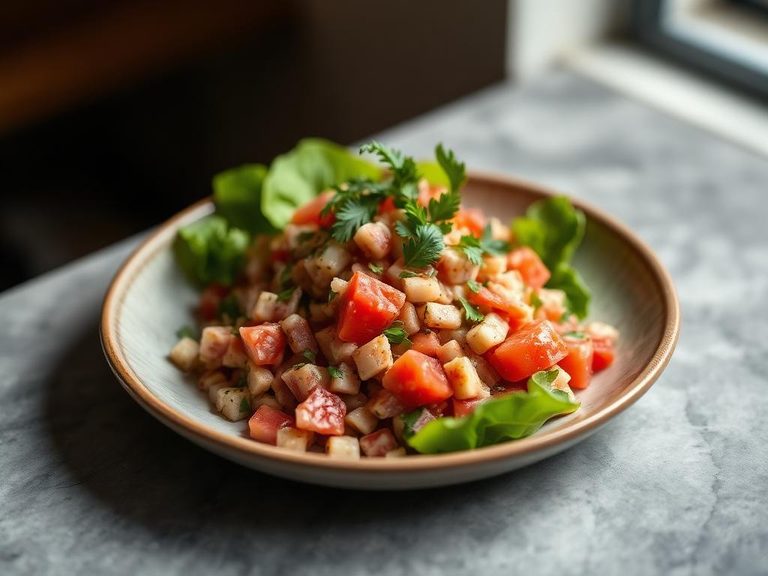
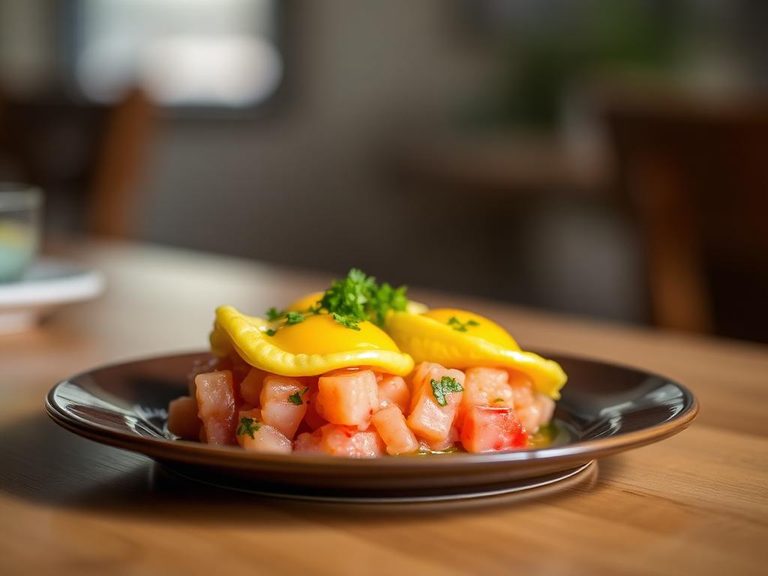
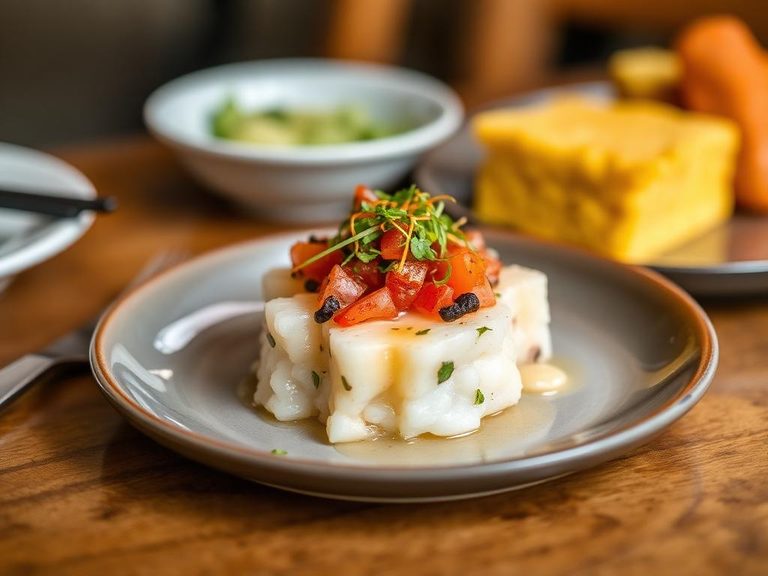
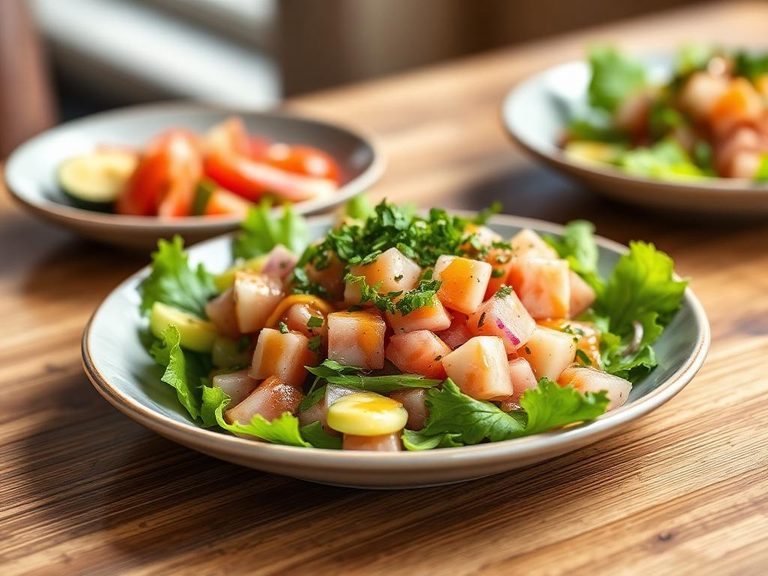
🌍 Where it's eaten
💡 Did you know?
The bright, magenta-colored berries of the same plant (pokeweed) were historically used as a dye and even as ink; during the American Civil War, soldiers reportedly used the juice to write letters home.
Full nutrition (USDA data · scales with serving)
| Water | 92.9 g |
| Energy | 20.0 kcal |
| Energy | 84.0 kj |
| Protein | 2.3 g |
| Total lipid (fat) | 0.40 g |
| Ash | 1.3 g |
| Carbohydrate, by difference | 3.1 g |
| Fiber, total dietary | 1.5 g |
| Total Sugars | 1.6 g |
| Calcium, Ca | 53.0 mg |
| Iron, Fe | 1.2 mg |
| Magnesium, Mg | 14.0 mg |
| Phosphorus, P | 33.0 mg |
| Potassium, K | 184 mg |
| Sodium, Na | 18.0 mg |
| Zinc, Zn | 0.19 mg |
| Copper, Cu | 0.13 mg |
| Manganese, Mn | 0.34 mg |
| Selenium, Se | 0.90 ug |
| Vitamin C, total ascorbic acid | 82.0 mg |
| Thiamin | 0.07 mg |
| Riboflavin | 0.25 mg |
| Niacin | 1.1 mg |
| Pantothenic acid | 0.04 mg |
| Vitamin B-6 | 0.11 mg |
| Folate, total | 9.0 ug |
| Folic acid | 0.00 ug |
| Folate, food | 9.0 ug |
| Folate, DFE | 9.0 ug |
| Choline, total | 0.30 mg |
| Betaine | 0.20 mg |
| Vitamin B-12 | 0.00 ug |
| Vitamin B-12, added | 0.00 ug |
| Vitamin A, RAE | 435 ug |
| Retinol | 0.00 ug |
| Carotene, beta | 5220 ug |
| Carotene, alpha | 0.00 ug |
| Cryptoxanthin, beta | 0.00 ug |
| Vitamin A, IU | 8700 iu |
| Lycopene | 0.00 ug |
| Lutein + zeaxanthin | 1747 ug |
| Vitamin E (alpha-tocopherol) | 0.85 mg |
| Vitamin E, added | 0.00 mg |
| Vitamin D (D2 + D3), International Units | 0.00 iu |
| Vitamin D (D2 + D3) | 0.00 ug |
| Vitamin K (phylloquinone) | 108 ug |
| Alcohol, ethyl | 0.00 g |
| Caffeine | 0.00 mg |
| Theobromine | 0.00 mg |
Fat & fatty acid profile (per 100g)
| Fatty acids, total saturated | 0.09 g |
| SFA 4:0 | 0.00 g |
| SFA 6:0 | 0.00 g |
| SFA 8:0 | 0.00 g |
| SFA 10:0 | 0.00 g |
| SFA 12:0 | 0.00 g |
| SFA 14:0 | 0.00 g |
| SFA 16:0 | 0.08 g |
| SFA 18:0 | 0.01 g |
| Fatty acids, total monounsaturated | 0.01 g |
| MUFA 16:1 | 0.00 g |
| MUFA 18:1 | 0.01 g |
| MUFA 20:1 | 0.00 g |
| MUFA 22:1 | 0.00 g |
| Fatty acids, total polyunsaturated | 0.18 g |
| PUFA 18:2 | 0.17 g |
| PUFA 18:3 | 0.01 g |
| PUFA 18:4 | 0.00 g |
| PUFA 20:4 | 0.00 g |
| PUFA 20:5 n-3 (EPA) | 0.00 g |
| PUFA 22:5 n-3 (DPA) | 0.00 g |
| PUFA 22:6 n-3 (DHA) | 0.00 g |
| Fatty acids, total trans | 0.00 g |
| Cholesterol | 0.00 mg |
FAQ
Is poke poisonous?
The mature plant, especially the roots, seeds, and leaves, contains toxins. Only the young, tender shoots (under 6-8 inches) harvested in early spring are used, and they MUST be boiled in several changes of water to remove soluble toxins before final cooking.
What does poke taste like?
When properly prepared, it has a mild, earthy, slightly mineral flavor similar to asparagus, spinach, or collard greens, with a soft, tender texture.
Where can I find poke shoots?
They are a foraged food, not typically sold in mainstream grocery stores. They can sometimes be found at farmers' markets in the Appalachian region during spring or purchased from specialty foragers. Never consume any part of the plant unless you are 100% certain of its identity and proper preparation.
Nutrient density (calculated · NRF9.3)
Nutrient Rich Foods index: beneficial nutrients (protein, fiber, vitamins, minerals) minus saturated fat, added sugar & sodium, per 100 kcal.
NRF9.3 index — Fulgoni, Keast & Drewnowski, 2009. Computed from USDA nutrients.
Weight-loss friendliness (composite index)
Energy density 0.20 kcal/g · 46% calories from protein · 1.5 g fiber · 1.6 g sugar per 100 g.
Composite of energy density (Rolls et al., 1999), protein & fiber satiety, minus sugar. A calculated heuristic — ranks satiety-per-calorie, not a clinical measure.
Dietary load (calculated from USDA values)
Potential renal acid load. Positive = acid-forming, negative = alkaline-forming.
Sodium-to-potassium ratio: 0.10 (lower is better — aim for ≤ 1)
Sodium:potassium per WHO potassium guidance. Computed from USDA nutrients.