

Pickle relish, hot dog
Whole food · Vegetables and Vegetable Products
Photo: Wikipedia
Hot dog relish is a finely chopped, brined condiment, typically made from cucumbers, with a vibrant green or red color and a distinctive sweet-and-sour, tangy crunch. It's a classic topping that adds a burst of acidic, slightly spicy flavor and textural contrast to rich, savory foods. Nutritionally, it's very low in calories and fat but is a notable source of carbohydrates, primarily from added sugars and vinegar.
Calorie split: 6% protein · 90% carbs · 4% fat
↓ Full nutrition💚 Why it's loved
People love it for its iconic sweet-tart punch that perfectly complements the savory, fatty profile of a hot dog or sausage. Its bright flavor and satisfying crunch are deeply tied to the nostalgia of summer barbecues and ballpark eats.
⚠️ Watch-outs & how to enjoy it better
The primary downside is its high sodium content from the brining process and added sugars, which can contribute to blood-sugar spikes. Those monitoring salt intake or blood glucose should use it sparingly. Tip: Pair it with a protein-rich main (like a hot dog) and a source of healthy fat (like avocado) to help moderate the glycemic response.
Key benefits
- Adds significant flavor with negligible calories.
- Provides a crunchy texture contrast to soft foods.
- Can help cut through the richness of fatty meats.
- Offers a small amount of dietary fiber.
- A staple condiment for classic American cookout fare.
🍽️ Popular dishes

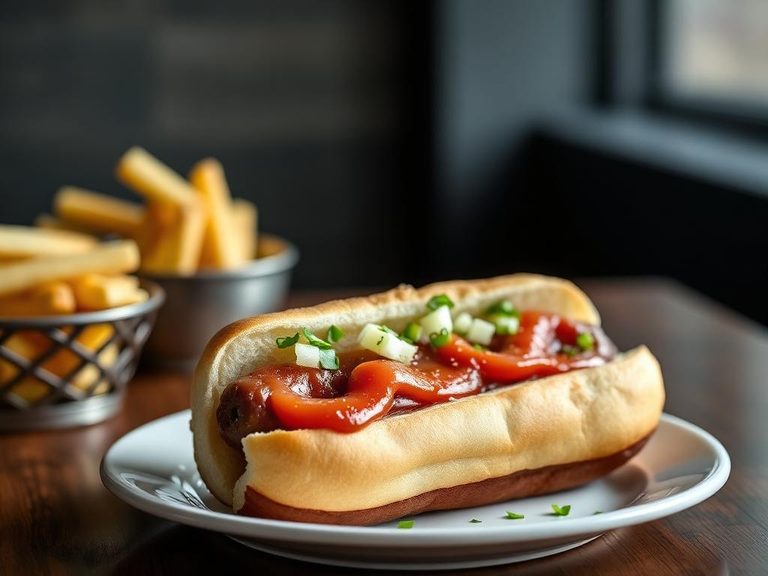


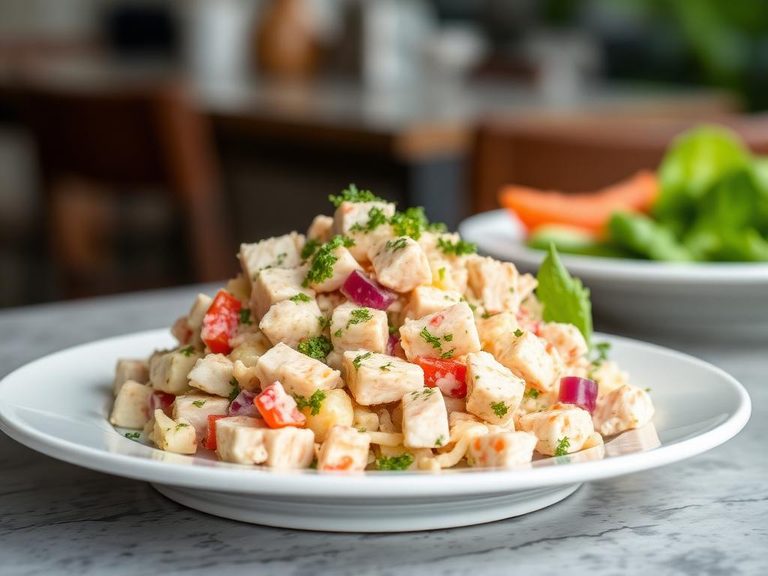
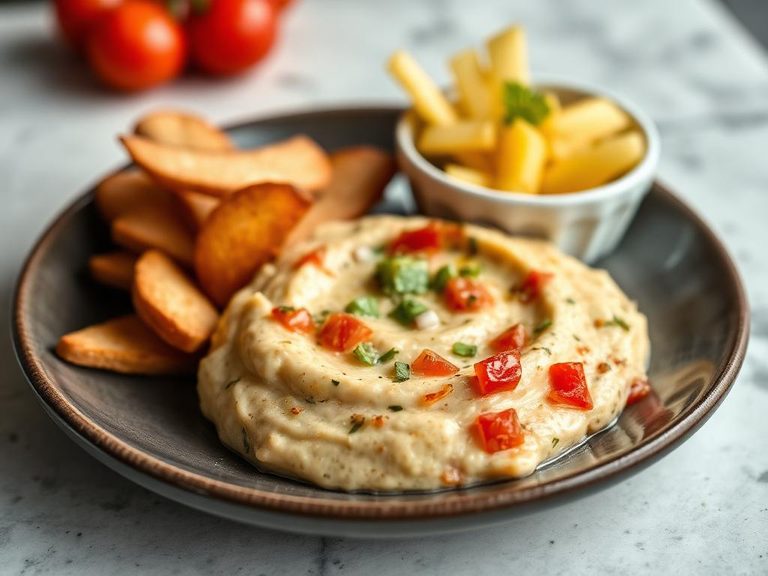
🌍 Where it's eaten
💡 Did you know?
The bright neon green color of many commercial relishes comes from artificial dyes like Yellow 5 and Blue 1, a tradition started in the early 20th century to make the condiment stand out.
Full nutrition (USDA data · scales with serving)
| Water | 71.7 g |
| Energy | 91.0 kcal |
| Energy | 381 kj |
| Protein | 1.5 g |
| Total lipid (fat) | 0.46 g |
| Ash | 3.0 g |
| Carbohydrate, by difference | 23.4 g |
| Fiber, total dietary | 1.5 g |
| Calcium, Ca | 5.0 mg |
| Iron, Fe | 1.3 mg |
| Magnesium, Mg | 19.0 mg |
| Phosphorus, P | 40.0 mg |
| Potassium, K | 78.0 mg |
| Sodium, Na | 1091 mg |
| Zinc, Zn | 0.21 mg |
| Copper, Cu | 0.08 mg |
| Manganese, Mn | 0.01 mg |
| Selenium, Se | 0.00 ug |
| Vitamin C, total ascorbic acid | 1.0 mg |
| Thiamin | 0.04 mg |
| Riboflavin | 0.04 mg |
| Niacin | 0.50 mg |
| Pantothenic acid | 0.01 mg |
| Vitamin B-6 | 0.01 mg |
| Folate, total | 1.0 ug |
| Folic acid | 0.00 ug |
| Folate, food | 1.0 ug |
| Folate, DFE | 1.0 ug |
| Vitamin B-12 | 0.00 ug |
| Vitamin A, RAE | 8.0 ug |
| Retinol | 0.00 ug |
| Vitamin A, IU | 167 iu |
| Vitamin D (D2 + D3), International Units | 0.00 iu |
| Vitamin D (D2 + D3) | 0.00 ug |
Fat & fatty acid profile (per 100g)
| Fatty acids, total saturated | 0.04 g |
| SFA 10:0 | 0.00 g |
| SFA 12:0 | 0.00 g |
| SFA 14:0 | 0.00 g |
| SFA 16:0 | 0.04 g |
| SFA 18:0 | 0.01 g |
| Fatty acids, total monounsaturated | 0.23 g |
| MUFA 16:1 | 0.00 g |
| MUFA 18:1 | 0.09 g |
| MUFA 20:1 | 0.03 g |
| MUFA 22:1 | 0.11 g |
| Fatty acids, total polyunsaturated | 0.11 g |
| PUFA 18:2 | 0.06 g |
| PUFA 18:3 | 0.05 g |
| Fatty acids, total trans | 0.00 g |
| Cholesterol | 0.00 mg |
Amino acid profile (per 100g)
| Tryptophan | 0.02 g |
| Threonine | 0.05 g |
| Isoleucine | 0.05 g |
| Leucine | 0.07 g |
| Lysine | 0.07 g |
| Methionine | 0.02 g |
| Cystine | 0.02 g |
| Phenylalanine | 0.05 g |
| Tyrosine | 0.03 g |
| Valine | 0.06 g |
| Arginine | 0.10 g |
| Histidine | 0.03 g |
| Alanine | 0.06 g |
| Aspartic acid | 0.09 g |
| Glutamic acid | 0.33 g |
| Glycine | 0.06 g |
| Proline | 0.07 g |
| Serine | 0.05 g |
FAQ
What's the difference between sweet relish and dill relish?
Sweet relish is made with a significant amount of sugar or corn syrup, giving it a candy-like sweetness. Dill relish is savory and tangy, flavored primarily with dill, garlic, and vinegar, with little to no sugar.
Is relish just chopped pickles?
Essentially, yes. Most relish is made from cucumbers that are brined or pickled, then finely chopped. The brine often includes vinegar, sugar, and spices, which define its final flavor.
Can I use relish in cooking, not just as a topping?
Absolutely. It's a key ingredient in classic dishes like tartar sauce, Russian dressing, and some meatloaf glazes. It can also be mixed into potato salad, egg salad, or used as a base for a quick marinade.
Nutrient density (calculated · NRF9.3)
Nutrient Rich Foods index: beneficial nutrients (protein, fiber, vitamins, minerals) minus saturated fat, added sugar & sodium, per 100 kcal.
NRF9.3 index — Fulgoni, Keast & Drewnowski, 2009. Computed from USDA nutrients.
Weight-loss friendliness (composite index)
Energy density 0.91 kcal/g · 7% calories from protein · 1.5 g fiber · 0.0 g sugar per 100 g.
Composite of energy density (Rolls et al., 1999), protein & fiber satiety, minus sugar. A calculated heuristic — ranks satiety-per-calorie, not a clinical measure.
Dietary load (calculated from USDA values)
Potential renal acid load. Positive = acid-forming, negative = alkaline-forming.
Sodium-to-potassium ratio: 13.99 (lower is better — aim for ≤ 1)
Sodium:potassium per WHO potassium guidance. Computed from USDA nutrients.