

Pancakes, whole-wheat, dry mix, incomplete, prepared
Whole food · Baked Products

Photo: Wikipedia
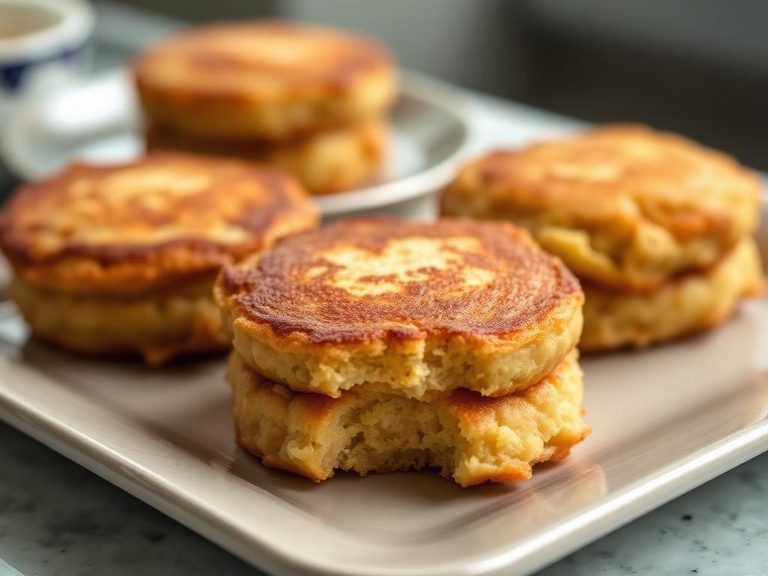
This is the humble, hearty base of a classic breakfast: a dry mix of whole-wheat flour and leavening agents, ready to be transformed with just water or milk. Once cooked, it yields a pancake with a satisfyingly dense, slightly nutty chew and a rustic, wholesome flavor far more complex than its white-flour counterpart. Nutritionally, it's a solid source of plant-based protein and dietary fiber, making it a more sustaining start to the day.
Calorie split: 16% protein · 56% carbs · 28% fat
↓ Full nutrition💚 Why it's loved
People love it for its comforting, familiar warmth and the deep, wheaty flavor that feels like a genuine, home-cooked meal. Its true charm lies in its versatility, acting as a perfect vehicle for everything from fresh berries and maple syrup to a fried egg and cheese.
⚠️ Watch-outs & how to enjoy it better
As a carbohydrate-dense food, it can cause blood-sugar spikes if eaten alone, especially without protein or fat. The whole-wheat content may also be a concern for those with gluten sensitivities or celiac disease. To counteract this, always pair it with a protein source like eggs, Greek yogurt, or nuts, and be mindful of portion size.
Key benefits
- Good source of plant-based protein (8.5g per 100g cooked)
- Provides dietary fiber for digestive health
- Contains more micronutrients than refined white flour mixes
- Quick and convenient base for a hot meal
- Versatile canvas for both sweet and savory toppings
🍽️ Popular dishes
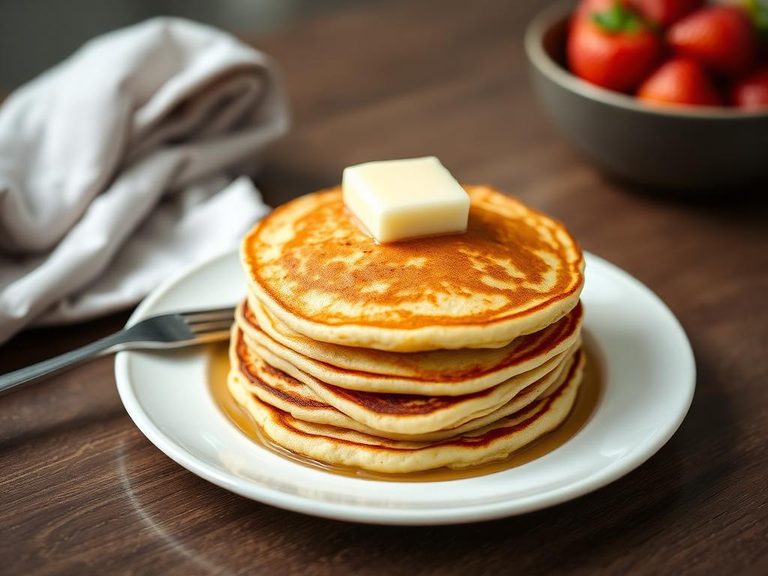
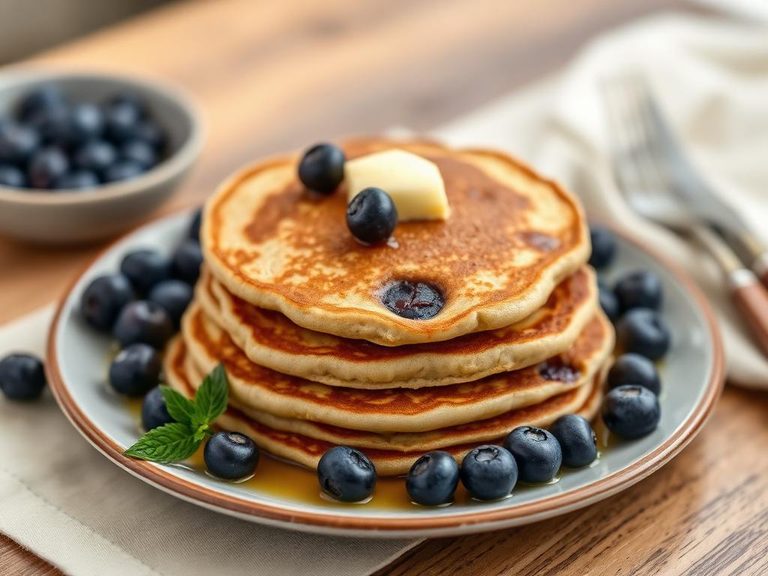
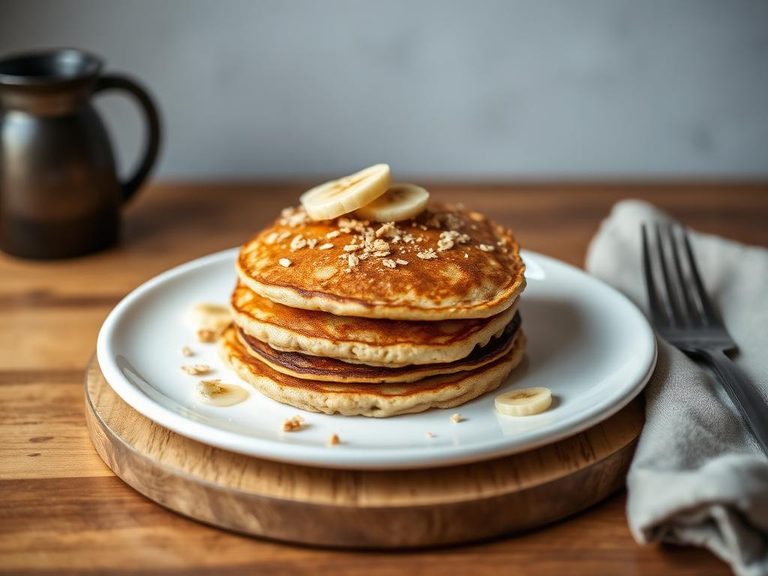
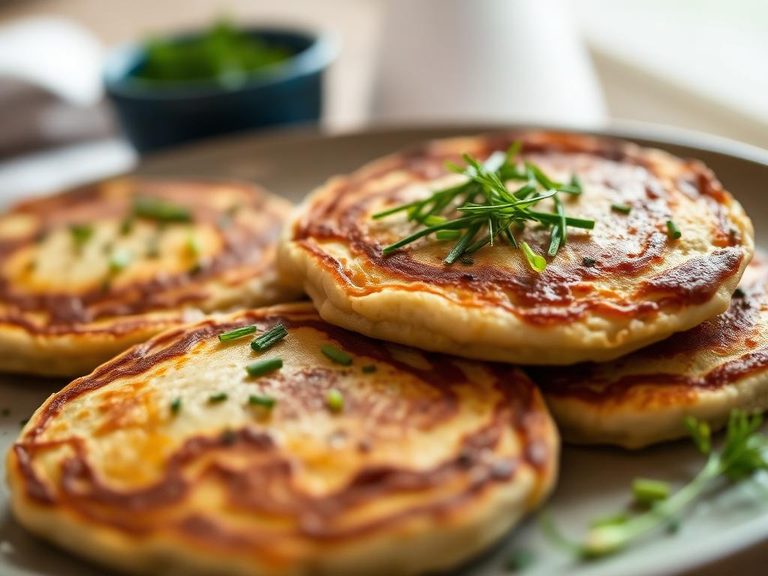

🌍 Where it's eaten
💡 Did you know?
The word 'pancake' appears in print as early as 15th-century England, but the tradition of cooking flat cakes on hot stones is ancient and found in nearly every grain-growing culture worldwide.
Full nutrition (USDA data · scales with serving)
| Water | 52.8 g |
| Energy | 208 kcal |
| Energy | 870 kj |
| Protein | 8.5 g |
| Total lipid (fat) | 6.5 g |
| Ash | 2.8 g |
| Carbohydrate, by difference | 29.4 g |
| Fiber, total dietary | 2.8 g |
| Calcium, Ca | 250 mg |
| Iron, Fe | 3.1 mg |
| Magnesium, Mg | 46.0 mg |
| Phosphorus, P | 373 mg |
| Potassium, K | 279 mg |
| Sodium, Na | 572 mg |
| Zinc, Zn | 1.0 mg |
| Copper, Cu | 0.08 mg |
| Manganese, Mn | 1.5 mg |
| Selenium, Se | 19.4 ug |
| Vitamin C, total ascorbic acid | 0.50 mg |
| Thiamin | 0.20 mg |
| Riboflavin | 0.53 mg |
| Niacin | 2.3 mg |
| Pantothenic acid | 0.52 mg |
| Vitamin B-6 | 0.11 mg |
| Folate, total | 29.0 ug |
| Folic acid | 8.0 ug |
| Folate, food | 21.0 ug |
| Folate, DFE | 35.0 ug |
| Vitamin B-12 | 0.29 ug |
| Vitamin A, RAE | 64.0 ug |
| Retinol | 63.0 ug |
| Vitamin A, IU | 226 iu |
Fat & fatty acid profile (per 100g)
| Fatty acids, total saturated | 1.7 g |
| SFA 4:0 | 0.04 g |
| SFA 6:0 | 0.03 g |
| SFA 8:0 | 0.01 g |
| SFA 10:0 | 0.03 g |
| SFA 12:0 | 0.04 g |
| SFA 14:0 | 0.14 g |
| SFA 16:0 | 1.1 g |
| SFA 18:0 | 0.39 g |
| Fatty acids, total monounsaturated | 1.7 g |
| MUFA 16:1 | 0.08 g |
| MUFA 18:1 | 1.6 g |
| MUFA 20:1 | 0.01 g |
| MUFA 22:1 | 0.00 g |
| Fatty acids, total polyunsaturated | 2.4 g |
| PUFA 18:2 | 2.1 g |
| PUFA 18:3 | 0.26 g |
| PUFA 18:4 | 0.00 g |
| PUFA 20:4 | 0.02 g |
| PUFA 20:5 n-3 (EPA) | 0.00 g |
| PUFA 22:5 n-3 (DPA) | 0.00 g |
| PUFA 22:6 n-3 (DHA) | 0.01 g |
| Cholesterol | 61.0 mg |
Amino acid profile (per 100g)
| Tryptophan | 0.12 g |
| Threonine | 0.32 g |
| Isoleucine | 0.40 g |
| Leucine | 0.68 g |
| Lysine | 0.44 g |
| Methionine | 0.18 g |
| Cystine | 0.17 g |
| Phenylalanine | 0.42 g |
| Tyrosine | 0.31 g |
| Valine | 0.47 g |
| Arginine | 0.43 g |
| Histidine | 0.20 g |
| Alanine | 0.36 g |
| Aspartic acid | 0.62 g |
| Glutamic acid | 2.0 g |
| Glycine | 0.30 g |
| Proline | 0.67 g |
| Serine | 0.45 g |
FAQ
How is this different from regular pancake mix?
The primary difference is the flour. This mix uses whole-wheat flour, which includes the bran and germ of the wheat kernel, giving it more fiber, protein, and a nuttier flavor and denser texture than mixes made with refined white flour.
Why is it called 'incomplete' mix?
An 'incomplete' mix typically means it requires the addition of wet ingredients like eggs and milk or water to become a batter, as opposed to an 'instant' mix where you might only add water.
Can I make this recipe gluten-free?
This specific product is not gluten-free as it is made from whole-wheat flour. To make gluten-free pancakes, you would need a dedicated gluten-free flour blend (often based on rice, almond, or oat flour) and ensure all other ingredients are certified gluten-free.
Nutrient density (calculated · NRF9.3)
Nutrient Rich Foods index: beneficial nutrients (protein, fiber, vitamins, minerals) minus saturated fat, added sugar & sodium, per 100 kcal.
NRF9.3 index — Fulgoni, Keast & Drewnowski, 2009. Computed from USDA nutrients.
Weight-loss friendliness (composite index)
Energy density 2.08 kcal/g · 16% calories from protein · 2.8 g fiber · 0.0 g sugar per 100 g.
Composite of energy density (Rolls et al., 1999), protein & fiber satiety, minus sugar. A calculated heuristic — ranks satiety-per-calorie, not a clinical measure.
Dietary load (calculated from USDA values)
Potential renal acid load. Positive = acid-forming, negative = alkaline-forming.
Sodium-to-potassium ratio: 2.05 (lower is better — aim for ≤ 1)
Sodium:potassium per WHO potassium guidance. Computed from USDA nutrients.