

Oat flour, partially debranned
Whole food · Cereal Grains and Pasta

Photo: Wikipedia
Oat flour, partially debranned, is a coarse, nutty-flavored flour made from oats with some of the outer bran layer removed, giving it a lighter color and milder taste than whole oat flour. It has a soft, slightly gritty texture that creates tender baked goods with a subtle earthy sweetness. Nutritionally, it's a standout for its high protein content (14.66g per 100g) and excellent fiber, making it a more balanced base than many refined flours.
Calorie split: 15% protein · 65% carbs · 20% fat
↓ Full nutrition💚 Why it's loved
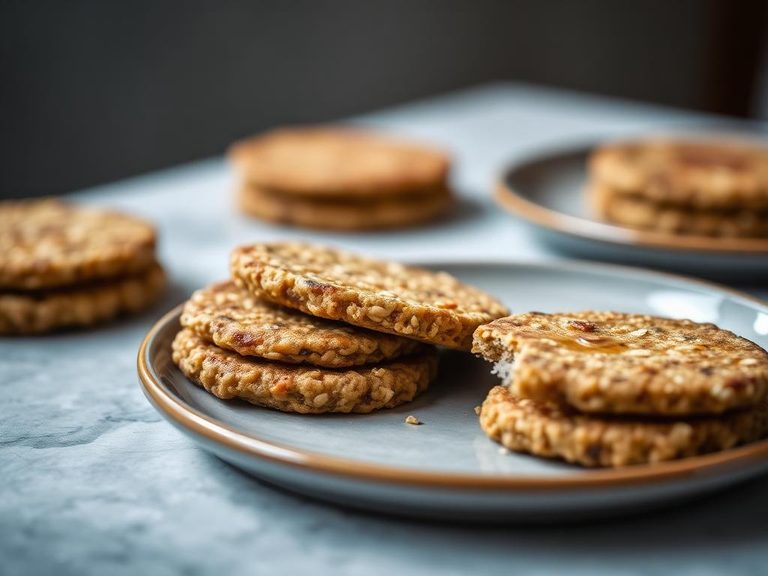
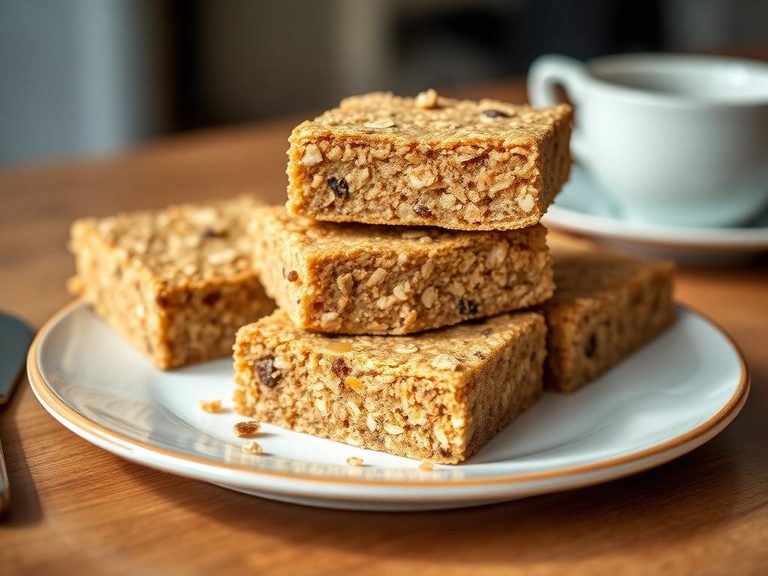
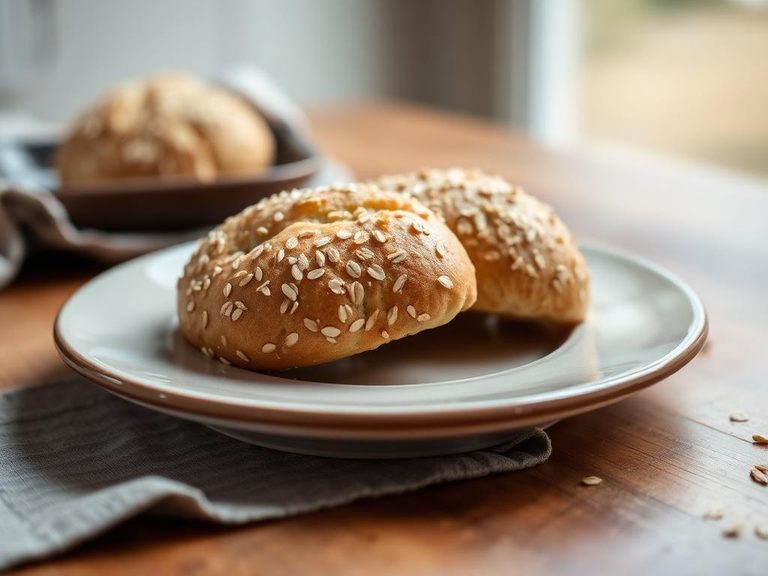
People love it for its warm, toasty flavor that enhances both sweet and savory dishes without overpowering them. Its versatility is unmatched—it works in everything from fluffy pancakes and cookies to savory breads and as a nutrient-dense thickener for soups.
⚠️ Watch-outs & how to enjoy it better
As a concentrated carbohydrate source, it can cause blood-sugar spikes if eaten alone in large portions, which is a consideration for diabetics. It is also a common allergen for those with oat sensitivities or non-celiac gluten contamination. To counteract this, always pair it with a protein (like eggs or yogurt) or healthy fat (like nuts or oil), and choose certified gluten-free versions if needed.
Key benefits
- Excellent source of plant-based protein for muscle and satiety
- High in soluble fiber (beta-glucan) for heart and gut health
- Provides sustained energy from complex carbohydrates
- Naturally gluten-free when certified, suitable for celiac diets
- Rich in minerals like manganese, phosphorus, and magnesium
🍽️ Popular dishes


🌍 Where it's eaten
💡 Did you know?
The partial debranning process is a modern technique that aims to retain more of the oat's nutritious inner endosperm while removing some of the coarser, more bitter-tasting outer bran, creating a flour that's both nutritious and palatable for direct use.
Full nutrition (USDA data · scales with serving)
| Water | 8.6 g |
| Energy | 404 kcal |
| Energy | 1688 kj |
| Protein | 14.7 g |
| Total lipid (fat) | 9.1 g |
| Ash | 2.0 g |
| Carbohydrate, by difference | 65.7 g |
| Fiber, total dietary | 6.5 g |
| Total Sugars | 0.80 g |
| Sucrose | 0.50 g |
| Glucose | 0.10 g |
| Fructose | 0.00 g |
| Calcium, Ca | 55.0 mg |
| Iron, Fe | 4.0 mg |
| Magnesium, Mg | 144 mg |
| Phosphorus, P | 452 mg |
| Potassium, K | 371 mg |
| Sodium, Na | 19.0 mg |
| Zinc, Zn | 3.2 mg |
| Copper, Cu | 0.44 mg |
| Manganese, Mn | 4.0 mg |
| Selenium, Se | 34.0 ug |
| Vitamin C, total ascorbic acid | 0.00 mg |
| Thiamin | 0.69 mg |
| Riboflavin | 0.13 mg |
| Niacin | 1.5 mg |
| Pantothenic acid | 0.20 mg |
| Vitamin B-6 | 0.13 mg |
| Folate, total | 32.0 ug |
| Folic acid | 0.00 ug |
| Folate, food | 32.0 ug |
| Folate, DFE | 32.0 ug |
| Choline, total | 29.9 mg |
| Betaine | 30.7 mg |
| Vitamin B-12 | 0.00 ug |
| Vitamin B-12, added | 0.00 ug |
| Vitamin A, RAE | 0.00 ug |
| Retinol | 0.00 ug |
| Carotene, beta | 0.00 ug |
| Carotene, alpha | 0.00 ug |
| Cryptoxanthin, beta | 0.00 ug |
| Vitamin A, IU | 0.00 iu |
| Lycopene | 0.00 ug |
| Lutein + zeaxanthin | 180 ug |
| Vitamin E (alpha-tocopherol) | 0.70 mg |
| Vitamin E, added | 0.00 mg |
| Vitamin D (D2 + D3), International Units | 0.00 iu |
| Vitamin D (D2 + D3) | 0.00 ug |
| Vitamin K (phylloquinone) | 3.2 ug |
| Alcohol, ethyl | 0.00 g |
| Caffeine | 0.00 mg |
| Theobromine | 0.00 mg |
Fat & fatty acid profile (per 100g)
| Fatty acids, total saturated | 1.6 g |
| SFA 4:0 | 0.00 g |
| SFA 6:0 | 0.00 g |
| SFA 8:0 | 0.00 g |
| SFA 10:0 | 0.00 g |
| SFA 12:0 | 0.03 g |
| SFA 14:0 | 0.01 g |
| SFA 16:0 | 1.4 g |
| SFA 18:0 | 0.09 g |
| Fatty acids, total monounsaturated | 2.9 g |
| MUFA 16:1 | 0.01 g |
| MUFA 18:1 | 2.9 g |
| MUFA 20:1 | 0.00 g |
| MUFA 22:1 | 0.00 g |
| Fatty acids, total polyunsaturated | 3.3 g |
| PUFA 18:2 | 3.2 g |
| PUFA 18:3 | 0.14 g |
| PUFA 18:4 | 0.00 g |
| PUFA 20:4 | 0.00 g |
| PUFA 20:5 n-3 (EPA) | 0.00 g |
| PUFA 22:5 n-3 (DPA) | 0.00 g |
| PUFA 22:6 n-3 (DHA) | 0.00 g |
| Cholesterol | 0.00 mg |
FAQ
How is it different from regular oat flour or rolled oats?
Regular oat flour is typically whole-ground oats with all bran, while partially debranned flour has some bran removed for a milder taste and lighter texture. Rolled oats are whole flakes, not a flour, and require grinding.
Can I use it as a 1:1 substitute for all-purpose flour?
Not directly. It lacks gluten, so baked goods may be crumbly. Use it in blends (e.g., 25-50% with wheat flour) or in gluten-free recipes with binders like xanthan gum or eggs.
Is it safe for a gluten-free diet?
Only if labeled 'certified gluten-free.' Oats are often cross-contaminated with wheat during growing or processing, which is unsafe for those with celiac disease.
Nutrient density (calculated · NRF9.3)
Nutrient Rich Foods index: beneficial nutrients (protein, fiber, vitamins, minerals) minus saturated fat, added sugar & sodium, per 100 kcal.
NRF9.3 index — Fulgoni, Keast & Drewnowski, 2009. Computed from USDA nutrients.
Weight-loss friendliness (composite index)
Energy density 4.04 kcal/g · 15% calories from protein · 6.5 g fiber · 0.8 g sugar per 100 g.
Composite of energy density (Rolls et al., 1999), protein & fiber satiety, minus sugar. A calculated heuristic — ranks satiety-per-calorie, not a clinical measure.
Dietary load (calculated from USDA values)
Potential renal acid load. Positive = acid-forming, negative = alkaline-forming.
Sodium-to-potassium ratio: 0.05 (lower is better — aim for ≤ 1)
Sodium:potassium per WHO potassium guidance. Computed from USDA nutrients.