

Mollusks, squid, mixed species, cooked, fried
Whole food · Finfish and Shellfish Products
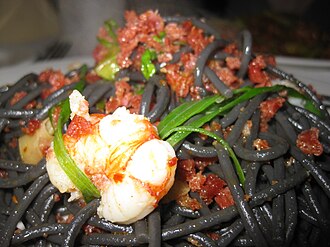
Photo: Wikipedia
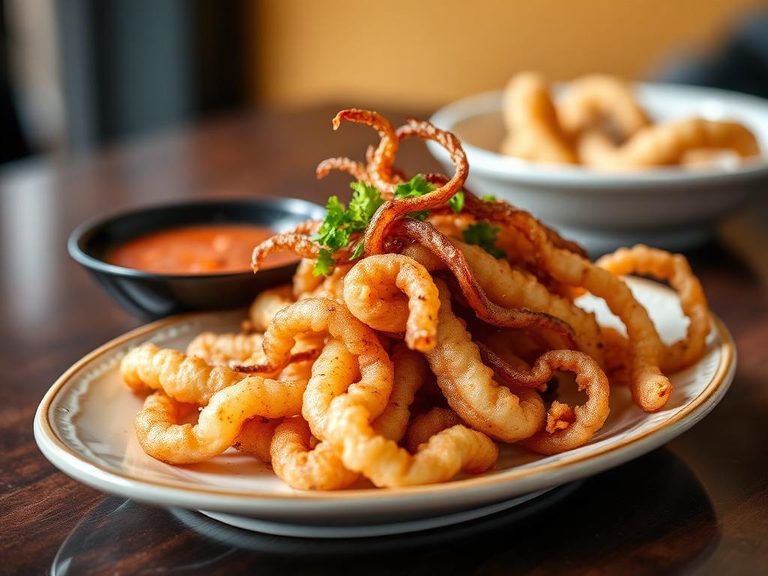
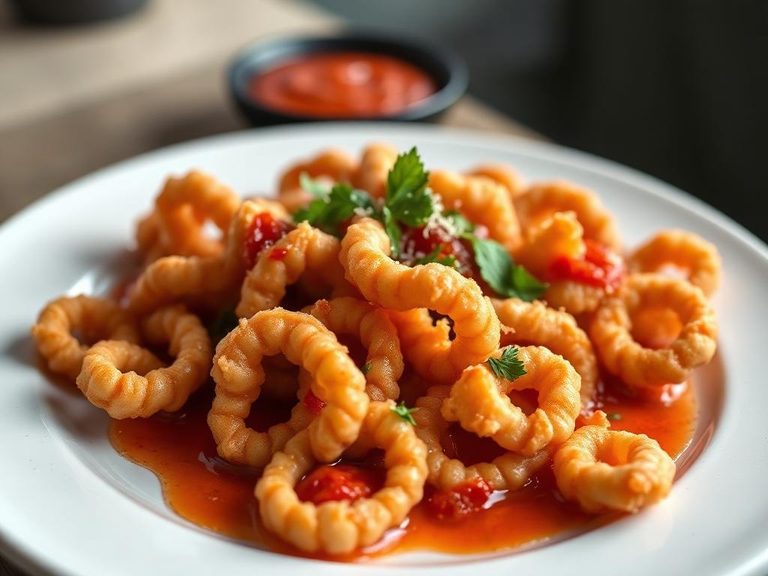
Fried squid, often known as calamari, transforms tender cephalopod meat into a golden, crispy delight with a satisfyingly chewy interior. This preparation method yields a savory, protein-rich food with a satisfying crunch, offering a substantial 17.94g of protein per 100g. The frying process adds a notable 7.48g of fat, contributing to its rich mouthfeel and caloric density of 175 kcal per 100g.
Calorie split: 42% protein · 18% carbs · 40% fat
↓ Full nutrition💚 Why it's loved
People adore fried squid for its irresistible contrast of textures—a shattering, crispy batter giving way to tender, slightly sweet meat. It's a beloved appetizer or street food globally, celebrated for its ability to be both comforting and sophisticated, often served with zesty lemon or spicy dipping sauces.
⚠️ Watch-outs & how to enjoy it better
The frying process significantly increases fat and calorie content, which can be a concern for those managing weight or heart health. As a common allergen, squid can trigger reactions in some individuals. To mitigate the high fat, pair it with a large, fiber-rich salad or steamed vegetables to increase satiety without excess calories, and opt for air-frying or grilling as healthier cooking alternatives.
Key benefits
- High in complete protein for muscle maintenance and repair
- Good source of selenium, an antioxidant mineral
- Contains vitamin B12, essential for nerve function
- Provides iron, important for oxygen transport in the blood
- Low in carbohydrates, making it suitable for low-carb diets
🍽️ Popular dishes
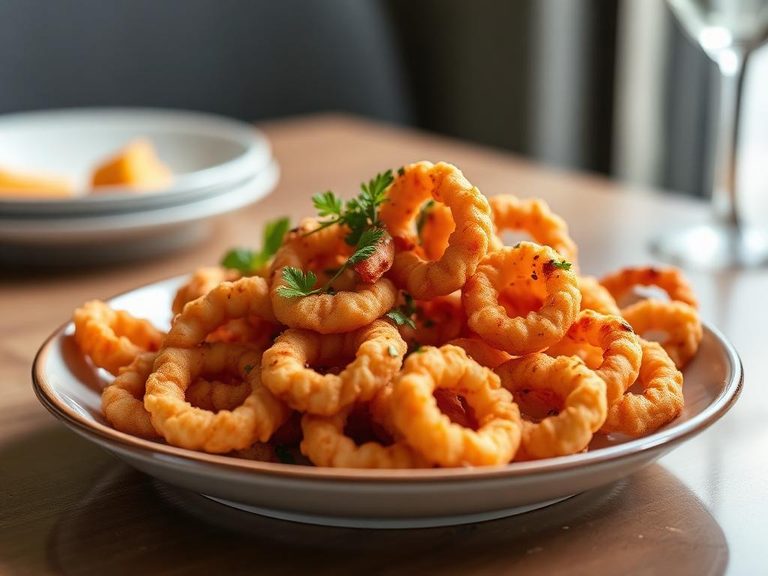
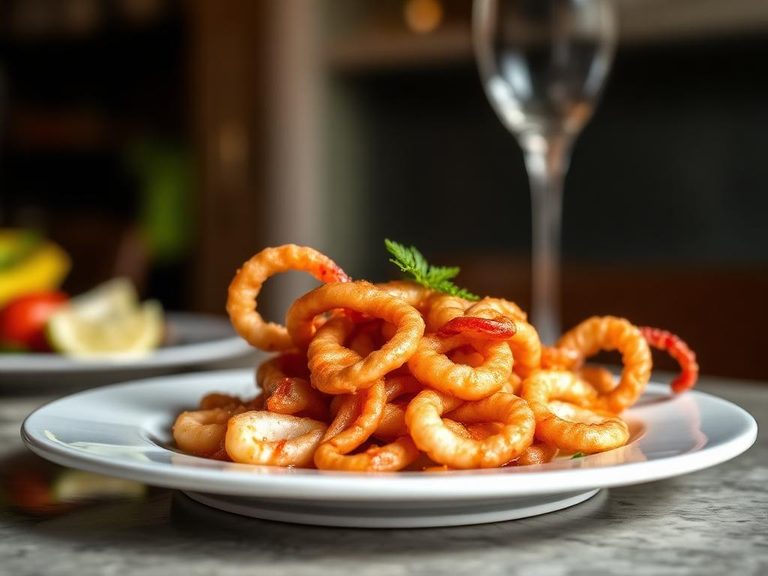
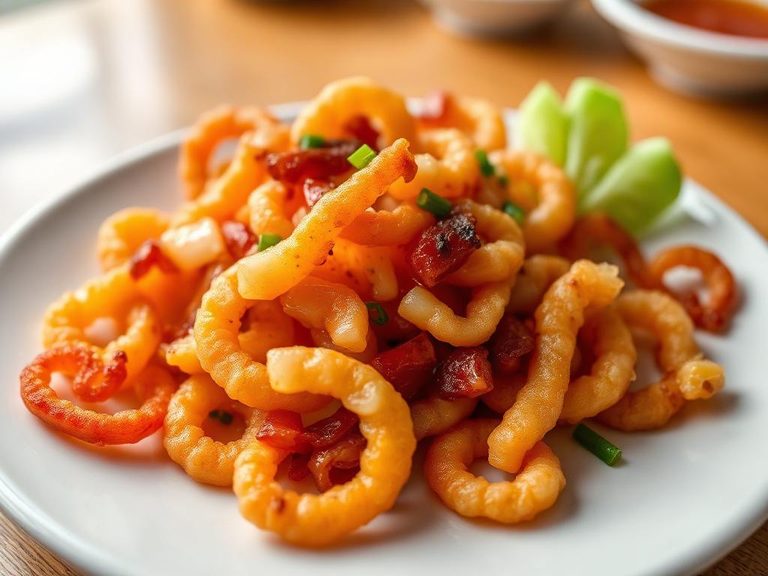
🌍 Where it's eaten
💡 Did you know?
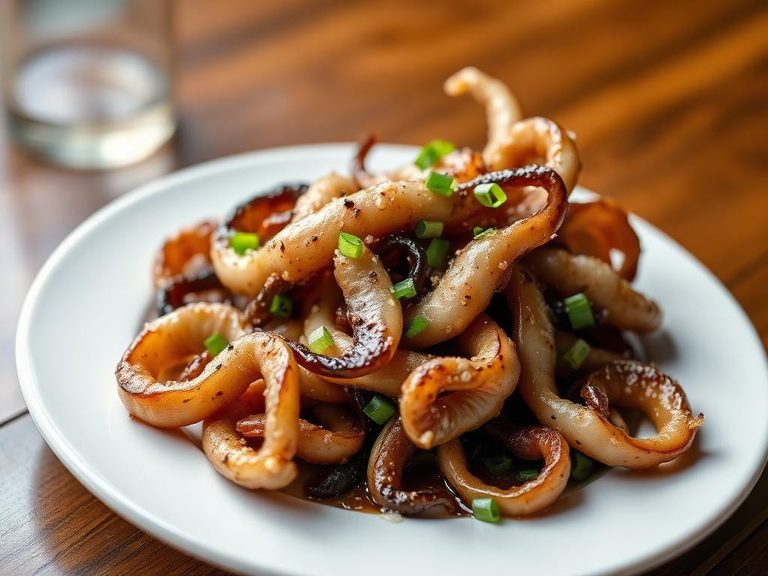
Squid ink, which is sometimes used in fried squid dishes like black calamari, is not only a natural black dye but also rich in antioxidants and iron, giving the dish a unique, briny flavor and dramatic color.
Full nutrition (USDA data · scales with serving)
| Water | 64.5 g |
| Energy | 175 kcal |
| Energy | 732 kj |
| Protein | 17.9 g |
| Total lipid (fat) | 7.5 g |
| Ash | 1.6 g |
| Carbohydrate, by difference | 7.8 g |
| Fiber, total dietary | 0.00 g |
| Calcium, Ca | 39.0 mg |
| Iron, Fe | 1.0 mg |
| Magnesium, Mg | 38.0 mg |
| Phosphorus, P | 251 mg |
| Potassium, K | 279 mg |
| Sodium, Na | 306 mg |
| Zinc, Zn | 1.7 mg |
| Copper, Cu | 2.1 mg |
| Manganese, Mn | 0.07 mg |
| Selenium, Se | 51.8 ug |
| Vitamin C, total ascorbic acid | 4.2 mg |
| Thiamin | 0.06 mg |
| Riboflavin | 0.46 mg |
| Niacin | 2.6 mg |
| Pantothenic acid | 0.51 mg |
| Vitamin B-6 | 0.06 mg |
| Folate, total | 14.0 ug |
| Folic acid | 9.0 ug |
| Folate, food | 5.0 ug |
| Folate, DFE | 20.0 ug |
| Vitamin B-12 | 1.2 ug |
| Vitamin A, RAE | 11.0 ug |
| Retinol | 11.0 ug |
| Vitamin A, IU | 35.0 iu |
Fat & fatty acid profile (per 100g)
| Fatty acids, total saturated | 1.9 g |
| SFA 14:0 | 0.06 g |
| SFA 16:0 | 1.1 g |
| SFA 18:0 | 0.69 g |
| Fatty acids, total monounsaturated | 2.7 g |
| MUFA 16:1 | 0.01 g |
| MUFA 18:1 | 2.7 g |
| MUFA 20:1 | 0.05 g |
| MUFA 22:1 | 0.01 g |
| Fatty acids, total polyunsaturated | 2.1 g |
| PUFA 18:2 | 1.5 g |
| PUFA 18:3 | 0.10 g |
| PUFA 18:4 | 0.01 g |
| PUFA 20:4 | 0.01 g |
| PUFA 20:5 n-3 (EPA) | 0.16 g |
| PUFA 22:5 n-3 (DPA) | 0.00 g |
| PUFA 22:6 n-3 (DHA) | 0.38 g |
| Cholesterol | 260 mg |
Amino acid profile (per 100g)
| Tryptophan | 0.20 g |
| Threonine | 0.76 g |
| Isoleucine | 0.78 g |
| Leucine | 1.3 g |
| Lysine | 1.3 g |
| Methionine | 0.40 g |
| Cystine | 0.24 g |
| Phenylalanine | 0.66 g |
| Tyrosine | 0.58 g |
| Valine | 0.79 g |
| Arginine | 1.3 g |
| Histidine | 0.35 g |
| Alanine | 1.1 g |
| Aspartic acid | 1.7 g |
| Glutamic acid | 2.6 g |
| Glycine | 1.1 g |
| Proline | 0.78 g |
| Serine | 0.81 g |
FAQ
Is fried squid a good source of protein?
Yes, fried squid is an excellent source of protein, providing about 17.94g per 100g, which supports muscle repair and overall body function.
How does frying affect the nutritional value of squid?
Frying adds significant fat and calories compared to other cooking methods like grilling or steaming. It can also reduce some heat-sensitive nutrients, but the protein content remains high.
Can I make fried squid healthier?
You can reduce fat by using an air fryer or oven-baking with a light coating. Pairing it with a large portion of vegetables or a salad can also help balance the meal.
Nutrient density (calculated · NRF9.3)
Nutrient Rich Foods index: beneficial nutrients (protein, fiber, vitamins, minerals) minus saturated fat, added sugar & sodium, per 100 kcal.
NRF9.3 index — Fulgoni, Keast & Drewnowski, 2009. Computed from USDA nutrients.
Weight-loss friendliness (composite index)
Energy density 1.75 kcal/g · 41% calories from protein · 0.0 g fiber · 0.0 g sugar per 100 g.
Composite of energy density (Rolls et al., 1999), protein & fiber satiety, minus sugar. A calculated heuristic — ranks satiety-per-calorie, not a clinical measure.
Dietary load (calculated from USDA values)
Potential renal acid load. Positive = acid-forming, negative = alkaline-forming.
Sodium-to-potassium ratio: 1.10 (lower is better — aim for ≤ 1)
Sodium:potassium per WHO potassium guidance. Computed from USDA nutrients.