

Lupins, mature seeds, raw
Whole food · Legumes and Legume Products

Photo: Wikipedia
Mature lupin seeds are a hardy legume with a distinctively firm, chewy texture and a mildly bitter, nutty flavor. They are a nutritional powerhouse, packing an exceptional 36 grams of protein per 100 grams, rivaling many meat sources. Their high fiber and low sugar content make them a standout for sustained energy and digestive health.
Calorie split: 37% protein · 41% carbs · 22% fat
↓ Full nutrition💚 Why it's loved
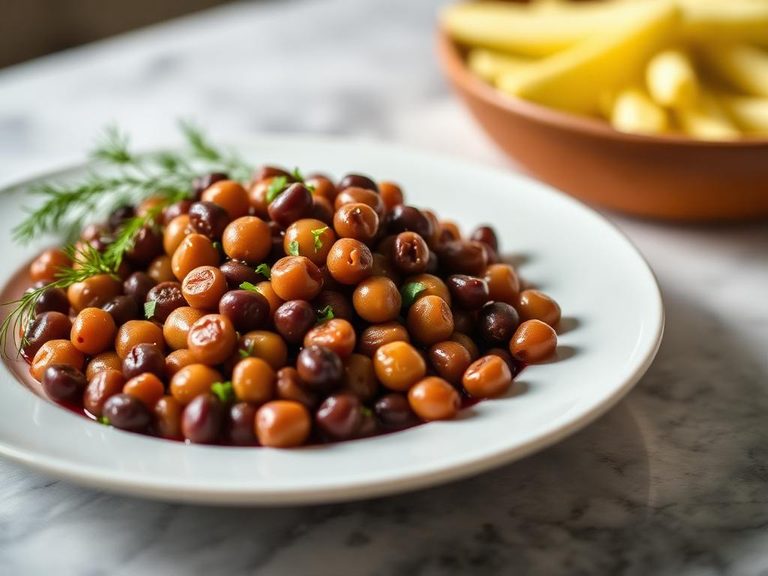
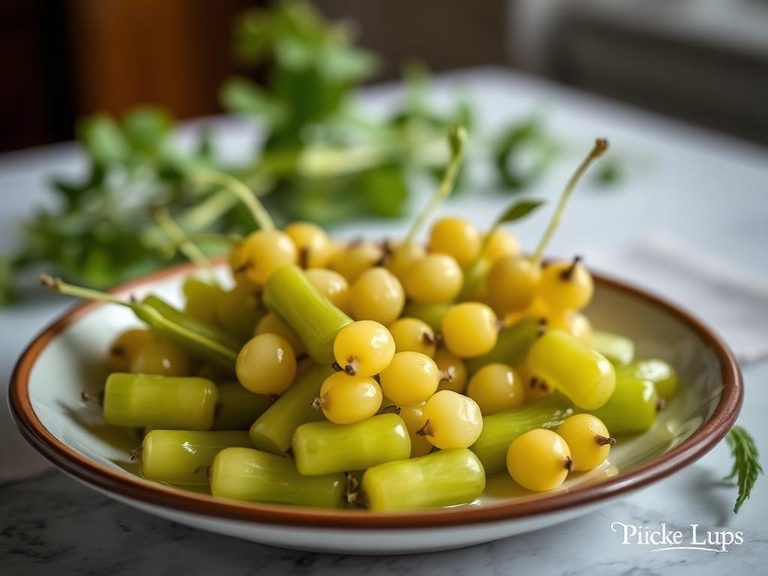
People love lupins for their robust, satisfying texture and their incredible versatility as a high-protein, low-carb ingredient. They are a beloved staple in Mediterranean and Andean cuisines, often enjoyed as a savory snack or a hearty addition to salads and stews.
⚠️ Watch-outs & how to enjoy it better
Raw lupins contain bitter alkaloids (lupanine) that must be removed through soaking and boiling to be safe for consumption. They are also a recognized food allergen, and individuals with peanut or soy allergies may be at higher risk. To counteract bitterness, always purchase pre-processed or thoroughly cook them yourself; for allergy concerns, avoid them entirely or consult an allergist.
Key benefits
- Exceptionally high in plant-based protein
- Very high in dietary fiber for gut health
- Naturally low in sugar and fat
- Good source of minerals like iron and magnesium
- May support healthy blood sugar levels due to fiber content
🍽️ Popular dishes


🌍 Where it's eaten
💡 Did you know?
Lupins are so efficient at fixing nitrogen in soil that they were historically planted as a 'green manure' crop to restore farmland fertility long before modern fertilizers existed.
Full nutrition (USDA data · scales with serving)
| Water | 10.4 g |
| Energy | 371 kcal |
| Energy | 1554 kj |
| Protein | 36.2 g |
| Total lipid (fat) | 9.7 g |
| Ash | 3.3 g |
| Carbohydrate, by difference | 40.4 g |
| Fiber, total dietary | 18.9 g |
| Calcium, Ca | 176 mg |
| Iron, Fe | 4.4 mg |
| Magnesium, Mg | 198 mg |
| Phosphorus, P | 440 mg |
| Potassium, K | 1013 mg |
| Sodium, Na | 15.0 mg |
| Zinc, Zn | 4.8 mg |
| Copper, Cu | 1.0 mg |
| Manganese, Mn | 2.4 mg |
| Selenium, Se | 8.2 ug |
| Vitamin C, total ascorbic acid | 4.8 mg |
| Thiamin | 0.64 mg |
| Riboflavin | 0.22 mg |
| Niacin | 2.2 mg |
| Pantothenic acid | 0.75 mg |
| Vitamin B-6 | 0.36 mg |
| Folate, total | 355 ug |
| Folic acid | 0.00 ug |
| Folate, food | 355 ug |
| Folate, DFE | 355 ug |
| Vitamin B-12 | 0.00 ug |
| Vitamin A, RAE | 0.00 ug |
| Retinol | 0.00 ug |
| Carotene, beta | 0.00 ug |
| Carotene, alpha | 0.00 ug |
| Cryptoxanthin, beta | 0.00 ug |
| Vitamin A, IU | 0.00 iu |
| Lycopene | 0.00 ug |
| Lutein + zeaxanthin | 0.00 ug |
| Vitamin D (D2 + D3), International Units | 0.00 iu |
| Vitamin D (D2 + D3) | 0.00 ug |
| Alcohol, ethyl | 0.00 g |
| Caffeine | 0.00 mg |
| Theobromine | 0.00 mg |
Fat & fatty acid profile (per 100g)
| Fatty acids, total saturated | 1.2 g |
| SFA 12:0 | 0.01 g |
| SFA 14:0 | 0.01 g |
| SFA 16:0 | 0.74 g |
| SFA 18:0 | 0.32 g |
| Fatty acids, total monounsaturated | 3.9 g |
| MUFA 16:1 | 0.03 g |
| MUFA 18:1 | 3.6 g |
| MUFA 20:1 | 0.26 g |
| MUFA 22:1 | 0.09 g |
| Fatty acids, total polyunsaturated | 2.4 g |
| PUFA 18:2 | 2.0 g |
| PUFA 18:3 | 0.45 g |
| Fatty acids, total trans | 0.00 g |
| Cholesterol | 0.00 mg |
Amino acid profile (per 100g)
| Tryptophan | 0.29 g |
| Threonine | 1.3 g |
| Isoleucine | 1.6 g |
| Leucine | 2.7 g |
| Lysine | 1.9 g |
| Methionine | 0.26 g |
| Cystine | 0.45 g |
| Phenylalanine | 1.4 g |
| Tyrosine | 1.4 g |
| Valine | 1.5 g |
| Arginine | 3.9 g |
| Histidine | 1.0 g |
| Alanine | 1.3 g |
| Aspartic acid | 3.9 g |
| Glutamic acid | 8.7 g |
| Glycine | 1.5 g |
| Proline | 1.5 g |
| Serine | 1.9 g |
FAQ
Are raw lupin seeds safe to eat?
No. Raw lupins contain toxic bitter alkaloids. They must be soaked in multiple changes of water and boiled thoroughly to remove these compounds before eating.
How does lupin protein compare to animal protein?
Lupin is a complete protein, containing all essential amino acids, though it is slightly lower in methionine than animal sources. Its protein density is comparable to meat and soy.
Can lupin be used in gluten-free baking?
Yes, lupin flour is a popular high-protein, low-carb gluten-free alternative. It adds structure and nutrition but is often blended with other flours for best texture.
Nutrient density (calculated · NRF9.3)
Nutrient Rich Foods index: beneficial nutrients (protein, fiber, vitamins, minerals) minus saturated fat, added sugar & sodium, per 100 kcal.
NRF9.3 index — Fulgoni, Keast & Drewnowski, 2009. Computed from USDA nutrients.
Weight-loss friendliness (composite index)
Energy density 3.71 kcal/g · 39% calories from protein · 18.9 g fiber · 0.0 g sugar per 100 g.
Composite of energy density (Rolls et al., 1999), protein & fiber satiety, minus sugar. A calculated heuristic — ranks satiety-per-calorie, not a clinical measure.
Dietary load (calculated from USDA values)
Potential renal acid load. Positive = acid-forming, negative = alkaline-forming.
Sodium-to-potassium ratio: 0.01 (lower is better — aim for ≤ 1)
Sodium:potassium per WHO potassium guidance. Computed from USDA nutrients.