

Kiwifruit (kiwi), green, peeled, raw
Whole food · Fruits and Fruit Juices
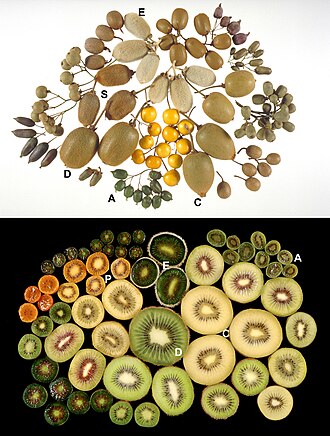
Photo: Wikipedia
The vibrant green flesh of a peeled, raw kiwifruit offers a uniquely tangy-sweet flavor with a refreshing, juicy texture dotted by tiny edible black seeds. At just 65 kcal per 100g, it is a nutrient-dense powerhouse, providing more vitamin C than an orange and a notable amount of fiber. Its bright, acidic profile makes it a standout fruit for both snacking and culinary applications.
Calorie split: 6% protein · 85% carbs · 9% fat
↓ Full nutrition💚 Why it's loved
People adore kiwifruit for its vibrant, jewel-like color and the perfect balance of sweet and tart that awakens the palate. Its versatility allows it to be enjoyed in everything from fruit salads and smoothies to savory meat tenderizers and elegant desserts.
⚠️ Watch-outs & how to enjoy it better
Some individuals may experience oral allergy syndrome or digestive discomfort due to the enzyme actinidin, and its high vitamin C content can be a concern for those with certain kidney conditions. To mitigate digestive issues, consume kiwifruit in moderation and pair it with a small amount of protein or fat to slow sugar absorption and ease digestion.
Key benefits
- Excellent source of vitamin C for immune support
- Contains actinidin, an enzyme that aids protein digestion
- High in dietary fiber (2.1g per 100g) for gut health
- Rich in antioxidants like lutein and zeaxanthin
- Low in calories and fat, making it ideal for weight management
🍽️ Popular dishes
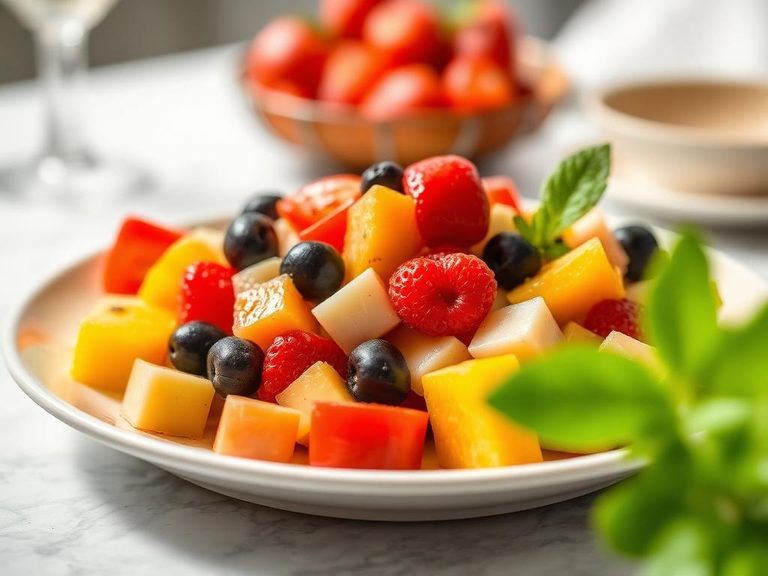


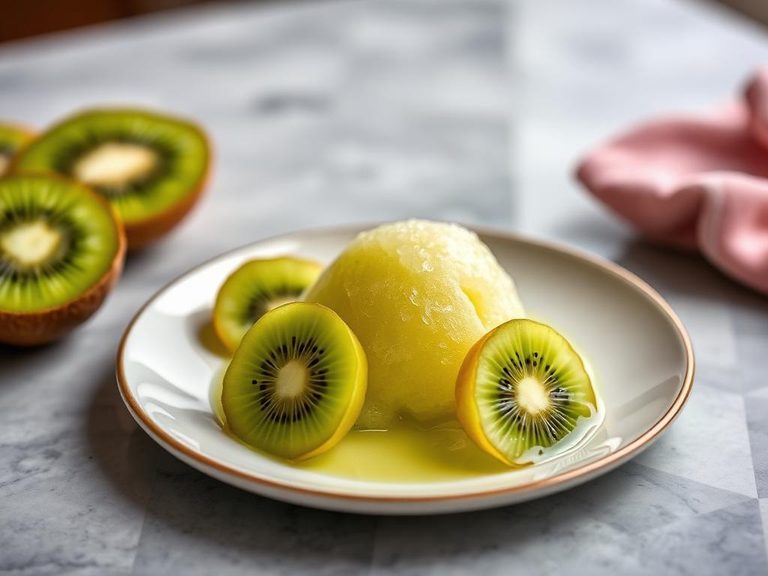

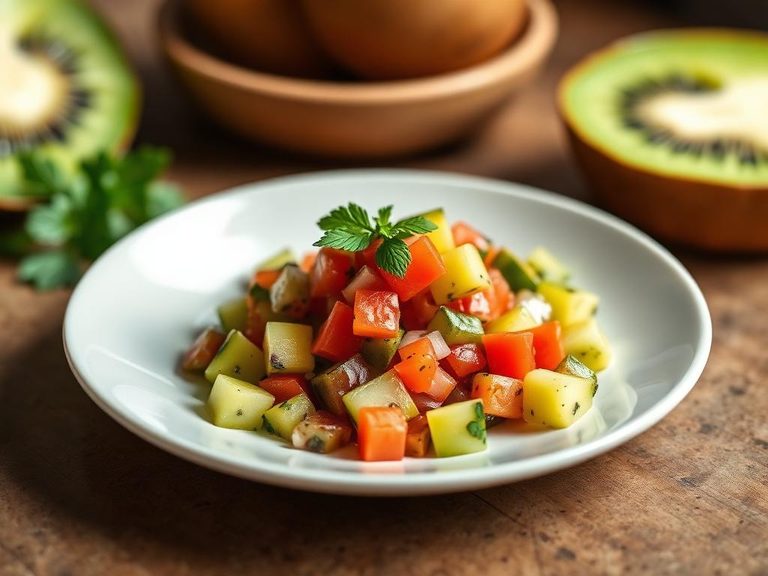
🌍 Where it's eaten
💡 Did you know?
Kiwifruit was originally known as the 'Chinese gooseberry' and was rebranded in the 1950s by New Zealand exporters to avoid association with communism and to capitalize on its fuzzy brown skin resembling a kiwi bird.
Full nutrition (USDA data · scales with serving)
| Water | 83.8 g |
| Energy (Atwater General Factors) | 65.1 kcal |
| Energy (Atwater Specific Factors) | 58.5 kcal |
| Nitrogen | 0.16 g |
| Protein | 1.0 g |
| Total lipid (fat) | 0.64 g |
| Ash | 0.70 g |
| Carbohydrate, by difference | 13.8 g |
| Fiber, total dietary | 2.1 g |
| Sugars, Total | 8.6 g |
| Sucrose | 0.81 g |
| Glucose | 3.5 g |
| Fructose | 4.3 g |
| Lactose | 0.00 g |
| Maltose | 0.00 g |
| Calcium, Ca | 24.4 mg |
| Iron, Fe | 0.04 mg |
| Magnesium, Mg | 14.8 mg |
| Phosphorus, P | 27.6 mg |
| Potassium, K | 302 mg |
| Sodium, Na | 2.3 mg |
| Zinc, Zn | 0.45 mg |
| Copper, Cu | 0.13 mg |
| Manganese, Mn | 0.07 mg |
| Vitamin C, total ascorbic acid | 58.8 mg |
| Folate, total | 32.9 ug |
Fat & fatty acid profile (per 100g)
Estimated from Kiwifruit, green, raw — USDA does not publish this profile for Kiwifruit (kiwi).
| Fatty acids, total saturated | 0.03 g |
| SFA 4:0 | 0.00 g |
| SFA 6:0 | 0.00 g |
| SFA 8:0 | 0.00 g |
| SFA 10:0 | 0.00 g |
| SFA 12:0 | 0.00 g |
| SFA 14:0 | 0.00 g |
| SFA 16:0 | 0.02 g |
| SFA 18:0 | 0.01 g |
| Fatty acids, total monounsaturated | 0.05 g |
| MUFA 16:1 | 0.00 g |
| MUFA 18:1 | 0.05 g |
| MUFA 20:1 | 0.00 g |
| MUFA 22:1 | 0.00 g |
| Fatty acids, total polyunsaturated | 0.29 g |
| PUFA 18:2 | 0.25 g |
| PUFA 18:3 | 0.04 g |
| PUFA 18:4 | 0.00 g |
| PUFA 20:4 | 0.00 g |
| PUFA 20:5 n-3 (EPA) | 0.00 g |
| PUFA 22:5 n-3 (DPA) | 0.00 g |
| PUFA 22:6 n-3 (DHA) | 0.00 g |
| Fatty acids, total trans | 0.00 g |
| Cholesterol | 0.00 mg |
Amino acid profile (per 100g)
Estimated from Kiwifruit, green, raw — USDA does not publish this profile for Kiwifruit (kiwi).
| Tryptophan | 0.01 g |
| Threonine | 0.05 g |
| Isoleucine | 0.05 g |
| Leucine | 0.07 g |
| Lysine | 0.06 g |
| Methionine | 0.02 g |
| Cystine | 0.03 g |
| Phenylalanine | 0.04 g |
| Tyrosine | 0.03 g |
| Valine | 0.06 g |
| Arginine | 0.08 g |
| Histidine | 0.03 g |
| Alanine | 0.05 g |
| Aspartic acid | 0.13 g |
| Glutamic acid | 0.18 g |
| Glycine | 0.06 g |
| Proline | 0.04 g |
| Serine | 0.05 g |
FAQ
Is kiwifruit good for digestion?
Yes, kiwifruit contains actinidin, a natural enzyme that helps break down proteins, and its fiber content supports regular bowel movements.
How does kiwifruit compare to oranges in vitamin C?
Kiwifruit has more vitamin C per gram than oranges; one medium kiwi provides about 64 mg of vitamin C, which is over 70% of the daily recommended intake.
Can I eat the skin of kiwifruit?
Yes, the skin is edible and adds extra fiber and nutrients, though many prefer to peel it due to its fuzzy texture.
Nutrient density (calculated · NRF9.3)
Nutrient Rich Foods index: beneficial nutrients (protein, fiber, vitamins, minerals) minus saturated fat, added sugar & sodium, per 100 kcal.
NRF9.3 index — Fulgoni, Keast & Drewnowski, 2009. Computed from USDA nutrients.
Weight-loss friendliness (composite index)
Energy density 0.65 kcal/g · 6% calories from protein · 2.1 g fiber · 0.0 g sugar per 100 g.
Composite of energy density (Rolls et al., 1999), protein & fiber satiety, minus sugar. A calculated heuristic — ranks satiety-per-calorie, not a clinical measure.
Dietary load (calculated from USDA values)
Potential renal acid load. Positive = acid-forming, negative = alkaline-forming.
Sodium-to-potassium ratio: 0.01 (lower is better — aim for ≤ 1)
Sodium:potassium per WHO potassium guidance. Computed from USDA nutrients.